Creating an outdoor entertainment space that can withstand the elements while providing modern conveniences is a challenge many homeowners and contractors face. An outdoor television installation requires protection from weather, moisture, and UV exposure, but traditional fixed enclosures can be bulky and detract from the aesthetics of your patio or pool area. A motorized flip-up cover plate offers an elegant solution—protecting your TV when not in use while providing instant access at the touch of a button.
This comprehensive guide will walk you through designing and building an automated flip-up TV cover using linear actuators. We'll cover the mechanical principles, force calculations, component selection, and installation considerations to help you create a professional-grade outdoor TV system for your kitchen, patio, or poolside entertainment area. Whether you're watching the big game or enjoying a movie under the stars, this motorized solution combines functionality with clean aesthetics.
Environment changes assumptions. Outdoors, the environment is part of the load — water, UV, salt, and freeze cycles attack seals, wiring, and fasteners long before force ratings become the limit. Specify for the environment first, then size for the load.
"On an outdoor flip-up cover, the actuator is doing more than holding the panel weight. It is fighting breakaway friction at startup, gasket drag, wind load, and moisture in the seals. If you size it at the catalog number, you have nothing left for the real world. Size it at half the rated load, and the same actuator will still be lifting that cover a decade from now." — Robbie Dickson, Founder and Chief Engineer of FIRGELLI Automations
How does a motorized flip-up TV cover actually work?
The flip-up cover mechanism operates on a simple but effective principle: using one or two linear actuators to push a hinged panel upward and away from the TV screen. The panel rotates around a fixed hinge point, typically located at the top of the enclosure, while the actuators extend from their mounting points to lift the bottom edge of the cover.
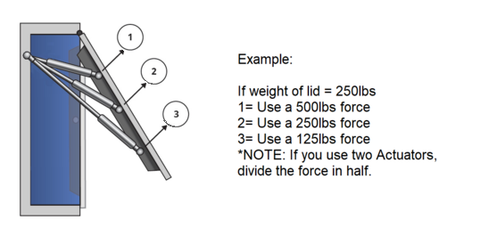
The mechanical advantage—and therefore the force required—depends critically on three factors: the weight of your cover panel, where you mount the actuators relative to the hinge point, and which actuators you select for the application. The relationship between mounting position and required force follows basic lever mechanics: mounting the actuator closer to the hinge (position 1 in the diagram) requires more force but less stroke length and results in faster operation. Mounting farther from the hinge (position 3) reduces the force requirement but needs a longer stroke actuator and takes more time to open and close.
This trade-off is fundamental to proper system design. A mounting position near the hinge might require a 200 lb force actuator with an 8-inch stroke, while a position farther from the hinge might only need a 35 lb force actuator but require a 16-inch stroke. The optimal mounting position balances force requirements, speed of operation, available space, and actuator cost.
How do you calculate the force and stroke length for the actuator?
Accurate force calculation is essential for selecting the right actuators and ensuring reliable, long-term operation. Undersizing your actuators can lead to overheating, premature failure, or insufficient lifting power, while oversizing adds unnecessary cost and weight to your installation.
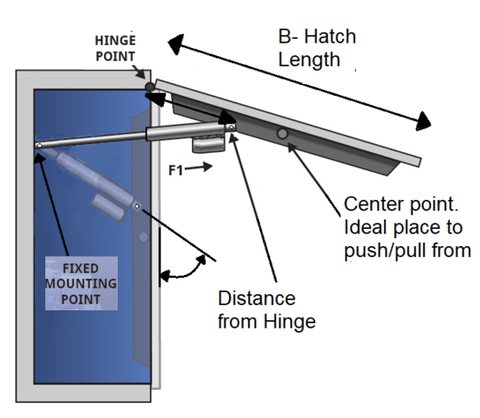
The force calculation requires several key measurements:
- Weight of the cover panel: Include all materials—the face panel, frame, seals, and any reinforcement. Don't forget to account for moisture absorption if using wood materials.
- Distance from hinge to center of gravity: This is typically half the width of your cover panel, measured perpendicular to the hinge line.
- Distance from hinge to actuator mounting point: Measured along the same line as above, this determines your mechanical advantage.
- Desired opening angle: Most installations target 90-110 degrees from closed position.
As a general engineering principle, we recommend sizing your actuators so they operate at no more than 50% of their maximum rated load during normal operation. This safety margin accounts for several important factors: initial breakaway force when starting from rest, dynamic loads during motion, tolerance variations in construction, environmental factors like temperature and moisture, and long-term wear. Operating actuators within their comfortable range dramatically extends service life and reduces the risk of premature failure.
For stroke length, you'll need to calculate the actual distance the actuator must extend based on your mounting geometry. This requires basic trigonometry: measure the distance from the actuator mounting point on the enclosure to the mounting point on the cover panel in both closed and fully open positions. The difference is your minimum required stroke length—add 10-15% margin for mounting tolerance and to avoid operating the actuator at the extreme ends of its travel.
Should you use one actuator or two?
One of the first decisions in your design is whether to use one or two actuators. A single actuator system is simpler and more economical, mounting at the center of the cover panel width. This approach works well for lighter covers up to approximately 50 lbs and panels with good structural rigidity. The main limitation is that as weight increases, you may see the cover panel flex or bow when fully open, particularly if the panel spans more than 40 inches.
Dual actuator systems mount one actuator on each side of the panel, typically 6-12 inches in from the edges. This configuration distributes the load more evenly, eliminates visible flex in the open position, and allows for heavier cover construction. Two actuators also provide redundancy—if one actuator fails, the cover can still be manually operated. The trade-off is higher cost and slightly more complex wiring, though modern control systems make synchronization straightforward.
For covers over 50 lbs or spans exceeding 48 inches, we strongly recommend dual actuators. The improved aesthetics and structural performance justify the additional investment, and the system will handle environmental stresses like wind loading much more effectively.
Which linear actuators are right for outdoor use?
Not all linear actuators are suitable for outdoor installations. Environmental exposure to moisture, temperature swings, UV radiation, and dust requires actuators specifically engineered for exterior applications. For outdoor TV covers, we recommend starting with Premium Line actuators designed with IP65 or higher ingress protection ratings (IP ratings are defined by IEC 60529, the international ingress protection rating standard).
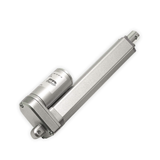
The Premium Line linear actuators offer three standard force ratings that cover most outdoor TV cover applications:
- 35 lb force actuators: Fastest operation with speeds up to 2 inches per second. Ideal for lightweight aluminum or composite covers under 30 lbs in dual-actuator configurations. Best suited when actuators mount far from the hinge point for maximum mechanical advantage.
- 150 lb force actuators: Balanced performance with moderate speed around 1 inch per second. The most versatile option for typical outdoor TV covers weighing 40-80 lbs. Provides good speed while handling substantial loads reliably.
- 200 lb force actuators: Maximum power for heavy-duty applications with speeds around 0.6-0.8 inches per second. Necessary for solid wood covers, oversized panels, or installations where actuators must mount close to the hinge point due to space constraints.
Actuator selection table for outdoor TV flip-up covers
| Force Rating | Approx Speed | Best For | Typical Cover Weight | Mounting Position |
|---|---|---|---|---|
| 35 lb | Up to 2 in/s | Lightweight aluminum or composite covers in dual config | Under 30 lbs | Far from hinge (max mechanical advantage) |
| 150 lb | ~1 in/s | Most typical outdoor TV covers | 40–80 lbs | Mid-range |
| 200 lb | 0.6–0.8 in/s | Solid wood, oversized panels, or hinge-close mounting | 80+ lbs | Close to hinge (space-constrained) |
Speed and force have an inverse relationship in actuator design—higher force ratings generally mean slower extension speeds. This is due to the gear reduction required to achieve greater force output. Consider your priorities: a lightweight cover might benefit from the faster 35 lb actuators for snappy operation, while a premium hardwood installation might require 200 lb actuators where the slower speed is an acceptable trade-off for reliable lifting power.
Stroke length availability varies by model, with common options ranging from 4 to 20 inches. Match your calculated stroke requirement to the nearest available size, remembering to include the margin for mounting tolerance. Premium actuators also typically feature mounting brackets at both ends with multiple hole patterns for flexible installation.
What control system and wiring do you need?
A reliable control system is essential for convenient operation of your outdoor TV cover. For most residential installations, a wireless RF remote control system offers the best combination of convenience, reliability, and cost-effectiveness.
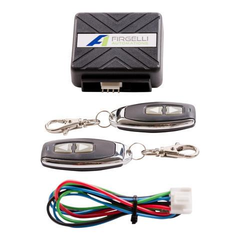
Quality wireless control systems designed for actuator applications typically include a receiver control box with two actuator output channels, allowing synchronized operation of dual actuators. The system should provide momentary control (press and hold to move) and automatic stop when actuators reach their end limits. Look for systems that include multiple remote fobs so family members can each have convenient access.
Wiring a dual actuator system is straightforward: both actuators connect in parallel to the control box outputs, ensuring they extend and retract together. Modern control boxes handle the load of two actuators without issues, provided your power supply is adequately sized. Use marine-grade or outdoor-rated wire with appropriate gauge for your run lengths—typically 18 AWG for runs under 20 feet, stepping up to 16 AWG for longer distances to minimize voltage drop.
For more sophisticated installations, you might consider integrating with home automation systems using relay interfaces or Arduino-based controllers. This allows your TV cover to synchronize with other outdoor systems—for example, automatically opening when you turn on your outdoor TV or closing at sunset. Feedback actuators with built-in position sensing enable precise control and status monitoring in automated systems.
How do you size and install the power supply?
Proper power supply selection ensures reliable operation and protects your investment in actuators and controls. Linear actuators typically operate on 12V DC power, with current draw varying based on load and force rating. During peak operation (starting from rest or under maximum load), actuators can draw 3-6 amps each, so a dual actuator system might require up to 12 amps total.
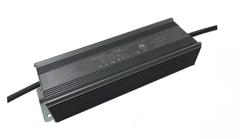
For outdoor TV cover applications, we recommend a weatherproof 12V DC power supply rated for at least 30 amps. This substantial overhead ensures the power supply never operates near its maximum capacity, which would generate excessive heat and reduce lifespan. A 30-amp supply easily handles two actuators plus the control system with plenty of margin for startup surge current.
Weatherproof ratings are critical for outdoor installations. Look for power supplies with minimum IP65 ratings (dust tight and protected against water jets) or ideally IP67 (dust tight and protected against temporary immersion). Both ratings are defined by IEC 60529. Install the power supply in a protected location—under an eave, within the TV enclosure structure, or in a weatherproof electrical box. Even with a weatherproof supply, avoiding direct weather exposure extends service life.
Ensure your installation includes proper circuit protection. The power supply should connect to a dedicated GFCI-protected circuit, particularly important in wet locations like pool areas. In the United States, this is governed by NEC Article 210.8 (GFCI protection for outdoor receptacles) and NEC Article 680 (electrical installations near swimming pools, fountains, and similar installations). Follow local electrical codes for outdoor installations, and consider having the main power feed installed by a licensed electrician if you're not experienced with outdoor electrical work.
What are the best practices for construction and installation?
Building a durable outdoor TV enclosure with a motorized flip-up cover requires attention to both mechanical and weatherproofing details. Start with material selection: marine-grade plywood, aluminum, or composite materials specifically rated for outdoor use will provide the best longevity. If using wood, apply high-quality exterior sealant or marine varnish to all surfaces, edges, and screw holes before assembly.
The enclosure frame must be rigid and securely mounted. Use appropriate anchors for your mounting surface—concrete screws for masonry, structural screws into studs for wood framing, or through-bolts for metal structures. The enclosure will experience significant dynamic loads as the cover opens and closes, plus wind loading when the cover is open, so don't underestimate the importance of solid mounting.
When installing the cover panel hinges, use heavy-duty continuous (piano) hinges or multiple butt hinges rated for at least twice the cover weight. Stainless steel hinges are essential for outdoor use to prevent corrosion. Ensure hinges are perfectly aligned and the cover swings smoothly before installing actuators—any binding will overload the actuators and lead to premature failure.
For actuator mounting, precision matters. The actuator mounting points must be positioned accurately according to your calculations, and the mounting surfaces must be perpendicular to the actuator axis. Use high-quality fasteners—stainless steel bolts with lock washers or Nylock nuts to prevent loosening from vibration. If mounting to wood, consider using threaded inserts for more durable connections that won't strip over time.
Weatherproofing requires careful attention to detail. Use rubber or foam gaskets around the cover perimeter to seal against moisture when closed. Consider adding small weep holes at the bottom of the enclosure to allow any trapped moisture to escape. Seal all wire entry points with marine-grade silicone or cable glands. If possible, route wiring so water cannot run along the wires into electrical connections.
How should you test, adjust, and maintain the system?
After installation, thorough testing ensures reliable operation and identifies any adjustments needed. Start with the cover closed and actuators fully retracted. Operate the system slowly, watching for any binding, misalignment, or unusual stress on components. The cover should lift smoothly and evenly without twisting or catching. If using dual actuators, both should extend at the same rate—any significant difference indicates a problem with wiring, mounting, or actuator matching.
Check the fully open position carefully. The cover should be stable and secure, with no excessive flex or bounce. Verify that actuators aren't bottoming out against their end stops with excessive force. If you hear grinding or feel vibration at full extension, you may need to adjust mounting points or add limit switches to stop travel before mechanical limits.
Adjust the actuator mounting positions if needed to fine-tune operation. Small changes in the mounting point location can significantly affect the force distribution and opening angle. Document your final mounting positions and any adjustments made for future reference.
Routine maintenance for outdoor TV cover systems is minimal but important. Every few months, inspect all mounting hardware for tightness—vibration can loosen fasteners over time. Clean the actuator rods with a soft cloth to remove dust and debris, then apply a light coating of silicone spray lubricant. Check electrical connections for corrosion, particularly in humid or coastal environments. Test the system operation regularly to ensure everything remains smooth and quiet.
In harsh environments, consider bringing the cover closed when not in use for extended periods. This protects the TV from the elements and keeps the actuators in their retracted position where they're best protected from environmental exposure. If you live in an area with freezing temperatures, verify that your actuators are rated for cold weather operation, as some models may have temperature limitations.
What usually goes wrong on outdoor TV flip-up covers?
Most outdoor flip-up cover failures are not the actuator's fault on its own — they trace back to environment, geometry, or mounting. The patterns below show up repeatedly:
- Hinge binding from misalignment. If the cover doesn't swing freely by hand, the actuator becomes the guide and burns out trying to fight a stiff hinge. Always confirm smooth manual operation before powering up.
- Undersized actuators running hot. Sizing at the catalog number leaves no margin for breakaway force, gasket drag, or wind load. Operate at 50% of rated load or less.
- Side loading at the mounts. If actuator brackets aren't perpendicular to the actuator axis, the rod sees a bending moment instead of pure tension or compression. Side loading destroys internal bushings long before the force rating is exceeded.
- Water ingress through wire entry. Wires routed upward into a connector channel rain straight into the contacts. Loop wires below the connector ("drip loop") and seal entries with cable glands or marine-grade silicone.
- Loose fasteners from cycle vibration. Standard nuts back off over hundreds of open/close cycles. Use Nylock nuts or thread locker on every actuator and hinge fastener.
- Freeze-locked seals. In cold climates, water trapped in the gasket perimeter can freeze and bond the cover shut, then tear the seal on first operation. Add weep holes and verify the cold-weather rating on the actuator.
What advanced options and customizations are possible?
Once you've mastered the basic flip-up cover design, several advanced options can enhance functionality and aesthetics. Integrated LED lighting can illuminate the TV area when the cover opens, creating ambiance and improving visibility. Wire LED strips to activate with the actuator power supply, so lights turn on automatically when you open the cover.
Sensor-based automation adds convenience and protection. Rain sensors can automatically close the cover if weather threatens, protecting your TV even if you're not home. Temperature sensors might prevent operation in freezing conditions to protect actuator motors. Wind sensors could close the cover if high winds pose a risk of damage.
For ultimate integration, connect your outdoor TV cover to a comprehensive home automation system. This enables voice control through systems like Amazon Alexa or Google Home, scheduled operation, or automatic synchronization with other outdoor systems. Professional installers often integrate outdoor TV controls with lighting, audio systems, and climate control for seamless outdoor entertainment spaces.
Aesthetic customization can make your installation truly unique. The cover panel itself can be finished to match your outdoor décor—painted, stained, wrapped in fabric, or faced with decorative panels. Some installations incorporate the cover into architectural elements, making it appear as a natural part of the outdoor kitchen or living space rather than an obvious technical addition.
Conclusion
Building a motorized flip-up cover for your outdoor TV combines practical weather protection with modern convenience and clean aesthetics. By carefully calculating forces, selecting appropriate components, and following proper installation practices, you can create a professional-quality automated system that will provide years of reliable service. The key to success lies in thorough planning, accurate measurements, and using quality components designed specifically for outdoor applications.
Whether you're protecting a modest TV in your patio kitchen or creating an elaborate poolside entertainment center, the principles and practices outlined in this guide provide a solid foundation for your project. Take your time with the planning phase, double-check your calculations, and don't compromise on component quality—particularly for actuators, power supplies, and weatherproofing materials. The result will be an outdoor entertainment space that combines the best of technology and outdoor living.
We encourage you to share your completed project with us. Photos, videos, and descriptions of your outdoor TV installation help inspire other builders and showcase the versatility of linear actuator technology in home automation projects. Your innovation and creativity drive the community forward and demonstrate the endless possibilities for motion control in residential applications.
Frequently Asked Questions
How many actuators do I need for my outdoor TV cover?
For covers under 50 lbs and spans less than 40 inches, a single centrally-mounted actuator may be sufficient if your cover panel has good structural rigidity. However, for covers over 50 lbs, spans exceeding 48 inches, or installations where appearance is critical, we strongly recommend using two actuators mounted symmetrically on either side of the panel. Dual actuators distribute the load evenly, eliminate visible flex when open, and provide more reliable long-term performance. The additional cost of a second actuator is typically worthwhile for the improved aesthetics and durability.
What IP rating do I need for actuators in an outdoor TV installation?
For outdoor installations, particularly in uncovered areas or near pools, you should use actuators with minimum IP65 rating (protection against dust and water jets from any direction). If your installation is in a particularly harsh environment—coastal areas with salt spray, locations with heavy rainfall, or poolside installations with regular splash exposure—consider IP67-rated actuators (protection against temporary immersion). Premium line actuators designed specifically for outdoor use typically meet or exceed these requirements and include corrosion-resistant materials and sealed internal components.
How fast will my TV cover open and close?
Opening speed depends primarily on the actuator force rating and the stroke length required for your installation. A 35 lb force actuator extends at approximately 2 inches per second, so an 8-inch stroke would take about 4 seconds to fully extend. A 150 lb force actuator moves at roughly 1 inch per second (8 seconds for the same stroke), while a 200 lb force actuator operates at 0.6-0.8 inches per second (10-13 seconds). The actual time for your cover to open also depends on your mounting geometry—the actuator doesn't need to extend fully to achieve a 90-degree cover opening, so real-world operation may be faster than the maximum stroke time suggests.
What size power supply do I need for dual actuators?
For a dual actuator outdoor TV cover system, we recommend a 12V DC weatherproof power supply rated for at least 30 amps. While two actuators might only draw 6-12 amps during normal operation, the 30-amp rating provides substantial overhead for startup surge current, ensures the supply doesn't overheat during operation, and accommodates the control system and any additional accessories like LED lighting. Operating a power supply well below its maximum rating significantly extends its service life, particularly important in outdoor installations where heat dissipation may be limited. Ensure your power supply has appropriate weatherproof rating (IP65 or better) for outdoor use.
How much maintenance does an outdoor TV actuator system require?
Motorized outdoor TV covers require minimal but important routine maintenance. Every 2-3 months, inspect and tighten all mounting hardware, as vibration can gradually loosen fasteners. Clean the actuator rods with a soft cloth to remove accumulated dust, pollen, and debris, then apply a light coating of silicone spray lubricant (avoid petroleum-based products which can damage seals). Check all electrical connections for signs of corrosion, particularly in humid or coastal environments, and ensure weatherproofing seals remain intact. Test system operation regularly to identify any changes in performance early. In freezing climates, verify that moisture hasn't entered any components before the first cold snap. With this simple maintenance routine, a properly installed system should provide many years of reliable service.
Should I build my cover panel from wood or aluminum?
Both materials can work well for outdoor TV covers, each with distinct advantages. Aluminum is lighter, won't absorb moisture, never needs refinishing, and naturally resists corrosion. However, aluminum panels typically cost more, require specialized tools to work with, and can be more challenging for DIY builders to fabricate. Wood—particularly marine-grade plywood—is easier to work with using common tools, costs less, and can be finished to match any aesthetic. The trade-offs are that wood is heavier (requiring more powerful actuators), absorbs moisture unless properly sealed, and needs periodic refinishing to maintain weather protection. For most installations, properly sealed marine-grade plywood offers the best balance of workability, cost, and durability. If weight is a critical concern or your installation is in an extremely harsh environment, aluminum becomes more attractive despite the higher initial cost.
About the author: Robbie Dickson is the Founder and Chief Engineer of FIRGELLI Automations. Before founding FIRGELLI in 2002, he worked as an engineer at Rolls-Royce, BMW, Isuzu, and Ford. More on his background is available on Wikipedia.


