
The modern workplace has engineered sedentary behavior into our daily lives. Whether you're a software developer, accountant, designer, or office manager, chances are you spend the majority of your workday seated at a desk. While this may seem like a minor inconvenience—perhaps resulting in occasional back pain or stiffness—the scientific evidence reveals a far more alarming reality: prolonged sitting is a significant independent risk factor for chronic disease and premature mortality.
What makes this health crisis particularly insidious is that it cannot be solved by simply adding an hour at the gym to your routine. Multiple large-scale studies have demonstrated that even individuals who exercise regularly remain at elevated risk when they spend most of their day sitting. The solution isn't to abandon your career or completely overhaul your lifestyle—it's to integrate movement into your existing work routine. This is where electric standing desk solutions become not just a trendy office upgrade, but an evidence-based health intervention that can literally add years to your life.
In this comprehensive guide, we'll examine the peer-reviewed research on sitting and health outcomes, explore the specific benefits of sit-stand desks, and explain how modern linear actuator technology makes transitioning between sitting and standing effortless with the push of a button.
A sit-stand desk is a height-adjustable workstation, typically driven by electric linear actuators, that lets you switch between seated and standing work postures in 15-20 seconds at the push of a button.
Repeated cycles with real load prove the design. A desk that lifts once impresses; a desk that lifts ten thousand times without drift, noise, or thermal fade is the one worth owning.
"A desk actuator isn't sized by peak load — it's sized by duty cycle. A monitor setup that weighs 80 pounds isn't the design problem; the design problem is lifting that 80 pounds eight to twelve times a day, every workday, for years. That's why dual synchronized actuators and conservative thermal headroom matter more than headline force numbers." — Robbie Dickson, Founder and Chief Engineer of FIRGELLI Automations
What are the health risks of prolonged sitting?
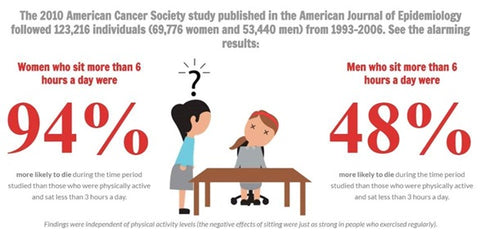
How many hours do you spend sitting each day? If you've never calculated this figure, the result might surprise you. Consider your commute, your desk work, your lunch break, your evening television viewing, and your dinner table time. Research published in the European Heart Journal found that the average adult spends 50-60% of their waking hours in sedentary pursuits—that's approximately 8-10 hours of sitting daily for most people.
Quantifying the Mortality Risk
The correlation between sitting time and mortality has been established across multiple large-scale epidemiological studies. A comprehensive meta-analysis published in PLOS ONE examined data from numerous studies and determined that each additional hour of daily sitting time was associated with a 2% increase in all-cause mortality risk. While 2% per hour might sound modest, it compounds significantly for individuals sitting 8-10 hours daily.
Even more striking, a global analysis examining all-cause mortality across 54 countries worldwide concluded that between 4% and 7% of all deaths could be attributed to excessive sitting time. This places sedentary behavior in the same risk category as more commonly discussed health threats like obesity and smoking.
Exercise Cannot Fully Compensate for Sitting
Many health-conscious professionals assume that their regular exercise routine neutralizes the effects of workplace sitting. Unfortunately, the data tells a different story. Research published in Medicine & Science in Sports & Exercise examined the relationship between sitting time and mortality among people who exercised daily. The study found that even among regular exercisers, sitting time remained an independent risk factor for both all-cause and cardiovascular mortality.
This doesn't mean exercise is ineffective—rather, it demonstrates that prolonged sitting creates physiological changes that cannot be completely reversed by periodic exercise. The human body appears to require regular postural changes and movement throughout the day, not just concentrated periods of activity. As one research paper concluded: "Public health messages and guidelines should be refined to include reducing time spent sitting."
Specific Disease Associations
Beyond general mortality risk, excessive sitting time has been specifically linked to several serious health conditions:
- Type 2 Diabetes: Prolonged sitting significantly impairs glucose metabolism and insulin sensitivity
- Cardiovascular Disease: One of the earliest studies on occupational sitting, conducted on 1950s London bus drivers, found they had twice the risk of coronary heart disease compared to more active bus conductors
- Obesity: Reduced daily energy expenditure from sitting contributes to weight gain and metabolic dysfunction
- Cancer: Several studies have identified associations between sedentary behavior and increased cancer risk
- Musculoskeletal Disorders: Chronic sitting places sustained stress on spinal structures, leading to disc degeneration and chronic pain
How do electric sit-stand desks solve the sitting problem?
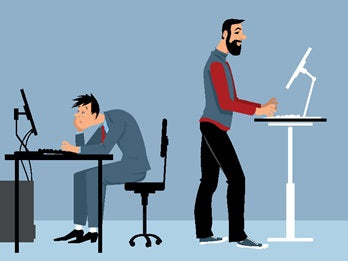
Before you consider leaving your desk job or making dramatic lifestyle changes, there's a straightforward engineering solution: an electric sit-stand desk allows you to reduce sitting time while maintaining full productivity. Modern standing desk systems use precision linear actuators to smoothly transition between sitting and standing heights at the push of a button.
Quantifiable Longevity Benefits
Research published in BMJ Open titled "Sedentary Behaviour and Life Expectancy in the USA" provided remarkable findings: limiting sitting time to less than three hours per day was associated with an increase in life expectancy of 2.5 years. This benefit is comparable to other major lifestyle interventions, yet requires no special equipment beyond a height-adjustable desk.
The mechanism is straightforward: by standing for portions of your workday, you dramatically reduce total daily sitting time without sacrificing productivity or requiring additional time commitments. Unlike going to the gym (which requires scheduling, transportation, and dedicated time), transitioning to standing position is instantaneous.
How Modern Actuator Technology Enables Effortless Transitions
Contemporary sit-stand desks rely on electric linear actuators—devices that convert rotational motor motion into precise linear movement. These systems typically feature:
- Dual actuator configurations for stable, synchronized lifting of both sides of the desk
- Programmable memory positions that recall your preferred sitting and standing heights
- Smooth operation capable of lifting 100-200 pounds of equipment without vibration
- Quiet motors suitable for open office environments
- Safety features including anti-collision sensors and overload protection
This engineering sophistication means transitioning between positions requires no manual effort—you simply press a button and the desk adjusts in 15-20 seconds. This ease of use is critical for establishing the habit of regular position changes throughout your workday.
What are the proven benefits of using a sit-stand desk?
Beyond the mortality and disease risk reductions discussed above, clinical studies have documented several specific benefits that workers experience when using sit-stand desks. These benefits typically manifest within weeks of consistent use.
Reduced Neck and Back Pain
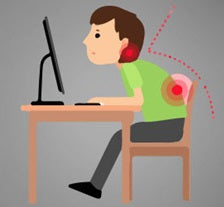
Musculoskeletal pain is one of the most common complaints among office workers, and the research on sit-stand desks shows impressive improvements. A study conducted with office workers in Minneapolis examined the effects of using a standing desk for just one hour per day over seven weeks. Participants reported a 54% reduction in upper back and neck pain—a dramatic improvement for such a modest intervention.
Notably, when researchers had participants return to full-time sitting after the study period, the pain returned within two weeks. This demonstrates that the benefit is ongoing and requires continued use of variable positioning throughout the workday.
A separate study focused on lower back pain found that participants who intermittently used standing positions throughout their workday experienced a 32% reduction in lower back pain. This suggests that the benefit comes from position variation itself—not from standing exclusively, but from avoiding prolonged static postures.
Improved Mood and Energy Levels

The Take-a-Stand Project conducted extensive surveys of participants after one month of using sit-stand desks. The subjective benefits reported were remarkably consistent:
- 87% felt more comfortable during their workday
- 87% felt more energized
- 75% felt healthier overall
- 71% experienced improved focus
- 66% felt more productive
- 62% reported feeling happier
These aren't trivial improvements—they represent meaningful enhancements to daily work experience and quality of life. Another study that had workers alternate between sitting and standing every 30 minutes found a 15% reduction in total fatigue scores compared to eight hours of continuous sitting.
Increased Productivity

Perhaps the most compelling argument for employers considering sit-stand desk investments comes from productivity research. A six-month study of 167 call center employees compared workers using height-adjustable desks to those with traditional fixed-height desks. The results were striking: employees with stand-capable desks were 45% more productive on a daily basis compared to their seated counterparts.
This productivity improvement likely stems from multiple factors: increased energy and alertness, reduced discomfort and pain, improved mood, and better focus. From a business perspective, this represents a compelling return on investment—the desk system pays for itself through increased worker output.
Increased Energy Expenditure and Improved Metabolic Health
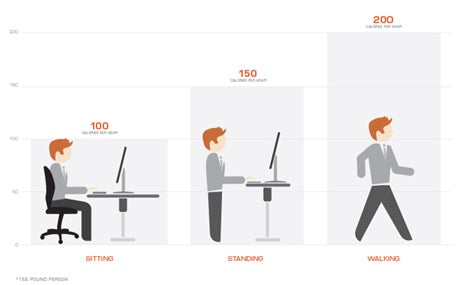
A study titled "Standing-Based Office Work" measured the metabolic effects of standing versus sitting during afternoon work periods. Participants burned an average of 174 additional calories during afternoons spent standing compared to sitting—a significant difference that accumulates over time. Over a full work year, this could translate to thousands of additional calories expended without any dedicated exercise time.
Even more impressive was the glycemic response: blood glucose levels after lunch were 43% lower during afternoons when participants stood versus when they remained seated. This demonstrates that standing has immediate, measurable effects on metabolic function, particularly glucose regulation. For individuals at risk for type 2 diabetes, this represents a powerful intervention that requires no medication and can be implemented immediately.
How do you use a sit-stand desk effectively?
Simply purchasing a sit-stand desk isn't enough—you need to use it properly to gain the full benefits. Here are evidence-based recommendations for implementation:
Optimal Sitting-Standing Ratio
Research suggests that the ideal approach is not to stand all day, but to alternate between sitting and standing. Most ergonomics experts recommend starting with a ratio of approximately 1:1 or 2:1 (sitting to standing time), then adjusting based on comfort and fatigue levels.
A practical starting protocol might be:
- Stand for 15-30 minutes every hour
- Sit for 30-45 minutes every hour
- Gradually increase standing time as your body adapts
- Target limiting total daily sitting to under 3 hours during work if possible
Proper Ergonomic Setup
Whether sitting or standing, proper ergonomic positioning is essential:
Standing position:
- Monitor at eye level, approximately arm's length away
- Elbows at 90-degree angle when hands rest on keyboard
- Neutral wrist position while typing
- Weight distributed evenly on both feet
- Consider an anti-fatigue mat for additional comfort
Sitting position:
- Feet flat on floor or footrest
- Knees at 90-degree angle
- Lower back supported by chair
- Screen positioned to avoid neck flexion or extension
Choosing the Right Actuator System
Not all sit-stand desk mechanisms are created equal. Quality systems use robust linear actuators designed for frequent daily cycling over many years. Key specifications to consider include:
- Load capacity: Ensure the system can handle your equipment weight with safety margin (typical office setups require 100-150 pound capacity)
- Stroke length: The actuator must provide sufficient height adjustment range for both sitting and standing positions
- Speed: Faster transition times (15-20 seconds) encourage more frequent position changes
- Duty cycle: Quality actuators should handle multiple daily cycles without overheating
- Noise level: Look for systems under 50 decibels for office-appropriate operation
Sit-Stand Desk Actuator Specifications — What to Check
| Specification | Typical Office Target | Why It Matters |
|---|---|---|
| Load capacity (per pair) | 100-200 lb with 30-50% margin | Equipment creep over time; safety |
| Stroke length | 16-26 in (sit-to-stand range) | Must reach both seated and standing posture |
| Transition speed | 15-20 sec full travel | Faster transitions encourage habit |
| Duty cycle | Suited for 8-12 cycles/day, multi-year | Office desks cycle constantly |
| Noise level | Under 50 dB | Open-plan office compatibility |
| Synchronization | Dual-actuator control box | Prevents racking and tipping |
| Safety features | Anti-collision, overload cutoff | Protects equipment, knees, cables |
FIRGELLI's sit-stand desk actuators are engineered specifically for this demanding application, with synchronized dual-actuator systems that ensure stable, level lifting even under heavy loads. The integrated control box systems include programmable memory positions, making transitions truly effortless.
What are the most common concerns about sit-stand desks?
Will Standing All Day Cause Other Problems?
Yes—which is why the recommendation is for intermittent standing, not continuous standing throughout the day. Prolonged static standing can lead to lower extremity discomfort, varicose veins, and fatigue. The key insight is that position variation is what provides benefit, not standing per se. The goal is to avoid prolonged static postures of any kind.
Won't This Disrupt My Workflow?
Modern electric systems with feedback actuators and programmable controls make transitions seamless. You press a button and continue working while the desk adjusts. After the first few days, most users find the transitions become automatic and require no conscious thought. The productivity research cited earlier demonstrates that workflow is not disrupted—it's actually enhanced.
Is the Investment Worth It?
When you consider the health benefits (potentially 2.5 additional years of life expectancy), productivity improvements (45% increase in some studies), and reduction in pain and discomfort, the return on investment is substantial. Quality electric sit-stand systems are now comparable in price to high-end traditional office furniture, but provide dramatically more value.
What usually goes wrong with sit-stand desks?
Most sit-stand desk failures aren't sudden — they're slow degradation from a handful of recurring causes. Knowing the failure modes makes specification choices obvious.
- Duty-cycle overrun. Cheap actuators rated for occasional lifts overheat when cycled 8-12 times per workday. Look for actuators rated for continuous office-duty cycling, not peak force only.
- Dual-actuator desynchronization. When two legs don't lift in sync, the desktop racks, joints loosen, and monitors tip. Quality systems use a synchronized control box, not two independent motors.
- Overload from accumulated equipment. Users add a second monitor, then a third, then a dock and a laptop riser. The system that worked at 60 lb starts straining at 140 lb. Pick load capacity with 30-50% headroom.
- Side loading from cable bundles and wall tethers. A cable bundle pulling sideways during lift acts as a side load on the actuator — and side loading destroys actuators long before vertical force does.
- Mounting and wiring shortcuts. Loose feet, under-torqued bolts, and pinched cables cause noise, wobble, and eventual electrical failure. The frame matters as much as the motor.
How should you test a sit-stand desk before trusting it?
Catalog numbers describe a desk in isolation. Your equipment, your floor, and your cable management describe the desk you'll actually use. Test against those conditions.
- Load test with your real equipment, not catalog weight. Put every monitor, dock, lamp, and laptop on the desk and lift through full travel.
- Cycle test. Run the desk through 20-30 full up/down cycles in a row. Listen for changes in motor pitch, watch for any racking between legs, and feel the actuator housing for heat buildup.
- Measure the hard part of travel. Full extension under full load is where actuators struggle. A desk that lifts easily at mid-stroke can stall near the top with a heavy load.
- Level check. Place a level across the desktop at sitting height, then raise to standing height. Any change in level indicates dual-actuator desync — a long-term failure mode.
- Stability check at full standing height. Push the desktop edge laterally. Excessive wobble at full extension means the column geometry is undersized for the stroke.
Why is the sit-stand desk an engineering solution to a health crisis?
The scientific evidence is unequivocal: excessive sitting is a major public health problem with serious consequences for longevity and disease risk. What makes this particularly frustrating is that the problem is largely architectural and occupational—our modern work environments have engineered movement out of our daily lives.
Fortunately, engineering can also provide the solution. Electric sit-stand desks powered by precision linear actuators enable you to dramatically reduce sitting time without sacrificing productivity or requiring major lifestyle overhauls. The benefits extend beyond mortality risk reduction to include improved pain levels, better mood and energy, enhanced productivity, and superior metabolic health.
The research consistently demonstrates that you don't need to stand all day—you simply need to avoid sitting all day. By incorporating regular standing periods into your work routine, you can potentially add years to your life while simultaneously improving your day-to-day comfort and performance. In an era where we engineer solutions for countless problems, addressing the sitting epidemic with motorized height-adjustable desks may be one of the most straightforward and impactful interventions available.
Frequently Asked Questions
How long should I stand at my desk each day?
Research suggests aiming to limit total sitting time to less than 3 hours during your workday for maximum longevity benefits. A practical approach is to alternate between sitting and standing every 30-60 minutes. Start with 15-30 minutes of standing per hour and gradually increase as your body adapts. The key is avoiding prolonged static postures in either position—variation is more important than any specific sitting-to-standing ratio.
Will a sit-stand desk help with my back pain?
Clinical studies have shown significant improvements in both upper and lower back pain with sit-stand desk use. One study found a 54% reduction in upper back and neck pain when using a standing desk for just one hour per day, while another demonstrated a 32% reduction in lower back pain with intermittent standing throughout the day. However, proper ergonomic setup in both sitting and standing positions is essential for maximum benefit.
Can I still get the health benefits if I exercise regularly?
Yes—in fact, research shows that even people who exercise daily remain at increased risk from excessive sitting. Studies published in Medicine & Science in Sports & Exercise found that sitting time was an independent risk factor for mortality even among regular exercisers. This means that daily exercise, while important, cannot fully compensate for 8-10 hours of sitting. Using a sit-stand desk provides complementary benefits that exercise alone cannot deliver.
What makes electric sit-stand desks better than manual ones?
Electric sit-stand desks use linear actuators to provide effortless transitions at the push of a button, making position changes quick and convenient. This ease of use is critical for establishing the habit of regular position changes. Manual desks often require significant effort to adjust, which discourages frequent use. Additionally, electric systems can include programmable memory positions that instantly recall your preferred heights, and modern feedback actuators provide precise positioning and safety features like anti-collision sensors.
How much weight can a sit-stand desk support?
Quality electric sit-stand desk systems typically support between 100-200 pounds of equipment weight, which is sufficient for multiple monitors, computers, and other office equipment. The load capacity depends on the specifications of the linear actuators used in the system. When selecting a desk, calculate your total equipment weight and choose a system with adequate safety margin. FIRGELLI's sit-stand desk actuators are designed for office loads and feature dual-actuator configurations for stable, synchronized lifting.
Will standing at my desk help me lose weight?
Standing burns approximately 174 more calories per afternoon compared to sitting, according to published research. While this alone won't cause dramatic weight loss, it contributes to overall energy balance—over a full work year, this could amount to thousands of additional calories expended. More importantly, standing improves glucose metabolism, with studies showing 43% lower post-meal blood glucose levels when standing versus sitting. These metabolic improvements may be more significant than the calorie expenditure alone.
How long does it take to adjust to using a standing desk?
Most people need 1-2 weeks to adapt to regular standing periods during work. Initially, you may experience some foot or leg fatigue, which is normal as your body adjusts to the new position. Start with shorter standing periods (15-20 minutes) and gradually increase duration as you become more comfortable. Using an anti-fatigue mat can help ease the transition. The benefits—reduced pain, improved energy, better focus—typically become noticeable within the first few weeks of consistent use.
Are sit-stand desks suitable for all types of work?
Sit-stand desks are appropriate for virtually all desk-based work, including computer work, writing, phone calls, video conferences, and collaborative tasks. The six-month call center study that found 45% productivity improvements demonstrates they work well even for demanding, fast-paced environments. Some tasks that require very fine motor control may be easier when seated, which is why having the flexibility to switch positions is valuable. The goal is not to eliminate sitting, but to incorporate movement and position variation throughout your workday.


