Transform a Broken Piano Into a Revolutionary Pop-Up TV Lift
Creating an outdoor entertainment space presents unique challenges that traditional TV mounting solutions simply can't solve. Screen glare shifts with the sun throughout the day, permanent installations limit viewing angles, and fixed positions can't adapt to changing outdoor activities. When a Gold Coast homeowner faced these exact problems around their pool and outdoor living areas, they engineered an ingenious solution that combines vintage furniture with modern motion control technology.
🎥 Video — DIY Pop-Up TV Lift from a Broken Piano: A Step-By-Step Guide
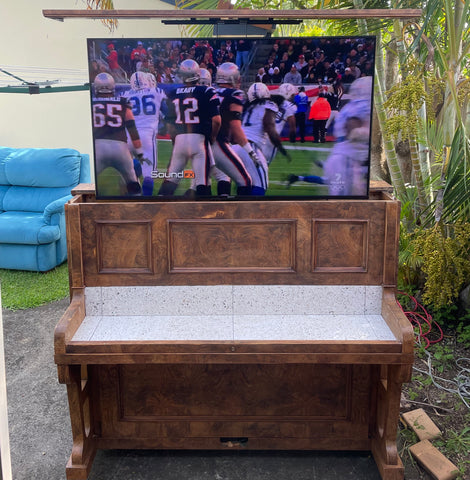
This detailed guide walks through the complete transformation of a $99 second-hand piano into a fully mobile, pop-up TV lift system. The result is a conversation-starting entertainment center that rolls anywhere outdoors, raises at the touch of a button, and solves the fundamental problems of outdoor TV viewing. Whether you're a DIY enthusiast looking for your next project or someone seeking creative alternatives to traditional TV installation, this build demonstrates how repurposed furniture and electric actuation systems can create something truly unique.
The Outdoor TV Challenge: Why Standard Solutions Fall Short
Outdoor television installation typically forces compromises. Wall-mounted TVs remain fixed in position while the sun moves throughout the day, creating glare problems at different times. Permanent structures near pools often violate local building codes or obstruct sight lines for swimming supervision. Shaded areas that work for TV viewing might not align with seating arrangements or activity spaces.
This particular project originated from three specific pain points: direct sunlight hitting outdoor areas at different angles throughout the day, making screen glare unavoidable; zero natural shade near the pool area, eliminating any permanent TV mounting locations; and a desire to occasionally move entertainment from the main patio to a distant garden shed converted into a man cave. The solution needed mobility, vertical adjustment to clear sightlines, and enough visual appeal to function as outdoor furniture when not in use.
The inspiration came from an unlikely source—those rolling AV carts that substitute teachers used to wheel into classrooms. But instead of an industrial metal cart, this project would disguise sophisticated motion control technology inside an elegant piece of repurposed furniture.
Step 1: Sourcing the Ideal Piano Housing
Finding the right enclosure proved more challenging than expected. Commercial TV lift cabinets designed for outdoor use typically run $800-$2,000 before even purchasing the lift mechanism. Custom cabinet makers quoted similar prices for basic outdoor-rated enclosures. Furniture stores offered decorative cabinets, but most were either too small to house a lift mechanism or constructed too lightly to support the weight and stress of repeated lifting cycles.
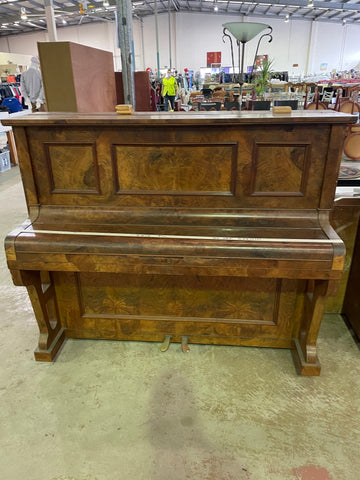
The breakthrough came at a local thrift store: a damaged upright piano for just $99. Pianos offer several advantages as TV lift housings that aren't immediately obvious:
- Substantial internal volume: The sound chamber designed for acoustic resonance creates a hollow interior large enough to accommodate lift mechanisms and electronics
- Robust construction: Piano frames are built to withstand tremendous string tension (often 20+ tons of cumulative force), providing excellent structural integrity
- Built-in aesthetics: The finished wooden exterior requires minimal modification to look intentional and decorative
- Natural height: Upright piano dimensions allow TVs to rise to comfortable viewing height while remaining concealed when retracted
- Wide availability: Broken or untunable pianos are common at thrift stores and estate sales since disposal is difficult
When selecting a piano for this type of conversion, examine the case exterior for structural soundness even if the internal mechanisms are damaged or missing. The wood should be solid hardwood rather than veneer over particle board, and the base should be wide enough to provide stable footing when wheels are added.
Step 2: Complete Piano Disassembly and Preparation
Piano disassembly is more labor-intensive than it appears. Modern upright pianos contain a cast iron harp (the frame holding the strings), hundreds of individual strings under high tension, the action mechanism with thousands of moving parts, hammers, dampers, and the soundboard. This particular project required several days of careful deconstruction.
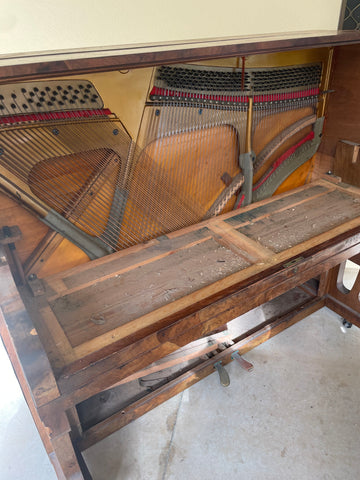
Safety considerations during disassembly include:
- String tension: Piano strings remain under significant tension even in damaged instruments. Release tension gradually and wear safety glasses
- Heavy components: The cast iron harp can weigh 150-300 pounds and requires careful removal with assistance
- Sharp edges: Cut wire ends and metal components create puncture hazards
- Dust and debris: Decades of accumulated dust inside pianos can aggravate respiratory issues—use appropriate dust masks
The disassembly process typically follows this sequence: remove the key cover and upper front panel, detach the action mechanism (the entire key and hammer assembly often removes as a single unit), cut and remove all strings after releasing tension, unbolt the cast iron harp from the wooden frame, remove the soundboard if desired, and extract any remaining brackets, pedal mechanisms, or hardware. Some bolts may be rusted or painted over, requiring penetrating oil or drilling out. The goal is reducing the piano to its outer wooden shell while maintaining structural integrity.
Step 3: Refinishing the Exterior and Building Interior Surfaces
With the piano reduced to a hollow shell, aesthetic and functional modifications transform it from musical instrument to entertainment furniture. This particular project required addressing the dark wood finish that clashed with the outdoor area's lighter decor scheme.
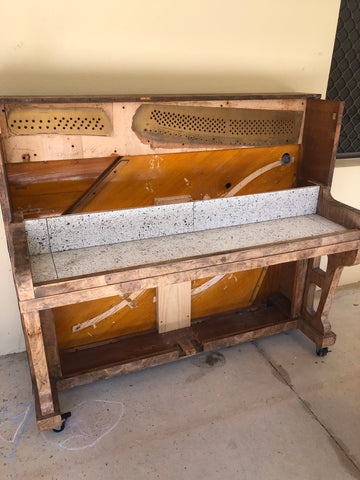
The refinishing process involved comprehensive sanding to remove the original dark finish and expose lighter wood tones underneath. Piano finishes are typically polyester or lacquer applied in multiple coats, requiring aggressive sanding with 80-grit paper initially, progressing through 120, 180, and 220-grit for smoothing. An orbital sander accelerates this process, though detailed areas around decorative molding require hand sanding.
After achieving the desired tone, applying a protective coating becomes essential for outdoor use. Exterior-grade polyurethane or spar varnish provides weather resistance while enhancing the wood's natural grain. Multiple thin coats with light sanding between applications create more durable finishes than single heavy coats.
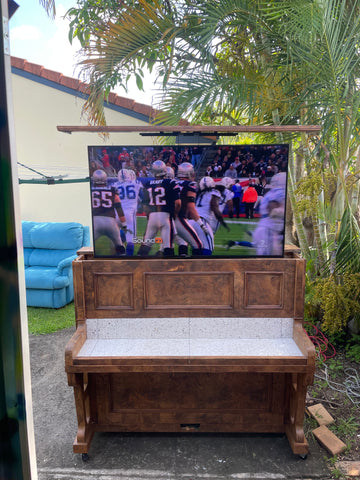
The keyboard area presented a unique opportunity—rather than boarding over this space, the project converted it into a functional shelf by installing floor tiles. This created a waterproof, level surface ideal for supporting Bluetooth speakers, beverages, or remote controls during outdoor viewing. The tiles were adhered using construction adhesive designed for wood substrates, with edges sealed against moisture infiltration.
Step 4: Installing the Electric TV Lift System
The core of this project centers on the FIRGELLI FA-TVL-180-30 TV lift mechanism, which provides 30 inches of vertical travel—sufficient stroke length to raise a television from complete concealment to comfortable viewing height. FIRGELLI offers this model in three configurations optimized for different TV sizes and weights, allowing builders to match lift capacity to their specific television.
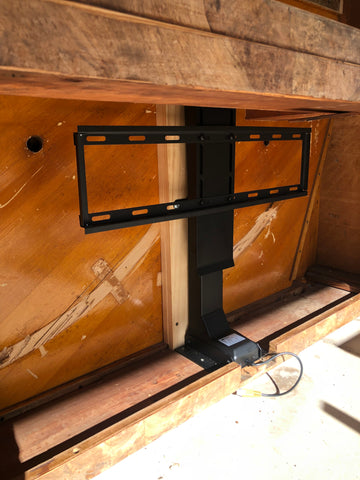
Critical installation considerations include:
- Positioning: The lift base was positioned several inches forward from the piano's rear wall to ensure the TV clears the back panel when fully raised. Measure television depth and add clearance for cables and connections
- Structural mounting: Wooden support blocks were installed inside the piano to create secure mounting points. The lift mechanism experiences significant lateral forces during operation, requiring solid attachment to the piano frame rather than just the bottom panel
- Leveling: The lift column must be perfectly vertical to prevent binding or uneven wear. Use a carpenter's level on multiple sides before final bolt-down
- Cable management: Plan wire routing for both the lift mechanism's power supply and TV power/signal cables before final installation
The TV lift includes a VESA-compatible mounting bracket that attaches to standard TV mounting holes on the back of most flat-screen televisions. This bracket then bolts to the lift's moving column. Proper weight distribution on this bracket ensures smooth operation and prevents strain on the lift mechanism. When selecting attachment points, reference your TV's specifications for proper VESA spacing and weight ratings.
Step 5: Engineering the Automated Piano Lid Mechanism
Simply installing a lift mechanism inside the piano creates one problem: the lid still needs to open before the TV can rise. While manually removing and replacing the lid works functionally, this project took a more elegant engineering approach by creating an automated lid-opening system using magnets and the lift's existing metal mounting plate.
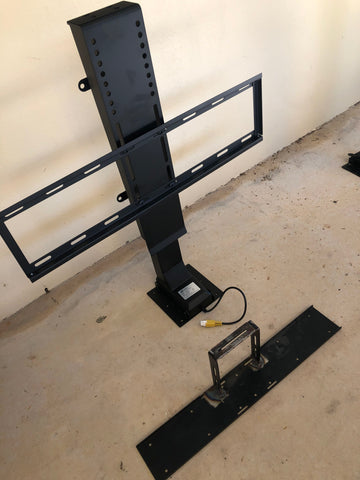
The mechanism works through these components: the top plate and mounting brackets from the TV lift kit were welded together to create a flat magnetic attachment surface, this assembly mounts to the top of the lift's moving column, and rare-earth magnets are attached to the underside of the piano lid in corresponding positions. When the lift activates and begins raising, the magnetic connection lifts the lid simultaneously with the TV until it clears the piano opening, at which point the continued upward travel of the column naturally breaks the magnetic hold and the lid hinges back to rest against the piano's back panel.
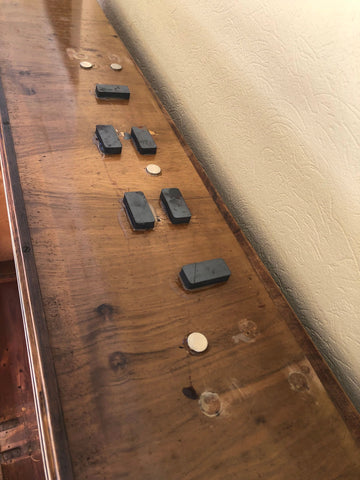
Magnet selection requires experimentation. The magnetic force must be strong enough to reliably lift the lid's weight but weak enough to release cleanly once the TV rises past the opening. Neodymium magnets rated between 30-50 pounds pull force typically work well, though the exact specification depends on lid weight and hinge friction. Starting with adjustable positioning (using adhesive putty rather than permanent glue) allows testing different magnet placements before final installation. The magnets should align precisely with the metal plate on the lift column to maximize holding force and ensure even lifting without twisting.
Step 6: Power Distribution and Cable Management
A mobile entertainment center requires accessible, flexible power connectivity. Rather than hardwiring to a specific outlet location, this build uses a pass-through approach that maintains mobility while ensuring clean cable routing.
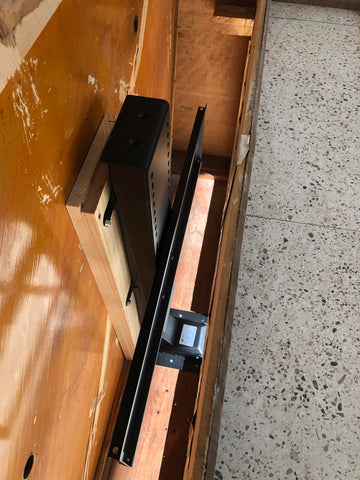
A hole drilled through the piano's rear panel accommodates a power cord that extends from inside the piano enclosure. This single connection point serves both the TV lift mechanism and the television itself. Inside the piano, a small power strip provides distribution for the lift's power supply, TV power, and any additional electronics like streaming devices or audio equipment.
The control box for the TV lift can be positioned inside the piano for protection or mounted externally for easier access to controls. Many users prefer integrating a remote control system that allows operation from a distance, particularly useful for outdoor entertainment where you might want to raise or lower the TV without approaching the cabinet.
Cable management best practices for this type of installation include using cable ties or velcro straps to secure wires along the inside of the piano frame, creating service loops that provide slack for the lift's vertical travel, labeling connections for easier troubleshooting, and protecting cables from sharp edges with foam padding or grommets. For outdoor installations, ensure all electrical connections use appropriately rated components and consider GFCI protection for safety near pools or wet areas.
Step 7: Adding Heavy-Duty Caster Wheels for Complete Mobility
The final transformation element converts this stationary furniture piece into a mobile entertainment station. Caster wheel selection significantly impacts both usability and safety, particularly given the combined weight of the piano case, lift mechanism, and television—easily exceeding 200 pounds total.
Appropriate casters for this application should feature:
- Weight capacity: Each caster should be rated for at least 100 pounds (400 pounds total for four wheels) to provide adequate safety margin
- Wheel diameter: Larger wheels (3-4 inches) roll more easily over outdoor surface transitions, cracks, and minor debris
- Locking mechanisms: At least two wheels should include locks to prevent unwanted movement during viewing
- Material: Polyurethane or rubber wheels prevent surface damage on decks and patios while providing smooth rolling
- Swivel capability: Four swivel casters maximize maneuverability in tight spaces
Installation requires removing the piano's existing legs or feet and attaching a caster plate or mounting directly to the piano's base frame. Ensure attachment points distribute weight across substantial structural members rather than just the bottom panel. Some builders add a reinforced plywood base plate inside the piano bottom to distribute caster mounting stress across a larger area.
Operating Your Piano TV Lift System
The completed system operates with remarkable simplicity despite its engineering sophistication. To deploy the TV, simply wheel the piano to the desired viewing location, connect the single power cord to any available outdoor outlet, activate the lift using the control button or remote, and watch as the magnetic lid mechanism automatically opens while the television rises to viewing height.
The FIRGELLI TV lift operates quietly and smoothly, raising a television from complete concealment to full extension in approximately 30-45 seconds depending on stroke length. Integrated limit switches prevent over-travel in either direction, protecting both the mechanism and your television. When viewing concludes, reversing the process retracts the TV and closes the lid automatically.
This mobility enables positioning the TV to avoid glare as sun angles change throughout the day, moving entertainment from pool area to patio to outdoor dining space, wheeling the unit to covered storage during inclement weather or off-season, and even relocating to a garden shed or garage for special events. The rolling capability that inspired the project proves invaluable in real-world use.
Technical Specifications and Design Considerations
Understanding the technical aspects of TV lift mechanisms helps optimize performance and longevity. The FA-TVL-180-30 model used in this build represents a mid-range option suitable for most residential outdoor entertainment applications. Key specifications include a 30-inch stroke length, adequate for raising TVs to comfortable viewing height from a concealed position, integrated limit switches for automatic stopping at full extension and retraction, and VESA mounting compatibility for most flat-screen TVs.
When selecting a lift for similar projects, consider total weight including the TV and mounting hardware, required travel distance from concealed to viewing position, available internal dimensions in your enclosure, and power requirements for your installation location. FIRGELLI's range of TV lifts includes options for various TV sizes and applications, from compact mechanisms for smaller displays to industrial-grade units for large outdoor screens.
The lift mechanism operates on standard household current through its included power supply, drawing minimal power during operation and virtually none when stationary. The DC motor design provides reliable performance across wide temperature ranges, important for outdoor installations that experience seasonal weather variations.
Beyond Pianos: Alternative Furniture Conversions
While this project demonstrates piano conversion specifically, the same principles apply to other furniture pieces with sufficient internal volume. Candidates for similar TV lift conversions include antique cabinets and armoires, custom-built outdoor furniture boxes, repurposed dressers or entertainment centers, decorative storage benches with hollow interiors, and even custom-fabricated enclosures designed to match outdoor decor.
The key requirements remain consistent: adequate internal dimensions to house the lift mechanism and retracted TV, structural integrity to support the combined weight and operational forces, mounting points for secure attachment of the lift base, and aesthetic appeal appropriate for the installation location. The motion control technology adapts readily to diverse enclosure types, limited only by spatial and structural constraints.
For builders considering custom enclosures rather than furniture conversion, designing around the lift mechanism's specifications from the beginning often yields cleaner results. FIRGELLI provides detailed dimensional drawings and specifications for all TV lift models, enabling precise enclosure design that optimizes both function and appearance.
Maintenance and Long-Term Performance
Electric linear motion systems like TV lifts require minimal maintenance but benefit from periodic inspection and care, especially in outdoor applications. Recommended maintenance includes periodic inspection of all mechanical fasteners, checking that the lift operates smoothly through its full range of travel without binding or unusual noise, verifying that magnetic lid connections remain secure and properly aligned, and protecting electrical connections from moisture intrusion.
For outdoor applications, consider covering the piano when not in use to protect both the furniture finish and internal electronics from weather exposure. Even when designed for outdoor environments, electronics benefit from protection against rain, direct sun exposure, and temperature extremes. A fitted outdoor furniture cover provides simple, effective protection.
The wood finish requires periodic reapplication of protective coatings, particularly in harsh sun or humid environments. Annual inspection and touch-up of exterior finishes prevents moisture damage and maintains aesthetic appeal. The interior space should remain clean and dry; periodic inspection helps identify any water intrusion or pest issues before they cause damage to electronics or lift mechanisms.
Project Cost Analysis and Value Comparison
This DIY approach delivers significant cost savings compared to commercial alternatives. Breaking down approximate costs: a used piano from thrift store or estate sale runs $50-200, the FIRGELLI FA-TVL-180-30 TV lift mechanism costs approximately $500-700 depending on configuration, heavy-duty caster wheels add $40-80, refinishing materials including sandpaper, stain, and protective coating total $50-100, power supplies and cable management components run $30-50, and magnets and mounting hardware add another $20-40.
The total project cost typically ranges from $700-1,200, compared to commercial outdoor TV lift cabinets that start around $1,500-2,000 for basic models and exceed $3,000-5,000 for high-end options. Beyond cost savings, the DIY approach creates a unique conversation piece with character and customization impossible to achieve with mass-produced furniture.
The investment also enhances outdoor living space functionality and entertainment value significantly beyond simple TV mounting solutions. The mobility, concealment, and aesthetic appeal add genuine value to the outdoor environment while solving practical problems that fixed installations cannot address.
Conclusion: Engineering Meets Creativity
This piano-to-TV-lift conversion demonstrates how creative problem-solving combines with proven motion control technology to create solutions perfectly tailored to specific needs. The project requires patience, basic fabrication skills, and careful planning, but the results deliver functionality and visual appeal far exceeding the sum of individual components.
The core lesson extends beyond this specific build: when standard solutions fall short, repurposing unexpected materials with quality engineered components opens possibilities limited only by imagination. An obsolete musical instrument transforms into sophisticated entertainment furniture, a mobility problem becomes an opportunity for creative flexibility, and a challenged outdoor space evolves into an entertainment destination.
Whether you follow this exact piano conversion or adapt the concept to different furniture and applications, the combination of FIRGELLI's electric motion control systems with creative enclosure design enables custom automation projects previously possible only through professional fabrication. The democratization of precision motion control technology empowers DIY builders to engineer solutions once requiring industrial expertise and budgets.
Frequently Asked Questions
What size TV can a piano TV lift accommodate?
The maximum TV size depends on both the internal dimensions of your piano and the lift mechanism capacity. Most upright pianos can accommodate TVs from 32 to 55 inches, though some larger pianos handle up to 65-inch displays. The FIRGELLI FA-TVL-180 series is available in three configurations optimized for different TV sizes and weights. Measure your piano's internal width and depth carefully, accounting for clearance around the TV during movement. The lift mechanism's weight capacity must exceed your TV's weight plus mounting hardware, typically ranging from 40 to 100+ pounds depending on screen size.
Can this piano TV lift be used outdoors permanently?
While this design works excellently for outdoor use, it's not designed for permanent outdoor exposure without protection. The wood finish and internal electronics benefit from covering when not in use, particularly during rain or extreme weather. The refinishing process using exterior-grade polyurethane or spar varnish provides water resistance for the wood, and ensuring all electrical connections are properly sealed protects against moisture intrusion. Many users position their piano TV lift on a covered patio or veranda where it's protected from direct rain while remaining in an outdoor entertainment area. For truly permanent outdoor installation, consider building or purchasing a weatherproof cabinet specifically designed for electronics rather than converting furniture.
How much power does a TV lift mechanism consume?
TV lift mechanisms are remarkably energy-efficient. During active raising or lowering, the FA-TVL-180 draws approximately 2-3 amps at 12V DC (converted from standard household AC by the included power supply), totaling around 25-40 watts during movement. Since the lifting cycle completes in 30-45 seconds, actual power consumption per operation is minimal. When stationary, the lift draws virtually no power—there's no motor load maintaining position since the mechanical design holds the column in place without continuous power. This makes TV lifts far more efficient than the television itself, which will consume significantly more power during actual viewing.
What skill level is required to build a piano TV lift?
This project suits intermediate to advanced DIY builders comfortable with power tools, basic carpentry, and simple electrical connections. The most challenging aspects include safely disassembling the piano without injury from heavy components or sharp edges, properly mounting and aligning the lift mechanism for smooth operation, engineering the magnetic lid mechanism with appropriate force and positioning, and refinishing wood to achieve professional-appearing results. No specialized skills like welding are absolutely required, though the original builder chose to weld the top plate assembly. Alternative attachment methods using bolts or strong adhesives can achieve similar results. If you've successfully completed furniture refinishing projects and basic home electrical work, you possess sufficient skills for this build. Allow several weekends to complete the project properly rather than rushing through critical steps.
Can I add remote control operation to my piano TV lift?
Absolutely. FIRGELLI offers various remote control options compatible with TV lift mechanisms, allowing wireless operation from across the room or outdoor space. Remote control proves particularly convenient for outdoor entertainment settings where you might want to raise or lower the TV without leaving your seating area. Options include simple two-button remotes (up/down), more sophisticated multi-channel remotes that can control multiple actuators or devices, and integration with smart home systems for voice control or automation. Adding remote control capability typically involves connecting the remote receiver to the lift's control box according to manufacturer instructions—a straightforward process requiring only basic wire connections. Some builders also integrate the TV lift controls with their TV's remote or smart home hub for unified control of the entire entertainment system.


