An electric linear actuator for seating is a self-contained motor-and-screw drive that converts DC current into the controlled push-pull motion used to recline backrests, extend footrests, position headrests, and drive massage rollers. The right actuator choice determines whether a chair feels premium and lasts a decade, or feels noisy and fails under load.
Electric reclining chairs, massage chairs, and premium seating systems have transformed comfort across industries
<<
The challenge is that not all actuators are created equal. A massage chair requires multiple actuators working in concert, each with different force, speed, and noise characteristics. An airline seat demands lightweight construction without sacrificing reliability. A home theater chair needs whisper-quiet operation and smooth, precise positioning. Understanding these nuanced requirements—and matching them to the right actuator technology—is essential for designers, manufacturers, and even DIY enthusiasts building custom seating solutions.
This comprehensive guide examines the critical factors for selecting actuators in seating applications, explores the specific requirements across different use cases, and provides practical recommendations based on decades of motion control engineering. Whether you're designing the next generation of massage chairs or upgrading a home theater setup, understanding actuator selection will ensure your seating system delivers the comfort, reliability, and performance users expect.
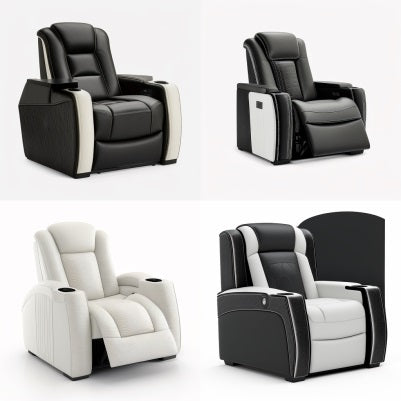
A spec sheet describes an actuator on a bench. A chair describes an actuator under load, through friction, at an angle, transmitting noise into a wooden frame. Size for the chair, not the bench.
"In a seating mechanism, the actuator never sees the user's weight in isolation. By the time you account for pivot friction, sliding losses, and the angle at full recline, the real working load is usually 20–30% above the static calculation. That's why we design at 60–70% of rated force — the chair has to feel smooth on cycle ten thousand, not just cycle one." — Robbie Dickson, Founder and Chief Engineer of FIRGELLI Automations
Why do actuators matter in seating applications?
Actuators are electromechanical devices that convert electrical energy into precise mechanical motion—either linear (straight-line) or rotary (circular). In seating applications, linear actuators dominate because they excel at the pushing and pulling motions required for reclining backrests, extending footrests, adjusting headrests, and positioning massage rollers.
The performance of an actuator directly impacts user experience. A high-quality actuator provides smooth, controlled motion that feels natural and comfortable. It operates quietly enough not to disturb a movie or conversation. It responds instantly to control inputs without jerking or hesitation. And critically, it continues performing reliably through thousands of adjustment cycles over years of use.
Poor actuator selection, by contrast, results in noisy operation that breaks immersion, jerky motion that feels mechanical and uncomfortable, slow response times that frustrate users, and premature failure that requires expensive service calls. In commercial applications like airline seating or spa equipment, these issues directly impact customer satisfaction and brand reputation.
What does a home theater chair actuator need to do?
Home theater seating represents one of the most demanding actuator applications in residential settings. These chairs typically incorporate multiple adjustment points—backrest recline, footrest extension, headrest positioning, and sometimes lumbar support—all requiring coordinated actuator motion. The goal is creating an immersive entertainment experience, which means actuators must be virtually silent during operation.
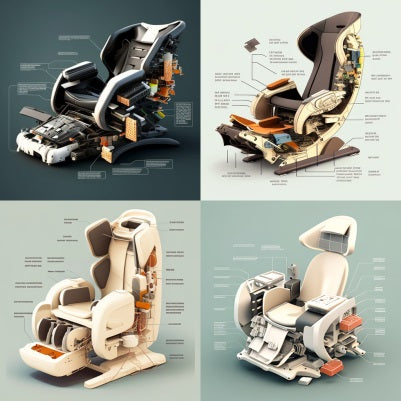
Noise Considerations for Theater Environments
Noise is the primary concern in home theater applications. During quiet dialogue scenes or dramatic pauses, even a moderately loud actuator (50-55 dB) becomes distractingly audible. Premium theater chairs require actuators operating at 45 dB or lower—roughly equivalent to a quiet library. This necessitates specific drive mechanisms like worm gear drives, helical gearing, or planetary gearbox systems that minimize mechanical noise.
DC linear actuators with these specialized drive systems offer the best noise performance. Traditional lead screw actuators, while affordable, typically generate more audible mechanical noise from the screw-nut interface. For ultra-quiet operation, ball screw actuators provide smoother motion but at a higher cost point.
Force and Speed Requirements
Home theater chairs typically require actuators with force ratings between 100-300 pounds, depending on the chair's weight and the user's size. The backrest actuator handles the highest loads, as it must support and move the user's torso weight against gravity during recline. Footrest actuators generally require less force, typically in the 50-150 pound range.
Speed is a balancing act. Too slow, and adjustments feel sluggish and frustrating. Too fast, and motion feels abrupt and uncomfortable. Optimal actuator speeds for theater seating fall between 0.5-1.5 inches per second. This provides responsive adjustment without feeling rushed, allowing users to find their preferred position smoothly.
Control and Positioning Accuracy
Modern theater chairs often include memory positioning—allowing users to save and recall preferred seating positions. This requires feedback actuators equipped with built-in potentiometers or Hall effect sensors that report precise position data to the control system. These feedback mechanisms enable repeatable positioning accurate to within a few millimeters.
Control interfaces typically include handheld remote controls with intuitive button layouts, sometimes supplemented by smartphone apps for advanced features. The actuator's control system must integrate seamlessly with these interfaces, responding immediately to commands without noticeable lag.
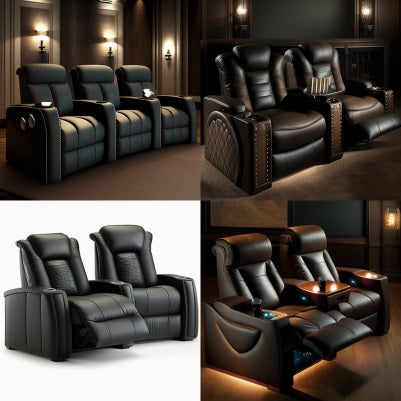
How do massage chair actuator systems work?
Massage chairs represent perhaps the most complex actuator application in consumer seating. A typical massage chair incorporates 6-12 separate motors and actuators, each controlling different massage functions or positional adjustments. This multi-actuator orchestration requires careful engineering to ensure all components work together harmoniously.

Types of Actuators in Massage Chairs
Massage chairs use several distinct actuator types, each optimized for specific functions:
- Reclining actuators: Large-stroke linear actuators (typically 8-16 inch stroke) that adjust the backrest angle and footrest position. These require high force ratings (200-400 pounds) to smoothly move the chair through its full range of motion while supporting the user's weight.
- Massage roller actuators: Smaller, more precise actuators (2-6 inch stroke) that position massage rollers along the user's back. These often use DC motors with gearboxes for rotational control, combined with linear actuators for vertical and horizontal positioning.
- Pneumatic actuators for airbags: Massage chairs extensively use inflatable airbags for compression massage in the arms, legs, and shoulders. These are controlled by pneumatic actuators—solenoid valves that regulate airflow from a small internal compressor. While not electric linear actuators, they're critical components of the massage system.
- Leg extension actuators: Dedicated actuators that extend the ottoman or leg rest independently from the main recline mechanism, allowing users to adjust leg support separately.
- Headrest and lumbar actuators: Smaller, low-profile actuators that provide fine adjustments to headrest angle and lumbar support depth, helping users dial in perfect positioning.
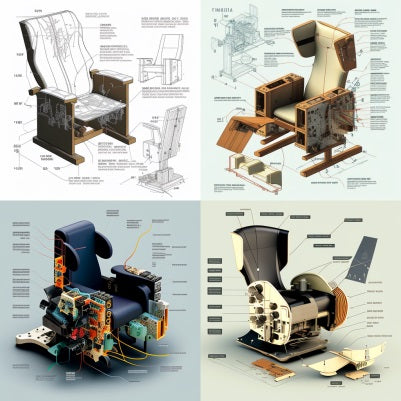
Coordination and Control Complexity
The complexity of massage chair control systems cannot be understated. A pre-programmed massage sequence might involve simultaneous operation of the recline actuators, coordinated movement of multiple massage rollers following the spine's contours, sequential inflation and deflation of airbags in specific patterns, and continuous adjustment of speed and intensity based on user feedback.
This requires sophisticated control systems with microprocessors capable of managing multiple actuator channels independently. Modern massage chairs often use CANbus or similar communication protocols to coordinate actuator movements, ensuring smooth, natural-feeling massage patterns rather than robotic, mechanical motion.
Durability for High-Cycle Applications
Commercial massage chairs in spas, salons, or shopping mall kiosks may operate dozens of times daily, accumulating hundreds of thousands of actuation cycles over their service life. This demands industrial-grade actuators with robust construction, sealed mechanisms protected against dust and moisture infiltration (IP54 rating minimum), and high-quality internal components rated for extended duty cycles.
Residential massage chairs face less demanding duty cycles but still require reliability. Users expect their massage chair to function flawlessly for 5-10 years or more. This means actuators must use quality bearings, properly lubricated drive mechanisms, and motors designed for intermittent operation without overheating.

What makes aircraft first-class seat actuators different?
Premium airline seating represents the most stringent actuator application, where weight, reliability, and safety considerations intersect with luxury comfort expectations. Every component in an aircraft faces rigorous certification requirements, and actuators are no exception.

Weight Constraints and Material Selection
In aviation, every ounce matters. Airlines and aircraft manufacturers obsessively track component weight because it directly affects fuel efficiency and operating costs. Actuators for aircraft seating must minimize weight while maintaining the strength and reliability required for thousands of flight cycles.
This drives material choices toward lightweight aluminum alloys and engineered plastics rather than heavier steel construction. The internal drive mechanism must be compact and efficient, eliminating any unnecessary mass. Even wiring and connectors are specified for minimum gauge consistent with safety and current-carrying requirements.
Despite these weight constraints, actuators cannot compromise on strength. They must handle the full rated load through turbulence, hard landings, and other dynamic conditions. This requires careful engineering and extensive testing to optimize the strength-to-weight ratio.
Power Efficiency and Electrical Considerations
Aircraft operate on 28V DC electrical systems (or 115V AC in larger aircraft), and available power is carefully budgeted. Seat actuators must operate efficiently within these constraints, drawing minimal current during normal operation. Low standby power consumption is equally important—with dozens of premium seats on a widebody aircraft, even small parasitic loads add up.
Actuators must also meet stringent electromagnetic interference (EMI) and radio frequency interference (RFI) requirements. They cannot generate electrical noise that might interfere with avionics, navigation systems, or communication equipment. This necessitates proper shielding, filtering, and sometimes specialized motor brush materials.
Safety and Certification Requirements
Aircraft seat actuators must incorporate multiple safety features and meet aviation certification standards. Critical requirements include:
- Fail-safe operation: If power is lost or the actuator fails, the seat must not create a hazard. This often means incorporating mechanical locking mechanisms that prevent unintended movement.
- Overload protection: Actuators must automatically shut down if they encounter excessive resistance, preventing damage to the mechanism or injury to passengers.
- Fire resistance: All materials must meet aviation flammability standards, using flame-retardant plastics and wire insulation.
- Smoke and toxicity: In the event of electrical failure or fire, materials must not produce toxic fumes that could incapacitate passengers or crew.
- Emergency egress: Seats must be manually moveable in emergency situations, requiring bypass mechanisms that allow manual override of the actuator.
For aircraft applications, FIRGELLI's Utility Actuator series offers an excellent balance of light weight, quiet operation, and built-in feedback for position control—all critical features for premium cabin seating.
What do marine seating actuators have to survive?
Boat and yacht seating presents unique environmental challenges for actuators. Marine environments combine motion, moisture, salt exposure, and temperature variations that can quickly degrade electrical and mechanical systems not designed for these conditions.
Environmental Protection and IP Ratings
Marine actuators require high Ingress Protection (IP) ratings to withstand the harsh conditions. At minimum, IP65 rating (dust-tight and protected against water jets) is necessary for most marine applications. For actuators in exposed locations subject to wash-down or waves, IP66 or IP67 ratings provide additional protection.
The IP rating addresses solid particle ingress and water penetration, but marine environments also demand materials that resist corrosion. Stainless steel fasteners and hardware, anodized aluminum housings, and marine-grade wire insulation are essential for long-term reliability. Even internal components benefit from conformal coatings that provide an additional barrier against moisture and salt.
Vibration and Shock Resistance
Boats operate in continuous motion—rolling, pitching, and experiencing constant vibration from engines and wave impacts. Actuators must maintain proper function through this dynamic environment. This requires robust mechanical design with secure mounting, properly retained bearings and bushings, and vibration-resistant electrical connections.
Shock loads from wave impacts or hard docking can exceed normal operating forces. Actuators need adequate mechanical strength and shock-absorbing design features to handle these transient loads without damage.
Swivel and Rotation Functionality
Marine seating often incorporates swivel bases that allow the seat to rotate—particularly useful for helm seats, fishing chairs, and observation seating. While the recline and positioning functions use linear actuators, the swivel function typically employs rotary actuators or electric motors with gear reduction to provide smooth, controlled rotation.
Integrating linear and rotary actuation in a single seat requires careful coordination. The control system must prevent conflicting movements and ensure user safety—for example, preventing recline operation when the seat is mid-rotation.
How do you select the right actuator for a seating application?
Selecting the optimal actuator for a seating application requires evaluating multiple technical parameters. Understanding these specifications and how they interact is essential for successful system design.

Force Capacity and Load Calculations
Force rating is the most fundamental actuator specification—it defines the maximum push or pull force the actuator can exert. For seating applications, calculating required force involves several factors:
- User weight: The actuator must support the maximum anticipated user weight, typically designed for 250-300 pounds in consumer applications or higher for commercial/industrial seating.
- Mechanical advantage: The mounting geometry creates leverage that affects the force seen by the actuator. A backrest that mounts the actuator near the pivot point experiences higher forces than one with a longer moment arm.
- Angle and gravity effects: As the seat reclines, the vertical component of the user's weight changes, affecting the force required. The actuator must handle the worst-case angle, typically when the backrest is horizontal.
- Friction and mechanical losses: Chair mechanisms have inherent friction from pivots, bearings, and sliding surfaces. Add 20-30% to calculated forces to account for these losses.
- Safety factor: Never operate an actuator at its maximum rated force continuously. Design for 60-70% of rated capacity to ensure longevity and reliable operation.
For a typical home theater chair, backrest actuators in the 200-300 pound force range handle most applications comfortably. Massage chairs with more complex mechanisms may require 300-500 pound actuators for the main recline function.
Stroke Length and Range of Motion
Stroke length defines how far the actuator can extend and retract. Too short, and the seat cannot achieve its full range of motion. Too long, and you're paying for capacity you don't use while adding unnecessary size and weight to the system.
Calculating required stroke involves the chair's geometry. A backrest that reclines from 90 degrees upright to 160 degrees reclined might require 8-12 inches of actuator stroke, depending on where the actuator mounts relative to the pivot point. Always verify stroke requirements through physical measurement or CAD modeling—geometric calculations can be tricky with complex linkages.
Remember that the actuator's stroke is measured from fully retracted to fully extended. Some of this stroke may be consumed by the mounting geometry, so verify that the usable stroke achieves the required seat motion.
Speed Specifications
Actuator speed is typically specified as inches per second at no load. Real-world speeds under load will be somewhat slower. For seating applications, speeds between 0.4-1.5 inches per second work well for most functions:
- Recline and major positioning: 0.5-1.0 in/sec provides smooth, comfortable adjustment without feeling rushed
- Fine adjustments (headrest, lumbar): 0.3-0.6 in/sec allows precise positioning control
- Lift/assist functions: 0.8-1.5 in/sec provides responsive assistance for users with mobility limitations
Faster speeds risk jerky motion and reduce position control precision. Slower speeds frustrate users waiting for adjustments to complete. Some applications benefit from variable speed control, moving faster through mid-range positions and slowing near endpoints for precise final positioning.
Noise Level Specifications
Actuator noise is measured in decibels (dB) at a specified distance, typically one meter. Context matters for interpreting noise levels:
- 40-45 dB: Library-quiet; suitable for home theater and high-end applications
- 45-50 dB: Quiet office environment; acceptable for most residential applications
- 50-55 dB: Moderate office; acceptable for commercial massage chairs or public seating
- 55+ dB: Noticeably audible; generally too loud for premium seating applications
Noise characteristics matter as much as overall level. A high-pitched whine is more objectionable than a low-frequency hum at the same decibel level. The best way to evaluate noise is testing actuators in their actual mounting configuration, as the chair structure can amplify or dampen certain frequencies.
Duty Cycle and Thermal Management
Duty cycle defines how long an actuator can operate continuously before requiring cooling. It's typically expressed as a percentage over a given time period—for example, "25% duty cycle over 10 minutes" means the actuator can operate for 2.5 minutes, then must rest for 7.5 minutes.
Most seating applications operate well within typical actuator duty cycles. A seat adjustment takes 20-30 seconds, then the actuator sits idle. Even massage chairs, with more continuous operation, typically run individual actuators intermittently rather than continuously.
Problems arise when actuators are forced to operate continuously beyond their duty cycle rating. The motor overheats, internal lubrication breaks down, and component life dramatically decreases. For applications requiring extended continuous operation, specify actuators with higher duty cycle ratings or built-in thermal protection that automatically shuts down the motor if it overheats.
Environmental Protection Ratings
The IP (Ingress Protection) rating, defined by international standard IEC 60529, specifies how well an actuator is sealed against dust and moisture. The rating consists of two digits:
- First digit (dust): Ranges from 0 (no protection) to 6 (dust-tight)
- Second digit (moisture): Ranges from 0 (no protection) to 9 (high-pressure/high-temperature water jets)
For indoor seating applications (home theater, residential massage chairs), IP42 or higher provides adequate protection against accidental contact and light moisture. Commercial environments benefit from IP54 (protected against dust and splashing water) for easier cleaning and maintenance.
Marine applications demand IP65 or higher—dust-tight and protected against water jets from any direction. This ensures reliable operation in spray and occasional submersion scenarios.
Which FIRGELLI actuators are best for seating applications?
Seating actuator selection reference table
| Application | Force | Stroke | Speed | Noise Target | IP Rating |
|---|---|---|---|---|---|
| Home theater recline | 100–300 lb | 8–12 in | 0.5–1.0 in/sec | ≤45 dB | IP42 |
| Home theater footrest | 50–150 lb | 4–8 in | 0.5–1.0 in/sec | ≤45 dB | IP42 |
| Headrest / lumbar | 50–100 lb | 2–4 in | 0.3–0.6 in/sec | ≤43 dB | IP42 |
| Massage chair recline | 200–400 lb | 8–16 in | 0.5–1.0 in/sec | ≤50 dB | IP42–IP54 |
| Commercial massage | 300–500 lb | 8–16 in | 0.5–1.0 in/sec | ≤55 dB | IP54+ |
| Aircraft first class | 150–330 lb | 2–12 in | 0.5–1.0 in/sec | ≤45 dB | IP42 |
| Marine seating | 200–400 lb | varies | 0.5–1.0 in/sec | ≤55 dB | IP65+ |
FIRGELLI Automations manufactures several actuator lines specifically suited to seating applications, each optimized for different requirements and priorities.

Utility Actuator Series
The Utility Actuator represents an excellent balance of quiet operation, feedback capability, and light weight construction. Key specifications make it ideal for home theater and aircraft seating:
- Force range: 150-330 pounds depending on model
- Stroke options: 2-16 inches available
- Noise level: 45 dB typical—quiet enough for home theater use
- Built-in feedback: Optional position feedback for memory positioning features
- Lightweight design: Aluminum construction minimizes weight for weight-sensitive applications
- Multiple voltage options: 12V and 24V DC versions available
The feedback option is particularly valuable for premium seating with memory positioning. Users can save preferred positions, and the control system automatically moves all actuators to recreate that exact configuration with the press of a button.

Silent Series Actuators
For applications where noise is the absolute top priority, the Silent Series actuators represent FIRGELLI's quietest offering. These use specialized helical drive mechanisms that minimize the mechanical noise typical of screw-driven actuators.
- Extremely low noise: 40-43 dB typical—virtually silent operation
- Compact form factor: Smaller profile than comparable-force actuators
- Smooth operation: Helical drive provides exceptionally smooth motion free of vibration
- Moderate force capacity: Best suited for lighter-duty applications (headrests, lumbar adjustment, light recline)
The Silent Series excels in ultra-premium home theater installations where even the slightest actuator noise would be unacceptable. They're also excellent choices for headrest and lumbar positioning where forces are lower and quiet operation is paramount.
Deluxe Rod Actuators
The Deluxe Rod series uses a worm gear drive system that combines quiet operation with higher force capacity. This makes them versatile choices for main recline functions in home theater and massage chair applications.
- High force capacity: Up to 500 pounds available
- Quiet operation: Worm gear drive provides low noise levels around 48 dB
- Good duty cycle: Suitable for commercial applications with frequent operation
- Robust construction: Designed for reliability through many thousands of cycles
The combination of high force and relatively quiet operation makes Deluxe Rod actuators excellent choices for main recline mechanisms where significant force is needed but noise must remain controlled.
Industrial Actuator Options
For commercial massage chairs, public seating, or other heavy-duty applications, FIRGELLI's industrial actuator line provides enhanced durability and environmental protection:
- Heavy-duty construction: Steel and hardened aluminum components for extended service life
- Higher IP ratings: IP65 and IP66 options for challenging environments
- Extended duty cycles: Designed for continuous operation in commercial settings
- Higher force ratings: Models up to 1000+ pounds available for specialized applications
How should you control and integrate seating actuators?
Even the best actuators require proper control systems to function effectively in seating applications. The control architecture significantly impacts user experience, reliability, and system capability.
Basic Control Systems
Simple seating applications can use straightforward DPDT (Double-Pole, Double-Throw) switch control. A rocker switch reverses polarity to the actuator, causing extension or retraction. This works well for single-actuator applications like simple footrest extension or backrest recline.
For multiple actuators, a control box coordinates operation. Basic control boxes include multiple relay-switched channels, each controlling one actuator. A handheld remote or control panel sends signals to the control box, which activates the appropriate actuator channels.
Advanced Control with Position Feedback
Premium seating systems use feedback actuators with integrated position sensors. The control system reads each actuator's position in real-time, enabling sophisticated features:
- Memory positioning: Store multiple user profiles with precise actuator positions for instant recall
- Synchronized movement: Multiple actuators move in coordination, maintaining specific relationships between positions
- Soft start/stop: Gradually ramp speed at movement beginning and end for smoother, more comfortable motion
- Collision avoidance: Prevent actuators from driving into mechanical limits or conflicting positions
- Wear monitoring: Track total actuator movement over time for predictive maintenance
Feedback-based control requires more sophisticated electronics, often using microcontrollers or programmable logic controllers (PLCs). For Arduino enthusiasts and makers, FIRGELLI offers Arduino-compatible control boards and sample code that simplify implementation of feedback-based control systems.
Power Supply Considerations
Most linear actuators for seating operate on 12V or 24V DC power. The power supply must provide adequate current to handle the actuator's peak draw, which occurs under maximum load. Typical current requirements range from 3-8 amps per actuator, depending on force rating and speed.
For systems with multiple actuators, calculate total current draw assuming worst-case scenarios (multiple actuators operating simultaneously under load). Add 20-30% margin for safety and to prevent voltage sag under heavy loads. Insufficient power supply capacity results in slow actuator operation, overheating, and premature component failure.
Safety Features and Emergency Stops
Professional seating installations should include safety features:
- Emergency stop: A clearly marked button that immediately halts all actuator motion
- Obstruction detection: Current-sensing or pressure-sensitive systems that stop movement if an actuator encounters unexpected resistance
- Position limits: Software or hardware limits preventing actuators from over-travel into mechanical end stops, which protects both the actuator and the user.
What usually goes wrong with seating actuators?
Most seating actuator failures trace to a small set of predictable causes. The following are the failure modes we see most often in returned units and field reports:
- Sized to spec, not to load. Actuators picked at their rated force run hot, slow under load, and wear out early. Design at 60–70% of rated capacity so the actuator has headroom.
- Duty cycle ignored. A 25% duty cycle actuator forced into continuous operation overheats; internal lubrication breaks down and motor life drops sharply.
- Friction underestimated. Pivots, bushings, and sliding linkages add 20–30% to the required force. Skipping this margin produces sluggish recline and stalled mid-stroke behaviour.
- Power supply undersized. Insufficient supply current causes voltage sag, slow operation, and overheating across every actuator on the bus.
- Wrong IP rating for the environment. Indoor-rated (IP42) actuators in marine spray fail from salt corrosion within months. Marine installations need IP65 or better as a minimum.
- Noise measured on the bench, not in the chair. The chair frame can amplify a 45 dB actuator into a 55 dB experience. The actuator must be evaluated in the actual mount.
How should you test a seating actuator before trusting it in production?
A bench test proves the actuator works in isolation. It does not prove the actuator will work in the chair. Use the following test protocol before committing a design to production:
- Test under real load, not bench load. Mount the actuator in the actual chair structure with maximum expected user weight (typically 250–300 lb). A bench test will not reveal mounting-induced friction or noise.
- Verify the worst-case angle. Run recline through the angle where the user's weight vector loads the actuator hardest — usually full recline near horizontal. Confirm the actuator moves without stalling or current spikes.
- Measure noise in the chair, not in air. The chair frame transmits and amplifies vibration. A 45 dB bench measurement can become 52 dB in a wood-frame theater chair.
- Run the duty cycle you'll actually use. For commercial massage chairs, run continuous cycles at expected daily volume for several hours and verify motor case temperature stabilizes within rated limits.
- Cycle to representative life. A prototype that works once proves the idea. Run several thousand full-stroke cycles under load before committing to production tooling.
About the author
Robbie Dickson is the Founder and Chief Engineer of FIRGELLI Automations. Before founding FIRGELLI in 2002, he held engineering roles at Rolls-Royce, BMW, Isuzu, and Ford. More background: Wikipedia.


