The modern home is undergoing a quiet revolution. Furniture is no longer static—it moves, adapts, and responds to our needs with a sophistication that would have seemed like science fiction just decades ago. Behind this transformation lies a technology that's as powerful as it is subtle: the electric linear actuator. These precision-engineered devices are fundamentally changing how we interact with our living spaces, bringing ergonomic support, space optimization, and accessibility to furniture design in ways that mechanical levers and manual adjustments never could.
From adjustable beds that find your perfect sleep position to standing desks that combat the health risks of prolonged sitting, actuators are the invisible force enabling furniture to adapt to human needs rather than forcing humans to adapt to furniture. Whether you're a furniture designer seeking to incorporate motion control into your next product, a mechanical engineer evaluating actuation solutions, or a DIY enthusiast building custom furniture, understanding how actuators work in furniture applications opens up a world of possibilities. This comprehensive guide explores the diverse applications, technical considerations, and design principles that make actuators the cornerstone of modern functional furniture.
How Actuators Transform Adjustable Furniture
Adjustable furniture represents one of the most widespread applications of linear actuators in the home environment. The ability to modify furniture position, angle, or height on demand addresses both comfort and health concerns that static furniture simply cannot solve. Unlike traditional mechanical adjustment systems that rely on gas springs, manual cranks, or lever mechanisms, electric actuators provide precise, repeatable positioning with minimal user effort.
The engineering advantage of actuators in adjustable furniture lies in their control precision and force consistency. A quality linear actuator can position furniture to within millimeters of a target position and maintain that position under load without drift or settling. This level of precision is particularly important in ergonomic applications where small adjustments can make significant differences in user comfort and health outcomes.
Electric Recliners and Lift Chairs
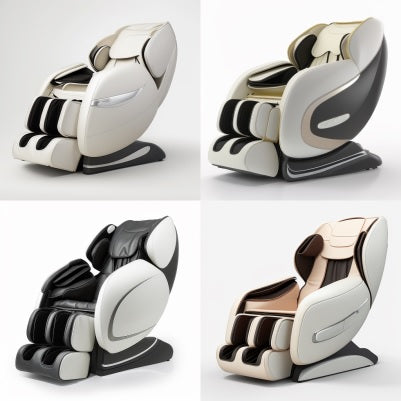
Modern recliners have evolved far beyond the manual lever-operated chairs of previous generations. Today's electric recliners typically incorporate two or more actuators to independently control backrest angle, footrest position, and overall chair tilt. High-end models may use three actuators to provide lumbar support adjustment, creating a chair that can adapt to virtually any body type and sitting preference.
The actuators used in recliners typically operate in the 200-500 pound force range, sufficient to move the chair mechanisms smoothly while carrying a seated person. Stroke lengths vary from 4 to 12 inches depending on the range of motion required. Modern designs prioritize quiet operation—quality actuators produce less than 50 decibels during movement, quieter than normal conversation, ensuring that adjustments don't disrupt the relaxation experience.
Lift chairs represent a specialized category where actuators serve an assistive function. These chairs use actuators to tilt the entire seating platform forward and upward, helping individuals with mobility challenges transition from sitting to standing. The lift mechanism requires careful engineering to ensure smooth, controlled motion throughout the full range of travel, with particular attention to speed control and safety stops.
Adjustable Beds for Optimal Sleep Positioning
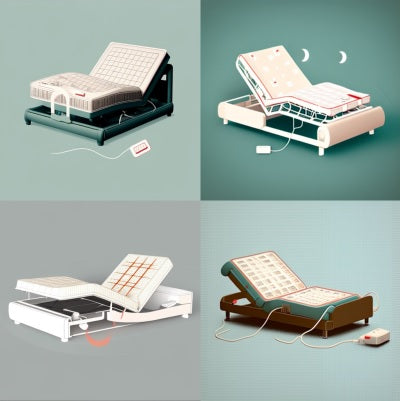
Adjustable beds have transitioned from medical equipment to mainstream bedroom furniture, driven largely by improvements in actuator technology. A typical adjustable bed base uses two to four actuators to control head and foot elevation independently. Premium models may include additional actuators for lumbar support or massage functions, creating a highly personalized sleep environment.
The critical specification for bed actuators is quiet operation. Sleep disruption from mechanical noise is unacceptable, which is why quality adjustable bed actuators incorporate noise-dampening features such as precision gear trains, optimized motor mounting, and vibration isolation. The best units operate at near-silent levels, typically under 45 decibels even when moving under full load.
Synchronization is another key consideration in adjustable bed design. When multiple actuators must move in coordination—such as raising both sides of a split king bed simultaneously—proper control systems ensure smooth, synchronized motion without binding or uneven positioning. This typically requires either individual feedback actuators that report their position to a central controller, or carefully matched actuators controlled by a synchronized control box.
Standing Desks and Height-Adjustable Workstations

The health risks of prolonged sitting have made height-adjustable desks a standard feature in ergonomic office design. Standing desks typically use either a single-column or dual-column lifting mechanism, with each column containing one or two actuators. The engineering challenge lies in lifting substantial weight—a desktop with monitors and equipment can easily exceed 100 pounds—while maintaining stability and preventing wobble at extended heights.
Standing desk actuators typically provide 18-24 inches of stroke length to accommodate the full range from standard sitting height (around 28 inches) to standing height (typically 42-48 inches for most users). Force requirements are significant, usually 300-500 pounds per actuator to provide adequate lifting capacity with a safety margin. Duty cycle is another critical specification—a standing desk may be adjusted multiple times per day over years of use, requiring actuators designed for frequent operation rather than occasional adjustment.
Modern standing desk systems often incorporate memory positioning, allowing users to save preferred sitting and standing heights for instant recall. This requires feedback actuators that can report their exact position to the control system, enabling precise repeatability. Some advanced systems even incorporate programmable height reminders, encouraging users to alternate between sitting and standing throughout the workday.
Actuators in Smart Furniture Systems
The integration of home automation technology with furniture design has created a new category: smart furniture. These pieces go beyond simple motorized adjustment to incorporate sensors, wireless connectivity, and intelligent control algorithms. Actuators serve as the physical interface between digital control systems and mechanical movement, translating software commands into real-world positioning.
Smart furniture systems often incorporate multiple actuators working in coordination, controlled by microprocessor-based systems that can respond to user inputs, environmental conditions, or programmed schedules. This level of integration requires careful attention to control system design, power distribution, and fail-safe mechanisms to ensure reliable operation.
Automated Recliners with Memory Positioning
High-end automated recliners represent the convergence of comfort and technology. These chairs use position feedback to remember user preferences, automatically adjusting to saved positions with a single button press. The system typically stores multiple user profiles, making it ideal for furniture used by multiple family members with different preferences.
The technical implementation requires feedback actuators that continuously report their position to a central controller. When a user selects a saved position, the controller commands each actuator to move to its stored target position, coordinating the movements to achieve smooth, synchronized adjustment. This level of sophistication requires careful control system design and quality actuators with accurate, reliable feedback mechanisms.
Expandable Tables and Hidden Mechanisms
Expandable dining tables that grow to accommodate guests represent an elegant application of actuator technology. Traditional extension tables require manual effort to pull apart sections and insert leaves—a process that can be awkward and physically demanding. Actuator-driven tables automate this process, with the table expanding or contracting at the touch of a button.
The engineering challenge lies in maintaining table stability while incorporating moving mechanisms. The actuator system must smoothly separate table halves, often against significant friction from sliding mechanisms, while keeping the table surface level and wobble-free. This typically requires precise alignment of guide rails or slide rails, along with actuators capable of pushing substantial lateral loads.
Stroke length requirements for expandable tables vary based on design, but typically range from 12 to 24 inches to accommodate standard table leaf sizes. Force requirements are moderate—usually 100-300 pounds—but the actuator must maintain force throughout the stroke to overcome friction in the sliding mechanism.
Smart Cabinets and Storage Solutions

Modern cabinetry increasingly incorporates motorized mechanisms for doors, drawers, and hidden compartments. Actuators enable soft-close functionality, touch-to-open mechanisms, and even hidden compartments that reveal themselves only when activated. These applications typically use smaller actuators—often micro linear actuators or specialized drawer slides with integrated motors.
Touch-to-open cabinet doors represent a particularly sophisticated application. When a sensor detects a touch, the control system activates an actuator to push the door open slightly, allowing it to swing freely. This requires precise force control—too much force and the door flies open violently; too little and it may not overcome the door's friction. Modern implementations use PWM (pulse-width modulation) control to finely regulate actuator speed and force.
Selecting Actuators for Furniture Applications
Choosing the right actuator for a furniture application requires careful consideration of multiple technical specifications. The wrong choice can result in inadequate performance, premature failure, or safety issues. Understanding the key specifications and how they relate to furniture requirements is essential for successful implementation.
Force Requirements and Safety Margins
Force rating is the most fundamental specification for any actuator. This represents the maximum load the actuator can push or pull throughout its stroke. For furniture applications, you must calculate not just the weight being moved, but also account for friction in mechanisms, binding from misalignment, and dynamic loads during movement.
As a general guideline, specify actuators with force ratings 50-100% above your calculated maximum load. This safety margin accounts for manufacturing variations, mechanism friction, and provides headroom for reliable operation over the product's lifetime. For example, if calculations show a maximum load of 200 pounds, specify an actuator rated for at least 300 pounds of force.
Force requirements vary dramatically across furniture types. A micro actuator with 20-50 pounds of force might be sufficient for a cabinet door or small drawer, while a standing desk requires industrial actuators capable of 400 pounds or more per column. Heavy-duty applications like fold-down beds or lifting large TV panels may require actuators with 1000+ pounds of force capacity.
Stroke Length and Positioning Requirements
Stroke length defines the total distance an actuator can extend from fully retracted to fully extended. This must be carefully matched to the furniture's range of motion requirements. An actuator with insufficient stroke cannot achieve the full range of adjustment, while excessive stroke wastes space and adds unnecessary cost.
For adjustable furniture, stroke length typically ranges from 4 inches for small adjustments (like recliner lumbar support) to 24 inches or more for standing desks or fold-down beds. When specifying stroke length, account for the mechanical advantage or disadvantage in your linkage. For example, if your actuator is mounted at an angle or operates through a lever system, the actual furniture movement may be more or less than the actuator stroke.
Positioning accuracy becomes critical in applications with memory functions or specific height requirements. Standard actuators position within approximately ±0.5 inches of their target, sufficient for most furniture applications. However, applications requiring higher precision may need feedback actuators with closed-loop control, capable of positioning within 0.1 inches or better.
Speed and Duty Cycle Considerations
Actuator speed, typically specified in inches per second, determines how quickly furniture moves between positions. Most furniture applications use speeds in the 0.25 to 0.75 inches per second range—fast enough to avoid frustrating delays, but slow enough to feel controlled and safe. Higher speeds may be appropriate for light-duty applications, while heavy-load or safety-critical applications benefit from slower, more controlled motion.
Duty cycle specifies how frequently an actuator can operate without overheating or premature wear. This is typically expressed as a percentage of on-time versus total time over a defined period. Most furniture actuators are rated for intermittent duty—for example, "2 minutes on, 18 minutes off" representing a 10% duty cycle. This is generally adequate for furniture that adjusts occasionally, but applications requiring frequent movement may need actuators rated for higher duty cycles or even continuous operation.
Noise Considerations for Residential Applications
Noise level is a critical specification often overlooked in furniture design. An actuator that sounds like a power tool is unacceptable in a bedroom or living room environment. Quality furniture actuators operate in the 40-50 decibel range, comparable to quiet conversation. For premium applications, particularly adjustable beds, noise levels below 45 decibels are standard.
Noise comes from multiple sources: motor armature rotation, gearbox meshing, mechanical resonance in mounting structures, and vibration transmission. Better actuators use precision gears, optimized motor designs, and internal dampening to minimize noise. Proper mounting with rubber isolation bushings or dampening pads can further reduce noise transmission to furniture structures.
Control Systems and Synchronization

The control system serves as the brain of any motorized furniture, translating user inputs into coordinated actuator movements. Control complexity ranges from simple rocker switches that directly power single actuators to sophisticated microprocessor-based systems managing multiple actuators with feedback, memory positioning, and wireless connectivity.
Basic Control with Switches and Relays
The simplest control approach uses momentary switches or rocker switches to directly control actuator direction. A center-off rocker switch, for example, extends the actuator when held in one direction and retracts when held in the opposite direction. This approach works well for single-actuator applications where precise positioning isn't required.
For basic dual-actuator synchronization, matching actuators from the same manufacturer can provide reasonably synchronized motion without sophisticated controls. However, this approach has limitations—slight manufacturing variations, unequal loading, or friction differences will cause actuators to drift out of sync over time.
Advanced Synchronization and Memory Control
Applications requiring precise synchronization between multiple actuators need dedicated control systems. These controllers receive position feedback from each actuator and actively adjust power to each unit to maintain synchronization. If one actuator starts to lag, the controller slows the leading actuator or speeds the lagging one to maintain alignment.
Memory positioning requires feedback actuators that report their absolute position. The control system stores target positions for each actuator in multiple memory slots. When a user recalls a memory position, the controller commands each actuator to move to its stored position, coordinating the movements for smooth operation. This capability is standard in high-end adjustable beds, standing desks, and automated recliners.
Wireless and Smart Home Integration
Modern furniture increasingly incorporates wireless control via remote controls, smartphone apps, or integration with smart home systems. Bluetooth and WiFi-enabled controllers allow users to adjust furniture from their phone, save unlimited position presets, and even schedule automatic adjustments.
Integration with smart home platforms like Alexa, Google Home, or Apple HomeKit enables voice control and automation scenarios. An adjustable bed might automatically raise the head position when you start reading, or a standing desk could adjust to standing height at scheduled times throughout the workday. These capabilities require control systems with appropriate wireless interfaces and compatibility with smart home protocols.
Space-Saving Furniture Applications
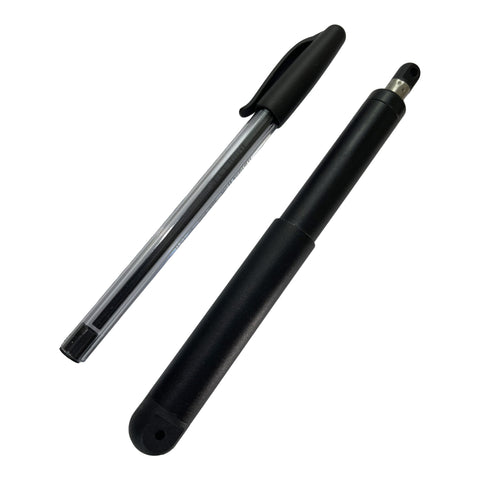
Urban living and smaller home footprints have driven demand for furniture that transforms or stows away when not in use. Actuators enable these space-saving mechanisms to operate smoothly and reliably, making transforming furniture practical for daily use rather than an occasional novelty.
Murphy Beds and Fold-Down Furniture
Murphy beds (fold-down beds that stow vertically against a wall) traditionally relied on counterbalance springs or hydraulic pistons for assisted lifting. Modern implementations increasingly use electric actuators, providing controlled, powered lifting and lowering without the maintenance issues of hydraulic systems or the occasional failure of spring counterbalances.
The engineering challenge in Murphy bed applications is substantial. A queen-size mattress and bed frame can weigh 150-300 pounds, and the mechanism must lift this weight through a 90-degree rotation from horizontal to vertical. This typically requires two actuators working in parallel, each rated for at least 600-800 pounds of force to provide adequate lifting capacity with proper safety margins.
Safety is paramount in Murphy bed applications. The control system must prevent accidental dropping, detect obstructions during lowering, and provide manual release mechanisms in case of power failure. Many implementations use actuators with internal braking systems that prevent back-driving, ensuring the bed cannot fall even if power is lost.
Convertible Tables and Multi-Function Furniture
Coffee tables that rise to dining height, desks that fold into wall-mounted cabinets, and other convertible furniture pieces use actuators to enable smooth transitions between configurations. These applications typically require moderate force actuators (200-400 pounds) with 8-16 inches of stroke, depending on the specific transformation mechanism.
The key to successful convertible furniture is making the transformation effortless enough that users will actually use it regularly. Manual mechanisms often end up being too cumbersome for daily use, causing the furniture to remain in one configuration permanently. Actuator-powered transformation reduces the effort to a button press, making regular conversion practical and encouraging users to maximize their space utilization.
Modular Furniture with Dynamic Reconfiguration
Modular furniture systems that can reconfigure themselves represent the cutting edge of space-saving design. Individual furniture modules might separate, rotate, or stack using integrated actuators and intelligent control systems. While still relatively rare in residential applications, this technology is gaining traction in hospitality and commercial environments where space needs change throughout the day.
These advanced systems require sophisticated control including position sensing, collision detection, and coordinated multi-actuator control. The technical complexity increases significantly compared to simpler furniture applications, but the functional benefits—a room that can transform from a conference space to a dining area to a lounge—can justify the added complexity in the right applications.
Assistive Furniture for Accessibility
Actuators play a crucial role in making furniture accessible to individuals with mobility challenges or disabilities. This application area emphasizes safety, reliability, and gentle, controlled motion above all other considerations.
Lift Chairs for Assisted Standing
Lift chairs use actuators to tilt the entire seat forward and upward, helping individuals with limited mobility transition from sitting to standing. This requires careful engineering to ensure smooth, controlled motion throughout the lifting cycle. The actuator must provide adequate force—typically 600-1000 pounds depending on chair and user weight—while maintaining safe, controlled speed.
Safety features are essential in lift chairs. The control system must detect obstructions and stop immediately if anything is in the way. Manual override controls allow caregivers to operate the chair if needed. Some advanced models incorporate fall detection, automatically retracting to a safe position if the user begins to slip or fall during the standing transition.
Adjustable Hospital-Style Beds for Home Care
Home care beds bring hospital-grade adjustability to residential settings, using multiple actuators to control head elevation, knee elevation, and overall bed height. Height adjustment is particularly important for caregivers, allowing the bed to be raised to a comfortable working height for providing care and lowered for safe patient transfers.
These beds typically use three to five actuators: one for head section, one for foot section, and one or two for height adjustment. Force requirements are substantial—height lift actuators typically require 800-1200 pounds of force to lift the entire bed frame, mattress, and patient safely. Quiet operation remains important even in care applications, as excessive noise can disturb rest and recovery.
Bathroom and Accessibility Furniture
Actuators are increasingly used in bathroom furniture to improve accessibility. Height-adjustable sinks and counters allow wheelchair users to access facilities comfortably, then raise to standard height for other users. Adjustable shower benches provide safe seating at the appropriate height for transfers and bathing.
Bathroom applications present additional engineering challenges due to moisture exposure. Actuators must have appropriate IP (Ingress Protection) ratings—typically IP66 or higher—to withstand humid environments and occasional water exposure. Stainless steel construction or protective coatings prevent corrosion in these demanding conditions.
Installation Considerations for Furniture Actuators
Proper actuator installation is critical for reliable, long-term operation. Even the highest-quality actuator will fail prematurely if mounted incorrectly or subjected to inappropriate loads.
Mounting Methods and Bracket Selection
Actuators typically mount using clevis brackets at both ends, allowing the actuator to pivot as it extends and retracts. The mounting brackets must be sized appropriately for the actuator and securely attached to structural members of the furniture, not just decorative panels or thin material.
Mounting angle significantly affects actuator force. An actuator mounted perpendicular to the moving furniture component delivers its full rated force. As the mounting angle deviates from 90 degrees, effective force decreases. For example, an actuator mounted at 45 degrees delivers only about 70% of its rated force to the moving component. This geometric consideration must be factored into force calculations during design.
Lateral (side) loading should be avoided whenever possible. Actuators are designed to handle axial loads (pushing and pulling along their length), not bending loads. If the furniture mechanism creates side loads on the actuator, use guide rods, slide rails, or other supporting structures to carry those loads rather than imposing them on the actuator.
Electrical Considerations and Power Requirements
Most furniture actuators operate on 12V or 24V DC power, requiring an appropriate power supply to convert household AC to the required voltage. Power supply capacity must exceed the actuator's maximum current draw—a single actuator might draw 3-6 amps under load, while systems with multiple actuators may require 15-20 amp power supplies.
Wire sizing becomes important for reliable operation, especially in furniture with actuators far from the power supply. Undersized wiring creates voltage drops under load, potentially causing actuators to stall or move sluggishly. For 12V systems, use at least 16 AWG wire for runs up to 10 feet, and 14 AWG or larger for longer distances. For 24V systems, voltage drop is less critical, allowing slightly smaller wire gauges for equivalent performance.
Maintenance and Longevity Considerations
Quality furniture actuators require minimal maintenance, but proper care extends their operational life. Periodic inspection of mounting points ensures bolts remain tight and brackets haven't developed cracks or deformation. Actuators should move smoothly without binding, unusual noise, or hesitation—any of these symptoms indicate problems requiring attention.
The internal mechanism of sealed actuators generally requires no lubrication or service, but the furniture's moving components do. Ensure any slides, hinges, or pivot points in the furniture mechanism remain properly lubricated to prevent binding that could overload the actuators. Accumulated dust or debris in moving mechanisms should be cleaned out periodically to maintain smooth operation.
Designing Custom Furniture with Actuators

For furniture designers, engineers, and DIY enthusiasts looking to incorporate actuators into custom furniture projects, understanding the design process from concept to implementation is essential. Success requires careful planning, accurate calculations, and attention to safety considerations.
Force and Stroke Calculations
Begin any actuator-based furniture project by carefully calculating force requirements. Determine the weight of all moving components, then factor in friction in any sliding mechanisms, binding from misalignment, and dynamic loads during movement. Add a safety margin of 50-100% to arrive at the minimum actuator force rating.
For mechanisms involving rotation (like a fold-down bed or tilting table), calculate the moment arm to determine torque requirements, then convert that to actuator force based on the actuator's mounting position. This often requires basic trigonometry, but taking time to calculate accurately prevents costly mistakes like specifying an underpowered actuator.
Stroke length determination requires measuring or calculating the full range of motion needed, accounting for the actuator mounting geometry. In some cases, the actuator stroke will be less than the furniture movement due to mechanical advantage; in others, it will be greater. Creating a simple scale drawing or CAD model helps visualize the mechanism through its full range of motion and accurately determine stroke requirements.
Prototyping and Testing
Before committing to final construction, build a prototype or mock-up of the mechanism. This doesn't need to be finished furniture—dimensional lumber, plywood, and temporary fasteners work fine for testing. The goal is to verify that the actuator provides adequate force, the mechanism moves smoothly through its full range, and no binding or interference occurs.
Test the prototype under realistic loads and conditions. If designing a standing desk, load it with the expected weight of monitors and equipment. If building a fold-down bed, test with an actual mattress. Real-world testing reveals issues that calculations and drawings might miss, such as unexpected friction points or binding at certain positions.
Pay attention to how the furniture feels during operation. Does motion start and stop smoothly, or does the furniture jerk or bounce? Is operation quiet enough for the intended environment? Does the mechanism feel stable and solid, or does it wobble or flex during movement? Addressing these subjective quality factors during prototyping prevents disappointment with the finished project.
Safety and Fail-Safe Considerations
Safety must be paramount in any furniture design, especially pieces that move or support significant weight. Consider what happens if power fails mid-operation—will the furniture fall or move unexpectedly? Actuators with internal braking prevent back-driving, holding position even without power. For overhead mechanisms like TV lifts or fold-down beds, this feature is essential to prevent dangerous falls.
Implement emergency stop capabilities in the control system. A clearly marked stop button should immediately halt all actuator motion. In applications where users might be in close proximity during movement (like lift chairs or adjust


