Ceiling-mounted televisions represent one of the most versatile solutions for modern spaces where traditional TV stands or wall mounts simply aren't practical. Whether you're designing a home theater with limited wall space, outfitting a commercial environment like a medical office or restaurant, or simply want the ability to tuck your display away when not in use, ceiling TV mounts offer unique advantages. The challenge lies in choosing the right mounting system for your specific needs—a decision that depends on factors like installation complexity, desired adjustability, aesthetic impact, and whether you want your TV visible at all times or hidden until needed.
The ceiling TV mount market has evolved significantly beyond basic static brackets. Today's options range from simple fixed-position mounts to sophisticated motorized tv lifts that can completely conceal your television within the ceiling structure. Understanding the differences between these systems—including their mounting requirements, adjustment capabilities, and control mechanisms—is essential for making an informed decision. This guide examines the full spectrum of ceiling TV mounting solutions, from non-motorized brackets to premium drop-down lifts, helping you identify which system best matches your space, budget, and viewing requirements.
For those who value flexibility and automation, motorized solutions powered by precision linear actuators have transformed what's possible with ceiling-mounted displays, offering smooth, reliable motion control that can be integrated into broader home automation systems.
Guide the load properly — the actuator should not become the guide. In a ceiling lift, the framing carries the weight and resists the lift forces; the actuator only sets the motion.
"A ceiling TV lift is a load-path problem before it is a motion problem. The actuator moves the TV, but the joists carry it — every static pound plus every dynamic spike from the lift cycle ends up in the framing. Get the structural attachment right first, and the actuator selection becomes the easy part." — Robbie Dickson, Founder and Chief Engineer of FIRGELLI Automations
What are non-motorized ceiling TV mounts and when do they make sense?
Static ceiling TV mounts represent the most straightforward and economical approach to ceiling mounting. These systems consist of a backplate that attaches directly to your television's VESA mounting pattern and a support arm or pole that connects to ceiling joists or other structural supports. While they lack the sophistication of motorized alternatives, non-motorized mounts serve an important role for installations where the viewing angle and position are predetermined and unlikely to change.
Most quality non-motorized ceiling mounts offer two types of adjustment during installation: vertical positioning to accommodate different TV sizes and ceiling heights, and angular adjustment to optimize the viewing angle relative to seating positions. Once installed and adjusted, however, these settings become semi-permanent. Changing them requires physical manipulation of the mount hardware—a process that typically involves loosening bolts, repositioning components, and re-tightening, which isn't practical for regular adjustments.
The primary advantages of static ceiling mounts include their lower cost, simpler installation process, and the absence of electrical components that could require maintenance or replacement. They're particularly well-suited for commercial installations like retail displays, waiting rooms, or industrial settings where the TV remains in a fixed position and viewing angles don't need frequent adjustment. The lack of moving parts also means there's less that can malfunction over time, making them a reliable long-term solution.
However, the limitations are equally clear. If you discover after installation that the viewing angle isn't optimal, or if you want to adjust the TV position for different activities or seating arrangements, you'll need to physically access and adjust the mount hardware. This inflexibility makes static mounts less ideal for residential applications where viewing preferences may vary or for spaces that serve multiple functions requiring different display positions.
How do motorized flip-down TV mounts work?
Motorized flip-down TV mounts represent a significant upgrade in functionality and convenience over static mounting solutions. These systems mount to the surface of your ceiling—meaning they don't require access to ceiling joists or extensive structural work—and provide powered angular adjustment from fully horizontal (parallel with the ceiling) to approximately 75 degrees downward. This range of motion allows you to position the screen for optimal viewing from various seating positions or to tilt the TV upward and out of the way when not in use.
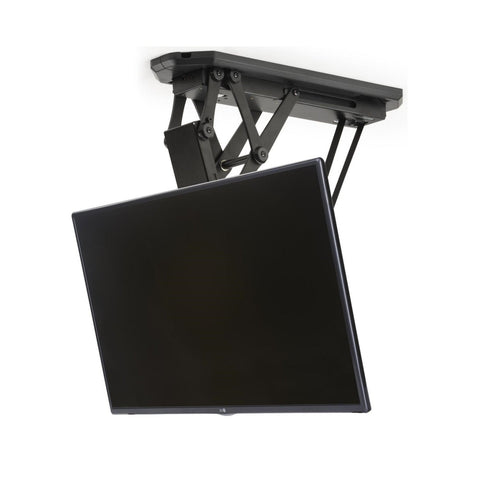
The motorized functionality relies on a compact electric motor and gear mechanism that provides smooth, controlled movement at the touch of a button. Control is typically handled through an infrared (IR) remote control, similar to your TV remote, making operation intuitive and accessible to anyone in the household. Advanced models include memory functions that store preferred viewing positions, allowing you to instantly return to your favorite angle without manual adjustment each time.
Installation of motorized flip-down mounts is remarkably straightforward, typically requiring only one to two hours for a competent DIYer. The surface-mount design means you're attaching the unit directly to the ceiling material rather than locating and securing into structural members. However, it's crucial to ensure your ceiling can support the combined weight of the mount and television—most mounts specify maximum TV weights, commonly ranging from 30 to 100 pounds depending on the model size. You'll also need access to electrical power, either from a nearby outlet or by running power to the installation location.
FIRGELLI Automations manufactures motorized flip-down TV mounts in three size categories to accommodate displays from compact 19-inch screens up to large 70-inch televisions. Each size is engineered with appropriate load capacity and motor strength for its intended TV size range. The mounts are designed to work with both flat and pitched ceilings, making them versatile for various architectural situations, including vaulted ceilings in living rooms or angled ceilings in attic conversions.
These mounts excel in situations where you need viewing angle flexibility but don't require the TV to be completely hidden when not in use. They're particularly effective in spaces with varied seating arrangements—such as living rooms where viewers might be on a sofa, in a recliner, or standing—or in commercial settings like restaurants or bars where different customer positions benefit from different screen angles. The visible presence of the TV, even when angled up, means they work best in dedicated media spaces rather than rooms where you want to maintain a television-free aesthetic when the screen isn't in use.
What is a drop-down TV lift and how does it conceal into the ceiling?
Drop-down tv lifts represent the premium solution for ceiling-mounted televisions, offering complete concealment when not in use and dramatic visual impact when deployed. Unlike flip-down mounts that leave the TV visible on the ceiling surface, drop-down lifts install within the ceiling structure itself, allowing the television to be stored completely out of sight in the ceiling cavity and lowered into viewing position only when needed.
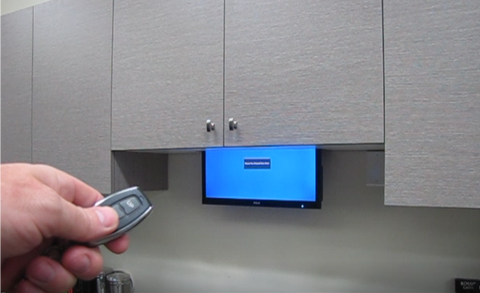
The mechanical heart of these systems is a powerful linear actuator or actuator pair that provides smooth, controlled vertical motion. These actuators are specifically designed for the duty cycle and load requirements of TV lifting applications, delivering consistent performance over thousands of operation cycles. The lift mechanism mounts directly to ceiling joists or other structural supports—this is non-negotiable, as the system must securely carry the full weight of the television plus the lifting mechanism itself.
Installation requires more extensive preparation than surface-mount systems. You'll need to create an opening in your ceiling large enough to accommodate both the stored television and the lift mechanism. Most drop-down lifts include a specialized drywall bracket system that allows you to attach the cutout section of ceiling material to the lift platform. When the TV is retracted, this ceiling section rises with it, seamlessly filling the opening and making the installation virtually invisible. The result is a completely clean ceiling appearance with no indication that a television is present until you activate the lift.
Control for drop-down lifts typically uses radio frequency (RF) remote control technology rather than infrared. This is a practical necessity: when your TV is concealed within the ceiling, an IR remote would have no line of sight to the receiver. RF remotes can operate through barriers, allowing you to activate the lift from anywhere in the room or even from adjacent spaces. This also enables integration with broader home automation systems that use RF protocols.
FIRGELLI Automations offers drop-down TV lifts in three stroke lengths—30 inches, 40 inches, and 50 inches—providing the vertical travel necessary to lower your television from the ceiling to your preferred viewing height. The choice of stroke length depends on two factors: the height of your television (the lift must be able to retract the entire display into the ceiling cavity) and how far you want the TV to descend for optimal viewing. These systems accommodate televisions up to 50 inches in height, covering the vast majority of residential display sizes.
The appeal of drop-down TV lifts extends beyond mere functionality into the realm of interior design and architectural aesthetics. They're ideal for spaces where you want to maintain a clean, uncluttered appearance when the television isn't in use—think modern living rooms, bedrooms where you prefer not to have a visible screen, or formal entertainment spaces where the TV would otherwise clash with the décor. The reveal effect when the lift activates also creates a memorable "wow factor" that never quite loses its appeal, making these systems popular for home theaters and entertainment spaces designed to impress guests.
From a practical standpoint, ceiling concealment also protects your television investment from potential damage, reduces dust accumulation on the screen, and can even provide a modest security benefit by keeping an expensive display out of sight. In commercial applications like conference rooms or presentation spaces, drop-down lifts allow the same ceiling space to serve dual purposes—maintaining a professional appearance when presentations aren't occurring while providing display capability when needed.
When should you choose a DIY ceiling TV lift kit?
For the technically inclined homeowner or professional installer who needs maximum flexibility, DIY ceiling TV lift kits provide all the essential components for building a custom drop-down TV system tailored to specific requirements. These kits represent the middle ground between purchasing a complete, pre-configured lift system and sourcing every component separately—they include the critical motorized elements while allowing customization of the mounting structure and integration details.
A comprehensive DIY kit typically includes several key components: one or more linear actuators with appropriate stroke length and force capacity for TV lifting applications, a control box to manage actuator operation, a remote control for user operation, essential mounting brackets for connecting actuators to the TV and ceiling structure, necessary wiring, and a power supply rated for the system's electrical requirements.
The DIY approach offers several distinct advantages. First, it allows you to adapt the lift mechanism to non-standard TV sizes or unusual mounting situations that pre-configured lifts might not accommodate. Second, it provides the flexibility to integrate with custom cabinetry, specialized ceiling designs, or architectural features unique to your space. Third, for those building multiple installations—such as system integrators or contractors—DIY kits can offer cost efficiencies at scale while maintaining consistent quality across projects.
Building your own ceiling TV lift does require a solid understanding of basic mechanics, electrical safety, and structural considerations. You'll need to ensure your actuator selection provides adequate force to lift your specific TV weight smoothly and reliably. You'll need to design and construct a stable mounting frame that distributes load properly and maintains alignment during operation. And you'll need to plan the electrical installation in compliance with local building codes (in the US, the National Electrical Code (NEC), NFPA 70, governs low-voltage wiring practices), which typically means incorporating proper strain relief, secure wire routing, and appropriate circuit protection.
The FIRGELLI Automations DIY Drop Down TV Lift Kit addresses these challenges by including components that are pre-engineered to work together reliably. The included actuators are selected for TV lifting duty cycles and are matched with compatible control electronics. The mounting brackets provided are designed specifically for connecting actuators to VESA TV mounting patterns and ceiling supports. This reduces the amount of custom fabrication required while still allowing builders to adapt the installation to their specific ceiling structure and aesthetic requirements.
DIY kits are particularly valuable for situations involving unusual ceiling configurations, oversized or oddly proportioned displays, or installations that need to coordinate with existing architectural elements. They're also popular with home automation enthusiasts who want to integrate TV operation with other smart home systems, as the modular nature of DIY kits makes it easier to incorporate custom control solutions or tie into broader automation platforms.
What technical factors should you evaluate before choosing a ceiling TV mount?
Selecting the right ceiling TV mount requires careful evaluation of several technical factors that impact both installation feasibility and long-term performance. Understanding these considerations before purchase can prevent costly mistakes and ensure your chosen solution performs reliably for years.
Weight Capacity and Load Distribution
Every ceiling TV mount system specifies a maximum weight capacity, and this specification should never be exceeded. However, simply staying under the weight limit isn't sufficient—you also need to consider how that weight is distributed and supported. Modern large-screen TVs can weigh anywhere from 30 to 100+ pounds, and this load must be safely transferred through the mounting mechanism to adequately strong ceiling supports.
For surface-mount systems like flip-down mounts, the weight is transferred directly through mounting bolts into the ceiling material. If mounting to drywall or plaster, you must ensure the fasteners reach through to solid backing—either ceiling joists, blocking installed between joists, or a substantial backing plate that spans multiple attachment points. For drop-down lifts that penetrate into the ceiling cavity, mounting to structural members is mandatory. The lift mechanism exerts both static loads (the constant weight of the TV) and dynamic loads (forces generated during lifting motion) that require secure structural attachment.
Stroke Length and Vertical Travel Requirements
For systems that offer vertical movement—particularly drop-down lifts—the stroke length of the linear actuator determines how far your television can descend from the ceiling. This measurement matters for two reasons: ensuring your TV fits completely within the ceiling cavity when retracted, and positioning the screen at the optimal viewing height when extended.
Calculate the minimum stroke length by adding your TV's height to the depth of your mounting bracket, then adding several inches for the lift mechanism itself. A 40-inch TV with a 4-inch mounting bracket depth would require at least 44-45 inches of stroke just to fully retract into the ceiling. In practice, you'll likely want additional travel to position the TV lower in the room for comfortable viewing, which is why 50-inch stroke lengths are popular for residential installations with standard ceiling heights.
Power Requirements and Electrical Integration
All motorized ceiling TV mounts require electrical power, and planning the power delivery system is a critical installation consideration. Most systems operate on low-voltage DC power—typically 12V or 24V—which is supplied by an AC-to-DC power supply (transformer) that connects to standard household AC power.
The power supply can be located in several places: within the ceiling cavity near the lift mechanism, in a nearby wall cavity, in an attic or plenum space above the ceiling, or in an equipment closet with wiring run to the lift location. The key consideration is ensuring the power supply remains accessible for service if needed while keeping wiring neat and code-compliant. In-ceiling installations should avoid placing transformers where they'll be difficult to reach if replacement becomes necessary.
For DIY installations or when integrating with home automation systems, you may need to calculate power draw to ensure your power supply has adequate capacity. Linear actuator current draw varies with load and speed, but TV lift applications typically require 2-6 amps at 12V or 24V during operation.
Control Systems and Integration Options
The control system determines how users interact with your ceiling TV mount and whether it can integrate with broader home automation. Basic systems include a dedicated remote control—either infrared (IR) for flip-down mounts or radio frequency (RF) for drop-down lifts where line-of-sight isn't possible.
More sophisticated installations might incorporate the TV lift into a whole-home control system using protocols like RS-485, relay triggers, or wireless home automation platforms. FIRGELLI Automations' control box options include models with multiple input methods, allowing integration with wall switches, automation controllers, or even voice control systems that can trigger relay closures.
Consider future integration needs when selecting your mount system. While a basic remote control may be sufficient initially, choosing a system with expandable control options provides flexibility as your automation needs evolve.
How should you plan a ceiling TV mount installation?
Successful ceiling TV mount installation begins long before you pick up tools. Proper planning addresses structural requirements, aesthetic considerations, and practical access needs that will determine both installation difficulty and long-term satisfaction with the system.
Structural Assessment and Ceiling Type
Your ceiling construction significantly impacts installation approach and feasibility. Standard drywall ceilings with accessible attic or plenum space above offer the most straightforward installation environment for drop-down lifts, as you can work from above to locate joists, run wiring, and secure mounting hardware. Concrete ceilings or situations where access above is impossible require alternative strategies, potentially including surface-mount solutions or exposed conduit for wiring.
Locate ceiling joists or other structural supports early in planning. For wood-framed construction, joists are typically spaced 16 or 24 inches on center. Your mounting points should align with these structural members, which may require adding blocking (cross-bracing between joists) if the ideal TV location doesn't line up with existing framing. In commercial buildings with drop ceilings, verify what structure exists above the acoustic tiles—you may need to penetrate through to the structural deck above.
Viewing Geometry and Positioning
The optimal ceiling TV position depends on your seating arrangement and viewing preferences. As a general guideline, the center of the screen should be at or slightly below eye level for primary viewers when seated. For a ceiling-mounted TV, this typically means positioning the screen to descend into the central viewing area rather than mounting at the room perimeter.
Consider sight lines from all typical viewing positions. In a living room with multiple seating areas, you may need to compromise on the perfect position for any single seat in favor of acceptable viewing from all positions. In bedrooms, viewers are often reclined, which changes optimal screen height and angle compared to upright seating positions. Testing with cardboard mockups or temporary positioning can help confirm the best location before cutting into your ceiling.
Integration with Room Aesthetics
For drop-down lifts that require a ceiling opening, plan how the opening will be concealed when the TV is retracted. The included drywall bracket systems work well for standard flat ceilings, but textured ceilings, coffered designs, or decorative ceiling treatments may require additional planning to ensure the cutout section matches the surrounding ceiling when raised.
Consider lighting fixture locations, ceiling fans, HVAC vents, and other ceiling-mounted elements that could interfere with TV operation or viewing. A TV dropping down directly in front of a light fixture creates problematic glare, while inadequate clearance from a ceiling fan could create collision risks. Map these elements during planning to identify any conflicts before installation begins.
Ceiling TV Mount Comparison: Which Type Fits Your Needs?
Choosing among ceiling TV mount options ultimately depends on your specific priorities, constraints, and intended use. This comparison framework can help guide your decision based on the factors that matter most for your application.
| Mount Type | Concealment | Adjustability | Install Complexity | Control | Typical Use |
|---|---|---|---|---|---|
| Static non-motorized | None | Set once at install | Low | None | Commercial, fixed-viewing |
| Motorized flip-down | None (visible folded up) | Powered tilt 0–~75° | Low (1–2 hr) | IR remote | Mixed-seating residential, hospitality |
| Drop-down TV lift | Full (in-ceiling) | Vertical stroke 30/40/50" | High (4–8 hr, ceiling cut) | RF remote | Premium residential, dedicated theater |
| DIY lift kit | Configurable | Configurable | High (custom build) | RF + integrations | Custom/non-standard installs, integrators |
Choose a static non-motorized mount if: Your viewing position and angle requirements are fixed and unlikely to change; you're working with a limited budget; the installation is for a commercial or public space where simple reliability matters more than adjustability; or you prefer systems with minimal electronics and moving parts.
Choose a motorized flip-down mount if: You need viewing angle adjustment but don't require the TV to be hidden when not in use; you're mounting to the ceiling surface rather than within the ceiling structure; installation simplicity and time are priorities; you want the convenience of remote-controlled positioning without the complexity of a full lift system; or your ceiling doesn't have adequate depth for a concealed lift installation.
Choose a drop-down TV lift if: Concealing the television when not in use is important for your room's aesthetics; you want maximum viewing flexibility with full vertical positioning control; you're designing a dedicated home theater or entertainment space where the reveal effect enhances the experience; you have adequate ceiling depth and access for in-ceiling installation; or you're willing to invest in the premium solution for best functionality and visual impact.
Choose a DIY lift kit if: You have the technical skills and inclination to build a custom solution; your TV size, ceiling configuration, or integration requirements don't fit standard pre-configured systems; you're installing multiple lifts and want component-level control over specifications; you're integrating with custom home automation that requires specific control interfaces; or you want to minimize costs while maintaining quality components.
Budget considerations also play a role. Static mounts represent the lowest initial investment, typically ranging from modest to moderate cost depending on build quality and features. Motorized flip-down mounts sit in the middle range, offering good value for their convenience and functionality. Drop-down TV lifts command premium pricing reflecting their sophisticated mechanism, concealment capability, and installation complexity. DIY kits can potentially reduce costs for those who can provide their own labor and fabrication, though the total investment depends heavily on the scope of custom work required.
How do you select the right ceiling TV mount for your space?
The ceiling TV mount market offers solutions ranging from straightforward static brackets to sophisticated motorized lift systems, each serving distinct needs and priorities. Static mounts provide economical, reliable positioning for installations where viewing angles are predetermined. Motorized flip-down mounts add convenient angle adjustment with simple installation. Drop-down TV lifts deliver the ultimate combination of concealment and flexibility for premium installations. And DIY kits empower technically capable users to create custom solutions tailored to unique requirements.
Your ideal choice depends on weighing factors including budget, desired functionality, installation complexity, aesthetic priorities, and long-term flexibility needs. For most residential applications where concealment and visual impact matter, drop-down lifts represent the best balance of features despite their higher investment. For commercial installations or situations requiring simple reliability, static or flip-down mounts may prove more practical. And for those with specific requirements that standard products don't address, DIY component kits provide the flexibility to engineer exactly the solution you need.
Regardless of which ceiling TV mount type you select, proper planning and installation are critical for safety, performance, and satisfaction. Ensure adequate structural support, carefully consider viewing geometry, plan electrical integration thoroughly, and don't hesitate to consult professionals when working with structural modifications or electrical systems beyond your expertise. With the right system properly installed, a ceiling-mounted TV can transform how you use and enjoy your space for years to come.
What usually goes wrong with ceiling TV mount installations?
- Fasteners landing in drywall only. Lag bolts pulled through drywall is the most common catastrophic failure. Always reach a joist or proper blocking; a backing plate alone is not sufficient for drop-down lifts.
- Sizing the actuator for static weight only. The lift sees dynamic forces every cycle, especially at start and stop. Pick actuator force with a 20–30% margin over the TV weight, not equal to it.
- Wrong stroke length. A stroke that just clears the TV body leaves no room for comfortable viewing height. Add TV height + bracket depth + desired drop into the room, then pick a stroke length above that total.
- Conflict with ceiling fixtures. Lights, fans, vents, and sprinkler heads in the descent path are routinely missed during planning. Map every ceiling element before cutting.
- Power supply buried inaccessibly. Transformers fail eventually. If yours is sealed inside the ceiling cavity with no access panel, the next service call becomes a drywall repair.
- IR remote chosen for a concealed lift. IR needs line of sight; a TV hidden in the ceiling cannot see the remote. Drop-down lifts need RF control.
How should you test a ceiling TV lift before trusting it?
- Run the full cycle empty first. Confirm smooth extension and retraction with no binding, no abnormal motor sound, and no rubbing against the ceiling opening.
- Run the full cycle with the actual TV weight installed. Watch for sag, slow points, or tilt that did not appear empty. Static loads behave differently from dynamic ones.
- Cycle it 10–20 times in a row. A lift that works once proves the idea; a lift that survives repeated cycles proves the design. Check fastener tightness after the cycle run.
- Verify clearance through the full travel. Stand at every viewing position and check sight lines to lights and fans, and confirm no contact with ceiling fixtures during descent.
- Test the remote from every realistic operating position, including behind walls and from adjacent rooms if RF.
- Confirm power supply temperature after a few cycles. A transformer that runs hot at install will run hotter inside the ceiling cavity over time.
Frequently Asked Questions
What weight capacity do I need for my ceiling TV mount?
Select a ceiling TV mount with a weight capacity at least 20-30% higher than your television's actual weight to provide a safety margin. Check your TV's specifications for exact weight—modern flat-screens typically range from 30-80 pounds for 32-70 inch displays. Remember that the mount system weight capacity includes not just the TV but also any mounting brackets and hardware attached to it. For drop-down lifts, the actuator force capacity must be sufficient to smoothly lift your TV's weight plus the platform mechanism itself, typically requiring actuators rated for 100-200 pounds of force for residential applications.
How large an opening do I need to cut in my ceiling for a drop-down TV lift?
The ceiling opening for a drop-down TV lift must accommodate both the television dimensions and the lift mechanism structure. As a general guideline, plan for an opening approximately 4-6 inches wider and taller than your TV's screen dimensions. For example, a 55-inch TV (approximately 48 inches wide by 28 inches tall) would require a ceiling opening roughly 52-54 inches wide by 32-34 inches tall. Always consult your specific lift model's installation specifications, as mechanism dimensions vary between manufacturers. The opening must also account for the drywall bracket system that allows the ceiling section to be attached to the lift platform for seamless concealment when retracted.
How long does it take to install a ceiling TV mount?
Installation time varies significantly based on mount type and ceiling accessibility. Surface-mount flip-down systems can typically be installed in 1-2 hours by a competent DIYer, as they require only securing the mount to the ceiling surface, attaching the TV, and connecting power. Drop-down TV lifts require substantially more time—expect 4-8 hours for a complete installation including ceiling opening creation, lift mechanism mounting to ceiling joists, electrical wiring, TV attachment, and finishing work around the ceiling opening. First-time installers or situations involving challenging ceiling access, complex wiring runs, or structural modifications can extend installation time considerably. Professional installers can typically complete even complex drop-down lift installations in 3-5 hours due to experience and specialized tools.
Can ceiling TV mounts work with different ceiling types like vaulted or textured ceilings?
Yes, ceiling TV mounts can accommodate various ceiling configurations, though installation approaches differ. Motorized flip-down mounts are specifically designed to work with both flat and pitched (vaulted) ceilings, with adjustable mounting brackets that compensate for ceiling angles. For drop-down lifts in vaulted ceilings, the lift mechanism itself installs vertically regardless of ceiling pitch, but you'll need custom framing to create a level mounting surface and manage the ceiling opening appropriately. Textured ceilings like popcorn or knockdown finishes present aesthetic challenges for drop-down lifts, as matching the texture on the cutout ceiling section that moves with the lift requires careful finishing work. Consider whether preserving texture continuity matters for your installation, or whether you're willing to create a smooth, finished panel around the lift opening.
Can I use my existing TV with a ceiling mount, or do I need a special television?
Any flat-panel TV with standard VESA mounting holes on the back can be used with ceiling mounts—no special television is required. VESA (Video Electronics Standards Association) mounting patterns are standardized, with hole spacing like 200x200mm, 400x400mm, etc., clearly specified in your TV's documentation. Verify that your chosen ceiling mount supports your TV's specific VESA pattern and weight. The main consideration is ensuring your TV's weight falls within the mount's capacity and that the dimensions work with the mount's size rating. Older or heavier plasma TVs may exceed weight limits of some mounts designed for modern lightweight LED/LCD displays. Also verify that your TV's input ports (HDMI, power, etc.) remain accessible when mounted—some ceiling positions may make rear-facing ports difficult to reach for cable connections.
Can ceiling TV lifts be integrated with smart home automation systems?
Yes, many ceiling TV lift systems can integrate with home automation platforms, though integration methods vary. Basic integration uses the lift's existing control system with relay triggers—your home automation system sends a signal to close a relay contact that the lift controller interprets as an "up" or "down" command, just as it would from a button press. More sophisticated integration requires control systems with appropriate communication protocols like RS-485, dry contact inputs, or wireless protocols compatible with your automation platform. FIRGELLI Automations offers control boxes with multiple input options that facilitate integration with popular home automation systems. For voice control through systems like Amazon Alexa or Google Home, you'll typically need a compatible smart home hub that can translate voice commands into control signals your lift system understands, often through relay or IR control methods.


