
What Is a Linear Actuator?
A linear actuator is a device that converts energy into controlled straight-line motion. Unlike rotary motors that spin, a linear actuator moves an output rod forward and backward along a single axis — pushing and pulling loads in a straight line. Electric linear actuators are the most common type, using a DC or AC motor, a gear train, and a lead screw to produce precise, repeatable linear movement.
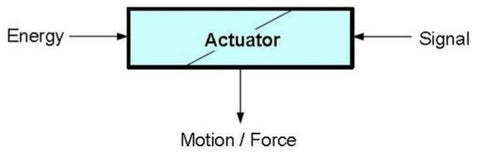
Linear actuators automate tasks that would otherwise require manual effort — lifting hatches, adjusting desk heights, tilting solar panels, opening vents, and positioning industrial equipment. They replace hydraulic cylinders in applications where simplicity, cleanliness, and precise control matter more than extreme force. With just an electrical connection (no pumps, hoses, or fluid), an electric linear actuator can be installed in minutes and controlled with a simple switch, remote, or Arduino controller.

For a broader overview of all actuator types (linear, rotary, and more), see our Actuators Explained guide. For detailed engineering specifications, see the Linear Actuator Engineering Guide.
How Does a Linear Actuator Work?
An electric linear actuator converts the rotary motion of a motor into linear motion through a simple mechanical chain:
Motor → Gear Train → Lead Screw → Nut → Output Rod
The motor (typically 12V or 24V DC) spins a series of gears that reduce speed and increase torque. The gears drive a lead screw — a threaded rod. A nut threaded onto the lead screw converts the rotation into straight-line movement, pushing or pulling the output rod. The screw thread pitch and gear ratio together determine the actuator's force and speed: a finer pitch and higher gear reduction produce more force but slower movement, while a coarser pitch and lower reduction produce faster movement with less force.

Built-in limit switches stop the motor automatically at full extension and full retraction, preventing stalling and overheating. The lead screw mechanism is inherently self-locking in most designs — meaning the actuator holds its position under load without consuming power, which is critical for lifting applications.
For a deeper technical breakdown, read Inside a Linear Actuator.
Types of Linear Actuators
Electric linear actuators come in several form factors, each designed for different requirements.
Standard Linear Actuators
The most common type. A motor and gear train drive a lead screw inside a tubular housing, extending and retracting an output rod. Available in forces from 35 lbs to over 2,000 lbs, strokes from 1 inch to 40+ inches, and multiple speed options. Ideal for hatches, lids, adjustable furniture, and general automation. Browse our full linear actuator range.
Micro Linear Actuators

Micro linear actuators are compact versions for small-scale applications and tight spaces. Strokes typically range from 10 mm to 100 mm, and force ratings are lower (usually under 50 lbs). Used in robotics, medical devices, RC models, camera rigs, and anywhere space is limited.
Track Actuators
Track actuators use an enclosed track and carriage system instead of an extending rod. The load rides on the carriage, which handles side loads that would damage standard rod actuators. Ideal for sliding doors, drawer systems, and applications with off-axis forces.
Lifting Columns

Lifting columns are telescoping actuators that extend through multiple nested stages, giving long strokes in a compact retracted form. Built-in linear guides handle side loads. Used for sit-stand desks, TV lifts, and medical equipment.
Feedback Actuators
Feedback actuators include a built-in position sensor (potentiometer or Hall effect) that reports current position to an external controller. This enables precise position control, mid-stroke stopping, and synchronization of multiple actuators.
Actuator Types Comparison
| Type | Force Range | Stroke Range | Side Load? | Best For |
|---|---|---|---|---|
| Standard | 35 – 2,000+ lbs | 1″ – 40″ | No | Hatches, lids, general automation |
| Micro | Up to 50 lbs | 10 mm – 100 mm | No | Robotics, models, tight spaces |
| Track | Up to 400 lbs | 12″ – 40″ | Yes | Sliding doors, drawers, side loads |
| Column Lift | Up to 600 lbs | 12″ – 60″ | Yes | Desks, TV lifts, workstations |
| Feedback | 35 – 400 lbs | 1″ – 30″ | No | Precision positioning, sync |
Electric vs. Hydraulic vs. Pneumatic Actuators
Linear motion can be achieved with electric, hydraulic, or pneumatic systems. For most applications under 2,000 lbs of force, electric linear actuators are the simplest and most cost-effective choice.
| Feature | Electric | Hydraulic | Pneumatic |
|---|---|---|---|
| Power source | Electricity (12V/24V DC) | Pressurized fluid + pump | Compressed air + compressor |
| Force range | Up to ~2,000 lbs | Up to 100,000+ lbs | Up to ~1,000 lbs |
| Precision | High (with feedback) | Moderate | Low (spongy) |
| Installation | Simple — wire and mount | Complex — pump, hoses, valves | Moderate — compressor, lines |
| Maintenance | Minimal — lubricated for life | High — fluid, seals, filters | Moderate — moisture, seals |
| Cleanliness | No fluids — clean operation | Fluid leak risk | Clean (air exhaust) |
| Self-locking | Yes (lead screw holds position) | No (needs check valve) | No (needs valve) |
| Cost | Low to moderate | High (system cost) | Moderate |
| Best for | Home, marine, industrial, DIY | Construction, heavy machinery | Factory automation, fast cycling |
For a detailed comparison between electric and hydraulic systems, see our Actuators Explained guide.
Key Specifications: Force, Stroke, Speed, and Voltage
Every linear actuator is defined by four primary specifications.
Force (Load Rating)
Force is how much weight the actuator can push or pull, measured in pounds (lbs) or Newtons (N). Always size based on dynamic load and add a 1.5× safety factor. Use our Lid and Hatch Calculator or Linear Motion Calculator to determine exact force requirements.
Stroke Length
Stroke is the total distance the rod extends. The actuator's retracted length (body + unexpanded stroke) must fit in the available space when closed. For hinged applications, mounting geometry affects required stroke.
Speed
Speed is how fast the rod extends or retracts (inches per second). Speed and force have an inverse relationship — higher gear reduction means more force but slower speed.
Voltage
Most actuators run on 12V DC or 24V DC. 12V is most common, compatible with car batteries, marine systems, solar setups, and standard power supplies. 24V draws less current for industrial applications.
Static Load vs. Dynamic Load
Dynamic load is the maximum force the actuator can exert while moving. Static load is the maximum force it can hold in place when the motor is off. Static ratings are typically higher because the lead screw's self-locking property helps hold position. Always size based on the dynamic load rating.
Loading Direction and Side Loading
Linear actuators are designed for axial loads — forces along the actuator's centerline in tension (pulling) or compression (pushing). Side loading (perpendicular force) and eccentric loading (off-center force) cause binding and premature wear and should be avoided.
If your application involves side loads, you have two options:
- Mount the load on linear slide rails or drawer slides so the slides carry the weight and the actuator only provides push/pull force.
- Use a track actuator, designed to handle side loads through its enclosed carriage.
Limit Switches and Stroke Control

Most quality actuators include built-in limit switches that automatically cut power at full extension and retraction, preventing stalling and motor burnout.
Limit switches come in two types: electro-mechanical (physical switches triggered by the drive nut) and magnetic (Hall effect sensors triggered by magnets). Magnetic switches are quieter with no moving parts to wear.
For custom stop positions, FIRGELLI offers patented adjustable-stroke actuators with externally settable limit switches. Learn more: How Does an Adjustable Limit Switch Work?
Motors, Speed, and Gearing

Linear actuators use DC motors (12V or 24V) or less commonly AC motors (110-240V). DC motors are preferred because they are compact, efficient, easily reversible (swap polarity to change direction), and compatible with batteries and solar panels.
The gear train determines the force-speed trade-off. Higher gear reduction = more torque (force) but slower speed. Lower reduction = faster movement but less force.
Duty Cycle
Duty cycle is the percentage of time an actuator can run before resting to cool down. A 25% duty cycle means 1 minute on, 3 minutes off. Exceeding the duty cycle overheats the motor, degrades winding insulation, and shortens life. For continuous-motion applications, choose high duty cycle actuators. See Duty Cycle Explained.
Mounting and Brackets
Most actuators use clevis mounting — a U-shaped bracket with a pin — at both ends. Clevis mounts allow pivoting, which is essential for hinged applications. For flat-surface mounting, various mounting brackets are available (L-brackets, flat brackets, ball-joint brackets). See our Mounting Brackets Guide.
IP Ratings and Environmental Protection

IP (Ingress Protection) ratings indicate dust and water resistance. The first digit is solids protection (0-6), the second is liquids (0-9):
- IP54 — dust-protected, splash-resistant. Indoor and sheltered outdoor use.
- IP66 — dust-tight, powerful water jet protection. Outdoor, marine, washdown.
- IP67 — dust-tight, temporary submersion (1 m / 30 min). Occasional submersion risk.
Always match IP rating to your environment. Full breakdown: IP Ratings Explained.
Back-Driving, Hard Stops, and Common Failures
Back-Driving
Back-driving occurs when an external force pushes the rod in against the motor. Most lead-screw actuators are self-locking under normal loads. Under very high forces or with ball screws, back-driving can occur. For absolute position-holding, select an actuator with a built-in brake or worm gear.
Hard Stops
Never run an actuator into an external hard stop before the limit switch triggers. The motor continues drawing stall current, generating heat that can burn out windings or strip gears. Ensure the actuator reaches its full limit-switch travel, or use external sensors to stop the motor before contact.
Common Causes of Failure
- Overloading — exceeding rated force causes gear stripping or motor burnout
- Side loading — perpendicular forces cause binding and accelerated wear
- Exceeding duty cycle — motor overheating from running too long
- Environmental exposure — insufficient IP rating in wet or dusty conditions
- Improper mounting — misalignment or loose brackets cause binding
If an actuator fails, see our Actuator Replacement Guide.
Synchronizing Multiple Actuators
Many applications need two or more actuators to move together at the same rate — desks, parallel lids, platform leveling. Without synchronization, actuators drift apart due to differences in load, friction, and manufacturing tolerances.
You need two things:
- Feedback actuators with position sensors (potentiometer or Hall effect)
- A synchronization controller that adjusts motor speed in real time. See our Arduino controllers and control boxes.
Full walkthrough: Synchronizing Linear Actuators.
Real-World Applications of Linear Actuators
Home and Furniture
TV lifts and projector lifts, sit-stand desks, kitchen appliance lifts (mixers, coffee machines), hidden storage, motorized cabinetry, adjustable bed frames, fireplace doors, and window openers.
Marine and Automotive
Boat hatch openers, engine covers, tonneau covers, trunk and hood lifts, RV slide-outs, wheelchair ramp deployment, and snowplow angle adjustment.
Industrial and Agricultural
Damper and valve control, conveyor positioning, height-adjustable workstations, solar panel tracking, farming implements, hopper gates, and ventilation systems.
DIY and Custom Projects
Pop-top camper roofs, hidden doors and passages, animatronics and props, robotics, camera rigs, and humanoid robot actuation.

How to Choose the Right Linear Actuator
Selecting the right actuator comes down to five key decisions:
1. Force — weigh the load, account for mounting angle, and add a 1.5× safety factor.
2. Stroke length — measure the full range of motion. For hinged apps, use our Lid and Hatch Calculator.
3. Speed — faster = less force from the same actuator.
4. Voltage — 12V DC for most applications. 24V for industrial or long wire runs.
5. Environment — indoor (IP54), outdoor/marine (IP66), submersible risk (IP67).
For a step-by-step buying guide, read Don't Buy a Linear Actuator Until You Read These Five Steps. Free sizing tools:
- Lid and Hatch Calculator — hinged lids, hatches, and doors
- Linear Motion Calculator — push/pull/slide applications
- Full Calculator Suite — all FIRGELLI engineering tools
Related Guides and Calculators
- Linear Actuator Engineering Guide — complete reference for force, stroke, duty cycle, and sizing
- Inside a Linear Actuator — detailed technical breakdown of internal components
- Types of Electric Linear Actuators — comparison of all actuator form factors
- 5 Steps Before Buying — avoid common purchasing mistakes
- Duty Cycle Explained — avoid overheating and motor damage
- IP Ratings Explained — choosing the right environmental protection
- Mounting Brackets Guide — clevis, L-bracket, and ball-joint options
- Remote Control Guide — wireless control setup
- Wiring Diagram Generator — custom wiring diagrams
- Actuator Replacement Guide — step-by-step replacement instructions
- Synchronizing Multiple Actuators — feedback-based sync control
Frequently Asked Questions About Linear Actuators
What is a linear actuator?
A linear actuator is a device that converts energy into controlled straight-line motion. Electric linear actuators use a DC or AC motor, gear train, and lead screw to push or pull a rod along a single axis. They automate lifting, lowering, sliding, tilting, and positioning tasks across home, industrial, marine, and DIY applications.
How does a linear actuator work?
A motor spins a gear train, which drives a lead screw (threaded rod). A nut on the lead screw converts the rotation into straight-line movement, pushing or pulling the output rod. Built-in limit switches stop the motor at full extension and retraction. The gear ratio and screw pitch determine force and speed — higher reduction means more force but slower speed.
What is the difference between a linear actuator and a hydraulic cylinder?
Electric actuators use a motor and lead screw, requiring only an electrical connection. Hydraulic cylinders use pressurized fluid, requiring a pump, reservoir, valves, and hoses. Electric actuators are simpler, cleaner, more precise, and easier to install. Hydraulic cylinders produce higher forces but are bulkier and require more maintenance. See our actuator types overview.
What is the difference between static load and dynamic load?
Dynamic load is the force the actuator can exert while moving. Static load is the force it can hold when stationary. Static ratings are typically higher because the lead screw's self-locking property helps hold position. Always size your actuator based on the dynamic load rating.
What voltages do linear actuators run on?
Most run on 12V DC or 24V DC. 12V is the most common, compatible with car batteries, solar systems, and standard power supplies. 24V reduces current draw for industrial applications. Some heavy-duty models use 110-240V AC.
Can linear actuators be used outdoors?
Yes, with the right IP rating. IP54 handles dust and splashing water (sheltered outdoor). IP66 is dust-tight with powerful water jet protection (marine, outdoor). IP67 handles temporary submersion. See our IP Ratings Guide.
What is the duty cycle of a linear actuator?
Duty cycle is the percentage of time an actuator can run before resting. A 25% duty cycle means 1 minute on, 3 minutes off. Exceeding the duty cycle overheats the motor and shortens actuator life. See Duty Cycle Explained.
Do linear actuators have limit switches?
Yes. Most include built-in limit switches that stop the motor at full extension and retraction, preventing stalling and overheating. FIRGELLI also offers adjustable-stroke actuators with externally settable stop points.
Can I synchronize two linear actuators?
Yes. Use feedback actuators with built-in position sensors and a synchronization controller. The controller reads each actuator's position and adjusts speed to keep them aligned. Without feedback, actuators will drift apart. See our sync guide.
How do I choose the right linear actuator for my project?
Start with five specs: (1) Force — weigh the load and add 1.5× safety factor. (2) Stroke — measure the full range of motion. (3) Speed — faster = less force. (4) Voltage — 12V for most, 24V for industrial. (5) IP rating — match to your environment. Use our free calculators for exact sizing.


