The furniture industry has undergone a dramatic transformation over the past two decades. What was once a market dominated by static, manually-adjusted pieces has evolved into a dynamic landscape where automation, comfort, and intelligent design converge. Modern consumers expect their furniture to adapt to their needs—beds that adjust at the touch of a button, kitchen cabinets that rise and lower effortlessly, and recliners that provide precise positioning for optimal comfort. This shift has created unprecedented demand for compact, powerful, and reliable actuation solutions that can be seamlessly integrated into furniture designs without compromising aesthetics or functionality.
🎥 Video — FIRGELLI Utility Actuator (FA-U) - Unparalleled Performance in the Furniture Market
At the heart of this revolution lies the electric linear actuator—a seemingly simple device that converts electrical energy into precise linear motion. However, not all actuators are created equal. The furniture market presents unique challenges: space constraints demand minimal footprint, consumers expect whisper-quiet operation, and manufacturers require consistent performance across millions of duty cycles. For over 15 years, FIRGELLI has been engineering solutions to these exact challenges, and the FA-U (Furniture Actuator - Utility) represents the culmination of this experience—a purpose-built actuator that redefines what's possible in furniture automation.
Whether you're a furniture manufacturer seeking to differentiate your product line, an RV builder optimizing limited space, or a DIY enthusiast automating custom furniture projects, understanding the capabilities and applications of the FA-U actuator will open new possibilities in motion control design.
FA-U Technical Specifications and Performance Characteristics
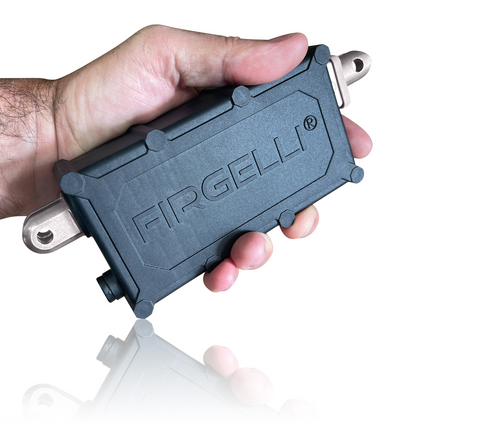
The FA-U electric actuator establishes a new benchmark in the power-to-size ratio for furniture applications. With a push force of 2,000N (approximately 450 lbs) and a pull force of 1,500N (approximately 337 lbs), this compact actuator delivers industrial-grade performance in a package designed specifically for furniture integration. This force capacity makes it suitable for everything from adjusting heavy sectional backrests to lifting substantial kitchen hood systems.
Speed is another critical performance metric. The FA-U operates at 15mm per second, striking an optimal balance between responsive adjustment and smooth, controlled motion. This speed ensures that furniture adjustments happen quickly enough to feel immediate to the user, while remaining slow enough to prevent jarring movements or safety concerns. For a 100mm stroke length, the actuator completes its full travel in approximately 6.7 seconds—fast enough for user satisfaction, controlled enough for safety.
Perhaps most impressive is the actuator's weight-to-performance ratio. At just 600 grams for a 100mm stroke model, the FA-U weighs significantly less than comparable actuators while maintaining superior force output. This lightweight design reduces shipping costs, simplifies installation, and minimizes the structural reinforcement required in furniture frames. When designing adjustable furniture, every gram matters—the FA-U's efficiency means more flexibility in overall furniture design.
Acoustic Performance for Residential Applications
Noise is perhaps the most underestimated specification in furniture actuators. A powerful actuator that sounds like industrial machinery has no place in a bedroom or living room. The FA-U operates at or below 56 dB—roughly equivalent to a quiet conversation or modern refrigerator. This acoustic performance results from precision engineering: optimized gear meshing, careful motor selection, and vibration-dampening design features that minimize operational noise without sacrificing durability.
For residential furniture applications, this quiet operation transforms the user experience. Adjusting a bed position at night won't disturb a sleeping partner. Raising a kitchen hood during meal preparation won't interrupt conversation. In healthcare settings, where patient rest is paramount, this acoustic performance becomes even more critical.
Environmental Protection and Durability
The FA-U carries an IP66 rating, indicating complete protection against dust ingress and protection against powerful water jets from any direction. While furniture actuators typically operate in relatively benign environments, this protection level ensures reliability across diverse applications. In RV installations, the actuator may encounter road dust, humidity, and temperature fluctuations. In kitchen applications, exposure to steam, grease, and cleaning solutions is inevitable. The IP66 rating provides peace of mind that the actuator will continue performing reliably regardless of environmental challenges.
This protection level also meets medical equipment requirements, opening applications in adjustable hospital beds, examination tables, and therapeutic furniture where hygiene standards are stringent and cleaning protocols intensive.
Integrated Hall Sensor Feedback for Precision Control
The FA-U can be equipped with Hall sensor technology, transforming it into a feedback actuator capable of precise positional control. Hall sensors use magnetic fields to detect the actuator's exact position throughout its stroke length, providing real-time feedback to the control system. This capability enables sophisticated control scenarios impossible with basic on/off actuators.
With Hall sensor feedback, you can program specific positions and have the actuator return to them reliably—essential for applications like memory-position recliners where users want to save and recall favorite seating configurations. The feedback also enables synchronized multi-actuator systems, ensuring that multiple actuators moving the same furniture piece maintain precise alignment throughout their travel.
For manufacturers developing smart furniture with app control or integration into home automation systems, Hall sensor feedback provides the data necessary for sophisticated control interfaces. Users can see current position, set precise adjustment increments, and create automated routines—possibilities that simply don't exist with traditional actuators.
Primary Applications in Modern Furniture Design
Adjustable Beds and Sleep Systems
The adjustable bed market has exploded in recent years as consumers recognize the health benefits of elevated sleeping positions. The FA-U's combination of power, speed, and quiet operation makes it ideal for these applications. Whether raising the head position to reduce snoring, elevating the legs for improved circulation, or creating a comfortable reading position, the FA-U provides smooth, reliable adjustment.
In dual-adjustment beds where each side moves independently, synchronization becomes critical. The FA-U's Hall sensor option enables precise coordination between multiple actuators, ensuring smooth operation without binding or stress on the bed frame. The quiet operation is particularly valuable here—adjustments can be made without disturbing a sleeping partner.
Recliners and Motion Furniture
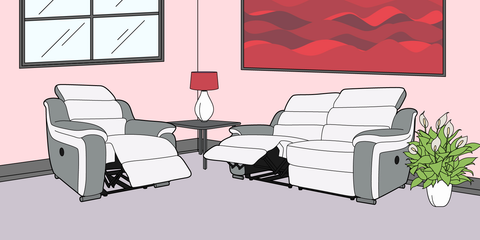
Modern recliners have evolved far beyond simple kick-back mechanisms. Today's motion furniture incorporates multiple adjustment points: independent back and leg positions, lumbar support adjustment, headrest articulation, and even massage functions. The FA-U's compact dimensions and lightweight design make it possible to integrate multiple actuators within a single furniture piece without excessive bulk or weight.
The actuator's force capacity handles even heavy-duty recliners with thick cushioning and robust frame construction. Furniture manufacturers can design premium products with confidence, knowing the actuation system will provide years of reliable service. When paired with a quality control box and remote control, the FA-U enables the sophisticated multi-position control that consumers expect in high-end motion furniture.
Kitchen Cabinet and Hood Systems
Modern kitchens increasingly incorporate automated elements that enhance functionality while maintaining clean aesthetics. Range hood systems that rise from countertops or descend from ceiling installations require powerful yet compact actuation. The FA-U's force capacity easily handles the weight of substantial hood units, while its compact design allows integration within cabinetry without consuming valuable storage space.
Vertical lift cabinets, which bring upper cabinet contents down to accessible heights, benefit from the FA-U's smooth operation and positional control. The IP66 rating provides protection against the kitchen environment's inherent challenges—steam, heat, and cleaning chemicals that would quickly degrade lesser actuators.
RV and Caravan Space Optimization
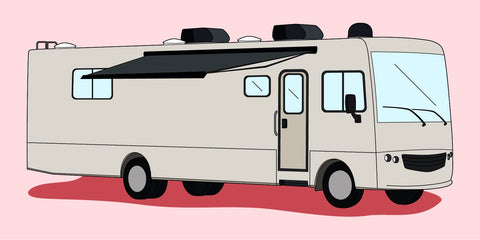
Recreational vehicles present perhaps the most demanding application for furniture actuators. Space is at an absolute premium, weight directly impacts fuel economy, and reliability is non-negotiable when you're hundreds of miles from service facilities. The FA-U addresses all three challenges simultaneously.
In RV beds, the actuator enables transforming sleeping spaces—beds that fold against walls during the day, overhead bunks that lower for sleeping and raise for daytime storage, and adjustable mattress platforms that create comfortable sleeping positions despite the vehicle's motion. The lightweight design minimizes impact on vehicle weight limits, while the IP66 rating provides protection against road dust and moisture infiltration.
RV slide-out rooms, which expand the interior space when parked, traditionally use hydraulic systems. Electric actuators like the FA-U offer significant advantages: no hydraulic fluid to leak or maintain, quieter operation, and more precise control. While larger industrial actuators typically handle main slide-outs, the FA-U is perfect for smaller secondary slides and interior furniture adjustments within the RV.
Installation Considerations and Best Practices
Successful actuator integration requires attention to several key factors. First, mounting points must be engineered to handle the actuator's force output. While the FA-U itself is lightweight, it generates substantial force—mounting brackets and attachment points must be designed accordingly. FIRGELLI offers a range of mounting brackets designed specifically for various installation scenarios, providing secure attachment while allowing the necessary pivoting motion.
Determining Required Stroke Length
Stroke length selection involves careful measurement of the required travel distance and geometric considerations of the mounting configuration. The actuator's physical stroke length must be sufficient to achieve the desired motion at the furniture's adjustment point. However, mounting geometry creates a mechanical advantage or disadvantage depending on the installation angle and pivot points.
A common mistake is measuring the desired furniture movement directly and ordering an actuator with that stroke length. In reality, if the actuator is mounted at an angle or on a lever arm, the required actuator stroke may be significantly different from the furniture's movement range. Careful geometric analysis or physical mockups help ensure correct stroke length selection.
Electrical System Integration
The FA-U operates on DC voltage, typically 12V or 24V depending on the specific model. Proper power supply selection ensures reliable operation and optimal performance. The power supply must provide adequate current capacity to handle the actuator's peak load—underpowered supplies result in sluggish operation or failure to move under load.
For multi-actuator systems, the control strategy becomes more complex. Simple parallel wiring works when synchronized motion is acceptable, but applications requiring independent control need more sophisticated control boxes with multiple channels. When Hall sensors are integrated, the control system must be capable of processing the feedback signals and implementing the desired positioning logic.
FA-U Compared to Other Actuator Types
Understanding how the FA-U compares to other actuator categories helps in making informed selection decisions. FIRGELLI manufactures several actuator lines, each optimized for different application requirements.
Compared to Micro Actuators
Micro linear actuators offer even smaller dimensions than the FA-U, but with significantly reduced force capacity—typically in the range of 50N to 500N. These are ideal for small mechanisms like motorized vents, camera positioning, or lightweight lid actuation. However, they lack the power necessary for furniture applications where loads typically range from 50 to 500 pounds. The FA-U's force capacity makes it appropriate for actual furniture movement rather than just lightweight accessories.
Compared to Industrial Actuators
At the opposite end of the spectrum, industrial actuators provide force capacities from 2,000N up to 10,000N or more. These heavy-duty units are built for harsh industrial environments, continuous duty cycles, and extreme loads. However, they're larger, heavier, and more expensive than necessary for most furniture applications. The FA-U provides the optimal balance—sufficient force for demanding furniture applications without the size, weight, and cost penalties of industrial units.
Compared to Track Actuators
Track actuators mount to a linear guide rail, providing the actuation force along a supported path. These excel in applications requiring very long stroke lengths or where side loads are significant. For standing desk applications or large TV lift systems, track actuators are often the better choice. However, for typical furniture applications where the actuator mounts between two pivoting points, the rod-style FA-U design is more appropriate and typically more compact.
Maintenance Requirements and Expected Lifespan
One of the FA-U's significant advantages is its minimal maintenance requirement. The sealed design protects internal components from contamination, and the electric motor requires no lubrication or adjustment. Unlike hydraulic systems that require periodic fluid changes and seal replacements, the FA-U operates maintenance-free for its service life.
Expected lifespan depends on duty cycle and loading conditions. For typical furniture applications involving intermittent adjustment rather than continuous cycling, the FA-U should provide many years of reliable service. The internal gear system is designed for the loading patterns typical of furniture use—occasional actuation under load rather than constant cycling.
If issues do arise, troubleshooting is straightforward. Failure to operate typically indicates power supply problems, control signal issues, or mechanical binding in the furniture mechanism. The actuator itself rarely fails unless subjected to loads exceeding its specifications or environmental conditions beyond its IP rating.
The Future of Furniture Automation
The FA-U represents current state-of-the-art in furniture actuation, but the field continues evolving rapidly. Integration with smart home systems is accelerating—furniture that adjusts automatically based on user preferences, time of day, or biometric feedback. Voice control integration allows hands-free adjustment. Health monitoring systems may eventually trigger automatic furniture adjustments to improve circulation or reduce pressure points.
As furniture becomes more automated, actuators like the FA-U will increasingly incorporate advanced features: integrated position sensing as standard, wireless control capabilities, and onboard intelligence for local decision-making. The fundamental requirements—compact size, quiet operation, and reliable performance—will remain constant, but the ways users interact with automated furniture will continue expanding.
Conclusion
The FIRGELLI FA-U utility actuator represents a purpose-engineered solution for modern furniture automation challenges. Its combination of high force output, compact dimensions, lightweight construction, and quiet operation addresses the specific requirements of furniture applications better than general-purpose actuators. Whether you're a manufacturer developing the next generation of adjustable furniture, an RV builder optimizing space and weight, or a DIY enthusiast creating custom automated furniture, the FA-U provides the performance and reliability necessary for successful implementation.
The optional Hall sensor feedback extends capabilities into precision positioning and smart furniture integration, while the IP66 rating ensures reliable operation across diverse environments. With over 15 years of experience in motion control systems, FIRGELLI has engineered the FA-U to deliver not just adequate performance, but exceptional reliability and user satisfaction across millions of adjustment cycles.
Frequently Asked Questions
What stroke lengths are available for the FA-U actuator?
The FA-U is available in multiple stroke lengths to accommodate different furniture designs and adjustment ranges. Common stroke lengths include 100mm, 150mm, 200mm, and 300mm options. The appropriate stroke length depends on your specific application geometry, including mounting points and the range of motion required. Keep in mind that the actuator's physical mounting geometry may require a different stroke length than the actual furniture movement distance due to leverage and angular considerations. When selecting stroke length, it's advisable to measure carefully and consider the contracted and extended lengths to ensure the actuator fits within your furniture frame in both positions.
What voltage does the FA-U actuator require?
The FA-U typically operates on 12V or 24V DC power, with specific voltage depending on the model variant. The 12V version is popular for RV and automotive applications where 12V power is standard, while 24V variants may be specified for applications requiring slightly higher performance or where 24V power systems already exist. It's crucial to pair the actuator with an appropriately rated power supply that can deliver sufficient current to handle the actuator's peak load conditions. Using an underpowered supply will result in poor performance and potentially damage the actuator or power supply.
Can I control multiple FA-U actuators simultaneously for synchronized movement?
Yes, multiple FA-U actuators can be controlled together for synchronized movement, which is essential for applications like adjustable beds or furniture with multiple adjustment points. For basic synchronized movement where all actuators move together, parallel wiring to a single control system works effectively. However, for more sophisticated control requiring independent movement or precise synchronization, a multi-channel control box is recommended. When Hall sensors are incorporated, synchronization becomes even more precise, as the control system can monitor each actuator's exact position and compensate for any differences. This prevents binding or stress on the furniture frame that can occur when actuators drift out of alignment.
Is the FA-U suitable for outdoor furniture applications?
While the FA-U's IP66 rating provides excellent protection against dust and water jets, outdoor furniture applications present additional challenges including UV exposure, extreme temperature variations, and prolonged exposure to moisture. The IP66 rating means the actuator can handle rain and washing, but for permanent outdoor installations, additional protective measures are advisable. Consider mounting the actuator in locations protected from direct sun exposure and standing water. For marine applications or environments with salt exposure, even higher protection levels may be necessary. The FA-U excels in covered patio furniture, RV awning applications, and other partially-protected outdoor scenarios, but permanent exposure to harsh weather may reduce service life.
Can the FA-U be manually retracted if power is lost?
The FA-U incorporates a self-locking gear mechanism that prevents backdriving under load—this is a safety feature that prevents uncontrolled motion when power is removed. However, this also means the actuator cannot be manually retracted simply by pushing or pulling on it. In emergency situations or power failures where manual retraction is necessary, the furniture would need to be designed with a manual release mechanism or alternative method of adjustment. For critical applications where manual override is essential, consider incorporating a manual release system into your furniture design, or ensure backup power is available through battery backup systems. This characteristic is actually beneficial for most furniture applications, as it means the actuator will hold position reliably without consuming power.


