Home automation is transforming from a luxury into an accessible reality for DIY enthusiasts and homeowners alike. With 57% of American homeowners viewing their homes as ongoing works in progress, the marriage of creativity and technology has never been more appealing. At the heart of this movement lies a versatile engineering component that's revolutionizing how we interact with our living spaces: the electric linear actuator.
🎥 Video — Top 10 Custom Projects You Can Do With Linear Actuators
Linear actuators—devices that convert electrical energy into precise push-and-pull linear motion—are the unsung heroes behind everything from automated TV lifts to height-adjustable desks and hidden storage solutions. What once required complex hydraulic systems or manual effort can now be accomplished with clean, quiet electric actuation controlled by the push of a button or a smartphone app. Whether you're looking to maximize space in a compact urban apartment, add accessibility features for aging-in-place, or simply inject a dose of James Bond-style sophistication into your home, linear actuators offer an engineering solution that's both practical and exciting.
In this comprehensive guide, we'll explore ten of the most popular and innovative DIY projects you can accomplish with linear actuators—from disappearing kitchen storage and hidden televisions to automated windows and transforming furniture. We'll also provide the technical foundation you need to select the right actuator for your specific application, ensuring your project is not only impressive but also reliable and safe.
Understanding Linear Actuators: The Foundation of Motion Control
Before diving into specific projects, it's essential to understand what linear actuators are and how they function. A linear actuator is a precision motion control device that creates straight-line movement—in contrast to rotary motors that produce circular motion. This push-and-pull capability makes actuators ideal for applications requiring controlled, repeatable linear displacement.

How Electric Linear Actuators Work
The most common type of actuator for DIY and home automation projects is the electric linear actuator. These devices operate on a elegantly simple principle: a DC or AC motor drives a leadscrew (or ball screw in precision applications) in rotational motion. A nut threaded onto this screw converts the rotation into linear motion—when the screw turns clockwise, the nut travels in one direction; reverse the motor polarity, and it travels the opposite way.
The force output is controlled by the motor speed through a gearbox reduction. Higher gear ratios produce greater force but slower speeds, while lower ratios offer faster movement with less push/pull capability. Limit switches positioned at the extended and retracted positions automatically cut power to the motor, preventing over-travel and protecting both the actuator and your project.
Modern electric actuators offer significant advantages over older technologies: they're cleaner than hydraulics (no fluid leaks), quieter than pneumatics, more controllable than mechanical systems, and increasingly affordable for residential applications.
Types of Linear Actuators for Different Applications
While this article focuses primarily on electric actuators, understanding the broader landscape helps you appreciate why electric actuation has become the dominant choice for home automation:
- Electric Actuators: The workhorse of DIY projects, using motor-driven screws for precise, controllable motion. Available in stroke lengths from 1 inch to over 60 inches with force ratings from 10 lbs to well over 2,000 lbs.
- Hydraulic Actuators: Used in heavy industrial applications like excavators and aircraft landing gear. They offer immense force but require fluid reservoirs, pumps, and regular maintenance—impractical for home use.
- Pneumatic Actuators: Operate on compressed air, common in factory automation. Fast but require air compressors and are difficult to position precisely.
- Mechanical Actuators: Manual screws, rack-and-pinion systems, or cam-driven devices. Require physical effort to operate.
For the projects outlined in this guide, electric actuators provide the ideal balance of force, precision, ease of control, and cost-effectiveness. Specialized types like track actuators and bullet actuators offer unique mounting and packaging advantages for specific applications.
Project 1: Disappearing Kitchen Storage Systems
Kitchen counter space is premium real estate in any home. The eternal struggle between having tools and ingredients readily accessible versus maintaining clean, uncluttered surfaces can be resolved through clever actuator-driven storage solutions.
Pop-Up Spice Rack
A classic starter project involves installing a spice rack that rises from beneath the countertop. The actuator mounts below the counter and connects to a sliding platform that holds your spice collection. When retracted, the top surface becomes an additional cutting board or prep area. When activated, the rack rises smoothly into view, making every bottle instantly visible and accessible.
This project typically requires an actuator with 6-12 inches of stroke and moderate force capability (100-200 lbs) to handle the weight of the spices plus the rack structure. The actuator should be mounted vertically with proper mounting brackets to ensure stable operation.
Pull-Out Deep Cabinet Storage
Deep cabinets notoriously become black holes where items disappear into unreachable corners. By installing drawer slides paired with actuators, you can create motorized pull-out shelving that brings the back of the cabinet to you. Multiple shelves can be staged at different depths, each independently controlled or synchronized to cascade outward sequentially.
Retractable Over-Sink Dish Drain
One of the most ingenious kitchen applications is a dish rack that lowers from an overhead cabinet. After washing dishes, you press a button and a rack descends to comfortable loading height. Place your clean dishes in organized compartments, then retract the entire assembly back into the cabinet where dishes drain and dry in their storage location—eliminating the need for a countertop dish drainer entirely.
This application requires careful planning for drainage (usually achieved through a sloped rack floor that channels water back toward the sink) and sufficient actuator force to handle the combined weight of the rack structure and wet dishes.
Project 2: Hidden TV Solutions for Every Room
Americans spend an average of 2 hours and 46 minutes watching television daily, yet many homeowners wish their TVs could disappear when not in use. Motorized TV lifts have evolved from luxury features in high-end homes to achievable DIY projects thanks to specialized actuator systems.

Types of Hidden TV Mechanisms
The beauty of TV lifts lies in their versatility. Depending on your room layout and aesthetic preferences, you can choose from several configurations:
- Pop-Up TV Lifts: The television rises from within a cabinet, console, or platform at the foot of the bed. These are among the most popular configurations and can be installed with rear-mount or floor-mount systems.
- Drop-Down TV Lifts: Perfect for mounting in ceiling spaces or above cabinetry, the TV descends when needed. Ideal for kitchens, garages, or rooms with limited floor space.
- Flip-Down Mechanisms: The TV pivots downward from a concealed position, commonly used for under-cabinet kitchen installations.
- Behind-Panel Systems: A painting, mirror, or decorative panel slides or swings away to reveal the TV behind it, driven by linear actuators.
Technical Considerations for TV Lifts
When designing a TV lift system, several critical factors must be addressed:
Weight Capacity: Modern flat-screen TVs range from 20 to 100+ pounds depending on size. Your actuator system must handle not only the TV weight but also the mounting bracket and any enclosure structure. Always include a safety margin—if your TV weighs 50 lbs, use an actuator rated for at least 75-100 lbs.
Stroke Length: Measure carefully to determine how far the TV needs to travel. For a pop-up application, this is typically the height of the TV plus clearance above any cabinet walls. Common stroke lengths for TV lifts range from 20 to 36 inches.
Speed: While you want the mechanism to operate quickly enough to feel responsive, excessively fast speeds can create stability issues. Most TV lift actuators operate at 0.5 to 1.5 inches per second—slow enough for smooth, stable motion but fast enough to feel effortless.
Synchronization: Larger TVs often require dual actuator systems for stability. These must be precisely synchronized to prevent binding or tilting. Use a control box specifically designed for synchronized operation, or choose feedback actuators that can communicate position data for precise coordination.
Project 3: Compact Tool Storage Solutions
For DIY enthusiasts, workshop organization is an ongoing challenge. Traditional toolboxes and pegboards have limitations—they either hide tools away in drawers or consume valuable wall space. Actuator-driven tool storage combines the best of both approaches: compact storage when not needed, instant access when you need a specific tool.

Expanding Tool Wall System
Imagine a workshop where a seemingly simple wall panel opens like a flower, revealing multiple pegboards or tool drawers that unfold into the workspace. Each section is controlled by linear actuators that push panels outward and can even rotate them via linkages to present tools at optimal angles.
This project requires careful mechanical design to ensure panels move smoothly without interference. Track systems or slide rails may be needed to guide panel movement, with actuators providing the driving force.
Under-Bench Tool Drawers
A more straightforward approach involves installing motorized drawers beneath a workbench. Rather than manually pulling heavy tool-laden drawers, a foot switch or wireless remote activates actuators that push drawers out to you. This is particularly valuable for drawers holding heavy equipment like power tools or fastener collections.
For this application, track actuators are often ideal—they combine the actuator and guide rail in one compact assembly, simplifying installation and improving drawer stability under load.
Project 4: Hidden Computer Within a Desk
The concept of a desk that transforms from a simple writing surface into a full computer workstation embodies the intersection of classic furniture design and modern technology. This project captures the imagination of anyone who's watched a spy movie and thought, "I want that in my home office."

Design Approach
The typical implementation involves several synchronized movements triggered by a single control:
- Monitor(s) rise from a compartment at the rear of the desk using vertically-mounted actuators
- Keyboard and mouse slide forward from an under-desk cavity on a tray driven by horizontal actuators
- Optional: speakers, desk lamp, or document holders deploy from side compartments
Synchronization and Wiring Challenges
This project's complexity lies not in the actuators themselves but in coordinating multiple movements smoothly. A microcontroller-based control box can sequence the movements—for example, the monitor begins rising while simultaneously the keyboard tray starts sliding forward, with both movements completing at approximately the same time for a polished, professional appearance.
Cable management is equally critical. Computer monitors, keyboards, and mice require data and power cables that must travel with the moving components. Plan for cable carriers or loops that can extend and retract without tangling or creating binding resistance that fights against your actuators.
Force Requirements
Monitor lifting requires moderate force—a typical 27-inch monitor weighs 10-15 lbs, plus the weight of mounting brackets and any enclosure structure. A 150-200 lb actuator provides ample capacity. Keyboard trays are lighter and can use lower-force actuators, but ensure you account for friction in the sliding mechanism.
Project 5: Pop-Up Outdoor Furniture and Refrigeration
Outdoor living spaces benefit tremendously from flexible furniture that appears when needed but doesn't permanently consume patio space. This project category pushes the boundaries of what's possible with industrial actuators capable of lifting significant weight.

Pop-Up Outdoor Beverage Cooler
One of the most impressive outdoor actuator projects is a built-in refrigerated cooler that rises from beneath the patio surface. When guests arrive, you activate the system and a insulated cooler compartment lifts up from a hidden underground installation, providing cold beverages without the need for portable coolers that clutter the space.
This project requires waterproof actuators rated for outdoor use, drainage planning for the underground cavity, and significant force capacity—a large cooler filled with ice and beverages can easily exceed 200 lbs. Multiple synchronized industrial actuators may be necessary, along with robust structural support to prevent tilting or binding.
Rising Tables and Seating
Granite or concrete tables that rise from flush with the patio surface create a "wow factor" that few outdoor features can match. The engineering challenges are substantial—you're lifting heavy materials (a 4x4 foot concrete table top can weigh 400+ lbs) and must ensure perfect stability so the surface is usable once raised.
This typically requires four synchronized high-force actuators, each capable of handling at least 500 lbs. The actuators must be protected from weather exposure, usually by mounting them within weatherproof columns or enclosures. Careful attention to mounting brackets and structural engineering is critical for safety.
Project 6: Automated Windows and Doors
Smart home automation is rapidly becoming standard rather than luxury, with consumers expected to spend $123 billion on IoT home devices. Automated window and door control represents one of the most practical applications of this technology, offering convenience, energy efficiency, and enhanced security.

Window Automation Applications
Linear actuators excel at window automation because they provide the controlled force needed to smoothly open even large or high-friction windows. Key applications include:
- Casement Windows: Outward-swinging windows that can be difficult to reach or operate manually, especially in high locations. An actuator mounted to push the window open provides effortless operation.
- Awning and Hopper Windows: These hinged windows benefit from actuator control, particularly when integrated with weather sensors that automatically close them when rain is detected.
- Skylights: Often the most challenging windows to access, skylights are ideal candidates for automation. Actuators can be controlled via wall switches, remote control, or smartphone apps.
- Greenhouse Vents: Temperature-sensitive automatic vent control maintains optimal growing conditions without manual intervention.
Enhanced Security Benefits
Beyond convenience, actuator-controlled windows offer security advantages. When locked in position by an energized actuator, windows are significantly more resistant to forced entry compared to traditional latches. The actuator essentially becomes a powered lock that would-be intruders must overcome, adding another layer of home security.
Automatic Door Systems
While windows get most of the attention, door automation offers equal benefits. Heavy doors, gates, or access panels that are burdensome to operate manually become effortless with actuator assistance. This is particularly valuable for accessibility—individuals with limited mobility can operate doors independently using simple switches or voice commands when integrated with smart home systems.
Project 7: Hidden Rooms and Secret Storage
Few projects capture the imagination quite like hidden rooms and secret compartments. What seems like Hollywood fiction is entirely achievable with modern actuator technology and some creative carpentry.

Hidden Bookcase Doors
The classic hidden room entrance features a bookcase that swings inward to reveal a concealed space beyond. While this can be accomplished with manual releases and pivot hinges, adding actuator control elevates the concept to new levels of sophistication.
The engineering approach typically involves mounting the bookcase on a pivot point (often heavy-duty hinges designed for large doors) and using an actuator to push or pull the bookcase open. The actuator can be cleverly hidden within the floor, ceiling, or an adjacent wall. Activation via remote control or a disguised switch (the classic "pull the specific book" trigger) adds to the mystique.
Structural Considerations
A bookcase filled with books can weigh several hundred pounds. Your actuator must provide sufficient force not only to move this weight but to overcome the friction and inertia of starting the movement. A 500+ lb rated actuator is often appropriate, and proper mounting brackets are essential to transfer forces safely into the surrounding structure.
The bookcase itself must be structurally sound enough to move as a single unit without flexing or racking. Reinforcing the back and sides of the bookcase, adding diagonal bracing, and using quality pivot hardware are all critical to successful implementation.
Compact Secret Storage Compartments
Not every hidden space needs to be room-sized. Small actuator-driven compartments hidden behind false panels, within furniture, or beneath flooring offer discrete storage for valuables. These require smaller actuators—even micro linear actuators—and can be integrated nearly anywhere with sufficient creativity.
Project 8: Automated Dog Kennel and Pet Gates
With 63 million American households owning at least one dog, pet care automation represents a practical application of actuator technology that improves quality of life for both pets and owners.

Automatic Kennel Door
The basic concept involves a top-hinged door that an actuator pushes upward to create an opening, allowing dogs to exit their kennel area into a fenced yard. When retracted, the actuator pulls the door closed. This can be controlled manually via switches inside the home, on a timer schedule, or even integrated with smart home systems that consider factors like weather conditions or time of day.
The mechanism is straightforward: mount a vertical actuator behind the door, with the actuator rod connected to the door via a pivot linkage. As the actuator extends, it pushes the door upward and outward. Consider weather protection for the actuator mechanism and ensure the door design prevents it from becoming a hazard to pets.
Automated Child and Pet Safety Gates
Traditional safety gates require manual operation that can be frustrating—they're designed to be difficult for children to open, which also makes them inconvenient for adults, especially when carrying items. An actuator-controlled gate solves this by providing one-button operation while maintaining security when closed.
The gate can be designed to lift vertically out of the pathway, swing horizontally like a door, or slide to the side. Motion sensors can be added to prevent the gate from closing if a child or pet is in the path, adding an important safety layer to the convenience factor.
Project 9: High-Tech Closet Space Optimization
Closet organization represents one of the most practical applications of actuator technology, transforming static storage into dynamic space that adapts to your needs.
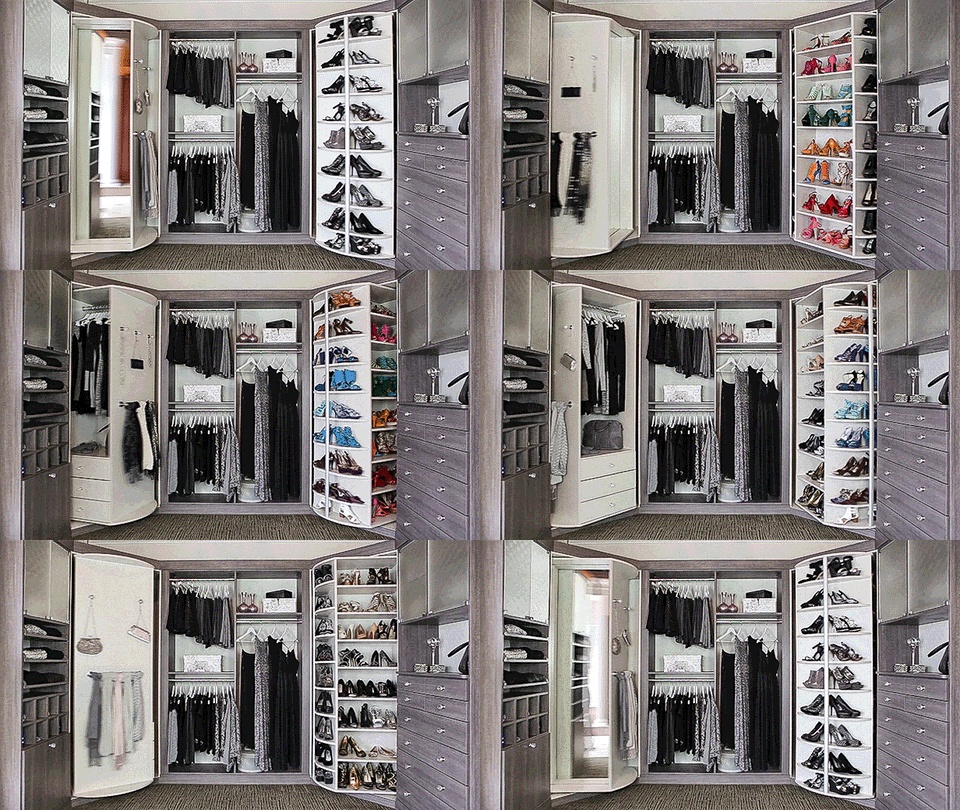
Expanding Shoe Rack
A motorized shoe rack uses actuators to push shelf layers outward, spreading a compact stack of shoes into a clearly visible display. When closed, the shoes stack efficiently in minimal space. When opened, each layer extends on slide rails, creating a cascading presentation of your entire shoe collection.
This project works particularly well for deep closets where traditional shelving leaves items in the back effectively inaccessible. Multiple actuators synchronized via a control system extend the shelves sequentially or simultaneously, depending on the desired effect.
Drop-Down Clothing Storage
Maximize vertical closet space by installing clothing rods or shelves in the upper reaches of tall closets, then use actuators to lower them to accessible height when needed. This concept works especially well for seasonal clothing—winter coats stored near the ceiling in summer, brought down in fall with the push of a button.
The mechanism typically uses vertically-mounted actuators with cable and pulley systems to distribute the load evenly across a rod or shelf. Careful attention to weight distribution is critical to prevent tilting or binding during operation.
Motorized Wardrobe Carousel
While traditional closet carousels use manual rotation, adding actuator power creates an automated system that brings any section of your wardrobe to the access point. This application often uses rotary actuators or linear actuators connected to rotation mechanisms through linkages.
Project 10: Adjustable Standing Desk Systems
Height-adjustable desks have moved from specialized ergonomic equipment to mainstream office furniture, driven by research showing the health benefits of alternating between sitting and standing throughout the workday. Building your own actuator-powered adjustable desk allows for complete customization while often costing less than premium commercial alternatives.

Pre-Engineered Desk Frames
The easiest path to a custom standing desk involves purchasing a pre-engineered actuator frame kit and mounting your own desktop. These kits include matched actuators, a control system with memory presets, and the structural frame—you simply add the work surface of your choice.
This approach offers significant advantages: the actuators are pre-synchronized, eliminating the challenge of keeping multiple legs extending at exactly the same rate. The control systems often include programmable height presets, allowing you to save your preferred sitting and standing heights for one-button adjustment. The structural engineering is proven, ensuring stability even with heavy monitor arrays or equipment.
Custom Traditional Desk Conversion
Converting an existing traditional desk into an adjustable height workstation is more challenging but offers the satisfaction of preserving a treasured piece of furniture or achieving a specific aesthetic. This requires separating the desktop from the base and building or installing a height-adjustment mechanism.
Key engineering considerations include:
- Leg Synchronization: Multiple actuators must extend and retract in perfect unison to prevent the desk from tilting or racking. This requires either feedback actuators with position sensing or a sophisticated control system that monitors and corrects any position differences.
- Structural Stability: The desk must remain rigid and wobble-free throughout its height range. This often requires cross-bracing or a frame structure that moves with the desktop.
- Cable Management: Computer equipment requires cables that must move with the desk. Plan for cable management solutions that prevent tangling and don't create resistance that opposes actuator movement.
- Weight Capacity: Calculate the total weight of the desktop, monitors, computers, and any other equipment, then select actuators with appropriate force ratings. A typical setup might require 200-400 lbs of total lifting capacity distributed across 2-4 actuators.
Bonus Project: Hidden Liquor Cabinet
For collectors of fine spirits, a hidden pop-up liquor drawer combines security with sophisticated presentation. Premium bottles representing significant investments deserve protection from theft, accidental damage, and UV light exposure that can degrade quality over time.
The mechanism is relatively straightforward: a drawer containing your spirits collection sits within a cabinet or built-in furniture piece. An actuator mounted beneath or behind the drawer pushes it upward and outward when activated. The top surface might disguise the drawer as a solid cabinet top, or the drawer could rise from within a larger cabinet structure.
This project requires moderate force capacity—a drawer with glassware and bottles can easily reach 50-100 lbs—but allows for creative finishing. LED lighting that illuminates automatically when the drawer extends, lined compartments sized for specific bottle types, and sophisticated wood finishing can transform this from a simple hidden storage project into a true showpiece.
Additional Creative Actuator Applications
The ten main projects above represent popular and proven applications, but linear actuators enable countless other creative possibilities. Here are additional ideas to spark your imagination:
Accessibility and Mobility Aids
Actuators play a vital role in aging-in-place modifications and accessibility improvements. Lift chairs that rise and tilt to assist with standing use coordinated actuators to provide controlled, safe motion. Wheelchair lifts that raise to door threshold height make entrances accessible without permanent ramps. Kitchen cabinets that lower to wheelchair-accessible height provide independence. These applications have real impact on quality of life and represent some of the most meaningful uses of actuator technology.


