How do you build a professional TV lift cabinet for under $300?
A TV lift cabinet is a piece of furniture that uses an electric linear actuator to raise and lower a television between a concealed position inside the cabinet and a viewing position above it. A hidden TV lift cabinet represents one of the most elegant solutions to a common interior design challenge: how to integrate modern entertainment technology without compromising your living space aesthetics. Whether you're designing a minimalist living room, creating a multi-functional bedroom, or outfitting a luxury outdoor entertainment area, a motorized TV lift allows your television to appear and disappear at the touch of a button.
The concept is straightforward but impressive—your TV remains concealed within custom cabinetry until you need it, then rises smoothly into viewing position using an electric linear actuator mechanism. While premium pre-built TV lift cabinets can easily cost $2,000-$5,000, this guide demonstrates how to construct a professional-quality cabinet for under $300 in materials, excluding only the TV lift mechanism itself. With basic carpentry skills, standard tools, and a weekend of focused work, you can create a custom piece that rivals commercial offerings in both function and appearance.
This comprehensive guide covers everything from selecting the right mounting configuration and safety features to detailed frame construction and finishing techniques. We'll walk through the engineering considerations that make these projects successful, including proper actuator placement, lid mechanism options, and cable management solutions that ensure long-term reliability.
Guide the load properly. On a TV lift, the cabinet frame carries the geometry — the actuator only carries the load along its axis. Side loading from a tilted mount or a misaligned lid is what kills these mechanisms, not the weight of the TV.
"On a TV lift, two things decide whether the build lasts: a vertical mounting axis and a 20-30% capacity margin over the TV weight. Get either wrong and the actuator carries side load it was never meant to carry." — Robbie Dickson, Founder and Chief Engineer of FIRGELLI Automations
Why install a TV lift cabinet in your home?
Television screens, while essential for modern entertainment, can dominate room aesthetics in ways that conflict with thoughtful interior design. A TV lift cabinet solves this fundamental conflict by allowing the television to serve its functional purpose without becoming the visual focal point of your space.
Design Flexibility and Space Optimization
Traditional wall-mounted TVs or entertainment centers force permanent design compromises. The wall space occupied by a 55" or 65" screen cannot simultaneously display artwork, family photographs, or architectural features. TV lift cabinets eliminate this either-or choice. During the day, your cabinet can showcase decorative objects, house storage, or simply present clean architectural lines. When entertainment time arrives, the television rises into position with the press of a button.
This flexibility proves particularly valuable in multi-purpose spaces. A bedroom footboard cabinet allows the TV to be concealed during sleep while remaining readily available for viewing. Kitchen installations hide screens during meal preparation but make them available for following recipes or watching cooking shows. Home offices can maintain professional video conference backgrounds without visible entertainment equipment.
Protection and Security
Beyond aesthetics, TV lift cabinets provide physical protection for expensive display equipment. Concealed televisions are protected from accidental impacts, particularly important in homes with children or pets. The enclosed design also reduces dust accumulation on screens and prevents direct sunlight exposure that can degrade display quality over time.
For vacation homes or properties that remain unoccupied for extended periods, hidden TVs offer security advantages. A concealed television is far less tempting to potential intruders than an obviously mounted flat screen visible through windows.
Relationship Harmony and Compromise
The "TV or no TV" debate causes genuine friction in many households. One partner prioritizes home aesthetics and views prominent screens as visual pollution; the other values convenient access to entertainment and sports. TV lift cabinets represent an engineering solution to what is fundamentally a design disagreement—both parties get exactly what they want, just at different times.

How do TV lift mechanisms work?
Understanding the mechanical principles behind TV lifts helps ensure proper installation and optimal performance. At their core, TV lift systems are specialized linear actuators engineered specifically for the unique requirements of moving television displays.
Linear Actuator Mechanics
A linear actuator converts rotational motion from an electric motor into linear (straight-line) motion through a lead screw or ball screw mechanism. In TV lift applications, this mechanism is paired with guide rails, mounting plates, and control electronics to create a complete lifting system. When activated, the motor drives the screw mechanism, which extends or retracts a carriage assembly that holds the television mounting bracket.
Quality TV lift mechanisms feature several key components that distinguish them from generic linear actuators. Precision guide rails ensure perfectly vertical motion without wobble or deflection, critical when lifting expensive displays. Internal limit switches automatically stop motion at fully extended and fully retracted positions, preventing over-travel that could damage equipment. Most systems operate on 12V or 24V DC power, drawing between 2-6 amps during operation depending on TV weight and lift speed.
Stroke Length and Weight Capacity
TV lift mechanisms are specified by two primary parameters: stroke length (how far the TV travels vertically) and weight capacity (maximum TV weight). Common stroke lengths range from 18" to 36", with longer strokes allowing the TV to rise higher above the cabinet or accommodating taller cabinet designs. Weight capacities typically range from 50 lbs to 150 lbs, adequate for screens up to 80" diagonal depending on the display technology and mount.
Proper sizing requires matching the stroke length to your cabinet height and desired TV elevation, while ensuring the weight capacity exceeds your TV's weight by at least 20% to provide a safety margin and ensure smooth operation throughout the actuator's service life.
Control Systems and Integration
Modern TV lift systems include both wired and wireless control options. Basic installations use a wired push-button switch mounted conveniently on the cabinet or nearby wall. More sophisticated setups integrate wireless RF remotes that control both the lift and the TV itself. Advanced systems can interface with home automation platforms, allowing voice control through systems like Amazon Alexa or Google Home, or integration with whole-house control systems.
The control electronics typically include soft-start and soft-stop features that gradually accelerate and decelerate the lift mechanism, preventing sudden jerky motion that could stress mounting points or create an unpleasant user experience.
Floor mount or rear mount — which TV lift configuration should you use?
One of the first engineering decisions in any TV lift cabinet project involves selecting the appropriate mounting configuration. This choice affects structural requirements, installation complexity, and long-term reliability.

Floor-Mounted Configuration
Floor-mounted TV lifts attach to the cabinet base or directly to the floor beneath the cabinet. This configuration offers maximum stability and works with any cabinet design, regardless of whether the cabinet has a solid back panel. The lift mechanism bolts to the floor or a substantial base panel, creating a rigid anchor point that prevents any tendency for the mechanism to tip or shift during operation.
Floor mounting proves ideal for several scenarios. If you're retrofitting an existing piece of furniture that lacks a suitable rear panel for attachment, floor mounting allows installation without modifying the furniture's structure. For very heavy displays approaching the lift's weight capacity, floor mounting provides superior stability. Additionally, if your design calls for a cabinet without a rear panel (perhaps to facilitate better cable access or ventilation), floor mounting becomes the only practical option.
The primary consideration with floor mounting involves ensuring you're willing to drill into your floor surface. For renters or those who may relocate the cabinet, this represents a more permanent commitment than rear mounting. However, most installations attach to a thick plywood base panel rather than directly to the floor, making the installation essentially portable.
Rear-Mounted Configuration
Rear-mounted TV lifts attach to the back panel of the cabinet structure. This configuration works beautifully with traditional cabinet designs that feature solid rear panels and eliminates the need to drill into flooring. The lift mechanism bolts through the cabinet back into a substantial vertical support member, typically a 2x4 or similar framing piece.
Rear mounting requires adequate structural backing. The rear panel must be at least 1/2" thick plywood or similar material, and it must be securely attached to vertical framing members capable of supporting the combined weight of the lift mechanism and television during operation. The mounting location should align with vertical studs or dedicated backing pieces to distribute stress across the cabinet structure rather than concentrating it on the thin rear panel.
This configuration offers the cleanest appearance and simplifies installation in situations where floor drilling is impractical. It's the preferred choice for most rectangular cabinet designs with traditional construction.
Dual-Mount Configuration (Floor and Rear)
Some high-end installations employ both floor and rear mounting for maximum rigidity. This approach makes sense when working with particularly heavy displays, when the cabinet itself may not be rigidly anchored to surrounding furniture, or when the cabinet design requires unusually tall lift strokes. The dual mounting approach distributes mechanical stress across both the floor/base and the rear panel, virtually eliminating any possibility of deflection or vibration during operation.
| Factor | Floor mount | Rear mount | Dual mount |
|---|---|---|---|
| Structural backing needed | Solid base panel or floor | 1/2"+ plywood rear panel into framing | Both |
| Best for | Heavy TVs, no rear panel, retrofits | Standard rectangular cabinets | Tall strokes, very heavy TVs |
| Drill into floor? | Often yes (or thick base) | No | Yes |
| Stability | Highest | Good | Highest |
Should you use a fixed lid or a flip-back lid?
The cabinet lid—the top surface through which the television emerges—requires careful consideration from both mechanical and safety perspectives. Two primary approaches exist, each with distinct advantages.
Fixed Lid Design
A fixed lid attaches directly to the top of the TV lift mechanism and rises with the television as a single unit. This approach eliminates the need for hinges and creates an elegant motion where the cabinet top appears to float upward with the screen. The fixed lid approach allows you to place decorative objects on the cabinet top without the need to remove them before TV operation—everything rises together.

The primary engineering consideration with fixed lids involves pinch-point safety. If a child's fingers are between the descending lid and the cabinet body when the TV retracts, the combined weight of the lid, mechanism, and television can cause injury. Advanced implementations address this concern using magnetic attachment between the lift mechanism and the lid. Strong neodymium magnets hold the lid securely in place during normal operation, even with decorative objects on top. However, if downward motion is obstructed—by fingers, toys, or other objects—the magnetic connection breaks, allowing the mechanism to continue descending while the lid remains stationary. This safety feature, pioneered in FIRGELLI's outdoor TV cabinets, provides reliable protection without complex sensors or expensive safety interlocks.
Flip-Back Lid Design
Flip-back lids remain hinged to the cabinet rear panel and swing upward and back when the TV rises. This configuration requires a piano hinge or similar continuous hinge along the rear edge. The lift mechanism includes small rollers or guides that gently push the lid upward as the TV rises, allowing it to swing on its hinges into a fully open position.
The flip-back approach offers inherent safety advantages. If a child's hand is in the way during TV retraction, only the relatively light weight of the wooden lid contacts the hand, rather than the combined weight of lid, mechanism, and TV. This substantially reduces injury risk in households with young children.

The primary disadvantage of flip-back lids involves the restriction on placing objects on the cabinet top. Any items must be removed before TV operation, or they'll fall or slide when the lid swings open. This makes flip-back lids less suitable for cabinets that serve double duty as display surfaces or functional furniture pieces. However, for dedicated TV applications where the cabinet top remains clear, the flip-back approach offers simplicity and safety.
| Factor | Fixed lid | Flip-back lid |
|---|---|---|
| Hinge required | No | Yes (piano hinge) |
| Objects on top | Yes, ride with the lid | No, must be cleared |
| Pinch-point risk | High without magnetic release | Low (lid is light) |
| Best for | Display surfaces, decorative tops | Dedicated TV cabinets, child safety |
How do you build the cabinet step by step?
This detailed construction guide walks through building a TV lift cabinet sized for a 50" display. The design uses simple 2x4 framing covered with hardwood flooring material for an attractive finish. Total material cost excluding the TV lift mechanism runs approximately $200-250 depending on your choice of finish materials and hardware.
Safety Precautions and Skill Requirements
This project requires basic carpentry skills and familiarity with power tools including circular saws, drills, and measuring instruments. If you've never operated these tools, seek guidance from an experienced woodworker or consider taking a basic woodworking safety course before attempting this project. Always wear appropriate safety equipment including eye protection and hearing protection when operating power tools. Work in a well-ventilated area and follow all manufacturer safety guidelines for tools and materials.
Complete Materials List
For a cabinet accommodating a 50" TV (adjust dimensions proportionally for larger displays):
- Seven 2x4x8' dimensional lumber pieces for framing ($2.34 each, approximately $16 total)
- One 4'x8' sheet of 1/4" plywood for base and lid substrate ($32)
- Two packages of hardwood flooring for exterior finish ($97 per pack, $194 total) - provides ample material with some waste
- Piano hinge, 24-30" length, if using flip-back lid design ($8)
- 1.25" finishing nails or brad nails ($4)
- Wood glue ($6)
- 220-grit sandpaper ($2)
- Optional: Four caster wheels for mobility ($15)
- Optional: Cabinet legs if preferred over casters ($20-40 depending on style)
- TV lift mechanism (separate purchase, typically $390-500 depending on stroke length and capacity)

Required Tools
- Circular saw with blade capable of 45-degree angle cuts
- Electric drill or impact driver
- Drill bit set including 1/8" pilot bit and 1.25" paddle bit for cable routing
- Tape measure and carpenter's square
- Wood clamps (or creative clamping solutions shown in the video tutorials)
- Level
- Pencil for marking cuts
- Safety glasses and hearing protection
Step 1: Cutting Frame Components
Begin by cutting all 2x4 framing components. Accurate cuts ensure the frame assembles squarely, so measure twice and cut once:
- Cut four pieces of 2x4 to 47.5" length (these form the front and rear horizontal members at top and bottom)
- Cut four pieces of 2x4 to 9" length (these form the side horizontal members at top and bottom)
- Cut eight pieces of 2x4 to 28" length (these form the vertical corner posts and center supports)
Additionally, cut two pieces of plywood for the base and lid:
- Two pieces of 1/4" plywood measuring 47.5" x 12"
These dimensions create a cabinet suitable for TVs up to approximately 50" diagonal. For larger displays, increase the 47.5" dimension proportionally while maintaining adequate clearance around the TV for safe operation. The 12" depth accommodates most modern flat-panel displays; measure your specific TV's depth including the mount and add 2-3" clearance.
Step 2: Assembling the Cabinet Frame
Frame assembly follows a straightforward sequence. Begin by creating the front and rear rectangular frames, then connect them with the side members to create the three-dimensional cabinet structure.

Assemble one front rectangle using two of the 47.5" horizontal pieces and two of the 28" vertical pieces. Use 1.25" screws at each joint, pre-drilling pilot holes to prevent splitting. Ensure corners are perfectly square using a carpenter's square before driving screws. Repeat to create an identical rear rectangle.
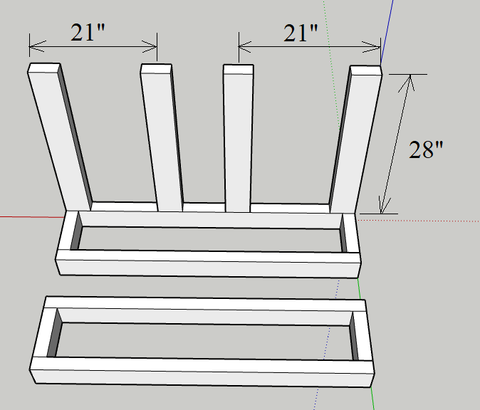
Connect the front and rear rectangles using the 9" side pieces at top and bottom corners. This creates the basic box structure. Add the remaining four 28" vertical pieces as center supports—two in the front rectangle and two in the rear rectangle. These center supports are critical; position them 21" from each side corner, as this spacing aligns with the mounting tabs on standard TV lift mechanisms.

The center support positioning ensures solid mounting points for the TV lift mechanism while maintaining structural integrity. If you're using a different TV lift model, verify the mounting tab spacing and adjust these center supports accordingly.

Step 3: Installing the Base Panel
Attach one of the 47.5" x 12" plywood pieces to the bottom of the frame using wood glue and 1.25" finishing nails spaced every 6-8 inches around the perimeter. This base panel provides a mounting surface for the TV lift mechanism, houses the control system and wiring, and adds substantial rigidity to the entire frame.

If you plan to make the cabinet mobile, this is the ideal time to add casters. Inexpensive ball caster wheels work well for this application; attach them at the four corners of the base using the hardware provided. Position casters slightly inset from the corners (about 2" in from each edge) to ensure they don't interfere with the exterior finishing material you'll add later.

Step 4: Installing the TV Lift Mechanism
With the frame complete, install your TV lift mechanism. Most mechanisms include both floor-mount and rear-mount brackets, allowing you to choose the configuration that best suits your design.

For rear mounting, position the mechanism so its mounting tabs align with the center vertical supports you installed 21" from the sides. Mark mounting hole locations through the mechanism's bracket, remove the mechanism, and pre-drill pilot holes at each mark. Reposition the mechanism and secure it with appropriate screws (typically #8 or #10 wood screws, 1.5" length). Ensure the mechanism is perfectly vertical using a level—even slight angles can cause binding or uneven operation.
For floor mounting, center the mechanism front-to-rear on the base panel and position it side-to-side according to the manufacturer's recommendations (typically centered or slightly offset to one side depending on your TV's configuration). Mark, pre-drill, and secure the floor mounting bracket.
Route the power supply cable and remote control receiver wires along the frame, securing them with cable ties or clips to prevent interference with the moving mechanism. Most TV lifts include both wired and wireless control options; install the wired control switch in an accessible location if you plan to use it.
Step 5: Preparing the Frame for Finishing
Before applying exterior finishing materials, sand all exposed frame edges and surfaces that might be visible in the completed cabinet. Use 220-grit sandpaper to smooth any rough edges or splinters. This step is particularly important around the top opening where the TV emerges, as rough edges could damage the screen during operation.
Drill a cable management hole through the rear panel using a 1.25" paddle bit or spade bit. Position this hole where it will be concealed by the TV but provides easy access for power and video cables. Smooth the hole's edges with sandpaper to prevent cable jacket damage.
Step 6: Applying Hardwood Flooring Exterior
Hardwood flooring makes an excellent cabinet exterior material for several reasons. It comes pre-finished in thousands of colors, textures, and wood species. The tongue-and-groove design creates tight, professional-looking joints. It's dimensionally stable and readily available at home improvement stores. And at approximately $3-4 per square foot, it's cost-effective for this application.

Begin at the bottom of one side and work upward. Measure and cut pieces to length, cutting 45-degree miters on the ends where pieces meet at corners. Apply wood glue to the back of each piece and press it firmly against the frame. The tongue-and-groove edges will interlock, creating tight vertical joints between pieces.
For clamping, you can use traditional bar clamps if available. Alternatively, the video tutorial demonstrates an efficient clamping technique using scrap pieces of wood and a single screw to create adequate clamping pressure while the glue dries. Work your way around all four sides of the cabinet, ensuring pieces remain level and aligned as you progress upward.
At corners, the 45-degree mitered edges should meet cleanly, creating an attractive and professional appearance. Take time to ensure these miter cuts are accurate—a sharp blade on your circular saw and careful measurement make all the difference.
Step 7: Constructing the Cabinet Lid
The cabinet lid requires a slightly different approach. Rather than applying hardwood directly to the plywood substrate, construct the lid as a mini-cabinet, creating an attractive top surface with finished edges on all sides.
Cut the second piece of 47.5" x 12" plywood to serve as the lid's core. Cut hardwood flooring pieces to cover all six edges of this plywood core (the top surface, bottom surface, and all four edges). Apply 45-degree miters where pieces meet at corners, just as you did for the cabinet sides. Glue and clamp these pieces in place, essentially creating a hardwood-wrapped plywood panel.
This approach provides a finished appearance from all viewing angles and creates a substantial, quality feel when handling the lid. The extra thickness added by the hardwood layers also provides more secure attachment points for hinges (flip-back design) or magnets (fixed design).
Step 8: Attaching the Lid
For a flip-back lid design, install a continuous piano hinge along the rear edge of the cabinet top and the corresponding edge of the lid. Pre-drill screw holes to prevent splitting, and ensure the hinge is positioned so the lid can swing freely through its full range of motion. The TV lift mechanism should include small rollers or guides that push the lid upward as the TV rises; position these according to the manufacturer's instructions.
For a fixed lid design, attach the lid directly to the top plate of the TV lift mechanism using the provided mounting hardware. If implementing magnetic safety release, install neodymium magnets on both the lift mechanism's top plate and the underside of the lid. Use magnets rated for 15-20 lbs of holding force—strong enough to support the lid reliably but weak enough to release if downward motion is obstructed.
Step 9: Final Assembly and Testing
With all components installed, perform thorough operational testing before considering the project complete. Attach your television to the lift mechanism's mounting plate according to the manufacturer's instructions. Most mechanisms use standard VESA mounting patterns, the same interface used for wall mounts (VESA Flat Display Mounting Interface Standard — VESA FDMI / MIS-D, MIS-E, MIS-F).
Test the lift through multiple complete cycles, watching for any binding, unusual noise, or irregular motion. Verify that the lid operates correctly—flipping back smoothly or rising with the fixed assembly. Check that the TV clears all cabinet edges with adequate margin throughout its travel. Test both wired and wireless controls to ensure reliable operation.
Connect and route all cables—power, HDMI, antenna, etc.—ensuring they have adequate slack to accommodate the TV's vertical motion. Secure cables to the lift mechanism or cabinet frame using cable ties or clips, preventing them from interfering with moving components.
Where can you install a TV lift cabinet?
The versatility of TV lift cabinets extends far beyond traditional living room applications. Understanding the range of possible installations helps you identify opportunities throughout your home.
Primary Living Spaces
Family rooms, dens, and living rooms represent the most common TV lift installations. In these shared spaces, the ability to conceal the television transforms the room's character. During social gatherings, dinner parties, or quiet reading time, the TV remains hidden. When entertainment time arrives, it appears effortlessly. This dual-mode functionality makes TV lifts particularly valuable in open-concept homes where the living area must serve multiple functions.
Bedroom and Personal Spaces
Bedroom TV lifts often integrate into footboard furniture, positioning the screen ideally for viewing from bed while keeping it concealed the rest of the time. This application has particular appeal in master suites where one partner may watch TV while the other sleeps—the concealed TV eliminates the visual presence of the screen and, in some cases, reduces light pollution when the screen is retracted behind thick cabinet walls.
Home offices benefit from TV lifts when the same space serves work and relaxation functions. During work hours, the professional environment remains free of entertainment equipment. After hours, the same space transforms into a comfortable viewing area.
Kitchen and Cooking Spaces
Kitchen TV lifts hide screens during meal preparation while making them available for following cooking shows, watching news during breakfast, or entertaining children during dinner preparation. Installing a lift mechanism in an island or peninsula counter creates a versatile solution that maximizes limited counter space. The TV rises when needed but doesn't permanently consume valuable work surface.
Outdoor Entertainment Areas
Outdoor TV lift cabinets protect expensive screens from weather when not in use while providing convenient entertainment for patios, pool areas, and outdoor kitchens. These installations require weatherproof lift mechanisms and sealed cabinetry, but the protection and convenience justify the additional complexity. Specialty outdoor-rated TV lifts feature sealed mechanisms, weather-resistant finishes, and enhanced corrosion protection for long-term reliability in exterior applications.
Specialty and Unusual Installations
Creative installations include bathroom vanity lifts for soaking tub entertainment, conference room installations for presentation equipment, retail display applications, trade show booth installations, and marine applications in yachts and large boats. The core technology adapts to virtually any space where the value of concealment and space optimization justifies the installation effort.
What usually goes wrong with a DIY TV lift cabinet?
Most TV lift failures trace to a handful of installation mistakes rather than to the mechanism itself. The patterns repeat across builds:
- Actuator mounted off-vertical. Even a few degrees of tilt loads the lead screw radially and causes binding, noise, and early wear. Use a level on two axes during mounting.
- Undersized capacity. Picking a lift rated exactly at the TV weight leaves no margin for the mount, glass, and dynamic loads. Specify 20-30% over the TV's measured weight.
- Center supports in the wrong place. Standard FIRGELLI mounting tabs land at a 21" spacing — frames built without this in mind force the actuator to mount into thin plywood instead of solid lumber.
- Cables routed across the travel path. HDMI and power cables snagged by the moving carriage will eventually pull connectors or pinch jackets. Anchor cables to the moving frame, not to fixed structure crossing the stroke.
- Fixed lid with no safety release. A heavy lid plus TV descending onto an obstruction can injure fingers. Use magnetic attachment so the lid releases if downward motion is blocked.
How should you test the cabinet before trusting it with a TV?
Run the lift through a structured test sequence before mounting the actual television. The goal is to surface alignment and wiring problems while the consequences are still cheap.
- Run 10 full cycles unloaded. Listen for binding, ticking, or motor strain at the top and bottom of stroke — that's where misalignment shows up first.
- Run 5 full cycles loaded. Mount a dummy weight equal to your TV before mounting the actual screen. Confirm soft-start, soft-stop, and limit-switch behavior at both ends.
- Verify edge clearance through full travel. With the TV mounted, watch every corner of the screen at the cabinet opening — flex in the frame can change clearance under load.
- Test obstruction behavior on the lid. With a fixed lid, place a block (not a finger) in the closing path and confirm the lid releases magnetically or the lift stops on current sense.
- Test both controls. Wired switch and wireless remote should each move the lift through full travel independently.
How do you select the right TV lift for your project?
Choosing an appropriate TV lift mechanism requires matching several specifications to your project requirements. Understanding these parameters ensures successful long-term operation.
Weight Capacity
Always select a lift mechanism with weight capacity exceeding your TV's weight by at least 20-30%. This safety margin ensures smooth operation and extends actuator life. Modern large-screen TVs typically weigh between 30-80 lbs depending on size and technology. A 75" LED display might weigh 60 lbs, suggesting a lift rated for at least 75 lbs capacity. Factor in the mounting bracket weight (typically 2-4 lbs) when calculating total load.
A well-specified TV lift comes down to three matched choices. First, stroke length — pick a stroke that lifts the screen clear of the cabinet opening with margin, using the 18 to 36 inch range as a starting point and your cabinet height as the constraint. Second, weight capacity — take the TV weight, add the mount and bracket weight, then add the 20-30% safety margin. Third, the control system — a wired switch is the most reliable baseline, with wireless RF or home-automation integration layered on top for convenience. Get those three right and the mechanical install (vertical mounting axis, 21" center-support spacing, cable routing off the travel path) is what determines whether the lift lasts.


