The automotive industry has undergone a remarkable transformation over the past two decades, transitioning from purely mechanical systems to sophisticated electromechanical solutions. At the heart of this evolution lies electric linear actuators—compact, powerful devices that convert rotary motor motion into precise linear movement. What was once the exclusive domain of six-figure luxury vehicles has now permeated every segment of the automotive market, from budget-conscious family SUVs to rugged pickup trucks.
🎥 Video — How Linear Actuators are Used in Automobiles
This democratization of automated features represents more than mere convenience; it reflects a fundamental shift in automotive engineering philosophy. Where hydraulic and pneumatic systems once dominated, electric linear actuators now offer superior control, reduced maintenance, lighter weight, and seamless integration with modern vehicle electronics. From the powered tailgate that opens with a wave of your foot to the active aerodynamics that deploy at highway speeds, linear actuators have become indispensable components in contemporary vehicle design.
Whether you're an automotive enthusiast looking to understand the technology behind your vehicle's features, an engineer evaluating actuation solutions, or a DIYer planning to add automated functionality to your own vehicle, this comprehensive guide explores how linear actuators are revolutionizing the automotive experience.
Commercial Automotive Applications of Linear Actuators
Modern vehicles incorporate linear actuators in dozens of applications, many of which have become standard equipment across multiple price segments. These applications leverage the unique advantages of electric actuation: precise position control, programmable speed profiles, safety features like obstruction detection, and integration with proximity sensors and vehicle control systems.
Powered Tailgates and Liftgates
The most ubiquitous application of linear actuators in automobiles is the powered tailgate system. Originally introduced in luxury SUVs, this feature has rapidly migrated downmarket and now appears in mainstream family vehicles, minivans, and crossovers. These systems typically employ one or two heavy-duty industrial actuators with force ratings ranging from 200 to 600 pounds, depending on the weight and size of the tailgate.
Modern powered tailgate systems integrate multiple technologies: capacitive kick sensors beneath the rear bumper for hands-free opening, programmable height settings to accommodate low-clearance garages, obstruction detection for safety, and pinch protection that reverses movement if resistance is detected. The actuators must operate reliably across extreme temperature ranges—from sub-zero winter conditions to summer heat—while maintaining consistent speed and force characteristics.
The control systems for these applications often utilize feedback actuators with built-in potentiometers or hall-effect sensors that provide real-time position data. This feedback enables precise control of opening height, smooth acceleration and deceleration profiles, and accurate detection of the fully opened and closed positions.
Luxury Vehicle Automated Features

High-end luxury vehicles push the boundaries of what's possible with linear actuation technology. The Rolls-Royce Cullinan, for example, showcases a suite of automated features that transform the vehicle experience. Beyond the powered tailgate, these systems include retractable rear seats that fold and deploy at the touch of a button, deployable picnic tables that emerge from the cargo floor, and automated side steps that extend when doors are opened.
These applications often require compact yet powerful actuators that can be concealed within vehicle architecture while delivering substantial force. Bullet actuators, known for their slim profile and high force-to-size ratio, are frequently specified for such applications. The engineering challenge lies not just in the actuation itself, but in coordinating multiple actuators to create choreographed movements that feel refined and luxurious.
Automated Sliding Side Doors
Minivans and family SUVs commonly feature power sliding side doors, a convenience feature that has evolved from a luxury option to standard equipment. These systems typically employ heavy-duty track actuators or cable-driven systems that can handle the substantial weight of a vehicle door while providing smooth, controlled motion.
The control requirements for powered doors are particularly demanding. The system must detect obstructions in the door path, reverse if an object or person is detected, operate safely on inclines where gravity affects door movement, and function reliably after exposure to road salt, mud, and extreme temperatures. Modern implementations include programmable opening distances to prevent door contact with adjacent vehicles in tight parking spaces.
Active Aerodynamics and Spoilers
Performance and sports cars utilize linear actuators for active aerodynamic systems that balance aesthetics with functionality. Retractable rear spoilers deploy automatically at predetermined speeds—typically above 50-60 mph—to increase downforce and improve high-speed stability. These systems often incorporate multiple position settings: fully retracted for styling and fuel efficiency, partially deployed for moderate speeds, and fully deployed for maximum aerodynamic effect.
Air brake systems in high-performance vehicles take this concept further, using powerful actuators to rapidly deploy aerodynamic surfaces during heavy braking, reducing stopping distances. These applications demand actuators with fast actuation speeds (often under 2 seconds for full deployment), robust construction to withstand aerodynamic loads at high speeds, and reliable operation despite exposure to road debris and weather.
Convertible Hardtop Mechanisms
Modern retractable hardtop convertibles represent some of the most complex automotive actuation systems. A typical hardtop mechanism employs six to twelve actuators working in coordination to fold, pivot, and stow the roof panels. The choreography must be precisely timed, with each actuator reaching specific positions before subsequent movements begin.
These systems use feedback actuators extensively, as the control system must know the exact position of each component throughout the operation. Safety interlocks prevent operation if the vehicle is moving, if the trunk contains items that would interfere with roof stowage, or if any panel is not properly aligned. The entire sequence typically completes in 15-25 seconds, a remarkable feat of coordinated electromechanical engineering.
Linear Actuators in Pickup Trucks
The pickup truck segment has enthusiastically adopted linear actuator technology, applying it to enhance both convenience and functionality. These applications must withstand harsher operating conditions than passenger car implementations—pickup trucks encounter more extreme off-road vibration, mud, dust, and temperature cycling.
Automated Tonneau Covers
Tonneau covers protect truck bed cargo from weather and theft while improving aerodynamics. Manual tonneau covers require physical effort to open and close, but automated versions use linear actuators to provide effortless operation. Two primary configurations exist: retractable soft or hard covers that roll or fold into a canister, and hinged covers that lift using actuator-powered arms.
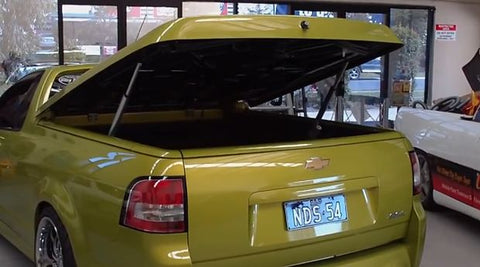
Lift-style tonneau covers typically use two synchronized actuators mounted on either side of the truck bed. These actuators must generate sufficient force to lift the cover weight plus any accumulated snow or water, typically requiring 150-300 pounds of force per actuator. The system must also stop immediately if an obstruction is detected, preventing damage to cargo or the cover itself.
Retractable tonneau covers present different engineering challenges. The actuator drives a rolling mechanism that winds the cover material onto a storage canister. These systems must maintain constant tension on the cover material to prevent sagging while managing the increasing rotational inertia as the cover rolls up.
Powered Truck Tailgates
Pickup truck tailgates are substantially heavier than SUV liftgates, often weighing 50-80 pounds for full-size trucks. Factory-installed power tailgate systems use robust industrial actuators with force ratings of 300-500 pounds to handle this weight plus safety margin. These systems must operate reliably despite exposure to mud, salt, and cargo debris that would compromise less robust designs.
Aftermarket power tailgate kits have become increasingly sophisticated, offering features comparable to factory systems including remote operation, adjustable speed control, and smartphone connectivity. These kits typically bundle the actuators, mounting brackets, control electronics, and wiring harnesses needed for installation.
DIY Vehicle Automation Projects
The availability of high-quality linear actuators, control systems, and online resources has made vehicle automation projects accessible to skilled DIY enthusiasts and custom fabricators. While these projects require careful planning, proper execution can add thousands of dollars of functionality to a vehicle at a fraction of the cost of factory-installed systems.
Project Planning and Selection Criteria
Successful vehicle automation projects begin with thorough planning. The first consideration is force requirements—how much weight must the actuator move, and at what angle? A tailgate or hood rotating on a hinge requires significantly different force calculations than a sliding door. Environmental factors matter equally: will the actuator be exposed to weather, or protected within the vehicle structure? What temperature range must it tolerate?
Stroke length determines how far the actuator can extend. For rotational applications like tailgates and hoods, the required stroke depends on both the desired opening angle and the mounting geometry. Mounting closer to the hinge requires less stroke but more force; mounting farther from the hinge requires more stroke but less force. Speed requirements vary by application—a trunk lid might open leisurely over 5-7 seconds, while a retractable spoiler might need to deploy in under 2 seconds.
Voltage compatibility is crucial. Most vehicles provide 12V DC power, though larger trucks and commercial vehicles may use 24V systems. The actuator voltage must match the vehicle electrical system, and the peak current draw should not exceed the available circuit capacity. Power supplies and appropriate fusing protect both the actuator and vehicle electrical system.
Self-Opening Engine Hood Project
A power-operated hood adds a dramatic element to any vehicle while providing practical benefits for those with mobility limitations or who frequently need engine access. This project typically uses a single linear actuator mounted between the firewall and a reinforced point on the hood structure.
The engineering challenge lies in geometry. Most hoods rotate approximately 60-90 degrees from closed to fully open. The actuator must be mounted such that it can produce adequate lifting force throughout this arc while avoiding interference with engine components. Feedback actuators are recommended for this application, as they allow the control system to stop the hood at any desired position and detect if the hood encounters unexpected resistance.
Safety considerations are paramount. The system should incorporate a manual release mechanism in case of electrical failure, a weight-rated gas strut as a backup support, and obstruction detection that reverses movement if resistance is encountered. The control system should prevent operation while the vehicle is moving and include a key-switch or hidden activation method to prevent unauthorized access.
Automated Tailgate Upgrade
Converting a manual tailgate to powered operation is one of the most popular DIY vehicle automation projects. The typical configuration uses two linear actuators mounted parallel to each other on either side of the tailgate opening. These actuators replace or supplement the existing gas struts.
Synchronization between the two actuators is critical—if one actuator moves faster than the other, the tailgate will bind and potentially damage mounting points. A synchronous control board ensures both actuators move at identical speeds regardless of slight differences in load or friction. FIRGELLI's FA-SYNC-2 controller is purpose-built for this application, automatically adjusting power to each actuator to maintain synchronized movement.
Mounting requires careful measurement and often custom mounting brackets to achieve the correct geometry. The actuator mounting points must be reinforced to handle the forces involved, as the original attachment points for gas struts may not be adequate for powered operation. Wiring should be routed through the vehicle's existing wire conduits where possible, with proper grommets and protection from sharp metal edges.
DIY Tonneau Cover Automation
Automating a tonneau cover requires understanding the cover type and mechanism. Hinged covers are most straightforward to automate, using one or two actuators with gas strut-style mounting. Roll-up and folding covers present more complex challenges, typically requiring custom mechanisms to translate linear actuator motion into the required rolling or folding action.
For hinged covers, force requirements depend on cover weight and wind resistance. Aluminum covers might weigh 30-50 pounds, while heavy-duty fiberglass models can exceed 80 pounds. Actuators should be sized with at least 50% force margin to handle snow load and provide adequate acceleration. Mounting geometry should position actuators to avoid interference with cargo while providing mechanical advantage for lifting.
Weather protection is essential for tonneau cover actuators, as they're fully exposed to the elements. Actuators should have IP65 or better ingress protection ratings, and mounting hardware should be stainless steel or zinc-plated to prevent corrosion. Electrical connections require waterproof connectors and should be routed to avoid standing water accumulation.
Control Systems and Electronics
The control system transforms basic linear actuators into sophisticated automated systems. Modern controllers offer features like soft start/stop to prevent abrupt movements, obstruction detection, programmable position memory, and integration with vehicle systems.
Basic Control Options
The simplest control method uses momentary rocker switches that apply power to the actuator in either direction while pressed. This approach works for non-critical applications but lacks safety features and position control. Adding limit switches provides basic position sensing, allowing the controller to stop movement at fully extended and retracted positions.
Remote controls add convenience, particularly for tailgate and tonneau cover applications where operation from a distance is valuable. RF remote systems offer ranges of 50-100 feet and can control multiple actuators with a single transmitter. More sophisticated implementations integrate with factory key fobs through additional interface modules.
Advanced Control Features
Feedback-based control systems unlock advanced functionality. By monitoring actuator position in real-time, these systems can implement programmable height settings, soft start/stop profiles, and precise obstruction detection. Current sensing detects when the actuator encounters unexpected resistance, immediately stopping or reversing movement to prevent damage or injury.
For projects requiring coordinated movement of multiple actuators, synchronization controllers are essential. These systems monitor the position of each actuator and adjust speed to maintain precise alignment. This technology is critical for applications like tailgates and hardtop conversions where binding can occur if actuators fall out of sync.
Microcontroller-based solutions using Arduino or similar platforms provide maximum flexibility. These systems can implement complex logic, integrate with vehicle CAN bus networks, log operating data, and provide smartphone connectivity. However, they require programming knowledge and more extensive testing to ensure reliable operation in automotive environments.
Installation Best Practices and Considerations
Proper installation is crucial for reliable operation and longevity of automated vehicle systems. Poor installation can lead to premature actuator failure, electrical issues, or safety hazards.
Mechanical Installation Guidelines
Mounting points must be structurally sound and capable of handling the forces involved. For high-force applications, reinforcement plates distribute loads across larger areas, preventing stress concentration on thin sheet metal. Fasteners should be grade 8 or better for critical mounting points, and thread-locking compound prevents loosening from vibration.
Actuator alignment is critical. Misalignment creates side loads that accelerate wear on internal components and reduce efficiency. Universal joints or spherical bearings at mounting points accommodate slight misalignment and rotational movement. The actuator should move smoothly through its full stroke without binding or requiring excessive force.
Protection from environmental damage extends actuator life significantly. Actuators mounted in wheel wells or under vehicles should have rubber boots protecting the stroke tube from rock impacts and road spray. Drain holes in actuator mounting brackets prevent water accumulation. In extreme environments, additional protection such as accordion-style boots or sealed enclosures may be warranted.
Electrical Installation
Automotive electrical systems present unique challenges. Voltage fluctuations occur during engine starting, alternator ripple introduces noise, and the entire chassis serves as the ground return path. Proper electrical installation accounts for these factors while ensuring safe, reliable operation.
Wire gauge must handle the peak current draw with minimal voltage drop. Undersized wiring causes voltage loss that reduces actuator performance and creates heat that can damage insulation. As a rule, 14 AWG wire handles up to 15 amps for runs under 10 feet, while 12 AWG is appropriate for higher currents or longer distances. Power supplies should include appropriate overcurrent protection.
Connections require automotive-grade components. Crimp connectors must be properly crimped with the correct tool—improper crimping is a leading cause of electrical failures. Heat shrink tubing protects connections from moisture and corrosion. For frequently flexed wiring such as tailgate applications, use extra-flexible wire with stranded conductors and allow adequate slack to prevent strain on connections.
Grounding deserves particular attention. Poor grounds cause voltage drop, erratic operation, and can create electromagnetic interference affecting other vehicle systems. Ground connections should be made directly to clean, bare metal with star washers to penetrate any oxidation. In fiberglass or composite body panels, ground wires must run back to the chassis or directly to the battery negative terminal.
Troubleshooting and Maintenance
Well-designed actuation systems require minimal maintenance, but understanding common issues helps ensure long-term reliability.
Common Issues and Solutions
Slow or weak operation often indicates voltage supply problems. Check for loose connections, corroded terminals, or undersized wiring. Battery voltage should be measured at the actuator during operation—if voltage drops significantly below 12V (for 12V systems), insufficient power is reaching the actuator. Dirty or corroded switches can also cause high resistance that reduces available power.
Noisy operation typically results from mechanical issues. Binding from misalignment creates grinding or squealing sounds as internal components strain against side loads. Worn mounting bushings allow excessive play that causes knocking or rattling. Lack of lubrication in pivot points creates squeaking. Inspection of mounting points and alignment usually reveals the source.
Intermittent operation or complete failure to move can result from either electrical or mechanical causes. Electrically, check for blown fuses, failed relays, or broken wires. Mechanically, ensure the actuator isn't encountering an obstruction or attempting to move an excessive load. Disconnecting the actuator from the load and testing it independently isolates whether the problem lies with the actuator or the mechanical system.
Preventive Maintenance
Regular inspection catches developing problems before they cause failure. Check mounting hardware for looseness, inspect wiring for damage or chafing, and verify that protective boots or covers remain intact. Pivot points and hinges benefit from periodic lubrication with appropriate automotive grease—avoid petroleum-based products on rubber components.
Electrical connections should be inspected annually for corrosion, particularly in harsh climates where road salt is used. Dielectric grease on connections protects against moisture infiltration. Battery terminals should be kept clean and tight, as poor battery connections affect all vehicle electrical systems.
Testing actuator operation through its full range periodically ensures it remains functional and identifies any degradation in performance. Unusual sounds, changes in speed, or reduced force indicate developing problems that should be addressed before complete failure occurs.
Conclusion
Linear actuators have fundamentally transformed the automotive landscape, enabling features that enhance convenience, safety, and functionality across all vehicle segments. From the ubiquitous powered tailgate to sophisticated active aerodynamics systems, these electromechanical devices have become integral to modern vehicle design. The technology's migration from exclusive luxury features to mainstream applications demonstrates both its reliability and value proposition.
For DIY enthusiasts and custom fabricators, the availability of high-quality actuators and control systems has opened possibilities that were previously the domain of automotive manufacturers. With proper planning, appropriate component selection, and careful installation, sophisticated automation projects are achievable for those with mechanical aptitude and willingness to learn. The key to success lies in understanding force requirements, environmental conditions, and control system needs before beginning implementation.
As vehicles continue evolving toward greater electrification and automation, the role of linear actuators will only expand. Future applications may include morphing body panels for aerodynamic optimization, automated cargo management systems, and integration with autonomous vehicle systems. For engineers, DIYers, and automotive enthusiasts alike, understanding linear actuator technology provides insight into both current vehicle capabilities and future possibilities.
Frequently Asked Questions
How do I calculate the force needed for a tailgate or hood actuator?
Force calculation for rotational applications depends on weight, mounting geometry, and the angle of rotation. The basic formula considers the perpendicular distance from the hinge to both the center of gravity and the actuator mounting point. As a general guideline, mounting the actuator 12-18 inches from the hinge typically requires force equal to 1.5-2 times the weight being lifted for a 90-degree rotation. However, precise calculation should account for the mechanical advantage changing throughout the rotation arc. For critical applications, use online calculators or consult engineering resources to determine the exact force profile required. Always specify actuators with at least 20-30% force margin above calculated requirements to account for friction, wind resistance, and aging of components.
What IP rating do I need for automotive actuators?
The required Ingress Protection rating depends on mounting location and exposure. Actuators mounted inside the vehicle cabin or trunk, protected from direct weather exposure, can function adequately with IP54 rating (dust protected, splash resistant). Actuators mounted under the vehicle, in wheel wells, or on external surfaces should have minimum IP65 rating (dust tight, resistant to water jets). For extreme environments such as off-road vehicles or regions with heavy road salt usage, IP66 or IP67 ratings provide additional protection. Remember that IP ratings address the actuator body itself—electrical connections and control boxes require separate consideration and should use waterproof connectors and sealed enclosures in exposed locations.
Why do I need synchronized control for dual actuator applications?
When two actuators work in parallel to move a single load—such as a tailgate—any difference in speed causes the load to twist and bind. Manufacturing tolerances mean that nominally identical actuators may have slightly different internal friction, gear ratios, or motor characteristics. Additionally, one actuator may encounter more resistance due to mounting geometry or alignment differences. Without synchronization, the faster actuator continues moving while the slower one lags, creating side loads that can damage mounting points, bend the load being moved, or cause premature actuator failure. Synchronization controllers continuously monitor position and adjust power delivery to each actuator, ensuring they move in lockstep regardless of individual variations. This technology is essential for any application where binding or twisting could occur.
Can I use 24V actuators in a 12V vehicle system?
No, actuators must match the vehicle system voltage. Using a 24V actuator in a 12V system results in significantly reduced force and speed, as the actuator receives only half its rated voltage. The actuator may not move at all under load, and the motor could overheat from excessive current draw as it strains against insufficient voltage. Conversely, applying 12V power to a 24V-rated actuator delivers approximately 25% of rated force and half the speed—inadequate for most applications. Some vehicles, particularly larger commercial trucks and RVs, use 24V electrical systems. Always verify your vehicle's system voltage before selecting actuators. If you absolutely must use a different voltage actuator, a DC-DC converter can step voltage up or down, but this adds complexity, cost, and potential points of failure.
When do I need feedback actuators versus standard actuators?
Feedback actuators incorporate position sensors—typically potentiometers or hall-effect sensors—that report the actuator's exact extension in real-time. Standard actuators lack position feedback; the controller only knows whether power is applied, not where the actuator is in its stroke. Feedback becomes essential when you need programmable stopping positions (such as adjustable tailgate height), precise synchronization between multiple actuators, obstruction detection based on position deviation, or integration with sophisticated control systems. For simple open/close applications where the actuator always moves to physical end stops, standard actuators with external limit switches suffice and cost less. However, feedback actuators enable significantly more advanced functionality and better protection against mechanical issues, making them worthwhile for complex projects or applications where safety and precision matter.
How do I determine the correct stroke length for my application?
Stroke length calculation depends on whether the application is linear (sliding) or rotational (hinged). For linear applications like sliding doors or extending platforms, measure the total distance the load must travel and add 10-15% margin. For rotational applications, the calculation is more complex. Draw a scaled diagram showing the hinge point, the actuator mounting locations at both ends, and the desired rotation angle. Using geometry, calculate the distance between mounting points at both fully closed and fully open positions—the difference is your required stroke. Online calculators and CAD software can perform this calculation precisely. Many automotive applications require 8-16 inch strokes, though compact installations may use 4-6 inch strokes while large tailgates might need 18-24 inches. Remember that longer stroke actuators are more susceptible to side load damage, so mount them with proper alignment and use spherical bearings where appropriate.


