Hidden Kitchen Appliance Lifts with Linear Actuators
Modern kitchen design increasingly emphasizes clean countertops and hidden storage solutions. One of the most elegant ways to achieve this aesthetic while maintaining functionality is through motorized appliance lifts powered by linear actuators. These systems allow you to conceal mixers, coffee makers, blenders, spice racks, and other frequently-used appliances below the counter surface, then raise them to working height at the touch of a button.
🎥 Video — Hidden Kitchen Appliance lifts using Linear Actuators
Unlike manual lift mechanisms that require physical effort and can wear out over time, electric linear actuators provide smooth, reliable motion with minimal maintenance. They're the same technology used in hospital beds, aircraft seating, and industrial automation—now adapted for residential applications. For homeowners, custom cabinet makers, and kitchen designers, understanding how to implement these systems opens up new possibilities for space optimization and modern convenience.
This guide will walk you through the engineering principles, component selection, and installation process for creating your own hidden appliance lift system using 12V DC linear actuators.

Why Linear Actuators for Kitchen Lifts
The transition from manual or spring-assisted lift mechanisms to electric actuation represents a significant upgrade in kitchen functionality. Traditional pop-up shelves rely on gas springs or counterweight systems that can be difficult to operate when loaded with heavy appliances. They also lack the ability to stop at intermediate positions and require constant force to control the motion.
Electric linear actuators solve these problems by providing powered, controlled motion in both directions. They can handle loads ranging from a few pounds for spice racks up to 50+ pounds for commercial-grade mixers and appliances. Built-in limit switches prevent over-extension, and the self-locking lead screw design means the actuator holds position even when power is removed—no need for additional braking systems.
For kitchen applications specifically, 12V DC actuators offer several advantages: they operate quietly (typically under 50dB), can be powered from standard wall outlets using an AC-to-DC power supply, and are safe for residential use. The low voltage also makes them straightforward to wire and control, even for DIY installers without electrical engineering backgrounds.
Key Components for Appliance Lift Systems
Building a functional hidden appliance lift requires several interconnected components working together. Understanding each element helps ensure proper system design and long-term reliability.
Selecting the Right Actuator
The actuator is the core component that provides the lifting force. The two critical specifications are stroke length and force rating. Stroke length determines how far the platform will travel—typically matching the height of your appliance plus 2-4 inches for clearance. Common stroke lengths for kitchen applications range from 8 to 16 inches.
Force rating indicates how much weight the actuator can push or pull. For kitchen appliances, a 100-200 lb rated actuator provides a comfortable safety margin. The FA-400 series actuators, for example, offer 400 lbs of force with strokes up to 18 inches, making them ideal for heavier mixers and multi-appliance platforms. For lighter loads like spice racks or small coffee makers, a lower-force actuator may suffice, reducing both cost and power consumption.
Speed is another consideration—most kitchen applications work well with actuators that travel at 0.5 to 1.0 inches per second. Slower speeds provide smoother, quieter operation, while faster speeds reduce wait time when accessing appliances.
Control Systems and Switches
Modern appliance lifts can be operated through several control methods. The simplest approach uses a momentary rocker switch mounted on the cabinet face—press and hold to raise, press the opposite direction to lower. This requires running low-voltage wiring from the switch location to a control box that manages the actuator's direction and power.
Wireless remote control systems offer more flexibility, eliminating visible switches and allowing operation from anywhere in the kitchen. The 2CH-RC remote control, for instance, provides two-channel control (up/down) with a range of up to 30 feet. The receiver unit connects between the power supply and actuator, interpreting the wireless signals to drive the motor in the appropriate direction.
For smart home integration, some installers incorporate relay modules controlled by home automation systems. This allows voice control through Alexa or Google Home, or integration with broader kitchen automation sequences.
Power Supply Requirements
Kitchen appliance lifts typically require a 12V DC power supply capable of delivering 5-12 amps depending on actuator specifications. The power supply converts standard 110V AC household current to the low-voltage DC needed by the actuator. For the FA-400 series actuators, a 12V 12A power supply provides adequate current even under full load conditions.
The power supply should be mounted in a location with adequate ventilation—typically inside the cabinet but away from heat sources. Some installations use a small ventilated enclosure to protect the electronics from kitchen moisture and temperature variations.

Mounting Hardware and Brackets
Proper mounting is critical for smooth, reliable operation. Mounting brackets connect the actuator to both the fixed cabinet structure and the moving platform. The MB3 bracket is commonly used for medium-duty applications, providing a clevis-style connection that allows the actuator to pivot slightly as the platform moves.
The bracket at the base of the actuator should be secured to solid cabinet structure—typically the cabinet bottom or a reinforced mounting board. The upper bracket attaches to the rear of the vertical platform assembly. Both connection points should use appropriate fasteners for the material (wood screws for plywood cabinets, machine screws with lock nuts for metal frameworks).
Designing the Vertical Platform Assembly
The vertical platform, sometimes called a "vertical drawer," is the structural element that holds the appliance and rides up and down within the cabinet opening. Unlike horizontal drawers, these platforms move vertically and require careful engineering to prevent binding, tilting, or jamming.
Platform Dimensions and Stability
The platform should be sized to accommodate your appliance with approximately 1/2 inch clearance on all sides. More important than the top dimensions, however, is the platform depth. A common mistake in DIY installations is making the platform exactly as deep as the appliance, which causes stability issues when fully extended.
As a general rule, maintain at least 6-10 inches of platform depth inside the cabinet even when the platform is fully raised. This ensures the platform remains guided by the cabinet walls throughout its travel. For a 10-inch-tall appliance that will be raised 12 inches, the total platform depth should be at least 22 inches.
Construct the platform from 1/2 or 3/4-inch plywood or Baltic birch for rigidity. The back panel is particularly important since this is where the actuator attaches—reinforce this area with additional blocking if needed to prevent the mounting screws from pulling through under load.
Guide Systems and Alignment
Linear actuators provide pushing and pulling force but no lateral guidance. The platform must be guided by the cabinet structure to move straight up and down without binding. The simplest approach relies on the cabinet walls themselves—if the platform fits snugly but still slides freely, this often provides adequate guidance for light to medium loads.
For heavier appliances or applications requiring tighter tolerances, add dedicated guide rails. Standard drawer slides can be mounted vertically to provide smooth, low-friction guidance. Full-extension ball-bearing slides rated for the load weight work particularly well. Install one slide on each side of the platform, ensuring they're perfectly parallel to prevent binding.
Another option uses slide rails with linear bearings for industrial-grade precision. This approach is overkill for most kitchen applications but may be appropriate for commercial installations or very heavy loads.
Step-by-Step Installation Guide
This installation sequence assumes a standard base cabinet with a false countertop section that can be removed to access the appliance. Adapt as needed for your specific cabinet configuration.
Cabinet Preparation
Begin by removing any existing shelves or dividers in the cabinet that will house the lift mechanism. Measure the interior dimensions carefully, accounting for any cabinet face frames or inset areas. Create a full-scale cardboard mockup of the platform to test fit before cutting actual materials.
If the cabinet will have a removable countertop section, ensure the opening is sized appropriately—typically 1/4 inch larger than the platform top dimensions. Install hard stops or brackets to support the removable section when the platform is lowered. Some installations use magnetic catches to hold the countertop piece in place while still allowing easy removal.
Platform Construction and Assembly
Cut the platform components from 3/4-inch plywood. The basic assembly consists of a back panel, two side panels, a bottom panel, and a front panel. Use wood glue and 1-1/4 inch screws to assemble the box structure, ensuring everything is square. Reinforce the back panel where the actuator will mount—add a 2x4 block or double layer of plywood to provide solid material for the mounting bracket screws.
If using vertical drawer slides for guidance, install them now according to the manufacturer's instructions. The cabinet-side slides should be perfectly plumb and positioned so the platform slides have full travel without binding.
Sand all surfaces that will be visible when the platform is raised. Many installers match the platform finish to the cabinet interior, using the same stain or paint for a cohesive look.
Actuator Mounting and Alignment
Mount the base bracket to the cabinet bottom, positioning it so the actuator will be centered behind the platform. The exact position depends on your actuator stroke length and platform height—the goal is to have the actuator fully retracted when the platform is in the closed position, with just enough clearance for the top bracket to clear any obstructions.
Attach the upper bracket to the platform back panel. With the platform positioned in the cabinet, temporarily support it at the correct height to mark where the actuator rod will connect. The actuator should be as close to vertical as possible—slight angles are acceptable but excessive deviation reduces effective force and can cause premature wear.
Connect the actuator to both brackets without tightening the fasteners completely. Manually test the platform motion through its full range, checking for binding or interference. Adjust the bracket positions as needed, then tighten all fasteners securely. Use thread-locking compound on critical connections to prevent loosening from vibration.
Electrical Connections and Controls
Mount the power supply inside the cabinet in a location with good airflow. If using a wireless remote control system, mount the receiver near the power supply. Wire the system according to the provided diagrams—most setups follow this sequence: AC power to power supply, power supply to control box or receiver, control box/receiver to actuator.
For wired switch controls, run low-voltage wire from the switch location to the control box. Use at least 18-gauge wire for runs under 20 feet. Secure all wiring with cable clips to prevent interference with the moving platform.
Before installing the appliance, test the system through multiple cycles. The platform should move smoothly without jerking or hesitation. If the actuator doesn't stop precisely when the platform is fully closed or open, you may need to adjust the internal limit switch settings or install external limit switches to fine-tune the travel range.
Final Adjustments and Load Testing
With the appliance installed on the platform, run several test cycles under load. The motion should remain smooth—if the actuator stalls or struggles, you may need a higher-force unit or the platform might be binding in the guides. Check that the appliance remains stable throughout the motion with no tipping or shifting.
Adjust the platform position if needed to ensure the appliance surface is flush with the countertop when raised. Some installations use adjustable feet on the platform bottom to fine-tune the height. Add non-slip material to the platform surface to keep the appliance secure during operation.
Advanced Applications and Variations
Once you understand the basic principles, the same technology can be adapted for more sophisticated installations. Multiple appliances can share a single platform with divided sections, allowing selective access to different items. Some designs incorporate rotating mechanisms powered by rotary actuators to present different appliances depending on the rotation angle.
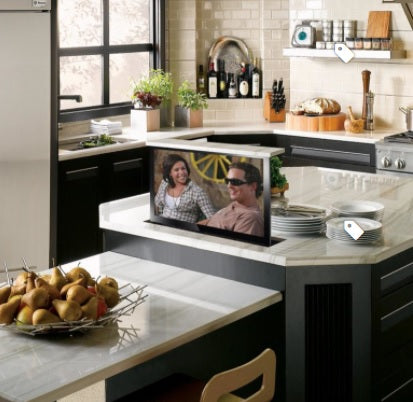
Kitchen island installations present unique opportunities since access can be designed from any side. Pop-up bars, hidden TV screens (similar to motorized TV lifts), and appliance garages that rise from the island center all follow the same actuation principles covered here. The key difference is that island installations may require multiple actuators working in parallel to prevent platform tilt, especially for wider surfaces.
For commercial applications or prosumer kitchens, industrial-grade systems using industrial actuators provide enhanced durability and higher duty cycles. These systems can handle continuous operation in restaurant environments where appliances are accessed dozens of times per shift.
Maintenance and Troubleshooting
One of the primary advantages of actuator-based lift systems is minimal maintenance requirements. The sealed internal mechanisms don't require lubrication, and there are no cables or chains to adjust. However, some basic upkeep ensures long-term reliability.
Periodically inspect all mounting fasteners for tightness. Kitchen environments with temperature and humidity variations can cause wood to expand and contract, potentially loosening screws over time. Check that the platform still moves freely in its guides—buildup of debris or splashed liquids can create friction points that strain the actuator.
If the system becomes noisy, first check for loose mounting brackets or hardware rattling during operation. True mechanical noise from the actuator usually indicates worn internal components or lack of proper lubrication, which typically doesn't occur until after thousands of cycles. Most quality actuators will operate smoothly for years in residential applications.
Electrical issues typically manifest as intermittent operation or complete failure to respond to controls. Check all wire connections for corrosion or damage, particularly at terminal blocks and connectors. Verify the power supply is delivering correct voltage using a multimeter—outputs more than 1V above or below the rated voltage may indicate power supply failure.
Cost Considerations and ROI
A complete DIY appliance lift system typically costs between $200-400 in components depending on actuator specifications and control options. This includes the actuator ($100-200), mounting brackets ($20-30), power supply ($30-50), control system ($30-100), and miscellaneous hardware. Add materials for the platform assembly ($50-100) and you have a complete system for roughly half the cost of commercial appliance lift products.
For professional installations by cabinet makers or contractors, expect to add $300-600 in labor depending on complexity and finish requirements. Even at this price point, motorized appliance lifts add significant value to kitchen remodels and are increasingly expected in high-end residential and commercial kitchen designs.
The return on investment comes from improved functionality, increased storage capacity, and enhanced aesthetics. Kitchens with hidden appliance systems typically see higher resale values, as buyers increasingly prioritize clean countertops and integrated technology. For homeowners who plan to stay long-term, the daily convenience of instant access to frequently-used appliances without sacrificing counter space justifies the investment.
Conclusion
Hidden kitchen appliance lifts powered by electric linear actuators represent a practical application of industrial motion control technology in residential settings. By understanding the key components—proper actuator selection, stable platform design, appropriate guidance systems, and reliable controls—DIY installers and professional cabinet makers can create custom solutions tailored to specific appliances and cabinet configurations.
The flexibility of these systems allows endless customization, from simple spice rack lifts to sophisticated multi-appliance garages with wireless control and smart home integration. As linear actuator technology continues to advance with quieter operation, more compact form factors, and improved reliability, these applications will become increasingly common in both new construction and kitchen remodels.
Whether you're a homeowner looking to upgrade your kitchen or a professional fabricator seeking to expand your service offerings, mastering appliance lift installation opens up new possibilities for combining modern convenience with timeless design principles. The result is a kitchen that's not just beautiful, but intelligently engineered for how people actually cook and live.
Frequently Asked Questions
What size actuator do I need for my kitchen appliance?
Select an actuator stroke length that matches or slightly exceeds your appliance height. For a 10-inch mixer, choose a 12-inch stroke actuator. For force rating, weigh your appliance and platform assembly, then select an actuator rated for at least double that weight as a safety margin. A 50-lb total load should use an actuator rated for 100+ lbs. The FA-400 series with 400 lb capacity handles virtually all residential kitchen appliances with substantial overhead capacity for reliability.
Can I install this system in existing cabinets?
Yes, existing cabinets can be modified for appliance lift systems provided they have adequate depth (typically 20+ inches) and sturdy construction. You'll need to remove existing shelves and possibly reinforce the cabinet bottom where the actuator mounts. The cabinet must be deep enough to accommodate both the appliance height plus 6-10 inches of platform that remains inside when fully raised for stability. Face frame cabinets may require additional modifications to create a clean opening.
How much noise do linear actuators make?
Quality 12V DC linear actuators designed for residential use typically produce 45-55 dB of sound during operation, roughly equivalent to a quiet conversation or modern dishwasher. The FA-400 series actuators use precision lead screws and quiet DC motors that are barely noticeable in a typical kitchen environment. Most of the sound comes from the mechanical motion rather than motor noise. Proper mounting with vibration isolation and ensuring the platform glides smoothly minimizes operational noise further.
What happens if the power goes out?
Linear actuators with lead screw mechanisms are self-locking, meaning they hold position even when power is removed. If a power outage occurs while the platform is raised, it will remain in that position until power is restored. The appliance and platform are secure and won't suddenly drop. Once power returns, normal operation resumes. For critical applications, some installers add a manual release mechanism or incorporate battery backup systems, though this is rarely necessary for kitchen applications.
Can I control multiple actuators together?
Yes, multiple actuators can be wired in parallel to a single control box to lift wider platforms or heavier loads. This is common for kitchen island installations where a single actuator might cause platform tilt. The key is ensuring all actuators have identical specifications (same stroke length and speed) so they move in perfect synchronization. For complex multi-actuator systems, specialized control boxes with synchronized output channels ensure even distribution of force and prevent binding from timing mismatches between actuators.
How long do linear actuators last in kitchen applications?
Quality residential-grade actuators typically provide 10,000+ cycles before showing wear, which translates to many years of daily use in kitchen applications. If you raise and lower an appliance twice per day, that's over 13 years of service life. Industrial-grade actuators like the industrial actuators series offer even longer duty cycles for commercial installations. The actual lifespan depends on load weight, duty cycle, and environmental conditions. Kitchens with high humidity or temperature extremes may see slightly reduced lifespan, but proper component selection and installation typically ensures decade-plus reliability.
Do I need special electrical work for installation?
No specialized electrical licensing is required for the low-voltage DC side of the system. The 12V DC wiring from the power supply to the actuator and controls is safe for DIY installation. However, connecting the power supply to household 110V AC may require a licensed electrician depending on local codes. Many installers simply plug the power supply into an existing outlet inside the cabinet. If you need to install a new outlet or hard-wire the power supply, consult local electrical codes and consider hiring a licensed electrician for that portion of the work.


