Marine Linear Actuators: Powering Modern Boat Design and Functionality
The marine industry has undergone a significant transformation in recent years, with electric automation replacing traditional hydraulic systems across vessels of all sizes. From compact fishing boats to luxury superyachts, shipbuilders and boat owners are increasingly turning to linear actuators to provide reliable, maintenance-free motion control in some of the harshest operating environments on Earth. Salt spray, constant moisture, UV exposure, and the mechanical stress of waves create unique engineering challenges that demand robust, corrosion-resistant solutions.
🎥 Video — Supporting Boat Hatches, Shipbuilders, and Marine Enthusiasts with Linear Actuators
Over more than a decade, FIRGELLI Automations has supplied thousands of marine clients with electric actuator solutions for boat hatches, helm controls, anchor systems, entertainment systems, and specialized custom applications. This experience has refined our understanding of what marine automation truly requires: not just waterproofing, but complete environmental protection coupled with the power density and reliability that life at sea demands. Whether you're a professional shipbuilder looking to differentiate your vessels or a boat enthusiast planning a DIY upgrade, understanding how to properly specify and implement linear actuators in marine environments is essential for long-term success.
This comprehensive guide explores the specific requirements, applications, and best practices for implementing electric linear actuators in marine environments, drawing on real-world experience with boat hatch automation, onboard comfort systems, and exterior marine applications.
Why Electric Actuators Have Replaced Hydraulics in Modern Marine Design
Traditional marine automation relied heavily on hydraulic systems, which offered substantial force but came with significant drawbacks in the marine environment. Hydraulic fluid leaks, complex maintenance requirements, the need for pumps and reservoirs, and environmental concerns have driven the industry toward electric actuation. Modern linear actuators now deliver comparable force ratings while eliminating hydraulic system complexity entirely.
Electric linear actuators offer several compelling advantages for marine applications. They operate on standard 12V or 24V DC power already available on most vessels, require virtually no maintenance beyond occasional inspection, and feature sealed construction that protects internal components from moisture and contaminants. Installation is straightforward with simple two-wire connections, and the absence of hydraulic fluid eliminates the risk of environmentally harmful leaks. For boat builders, this translates to faster installation times, reduced warranty claims, and the ability to offer premium automated features without the cost and complexity of hydraulic infrastructure.
The performance capabilities of modern marine-grade linear actuators have also improved dramatically. Units are now available with force ratings from 50 lbs to over 2,000 lbs, stroke lengths from 2 inches to 60 inches, and IP66 or higher ingress protection ratings. Built-in limit switches, position feedback options, and quiet operation make them suitable for applications ranging from delicate entertainment system deployment to heavy-duty hatch control.
Boat Hatch Automation: Engineering Reliable Access Systems
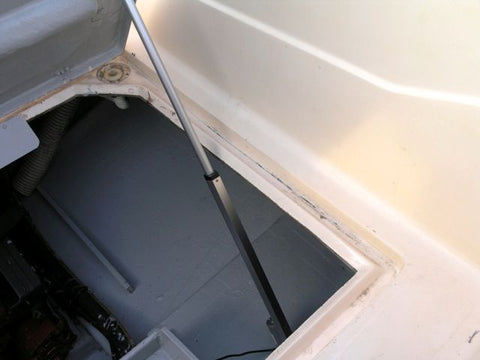
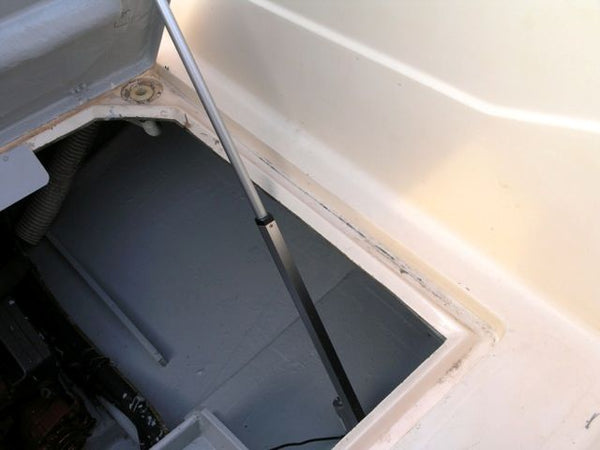
Boat hatches represent one of the most common and demanding applications for marine linear actuators. Engine compartment hatches, storage access panels, cockpit hatches, and anchor lockers all benefit from automated opening systems that enhance convenience while improving safety. Manual hatches can be heavy, awkward to operate in rough conditions, and may require both hands at moments when crew members need to maintain their grip on safety rails.
When designing an automated boat hatch system, several critical factors must be considered. First, the actuator must provide sufficient force not just to lift the hatch weight, but to overcome wind resistance, the mechanical advantage of the mounting geometry, and any binding that may occur due to boat flexing or debris. As a general guideline, select an actuator with at least 30-50% more force capacity than your calculated requirement to ensure reliable operation under all conditions.
Mounting geometry significantly impacts performance and longevity. The actuator should be mounted to create approximately a 45-degree angle at mid-stroke, which optimizes force transfer and reduces side-loading stress on the internal mechanics. Mounting brackets must be through-bolted with backing plates and marine-grade fasteners, not simply screwed into fiberglass or wood. The mounting points should be reinforced if necessary to handle the concentrated loads.
Stroke length selection requires careful measurement. The actuator stroke must be sufficient to achieve full hatch opening while accounting for the arc of travel created by hinge placement. A common mistake is selecting stroke length based on linear measurement rather than accounting for the angular geometry. Additionally, consider adding an inch or two of extra stroke to allow for adjustment and to ensure the actuator never reaches its physical limit under load, which can cause premature wear.
Environmental Protection Considerations
Boat hatches often face the harshest conditions on a vessel. They may be exposed to direct seawater spray, full sun exposure, and repeated temperature cycling. For above-deck applications, select industrial actuators with IP66 or IP67 ratings at minimum. The actuator housing should be stainless steel or hard-anodized aluminum, not painted steel which will corrode rapidly in salt environments.
Electrical connections require special attention in marine environments. Use marine-grade heat shrink with adhesive lining on all connections, and apply dielectric grease to connector pins. Where possible, route wiring through protected pathways and avoid leaving connectors exposed to standing water. Consider using waterproof quick-disconnect connectors rated for marine use, which simplify maintenance and allow for easier actuator replacement if needed.
Control Systems and Safety Features
Most boat hatch applications benefit from control box systems that provide momentary or maintained operation with integrated relay protection. For convenience, wireless remote control systems allow operation from anywhere on the vessel, though hardwired controls should be provided as backup.
Safety features are essential for hatch automation. Emergency manual release mechanisms should allow the hatch to be operated manually if electrical power is lost. Obstruction sensing, either through current sensing in the control system or mechanical clutch mechanisms, prevents injury or damage if the hatch encounters resistance during operation. For hatches that people walk across or that secure critical systems, incorporate visual or audible warnings before movement begins.
Interior Comfort and Entertainment Applications
Inside the cabin, salon, and staterooms, linear actuators enable the kind of luxury automated features that distinguish premium vessels from standard builds. These applications typically face less environmental stress than exterior installations but require smooth, quiet operation and precise control for the close-quarters living environment.
Hidden TV and Entertainment Systems
Concealed television and entertainment systems are highly desired features in modern boat interiors. TV lifts can be integrated into cabinetry, headboards, or countertops to deploy screens only when needed, maximizing space efficiency in compact cabin layouts. For marine applications, select lift mechanisms with solid construction and secure latching, as they must withstand the constant motion of a vessel underway.
Custom installations may use track actuators to create slide-out screen deployments from bulkhead cabinets, or column lift systems for elegant floor-to-ceiling deployments in larger salon spaces. The key consideration is ensuring the deployment mechanism positively locks in both stored and deployed positions to prevent rattling or unexpected movement in rough seas.
Adjustable Furniture and Berths
Convertible furniture maximizes the utility of limited cabin space. Dinette tables that rise to create sleeping berths, captain's chairs with powered lumbar and recline adjustment, and salon seating that converts to accommodate different configurations all rely on linear actuators for smooth, controlled movement. For these applications, micro linear actuators often provide sufficient force in a compact form factor that integrates discreetly into furniture designs.
Synchronized multi-actuator systems allow for level adjustment of larger platforms or surfaces. When multiple actuators must work together, using feedback actuators with position sensing enables precise coordination through electronic control systems, ensuring all actuators maintain synchronization even under uneven loading.
Galley and Storage Optimization
Electric drawer slides provide soft-close, soft-open functionality for galley drawers and storage lockers, preventing the slamming and rattling that occur with traditional slides in seaway conditions. Powered pantry systems can bring deep storage forward for easy access, while automated spice racks and appliance garages deploy at the touch of a button.
Under-floor storage access is another innovative application, where floor panels lift electrically to reveal storage compartments, eliminating the need to manually lever up heavy teak or composite flooring sections. This not only adds convenience but reduces the risk of damage to expensive flooring materials.
Exterior and Deck Applications
On deck and in exterior locations, linear actuators face the full force of marine environmental challenges while often requiring greater force capacity than interior applications. These installations demand the most robust actuator designs and the most careful attention to installation details.
Anchor Systems and Davit Controls
While primary anchor windlasses typically use dedicated marine windlass motors, linear actuators play important roles in secondary anchor controls, anchor locker lid automation, and davit positioning systems for tenders and PWCs. Heavy-duty industrial actuators with 1,000 lbs or greater force capacity handle the substantial loads involved in raising and lowering small boats or controlling swim platforms.
For these applications, the marine environment demands stainless steel construction throughout. Actuator rods should be 316 marine-grade stainless steel with additional surface hardening to resist pitting corrosion. Sealed bearing surfaces prevent salt intrusion, and all fasteners must be stainless steel or better to prevent galvanic corrosion issues.
Ventilation Systems and HVAC Control
Automated ventilation hatches maintain comfortable cabin temperatures while protecting interiors from sudden weather changes. Linear actuators can open overhead hatches, portlights, and dedicated ventilation ports in response to temperature sensors or manual controls. Rain sensors can automatically close hatches when precipitation is detected, protecting interiors even when the boat is unattended.
For sailboats, automated companionway hatch control provides security and ventilation control from below decks. The actuator can be controlled via wireless remote, allowing the skipper to open or secure the companionway without going topside in rough conditions.
Bimini Tops and Canvas Deployment
Powered bimini top deployment eliminates the manual effort of erecting sun protection, particularly valuable on larger vessels where canvas structures can be heavy and awkward to manage. Bullet actuators are often well-suited to these applications due to their compact size and ability to mount inline with existing frame structures.
The key engineering challenge is managing the variable loads as fabric stretches and wind loads change. Actuators should be specified with adequate force margin, and control systems should include current limiting to prevent damage if the mechanism binds or reaches unexpected resistance.
Selecting the Right Actuator for Your Marine Application
Proper actuator selection is critical for reliable long-term performance in marine environments. Beyond simple force and stroke calculations, several factors specific to marine use must be considered.
Force Rating and Speed Considerations
Calculate the actual force required by considering the weight being moved, the mechanical advantage of your mounting geometry, friction in the system, and any environmental factors like wind resistance. For above-deck hatches, wind load calculations should assume worst-case conditions, not calm weather scenarios. Remember that as mechanical advantage increases (making installation easier), the required stroke length also increases proportionally.
Speed is often less critical than force in marine applications, but it affects user experience. Slower actuators (1 inch per second or less) provide finer control and are often quieter, while faster units (2 inches per second) reduce waiting time for large movements. In general, favor slightly slower speeds for marine applications as they produce less shock loading on mounting points when starting and stopping.
Duty Cycle and Power Requirements
Most linear actuators are rated for intermittent duty, typically 20-25% duty cycle (2 minutes on, 8 minutes off). Marine applications usually fall well within these limits as hatches and other systems operate briefly and infrequently. However, verify that your power supply can provide adequate current, particularly when multiple actuators may operate simultaneously.
Battery voltage drop can be significant on boats, especially with engine-off loads. If your actuator is rated for 12V operation, ensure that it will receive at least 11V under load conditions. Voltage drop over long cable runs can cause sluggish performance or failure to operate. Use appropriately sized wire (typically 16 AWG minimum for runs under 20 feet, heavier for longer distances) and minimize cable length where possible.
Environmental Rating and Material Selection
For above-deck marine applications, IP66 is the minimum acceptable ingress protection rating, with IP67 or IP68 preferable for any location that may be submerged or experience heavy water exposure. The IP rating describes protection against both solid particles (first digit) and water ingress (second digit). IP66 means complete dust protection and protection against heavy seas or powerful jets. IP67 adds protection against temporary immersion.
Material selection directly impacts longevity in salt environments. Stainless steel housings (ideally 316 grade) resist corrosion far better than aluminum or painted steel. Actuator rods should be hard chrome plated stainless steel or ceramic coated to resist pitting from salt spray. Internal seals should be Viton or equivalent marine-grade materials that maintain flexibility across temperature ranges and resist degradation from salt exposure and UV radiation.
Installation Best Practices for Marine Linear Actuators
Proper installation is just as important as selecting the right actuator. Marine environments are unforgiving of installation shortcuts, and problems that might be minor annoyances in land-based applications can lead to complete failure at sea.
Structural Mounting and Load Distribution
Linear actuators generate substantial concentrated loads at their mounting points. Unlike distributed loads, these point loads can cause localized failure in fiberglass laminates, wood structures, or thin-wall aluminum if not properly backed up. Every actuator mounting point should have a backing plate or structural reinforcement distributing the load over a larger area.
Through-bolt all critical mounting points rather than relying on screws. Use oversized washers or backing plates (stainless steel or G10 fiberglass) spanning at least 3-4 times the bolt diameter to spread loads. In fiberglass structures, consider using structural marine epoxy to bond backing plates into the laminate for ultimate strength. Never mount directly to gelcoat or thin surface layers without accessing the structural laminate beneath.
Allow for flexing and movement in the boat structure. Boats are dynamic structures that flex considerably in seaways. Rigid connections between widely separated points can create binding or impose dangerous stress on both the actuator and mounting structures. When connecting points that may move relative to each other, use mounting brackets with spherical bearings that accommodate angular misalignment.
Electrical Installation to Marine Standards
Marine electrical installations should follow ABYC (American Boat and Yacht Council) standards for safety and reliability. Use marine-grade tinned copper wire throughout, as the tin coating prevents the green corrosion that destroys standard copper in marine environments. All connections should be soldered or use marine-grade crimp connectors with adhesive-lined heat shrink covering the entire connection.
Provide proper overcurrent protection with appropriately sized fuses or circuit breakers located as close as practical to the power source. The protection device should be sized for the wire gauge, not necessarily the actuator rating, to prevent wire fires if a short circuit occurs. Include a master disconnect switch accessible from multiple locations so power can be cut in an emergency.
Where possible, install actuator control systems in protected locations away from direct water exposure. If controls must be deck-mounted, use marine-rated switch panels with gasket seals and waterproof actuators. Consider redundant control methods—for example, both helm-mounted switches and wireless remote control—so the system remains operable if one control method fails.
Maintenance and Long-Term Care
While linear actuators are largely maintenance-free, marine installations benefit from periodic inspection and preventive care. At the start and end of each season, inspect mounting bolts for tightness and corrosion. Check electrical connections for signs of water intrusion or corrosion, and re-seal with dielectric grease if necessary. Verify that actuator rods retract and extend smoothly without binding.
Clean actuator rods periodically with fresh water to remove salt deposits, but avoid getting water in any openings or seals. If salt crystals are visible on the rod, gently brush them away—never allow salt buildup to enter the actuator housing where it can cause internal corrosion. Some installers apply a light coating of marine grease to exposed rod sections, though this should only be done if the manufacturer specifically allows it, as some seal designs can be damaged by greases.
For vessels stored in salt water, consider operating all actuator systems monthly even when the boat isn't in use. This circulates internal lubricants and prevents seals from taking a compression set that could allow water intrusion. When preparing for long-term storage, leave hatches and other actuated systems in their mid-range position rather than fully extended or retracted, which reduces stress on internal components.
Advanced Control Systems and Automation Integration
Beyond simple switch control, modern marine linear actuator systems can integrate with sophisticated boat automation systems, offering remote monitoring, automated sequences, and integration with vessel management systems.
Wireless and Remote Control Options
Wireless remote control systems eliminate the need for running control wiring throughout the vessel and provide convenience and flexibility in operation. RF remote systems typically offer reliable range of 50-100 feet, sufficient for most vessels, with the transmitter small enough to keep on a keychain.
For larger vessels or those with significant metal structure that blocks RF signals, multiple receivers can be installed to ensure coverage throughout the boat. When selecting wireless systems for marine use, verify that the remote is sealed against water intrusion and that the receiver electronics are protected from moisture and vibration.
Microcontroller and Programmable Control
Enthusiasts comfortable with electronics can create custom control systems using Arduino or similar microcontroller platforms. This enables sophisticated behaviors like synchronized multi-actuator control, sensor-triggered automation (closing hatches when rain is detected), or sequences where multiple operations occur in programmed order.
When using feedback actuators with position sensing, microcontrollers can implement precise positioning control, moving actuators to specific positions rather than simply full extension or retraction. This is valuable for applications like ventilation control where you might want a hatch 30% open for air circulation but not fully open.
The microcontroller can also implement safety features such as current sensing to detect obstructions, timeout limits to prevent overheating if an actuator stalls, and soft-start/soft-stop ramping to reduce mechanical shock. For builders creating multiple similar vessels, a programmable control system allows easy customization without redesigning hardware for each installation.
Common Challenges and Solutions in Marine Actuator Applications
Experience with thousands of marine installations has revealed recurring challenges and the engineering solutions that address them effectively.
Binding and Misalignment
Binding occurs when the actuator rod experiences side loading or when connected components are misaligned. In severe cases, this can stall the actuator or cause premature wear. The solution is ensuring proper mounting geometry with clevis or spherical bearing mounts that accommodate angular changes during movement. If an actuator binds at certain points in its travel, the mounting points likely move relative to each other as the mechanism operates, requiring repositioning or more flexible mounting hardware.
Corrosion and Environmental Degradation
Even with proper marine-grade actuators, exposed metal components can corrode if not properly protected. The solution involves multiple layers of protection: selecting stainless or anodized aluminum components, applying marine-grade anti-corrosion coatings to mounting hardware, using dielectric grease on electrical connections, and maintaining proper drainage so water doesn't pool around actuator mounting points. For ultimate corrosion resistance in aggressive environments, some builders use cathodic protection systems or sacrificial anodes near critical actuator installations.
Electrical Issues and Troubleshooting
Intermittent electrical problems plague marine systems due to vibration, moisture, and corrosion. The most reliable solution is prevention through proper marine electrical practices: tinned wire, marine-grade crimp connectors with adhesive heat shrink, and waterproof connector housings. When problems do occur, systematically check voltage at the actuator under load—low voltage indicates wiring issues or inadequate wire gauge. If voltage is correct but the actuator doesn't operate, disconnect and test the actuator directly with a battery to isolate whether the problem is in the actuator or control circuitry.
Custom Solutions for Unique Marine Applications
While standard linear actuators solve the majority of marine automation needs, custom applications occasionally require specialized solutions or engineering collaboration to optimize the implementation.
For unique vessel designs or innovative feature concepts, working with actuator specialists during the design phase ensures that the motion control solution integrates seamlessly with the overall design. This might involve custom mounting brackets, modified stroke lengths, specialized environmental protection, or integration with proprietary control systems. The key is bringing the motion control engineering team into the conversation early, before structures are finalized, when design modifications are still practical and cost-effective.
Professional shipbuilders creating multiple vessels benefit from developing standardized actuator installations that can be replicated efficiently. This involves creating detailed installation documentation, fixture templates for mounting point location, and pre-fabricated wiring harnesses that reduce installation time and ensure consistency across builds. The initial engineering investment pays dividends across the production run through reduced labor hours and fewer warranty issues from installation variations.
Conclusion: Elevating Marine Design Through Electric Automation
Electric linear actuators have fundamentally transformed what's possible in marine automation, making features that were once exclusive to superyachts accessible to boats of all sizes. The transition from hydraulic to electric actuation has eliminated complexity while improving reliability and reducing maintenance burdens. For boat builders, this represents an opportunity to differentiate vessels through premium automated features that enhance both functionality and luxury appeal.
Success in marine actuator applications comes down to understanding the unique requirements of the salt water environment and implementing installations that account for constant motion, exposure to elements, and the structural dynamics of vessels underway. Proper actuator selection based on realistic force requirements and adequate environmental protection ratings, combined with installation practices that ensure robust mounting and marine-grade electrical connections, delivers automation systems that provide years of reliable service.
Whether automating boat hatches for convenience and safety, creating hidden entertainment systems that maximize cabin space, or implementing sophisticated multi-actuator systems that coordinate complex movements, the fundamental principles remain consistent: specify appropriately, install correctly, and maintain proactively. The resulting systems not only enhance the boating experience but also increase vessel value and owner satisfaction.
Frequently Asked Questions
What IP rating do I need for marine linear actuators?
For above-deck marine applications exposed to spray and weather, use actuators with an IP66 rating at minimum. IP66 provides complete dust protection and resists powerful water jets from any direction. For applications that may experience temporary submersion—such as swim platforms or locations near the waterline—specify IP67 or IP68 rated actuators. Interior cabin applications can use lower ratings (IP54 or IP65) since they face less severe water exposure, though higher ratings provide additional insurance against condensation and spills. Remember that the IP rating only applies if the actuator is properly installed with sealed cable entries and appropriate mounting orientation.
Should I use 12V or 24V actuators on my boat?
Match your actuator voltage to your boat's house electrical system. Most small to mid-size boats operate on 12V DC systems, making 12V actuators the natural choice. Larger vessels, particularly those over 40 feet, often use 24V systems for improved efficiency over longer cable runs and reduced current draw for high-power equipment. Some boats have both voltages available, with 12V for navigation electronics and 24V for house systems—in this case, 24V actuators are preferable as they draw half the current of equivalent 12V units, reducing voltage drop and allowing use of smaller gauge wire. Never operate an actuator at higher than its rated voltage as this causes overheating and premature failure.
How much force do I need to lift my boat hatch?
Calculate the required force by considering hatch weight, mounting geometry, and environmental factors. As a simplified example: a 50-pound hatch mounted with the actuator creating a 45-degree angle at mid-stroke requires approximately 35-40 pounds of force just to lift the weight, before accounting for friction, wind resistance, or binding. Add 30-50% safety margin to handle these additional factors and ensure reliable operation in all conditions. For hatches over 75 pounds or with unfavorable mounting geometry (actuator mounted near the hinge), forces of 200-500 pounds may be required. When possible, measure actual force requirements using a spring scale before ordering actuators, particularly for critical applications or unusual installations.
Do marine actuators need to be stainless steel?
For above-deck applications exposed to salt spray, stainless steel construction significantly extends service life compared to aluminum or painted steel housings. Marine-grade 316 stainless steel resists corrosion far better than 304 stainless and is worth the additional cost for permanent installations. The actuator rod should always be stainless steel with hard chrome plating or ceramic coating to resist pitting corrosion. For protected interior locations, anodized aluminum actuators perform well and cost less than stainless alternatives. Avoid painted steel actuators in marine environments entirely—the paint will eventually chip or scratch, allowing corrosion to start underneath and spread. Even small rust stains are difficult to remove from fiberglass and teak, potentially damaging expensive surrounding finishes.
Can I synchronize multiple actuators for a large hatch or platform?
Yes, multiple actuators can work together to lift large or heavy panels, but synchronization requires careful implementation. The simplest method uses matched actuators (identical force and speed ratings) wired in parallel to the same control system, which works adequately if the load is balanced and mounting geometry is symmetric. For more precise control, particularly with uneven loads or when perfect synchronization is critical, use feedback actuators with position sensing connected to a microcontroller or specialized synchronization control box. The control system monitors each actuator's position and adjusts power to individual units to maintain alignment. This prevents binding and reduces stress on mounting structures. When designing multi-actuator systems, ensure each actuator handles less than 80% of its rated capacity to provide margin for load imbalances.
What maintenance do marine linear actuators require?
High-quality marine linear actuators require minimal maintenance compared to hydraulic systems. Perform visual inspections at the start and end of each boating season, checking mounting bolts for tightness and any signs of corrosion on the housing or rod. Clean exposed actuator rods with fresh water to remove salt deposits—this is particularly important after extended ocean voyages or rough weather. Inspect electrical connections for corrosion and reapply dielectric grease if connections have been exposed to moisture. Operate all actuator systems monthly even when the boat is stored, which circulates internal lubricants and prevents seals from degrading. Replace any actuators showing signs of rod pitting, housing corrosion that penetrates to base metal, or binding during operation—these issues worsen rapidly in marine environments and early replacement prevents system failures.
How do I manually operate an electric actuator if power fails?
Most electric linear actuators do not include manual override mechanisms in their standard design, as the internal gearing that provides high force output also prevents backdrive. For critical safety applications like emergency hatches, design the installation with a mechanical release—either a manual disconnect that allows the hatch to move freely, or a separate manual backup mechanism. Some specialized marine actuators include clutch mechanisms that disengage the drive when a release lever is activated, though these add cost and complexity. Alternatively, include a small portable 12V battery pack in the boat's emergency kit specifically for operating critical actuator systems if house power fails. For non-critical applications, having a charged backup battery is usually simpler and more reliable than mechanical manual override systems.


