Selecting the right electric linear actuator is one of those engineering decisions that seems straightforward until you're three weeks into a project and realize your actuator can't handle the load, cycles too slowly, or doesn't fit in the available envelope. Whether you're designing industrial automation equipment, robotics systems, medical devices, or aerospace applications, the actuator you choose will fundamentally determine your system's performance, reliability, and cost-effectiveness.
🎥 Video — Top Actuator Tips for Design Engineers - Choosing the Right Electric Linear Actuator
Since FIRGELLI Automations was founded in 2002, we've worked with thousands of design engineers across industries — from Fortune 500 manufacturers to innovative startups and DIY builders. The most common mistakes we see aren't about obscure technical specifications; they're about skipping fundamental selection criteria or making assumptions about force requirements, environmental conditions, or control capabilities. This guide synthesizes two decades of engineering experience into a systematic approach for choosing the right electric linear actuator for your application.
The good news is that with a methodical selection process, you can confidently specify an actuator that performs reliably for years. The key is understanding not just what your application requires today, but also how those requirements translate into specific actuator characteristics — from force and stroke to feedback systems and environmental protection ratings.

Where Electric Linear Actuators Are Used
Before diving into selection criteria, it's worth understanding the breadth of applications where linear actuators have replaced hydraulic and pneumatic systems. This context helps inform your requirements and shows what's possible.
Industrial Automation: Linear actuators drive conveyor positioning systems, packaging machines, material handling equipment, and assembly line robotics. In these applications, reliability and cycle life are paramount — many industrial actuators need to perform millions of cycles without maintenance.
Robotics: Both collaborative robots (cobots) and traditional industrial robots use electric actuators for joint articulation, end-effector positioning, and gripper control. The transition from pneumatic to electric actuation in robotics has enabled more precise force control and position feedback.
Medical Equipment: Hospital beds, surgical tables, patient lifts, dental chairs, and diagnostic imaging equipment all rely on electric linear actuators for smooth, quiet, and precise positioning. Medical applications typically require high reliability, low noise operation, and often need to meet specific safety certifications.
Aerospace Applications: Aircraft use electric actuators in flight control systems, landing gear mechanisms, thrust reversers, and cabin systems. Aerospace actuators must meet stringent weight, reliability, and environmental specifications while operating in extreme temperature ranges and vibration environments.
Automotive Systems: Modern vehicles contain dozens of actuators controlling seat adjustments, trunk lifts, active aerodynamics, hood and hatch opening systems, and even active suspension components. Automotive actuators need to be cost-effective while maintaining reliability over the vehicle's lifetime.
Home Automation: Smart home systems use actuators for automated window blinds, adjustable furniture, TV lifts, hidden storage solutions, and accessibility adaptations. These applications prioritize quiet operation, ease of integration, and aesthetic considerations.
Consumer Electronics: Gaming chairs, massage chairs, adjustable standing desks, and ergonomic workstations all incorporate electric actuators for user comfort and adjustability. Consumer applications demand low cost, quiet operation, and long service life under variable loading conditions.
Calculating Force Requirements for Your Application
Force calculation is the foundation of actuator selection, yet it's where many engineers make critical errors. Underestimating required force leads to stalled actuators, burnt-out motors, and system failures. Over-specifying wastes budget and often introduces unnecessary size and weight penalties.

Determining Static Load
Start by calculating the total weight your actuator must move. This includes the primary load plus any mounting hardware, connecting linkages, and moving components of the mechanism itself. For vertical applications, this is straightforward — if you're lifting a 50 lb hatch, you need at least 50 lbs of force at the actuator mounting point.
However, most applications aren't simple vertical lifts. When actuators are mounted at angles or connected through linkage mechanisms, mechanical advantage or disadvantage comes into play. A hatch that weighs 50 lbs at the hinge might require 150 lbs of force at the actuator depending on mounting geometry. This is where CAD analysis or physical prototyping becomes essential.
Accounting for Dynamic Forces
Static load is only part of the equation. Dynamic forces during acceleration and deceleration can significantly increase force requirements. Using the formula Force = Mass × Acceleration, you can calculate additional force needed to overcome inertia during startup.
For example, if you need to accelerate a 50 lb load (approximately 23 kg) to operating speed in 0.5 seconds, and your application requires a travel speed of 1 inch per second, the acceleration is roughly 2 inches/second². This translates to additional force requirements beyond the static load. In practice, many engineers use a simpler approach: assume acceleration forces will add 20-30% to static load requirements for typical applications.
Friction and Environmental Resistance
Friction forces depend on your mechanical design. Sliding mechanisms create friction proportional to load and the coefficient of friction between surfaces. Using linear bearings or slide rails dramatically reduces friction compared to sliding on bare metal or plastic surfaces.
For outdoor applications or systems with large surface areas, wind resistance can become significant. A solar panel actuator, for instance, must overcome both the panel's weight and wind loading, which can exceed static weight by several times during high wind conditions.

Applying an Appropriate Safety Factor
Once you've calculated total force requirements including static load, dynamic forces, and resistance, apply a safety factor. A 20-25% safety margin is standard for most applications, accounting for manufacturing tolerances, wear over time, and unforeseen loading conditions. For critical applications or those with variable loads, consider safety factors of 50% or higher.
For example, if calculations show you need 100 lbs of force, specify an actuator rated for at least 120-125 lbs. This ensures reliable operation throughout the product lifecycle and accommodates slight variations in manufacturing or installation that might increase loading.
Determining Stroke Length and Travel Speed Requirements

Calculating Required Stroke Length
Stroke length is the total linear distance an actuator can extend and retract. This seems simple — if you need to move something 12 inches, you need a 12-inch stroke, right? Not always. When actuators are mounted at angles or connected through linkage mechanisms, the required actuator stroke may be longer or shorter than the actual movement of the load.
For applications like TV lifts or linear positioning systems, stroke length typically matches the desired travel distance directly. But for hatch lifts, adjustable furniture, or articulated mechanisms, you need to calculate stroke requirements based on geometry at both fully extended and fully retracted positions.
Many engineers create a simple CAD model or physical mockup to verify stroke requirements before specifying an actuator. This is time well spent — ordering an actuator with insufficient stroke is a costly mistake that delays projects and requires reengineering mounting points to accommodate a longer actuator.
Determining Optimal Travel Speed
Travel speed determines how quickly your mechanism completes its motion cycle. Speed requirements are typically driven by production rates in industrial applications or user experience considerations in consumer products. The relationship between speed and force is inverse — higher speed actuators generally deliver less force, and vice versa.
To calculate required speed, use the formula: Speed = Travel Distance ÷ Desired Cycle Time. If you need to move a load 10 inches in 5 seconds, you need a minimum speed of 2 inches per second. However, this assumes constant velocity, which isn't realistic. Account for acceleration and deceleration time by targeting a speed 20-30% higher than the theoretical minimum.
For applications requiring both high force and high speed — often competing requirements — consider whether you can use multiple smaller actuators instead of one large one, or whether a different actuator technology like belt-driven or ball screw mechanisms might better suit your needs.
Duty Cycle and Thermal Management
Speed specifications are often tied to duty cycle — the percentage of time an actuator operates versus resting. Most standard electric actuators are rated for 20-25% duty cycle, meaning they can run for 2-2.5 minutes out of every 10 minutes. Continuous operation generates heat that must dissipate to prevent motor damage.
If your application requires frequent cycling or near-continuous operation, you'll need industrial actuators designed for higher duty cycles, or you'll need to specify a larger actuator than force calculations alone would suggest, giving the motor thermal headroom to operate continuously without overheating.
Physical Dimensions and Mounting Considerations
An actuator that meets force and stroke requirements but doesn't fit in your available envelope is useless. Dimensional constraints often become the limiting factor in actuator selection, particularly in compact applications or retrofit projects where space is predetermined.
Understanding Retracted and Extended Length
Linear actuators take up more space than just their stroke length. The retracted (closed) length is typically the stroke length plus 6-12 inches, depending on actuator design. A 12-inch stroke actuator might be 18-20 inches long when fully retracted. Plan your mounting points accordingly.
Also consider extended length — the actuator's total length at full extension — which equals retracted length plus stroke. For a 12-inch stroke actuator with 18-inch retracted length, extended length would be 30 inches. Your mechanism must accommodate this full range of motion without interference.
Micro actuators offer significant space savings for applications with lower force requirements, often achieving much more favorable stroke-to-length ratios than standard actuators. Similarly, bullet actuators provide compact solutions for specific mounting configurations.
Mounting Options and End Fittings
Electric actuators typically feature either clevis mounts (hinged end fittings) or threaded rod ends for attachment. Clevis mounts allow angular movement and are ideal for applications where the actuator mounting angle changes during operation, such as hatch lifts or articulated mechanisms.
Threaded rod ends provide rigid mounting and are suitable for linear applications where the actuator moves along a fixed axis. Some actuators offer interchangeable end fittings, providing mounting flexibility. Always verify that available mounting brackets and hardware will work with your specific installation requirements.
Physical Clearance and Interference
Beyond the actuator body itself, account for clearance around the actuator for wiring, connectors, and mounting hardware. Leave adequate space for wire routing — pinched or sharply bent wires are a common failure point. If using feedback actuators, additional wiring and potentially external electronics must be accommodated.
Create a full 3D CAD assembly showing the actuator at both fully retracted and fully extended positions. Check for interference not just at these endpoints but throughout the travel range. Physical mockups using cardboard tubes or PVC pipe cut to actuator dimensions can catch clearance issues early in the design process.
Environmental Protection and IP Rating Requirements

Environmental conditions dramatically impact actuator reliability and service life. An actuator perfect for indoor furniture applications may fail within weeks if used outdoors or in industrial environments without proper environmental protection.
Understanding IP Rating Standards
The IP (Ingress Protection) rating system uses a two-digit code to specify protection levels against solid objects (first digit) and liquids (second digit). For example, an IP54 rating means the actuator is protected against dust (5) and splashing water from any direction (4). An IP66 rating indicates complete dust protection (6) and protection against powerful water jets (6).
Common IP ratings for electric linear actuators include:
- IP20: Basic protection suitable for clean, dry indoor environments. No protection against moisture or dust.
- IP42: Protected against objects larger than 1mm and water dripping at an angle. Suitable for most indoor applications.
- IP54: Dust protected (not dust tight) and protected against water spray. Appropriate for light industrial use or covered outdoor installations.
- IP65: Dust tight and protected against water jets. Suitable for most industrial and outdoor applications.
- IP66: Dust tight and protected against powerful water jets. Required for marine, washdown, or harsh industrial environments.
- IP67: Dust tight and protected against temporary immersion in water. Necessary for applications with potential flooding or submersion.
Other Environmental Factors
Beyond IP rating, consider operating temperature range. Standard actuators typically operate from -20°C to +65°C (-4°F to +149°F). Applications outside this range require specially designed actuators with appropriate lubricants, seals, and materials.
Chemical exposure, UV radiation, salt spray (marine environments), and vibration all affect actuator selection. Industrial environments may require stainless steel construction rather than standard steel or aluminum. Outdoor applications need UV-resistant coatings and seals that won't degrade from sunlight exposure.
Corrosive environments like food processing, chemical plants, or marine applications often require stainless steel actuators with specialized seals and lubricants. While these cost more than standard actuators, they're essential for reliable operation in harsh conditions.
Deciding Between Standard and Track Actuators

One of the most fundamental decisions in actuator selection is choosing between standard rod-style actuators and track actuators. Each design offers distinct advantages for different application requirements.
Standard Rod-Style Actuators
Standard actuators, also called rod-style actuators, feature a cylindrical shaft that extends and retracts through linear motion. These are the most common and cost-effective type of electric linear actuator. They excel in applications where the actuator can be mounted at both ends (clevis mounting) and where side loading is minimal or can be managed through proper mounting and guiding.
Advantages of standard actuators include:
- Lower cost compared to track systems
- More compact envelope, especially in retracted position
- Lighter weight for equivalent force ratings
- Simpler installation in many applications
- Wide range of force, speed, and stroke options available
Standard actuators work well for applications like hatch lifts, agricultural equipment, adjustable furniture, solar panel positioning, and general automation where proper mounting can prevent side loading and binding.
Track Actuators and When to Use Them
Track actuators (also called linear slides or guide actuators) incorporate precision guide rails that support the moving element throughout its travel. Rather than a simple extending rod, the entire carriage rides on parallel rails or a track system, providing inherent stability and side load capability.
Track actuators excel in applications requiring:
- High precision positioning and repeatability
- Significant side load resistance (perpendicular to direction of travel)
- Moment load capability (resistance to tilting or twisting)
- Smooth, vibration-free motion
- Applications where the load cannot be centered on the actuator axis
Common applications for track actuators include robotic systems, machine tools, semiconductor manufacturing equipment, precision positioning stages, medical devices, and automated testing equipment. Track systems are also preferred when mounting a load directly to the moving element without additional guiding components.
The trade-offs with track actuators are higher cost, larger physical envelope, and typically heavier weight compared to standard actuators with equivalent force ratings. However, in applications where precision, stability, or side load resistance are critical, track actuators often simplify overall mechanical design by eliminating the need for external guide rails or support structures.
Feedback Systems and Control Requirements
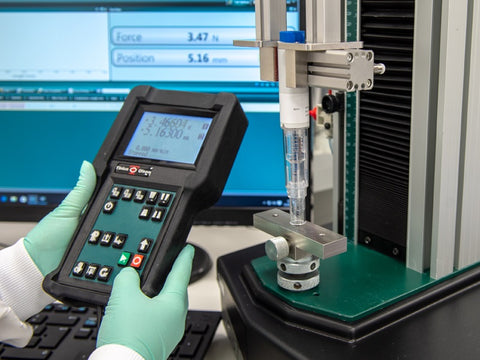
Deciding whether your application needs feedback is a critical early decision that affects actuator cost, control complexity, and system capabilities. Not all applications require feedback, but when position accuracy, synchronization, or load monitoring matter, feedback becomes essential.
When Feedback Is Necessary
Consider feedback actuators when your application requires:
Precise Position Control: If your mechanism must stop at specific positions within its travel range — not just at fully extended or retracted endpoints — feedback is essential. Applications like multi-position adjustable beds, precision positioning systems, or pick-and-place robotics need position feedback to achieve accurate, repeatable positioning.
Synchronization: When multiple actuators must move in perfect coordination, feedback allows a controller to monitor each actuator's position and adjust speeds to maintain synchronization. This is critical in applications like height-adjustable workbenches with multiple lifting columns or large hatch systems using multiple actuators.
Speed Control: Closed-loop speed control requires position feedback to calculate actual velocity and adjust motor drive accordingly. Applications requiring constant speed regardless of load variations benefit from feedback-based speed control.
Load Monitoring: Some feedback systems, particularly strain-gauge-based systems, can provide load information in addition to position. This enables safety features like obstacle detection, overload protection, or force-limiting for human-interactive applications.
Safety and Monitoring: Feedback allows continuous monitoring of actuator position and performance. Control systems can detect unexpected behavior like stalling, binding, or excessive current draw and shut down before damage occurs or safety is compromised.
Types of Feedback Sensors
Potentiometer Feedback: Potentiometers measure position through resistance changes as a wiper moves along a resistive element. They provide absolute position information (the position is known immediately upon power-up without requiring homing) and are cost-effective. However, potentiometers have limited resolution (typically 0.5-1% of stroke), are susceptible to wear over millions of cycles, and can be affected by temperature variations and electrical noise.
Hall Effect Sensors: Hall effect sensors use magnetic fields to detect position. They're non-contact (eliminating wear), can provide good resolution, and are relatively immune to dust and moisture. Hall sensors can be configured for absolute or incremental feedback. They require more sophisticated control electronics than simple potentiometers but offer better long-term reliability.
Optical Encoders: Optical encoders provide the highest resolution and accuracy for position feedback. They use optical sensors to read patterns on a rotating disk or linear scale. Encoders can be incremental (requiring homing to establish absolute position) or absolute (position known at power-up). They excel in high-precision applications like robotics and machine tools but are more expensive and sensitive to contamination than other feedback types.
Reed Switch Feedback: Reed switches provide simple endpoint detection rather than continuous position feedback. Magnets trigger reed switches at predefined positions, typically fully extended and fully retracted. This is the most basic form of feedback, suitable for applications needing only endpoint confirmation without position control along the travel path.
Load Cells and Strain Gauges: These sensors measure force rather than position, though they're sometimes integrated into actuator systems for force-limiting applications or to detect obstacles and prevent damage. Load cell feedback is particularly valuable in applications involving human interaction or delicate components that could be damaged by excessive force.
Control Systems and Integration
Feedback actuators require compatible control electronics. Simple on-off control with limit switches (standard for non-feedback actuators) isn't sufficient when position feedback is involved. Your control system options include:
Dedicated Controllers: Purpose-built actuator controllers accept feedback signals and provide closed-loop position control. These control boxes often include features like programmable positions, speed adjustment, and synchronization of multiple actuators.
PLC Integration: Industrial applications typically interface actuators with programmable logic controllers (PLCs) that handle overall machine control. Feedback actuators with analog or digital outputs integrate readily with PLC analog inputs or high-speed counter modules.
Microcontroller Systems: Custom applications often use microcontroller platforms like Arduino, Raspberry Pi, or industrial embedded controllers. These require programming but offer maximum flexibility for custom control algorithms and user interfaces.
Don't forget to specify appropriate power supplies that can handle the actuator's electrical requirements while providing clean, stable power for feedback electronics. Electrical noise from motor operation can interfere with feedback signals if proper power supply filtering and grounding practices aren't followed.
Selecting the Right Actuator Technology
Electric linear actuators come in several mechanical designs, each optimized for different performance characteristics. Understanding these differences helps you select the technology best suited to your application requirements.
Lead Screw Actuators
Lead screw actuators use a threaded rod and nut mechanism to convert rotary motor motion into linear motion. They're the most common type of electric actuator due to their balance of performance, cost, and reliability. Lead screw actuators typically offer:
- Force ranges from a few pounds to over 2,000 lbs
- Speeds from 0.5 to 2.5 inches per second
- Good efficiency (60-80% depending on lead screw pitch)
- Self-locking capability in many configurations (actuator holds position without power)
- Relatively compact design
- Cost-effective for most applications
Lead screw actuators work well for general automation, furniture adjustment, hatch lifts, solar tracking, and most applications where moderate force and speed requirements exist. They're available from micro sizes for compact applications up to heavy-duty industrial versions for demanding environments.
Ball Screw Actuators
Ball screw actuators use recirculating ball bearings between the screw and nut, dramatically reducing friction compared to standard lead screws. This technology offers:
- Higher efficiency (typically 90-95%)
- Higher speeds with the same motor
- Longer life with reduced wear
- Better positioning accuracy and repeatability
- Smoother motion with less vibration
The trade-offs are higher cost and lack of self-locking capability — ball screw actuators typically cannot hold position without power and may back-drive under load. They're ideal for precision positioning, high-cycle applications, robotics, and machine tools where their performance advantages justify the cost premium.
Belt-Driven Actuators
Belt-driven actuators use toothed belts and pulleys to create linear motion. They excel in applications requiring very high speed or very long stroke lengths. Benefits include:
- Very high speeds (up to 10+ feet per second possible)
- Long stroke capability (20+ feet practical)
- Smooth, quiet operation
- Lower cost per inch of stroke for long travels
Belt-driven systems typically deliver lower force than screw-driven actuators and cannot self-lock. They're ideal for gantry systems, large door openers, conveyor positioning, and other applications where speed and stroke length are priorities over maximum force.
Rack and Pinion Systems
Rack and pinion actuators use a rotating pinion gear driving a linear rack to create motion. They offer very high force capability and good speed but are less common in packaged actuator form. They work well for heavy gates, industrial doors, and other applications requiring very high force with moderate precision requirements.
Practical Selection Tools and Resources
Even with a thorough understanding of selection criteria, translating your application requirements into a specific actuator model can be challenging. FIRGELLI Automations provides several online calculators to streamline the selection process:
Stroke-Based Selection: If you know your required stroke length, the stroke calculator filters available actuators by this primary constraint, then allows you to compare force, speed, and other specifications among compatible models.
Force-Based Selection: When force is your primary requirement, the force calculator identifies actuators meeting your force specification and provides detailed specifications for comparison.
Comprehensive Application Calculator: For complex applications involving angles, linkages, or variable geometry, the application calculator accepts inputs like weight, angle, mounting geometry, and cycle time to calculate required force, recommend actuator models, and verify that your selected actuator meets all requirements.
These tools don't replace engineering judgment, but they accelerate the selection process and help catch potential issues before ordering. They're particularly valuable for validating your calculations and discovering actuator models you might not have considered.
Common Actuator Selection Mistakes to Avoid
Learning from others' mistakes is more efficient than making them yourself. Here are the most common actuator selection errors we see and how to avoid them:
Insufficient Safety Factor: Designing right at the edge of an actuator's force rating leaves no margin for manufacturing variations, friction increases over time, or unexpected loading. Always include at least 20% safety margin, more for critical applications.
Ignoring Duty Cycle: Assuming a standard actuator can run continuously or cycle rapidly leads to thermal overload and premature failure. Verify that your operating cycle matches the actuator's duty cycle rating, or specify an industrial actuator designed for continuous operation.
Neglecting Side Loads: Side loads (forces perpendicular to the direction of travel) are an actuator's enemy. Proper mounting with pivot points or using track actuators designed to handle side loads prevents binding and premature wear.
Inadequate Environmental Protection: Using an indoor-rated actuator in outdoor or industrial environments guarantees moisture ingress, corrosion, and failure. Always specify appropriate IP rating for your environment, erring on the side of better protection.
Voltage and Power Supply Issues: Mismatched voltage or inadequate power supply


