
Ball screw vs lead screw actuators is really a tradeoff between efficiency and simplicity. Ball screws usually suit high duty cycle, higher speed, and precision work. Lead screws often suit lower cost, quieter motion, simpler mechanics, and applications that benefit from more friction and load holding.
Practical constraints matter more than catalog numbers. A screw drive's efficiency rating means nothing if the actuator can't hold position when power drops, or if the mounting allows the load to side-load the screw. Measure the job, not the spec sheet.
"The screw type is not the answer — the job is. A lead screw that holds its position with the power off can be the right answer over a more efficient ball screw if the application doesn't justify the complexity. I've seen the same actuator job solved correctly both ways. What matters is load, duty cycle, back-drive risk, and how the load is guided." — Robbie Dickson, FIRGELLI Automations founder and former Rolls-Royce, BMW, and Ford engineer
What is the difference between a ball screw and a lead screw?
A lead screw uses sliding contact between the screw and nut. A ball screw uses recirculating balls between the screw and nut, so the contact rolls instead of mostly sliding.
What is the simple explanation?
A lead screw is like dragging a block along a thread. A ball screw is like putting tiny bearings between the moving parts. Bearings reduce friction, but they also make the mechanism more complex.
Use the simple relationship below to understand why efficiency matters.
Useful output power = motor input power × screw efficiency
A quick efficiency example
Assume a 50W motor driving an actuator.
- With a lead screw at roughly 35% efficiency, useful output is about 17.5W. The remaining 32.5W shows up as friction and heat.
- With a ball screw at roughly 90% efficiency, useful output is about 45W. Only 5W is wasted as heat.
At low duty cycle, that wasted heat dissipates between cycles and nothing breaks. At high duty cycle, the 32.5W of heat in a lead screw application is what derates motors, breaks down grease, and shortens cycle life. This is why duty cycle drives the decision more than peak load does.
Efficiency ranges shown are typical for general illustration; consult Machinery's Handbook or the actuator manufacturer's data sheet for the actual screw geometry being used.
When does this choice matter?
It matters when speed, duty cycle, precision, heat, noise, and load holding matter. If the actuator moves once in a while, a simple screw drive often works well. If the actuator cycles all day or needs efficient high-speed motion, screw efficiency becomes more important.
Do not choose from the screw name alone. Choose from the job.
Which screw type fits your priorities?
This scorecard turns the tradeoff into a first-pass decision. It does not replace actuator specs, but it helps you ask the right question before buying.
How do you use this scorecard?
- Choose how important load holding is.
- Choose how important duty cycle, speed, quiet motion, and cost are.
- Compare the lead screw and ball screw direction scores.
- Click Calculate to see your result.
How do the options compare?
What is a simple example?
A cabinet lift moves 12 inches, a few times per day, and must stay put when stopped. Lead screw direction makes sense because efficiency matters less than holding, cost, and quiet motion.
A machine axis moves hundreds of times per hour and needs high speed. Ball screw direction makes more sense because friction and heat become real problems.
What should you check before choosing?
- Dynamic load
- Static load
- Stroke
- Speed
- Duty cycle
- Back-driving risk
- Noise
- Feedback requirement
- Environmental exposure
- Mounting and side load
Where does this choice show up in real applications?
- Smart furniture and cabinet lifts: low duty cycle, must hold position with power off, quiet motion matters. Lead screw direction usually wins.
- Industrial machine axes: high cycle count per shift, speed and efficiency dominate, mechanical noise is acceptable. Ball screw direction usually wins.
- Marine hatch lifts: cycle count is low but the load must hold against gravity and wave motion with power off. Lead screw direction is typical, with the actuator sized for static holding rather than fast cycling.
- RV slide-outs and lift mechanisms: low duty cycle, must hold position when parked, cost sensitivity is real. Lead screw direction is the usual answer.
- Automated production fixtures with high cycle counts: ball screw direction, paired with feedback and a brake or gearbox when back-driving has to be prevented.
What usually goes wrong with screw drive actuators?
Three common failure patterns are worth planning around before they bite the design.
- Side loading damages the screw and nut. If the actuator is also being used to guide the load, the screw takes bending forces it was never sized for. The screw, nut, and bearings wear unevenly and the actuator dies long before its rated cycle life. Always guide the load with a separate linear bearing, slide, or hinge.
- Back-driving under power loss. A ball screw is efficient in both directions, which means a heavy load can drive the actuator backward when power is removed. If the application can't tolerate that, plan for a brake, a worm gear stage, a lead screw, or a controller that holds position electrically.
- Heat buildup at high duty cycle. A lead screw at high speed wastes a meaningful fraction of motor power as heat. Over a long run the motor and screw get hot enough to derate the actuator, accelerate grease breakdown, or trigger thermal protection. If duty cycle is high, either step up to a ball screw or step down the speed.
How should you test the actuator before trusting it?
Three tests are worth running before committing the design.
- Run the actuator under the real load, not just the rated load. A prototype that strokes once with a sandbag tells you very little. Run it through the expected duty cycle for at least the full work session and watch for heat, noise change, or position drift.
- Cut power mid-stroke under load. With the rated load applied, kill power and confirm the actuator holds position the way the design expects. If it back-drives and the application can't tolerate that, the screw type or the gearing is wrong.
- Measure case temperature after a realistic run. Run the actuator at the expected speed and duty cycle, then check the motor and housing temperature. If it's climbing past the duty cycle rating, either the screw is wasting too much energy as heat or the duty cycle is too aggressive for the platform.
Recommended FIRGELLI setup
Which FIRGELLI products fit this decision?
The product-first check did not find a verified public FIRGELLI product page that should be sold as a dedicated ball screw family. So the correct recommendation is to choose by load, stroke, speed, feedback, duty cycle, and environment.

C-Series Actuators
Use these as a practical starting point when you need a general-purpose actuator with multiple force, speed, and stroke options.
View C-Series Actuators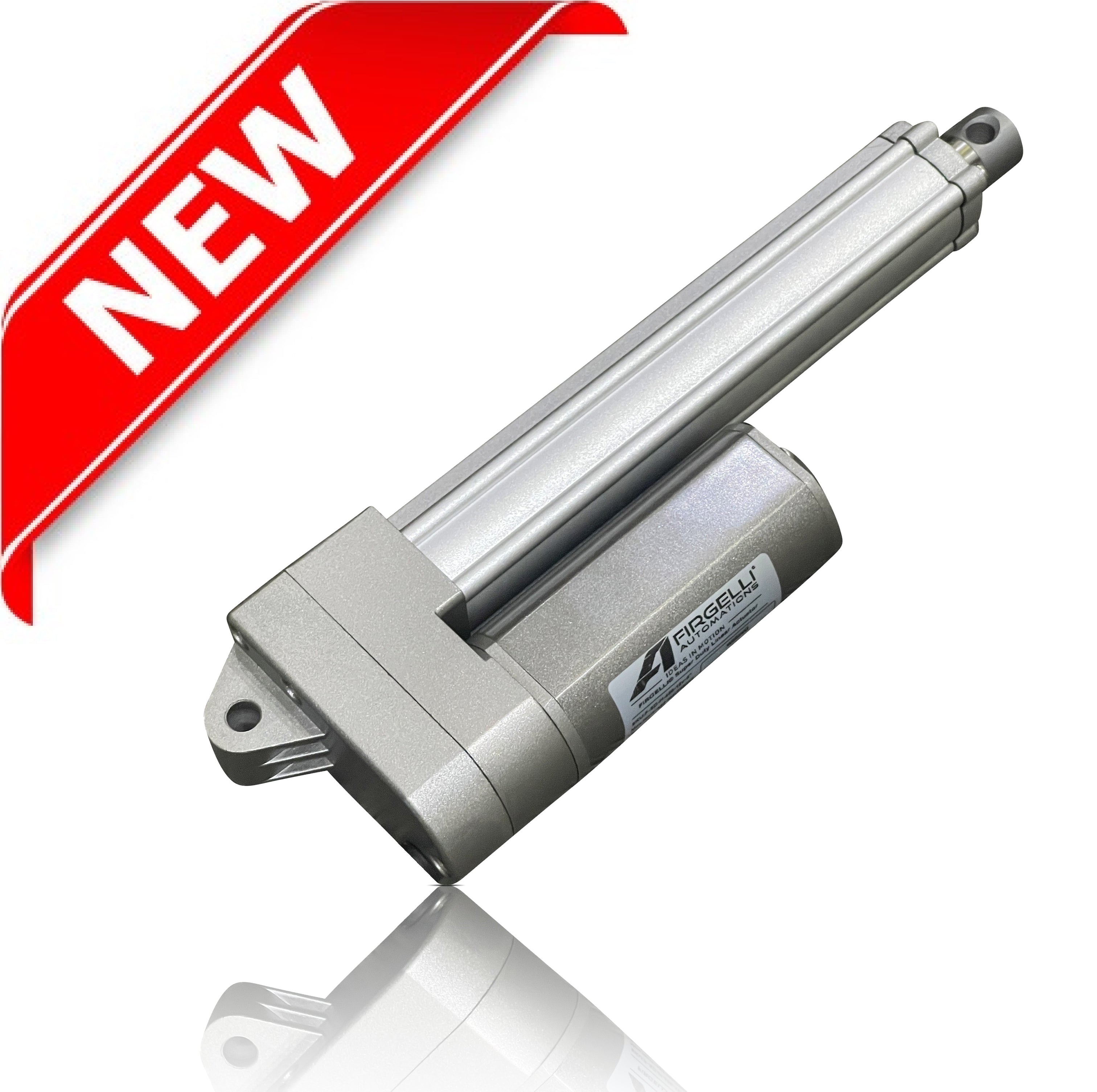
Super Duty Electric Linear Actuator
Use this when the job needs a stronger actuator platform with feedback-capable options. Feedback can work with the FCB-2, but basic switch control still works.
View Super Duty Actuators
Industrial Linear Actuators
Use these for heavier or harsher applications where rugged construction and optional feedback wiring matter.
View Industrial ActuatorsFor position-aware control, use the FCB-2 actuator controller. For the wider catalog, start with the FIRGELLI linear actuators collection.
Frequently Asked Questions
Is a ball screw better than a lead screw?
Not always. A ball screw usually wins on efficiency, speed, and high duty cycle. A lead screw often wins on simplicity, lower cost, quieter motion, and load holding. The better choice depends on the application.
Why do lead screws hold load better?
Many lead screw systems have more friction than ball screw systems. That friction can resist back-driving. It helps hold position, but it also reduces efficiency and creates more heat during long or fast runs.
Why are ball screws more efficient?
Ball screws use rolling contact through recirculating balls instead of mostly sliding contact. Rolling contact reduces friction, so more motor power turns into linear motion instead of heat.
Which screw type is quieter?
Lead screws often sound quieter in light and moderate-duty applications. Ball screws can make more mechanical noise because of the ball circulation path, though design quality, speed, mounting, and load affect sound more than the screw name alone.
Does feedback make a lead screw actuator precise?
Feedback improves control because the controller can read position. It does not change backlash, stiffness, screw efficiency, or mechanical play by itself. For accurate positioning, choose the right mechanics and the right feedback/control system.


