Modern kitchens have evolved far beyond mere cooking spaces—they're now the architectural and social centerpiece of contemporary homes. Yet this transformation brings a challenge: as we incorporate more high-performance appliances and smart technology, countertop real estate becomes increasingly scarce. The solution lies not in choosing between functionality and aesthetics, but in reimagining how appliances integrate into kitchen design through motion control technology.
🎥 Video — Revolutionize Your Kitchen: The Power of Linear Actuators in Appliance Lift Applications
Electric linear actuators are revolutionizing kitchen design by enabling appliances to appear exactly when needed and disappear seamlessly when not in use. This technology—refined through decades of industrial automation—is now transforming residential kitchens into highly efficient, uncluttered spaces that adapt to your workflow rather than dictating it.
Whether you're a homeowner planning a kitchen renovation, a custom cabinet maker looking to differentiate your offerings, or a DIY enthusiast ready to tackle an advanced project, understanding how linear actuators work in appliance lift applications opens up possibilities that simply weren't feasible with traditional cabinetry.
The Rise of Hidden Appliances in Modern Kitchen Design
The hidden appliance movement represents more than just an aesthetic preference—it's a fundamental shift in how we think about kitchen functionality. Open-concept living has made kitchens visible from living and dining areas, elevating the importance of visual continuity. Simultaneously, the proliferation of specialized appliances—stand mixers, food processors, blenders, coffee machines, toasters—creates a storage and display challenge that traditional cabinetry struggles to address.
Hidden appliances solve both problems simultaneously. By concealing appliances behind cabinetry panels or integrating them into lift mechanisms, homeowners achieve the clean lines of a minimalist kitchen without sacrificing the tools that make cooking efficient and enjoyable. The result is a space that can transform from showroom-ready to fully functional workspace in moments.
Types of Hidden Kitchen Appliances
Integrated refrigerators represent the most established category of hidden appliances. These units are designed with flush installation capabilities, allowing custom panels that match surrounding cabinetry to be mounted on their doors. Only handles and ventilation grilles remain visible, creating a cohesive cabinet wall appearance. High-end models feature sophisticated hinge systems that allow heavy doors to open smoothly while maintaining alignment with adjacent cabinets.
Pull-out pantries maximize vertical storage in narrow spaces—typically 6 to 12 inches wide—between standard cabinets or beside appliances. When closed, they appear as standard cabinet faces. When opened, they reveal multi-tiered shelving systems that bring items from the back to the front, eliminating the wasted space typical of deep cabinets. These are particularly valuable in galley kitchens or spaces where traditional pantry closets aren't feasible.
Concealed dishwashers blend completely into cabinetry runs using panel-ready designs. The control interface may be mounted on the top edge of the door (visible only when open) or integrated into a touch-sensitive panel that matches the cabinet surface. This approach is especially popular in kitchens where maintaining unbroken sight lines across cabinet runs is a priority.
Hidden range hoods retract into cabinetry when not in use, addressing one of the most visually dominant elements in traditional kitchen design. These units extend downward when cooking begins, providing necessary ventilation, then retract flush with the underside of upper cabinets when cooking is complete.
How Linear Actuators Power Appliance Lift Systems
The integration of linear actuators into kitchen cabinetry represents an elegant engineering solution to a spatial problem. These electric motors convert rotational motion into precise linear motion, capable of lifting loads ranging from a few pounds to over 1,000 pounds depending on the actuator specification. In kitchen applications, this technology enables heavy appliances like stand mixers (which can weigh 20-30 pounds) to rise smoothly from within a base cabinet to countertop height at the press of a button.

The Mechanics of an Appliance Lift System
A typical appliance lift installation begins with a specialized cabinet—often called an appliance garage—designed with internal clearances to accommodate both the stored appliance and the lifting mechanism. The system consists of several key components working in concert:
The lifting platform provides the surface on which the appliance rests. This platform must be rigid enough to prevent flexing under load but light enough not to overburden the actuator. Materials typically include 3/4-inch plywood, MDF with reinforced edges, or aluminum plate for higher-end installations. The platform dimensions are typically 2-4 inches smaller than the cabinet opening to allow clearance during vertical travel.
The guide mechanism ensures the platform travels vertically without lateral movement or binding. This is accomplished through various approaches: telescoping slides mounted on both sides of the platform, fixed guide rails with linear bearings, or track systems integrated into the cabinet walls. Drawer slides rated for vertical orientation can serve this purpose in lighter-duty applications, while dedicated slide rails provide smoother operation and higher load capacity.
The actuator mounting requires careful attention to load alignment and mechanical advantage. Most installations position the actuator vertically at the rear of the cabinet, with the extending rod connected to the underside of the lifting platform. This direct-drive configuration is mechanically simple but requires an actuator with stroke length equal to the desired lift height. Alternative designs use lever arms or pulley systems to multiply the effective stroke length, though these add complexity and potential points of failure.

The control system manages actuator operation through switches, remotes, or integrated smart home systems. Simple installations use rocker switches or momentary contact buttons wired to a control box that reverses polarity for up/down movement. More sophisticated systems incorporate limit switches to automatically stop travel at upper and lower positions, preventing over-extension and ensuring consistent positioning. Feedback actuators with built-in potentiometers enable precise position control and can be integrated with Arduino or other microcontrollers for programmable operation sequences.
Installation Considerations and Best Practices
Successful appliance lift installations require attention to several critical factors. Weight capacity must account not only for the appliance itself but also for any items typically stored with it (mixing bowls, attachments, etc.) plus a safety margin. A stand mixer weighing 25 pounds might require a system rated for 40-50 pounds when accessories are factored in.
Stroke length determines how high the appliance can rise. Standard countertop height is 36 inches, with base cabinets typically 24 inches deep and 34.5 inches tall. An appliance stored at the cabinet floor requires approximately 12-15 inches of lift to reach convenient working height. However, platforms stored on an intermediate shelf may only need 6-8 inches of travel.
Speed of operation balances user experience with mechanical reliability. Most kitchen appliance lifts operate at speeds between 0.5 and 1.5 inches per second. Faster speeds can startle users or cause items to shift on the platform, while slower speeds become tedious for frequently accessed appliances. The 12V DC actuators common in these applications typically offer speed ranges that work well for this purpose.
Proper mounting brackets ensure secure attachment without cabinet modification that might compromise structural integrity. Many installations benefit from custom mounting plates that distribute load forces across multiple cabinet members rather than concentrating stress at single fastener points.

Selecting the Right Actuator for Kitchen Appliance Lifts
The actuator specification process begins with understanding load requirements, space constraints, and desired performance characteristics. While the original article mentioned hydraulic actuators, the reality is that 12V electric linear actuators have become the de facto standard for residential kitchen applications due to their clean operation, simple installation, and low maintenance requirements.
Why Electric Actuators Dominate Kitchen Applications
Electric linear actuators offer several compelling advantages in kitchen environments. They operate silently compared to hydraulic systems, an important consideration in open-plan living spaces where kitchen noise travels freely. They require no hydraulic fluid, eliminating concerns about leaks that could damage cabinetry or contaminate food preparation areas. Their compact form factor allows integration into standard cabinet dimensions without requiring custom oversized enclosures.
From an installation standpoint, electric actuators simplify both initial setup and long-term maintenance. They require only DC power—typically provided by a simple power supply converting household AC to 12V or 24V DC—and basic two-wire control connections. There are no hydraulic pumps, reservoirs, or pressure lines to route through cabinetry. This straightforward electrical interface makes them accessible to DIY installers and reduces the specialized knowledge required for troubleshooting.
Key Specifications to Consider
Force capacity is the maximum load the actuator can push or pull, typically specified in pounds or Newtons. For appliance lifts, this must exceed the total weight being lifted plus friction in the guide system. A 100-200 pound capacity actuator provides appropriate overhead for most kitchen applications. Industrial actuators with higher force ratings are available for larger installations or commercial applications.
Stroke length defines the maximum extension distance. Standard models range from 2 to 24 inches, with longer strokes available in specialized units. The required stroke depends on both the desired lift height and the mechanical arrangement—direct-drive systems need stroke equal to lift height, while lever-arm designs can amplify effective travel distance.
Speed specifications indicate how quickly the actuator extends and retracts, typically measured in inches per second or millimeters per second. Most kitchen applications work well with speeds in the 0.5-1.0 inch per second range. It's worth noting that speed and force have an inverse relationship in electric actuators—models optimized for higher force typically operate more slowly.
Duty cycle indicates how long the actuator can operate before requiring a rest period. This is expressed as a percentage (e.g., "25% duty cycle") or as specific on/off times (e.g., "2 minutes on, 18 minutes off"). For intermittent kitchen use—raising and lowering appliances a few times per day—duty cycle is rarely a limiting factor, but it becomes important in commercial or high-use scenarios.

Actuator Types and Their Kitchen Applications
Standard rod-style actuators feature an extending shaft that moves in and out of a cylindrical body. These are the most common type for appliance lifts due to their straightforward mounting and reliable operation. They're available in various rod diameters and housing sizes to match space constraints.
Track actuators integrate the guide mechanism and drive system into a single assembly. The moving carriage travels along an enclosed track, providing inherent lateral stability without requiring separate guide rails. This can simplify installation in space-constrained applications, though the overall assembly is typically bulkier than a rod-style actuator with separate guides.
Micro linear actuators serve applications requiring very compact packaging or lower force requirements. While their limited force capacity makes them unsuitable for lifting full-size appliances, they work well for smaller items or secondary mechanisms like fold-down shelves or actuated cabinet doors.
Feedback actuators incorporate position sensing, typically through an internal potentiometer that provides a voltage signal proportional to extension. This enables precise control over position, allowing the platform to stop at any point in its travel range. Such capability is valuable in multi-position systems where different appliances require different working heights, or where the lift integrates with broader home automation systems.
Beyond Appliance Lifts: Other Linear Actuator Applications in Kitchens
Once the infrastructure for motorized motion is in place, numerous other kitchen enhancements become feasible. These applications share the same fundamental technology but address different functional needs.
Lift-Up Cabinet Doors and Overhead Storage
Traditional cabinet doors that swing outward create collision hazards in compact kitchens and block adjacent work areas when open. Lift-up door systems using linear actuators eliminate these problems by raising doors vertically or at an upward angle, keeping them out of the work zone. This approach works particularly well for upper cabinets, where the raised door doesn't obstruct sight lines or create head-bumping hazards.
The mechanism typically uses short-stroke actuators (4-8 inches) mounted along the top edge of the cabinet, connected to the door through pivot hinges that convert vertical actuator motion into rotational door movement. Spring-assist gas struts can be paired with actuators to reduce the required force, with the actuator providing controlled motion while the gas strut supports the door weight.
Adjustable Height Countertops and Work Surfaces
Height-adjustable work surfaces apply the same technology used in standing desks to kitchen countertops. This capability is particularly valuable for households with users of different heights, people with mobility limitations, or situations where seated and standing work modes are both desirable. A section of countertop mounted on lift columns can adjust from standard height (36 inches) down to seated work height (28-30 inches) or up to raised positions that reduce back strain for tall users.
Such systems typically employ multiple synchronized actuators—usually two or four—to ensure the work surface remains level during adjustment. Synchronization requires either identical actuators powered from a single control system or feedback actuators with closed-loop control that actively maintains position matching.
Motorized Pull-Down Shelves and Overhead Storage Access
Upper cabinets in kitchens with standard 8-foot ceilings often include space above the typical 30-42 inch wall cabinet height. This overhead space is difficult to access with traditional static shelving. Motorized pull-down shelf systems bring this storage within reach at the press of a button, then return it overhead when not needed.
These systems face unique engineering challenges because they're inverting the typical load direction—the actuator must support weight in its fully extended position rather than its most mechanically advantageous retracted position. This often requires higher-capacity actuators and robust mounting to prevent sagging or binding.
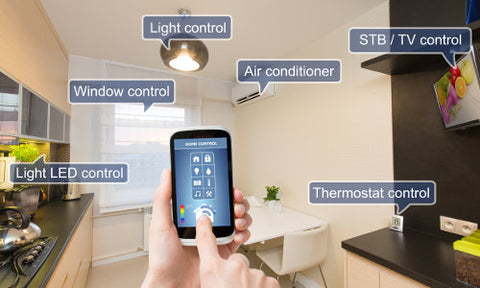
Integration with Smart Home Systems and Kitchen Automation
Modern kitchen automation extends beyond individual motorized elements to comprehensive systems that respond to user presence, voice commands, or programmed routines. Linear actuators can integrate into these ecosystems through various control approaches.
Basic integration uses simple relay controls connected to smart switches or outlets. A smart plug controlling the actuator's power supply enables smartphone control and integration with voice assistants, though without feedback about position or state.
Intermediate integration employs dedicated control boxes with network connectivity or dry contact inputs that interface with home automation controllers. This provides reliable control while maintaining the actuator's built-in protections against overcurrent and stalling.
Advanced integration uses Arduino microcontrollers or similar platforms to create custom control logic. With feedback actuators, these systems can implement precise positioning, multi-step sequences, soft-start acceleration profiles, and integration with sensors that detect user presence or cabinet state.
Design and Installation Best Practices
Successful kitchen automation projects balance technical performance with aesthetic integration and practical usability. Several considerations deserve careful attention during the planning phase.
Cabinet Structure and Reinforcement
Standard cabinet construction uses 3/4-inch plywood or particleboard for boxes, with face frames of solid wood or engineered lumber. While adequate for static loads, these structures may require reinforcement to handle dynamic forces from lifting mechanisms. Actuator mounting points should attach to solid wood members or use backing plates that distribute loads across larger areas. Cabinet floors supporting actuators often benefit from additional bracing to prevent deflection under repeated loading cycles.
Electrical Planning and Power Requirements
Most kitchen actuator applications use 12V or 24V DC power, requiring transformation from household 120V AC. The power supply location should be accessible for service but concealed from view—often in an adjacent cabinet or basement space below the kitchen. Wire routing through cabinets should avoid heat sources, sharp edges, and points where cabinet movement could pinch or abrade insulation. Power requirements scale with the number of actuators and their simultaneous operation—a single appliance lift might draw 2-4 amps, while multiple synchronized actuators could require 10+ amp supplies.
Maintenance Access and Serviceability
Even reliable systems eventually require service—actuators wear, connections loosen, and components fail. Designs should provide reasonable access to mechanical and electrical components without requiring cabinet disassembly. Removable panels, accessible fasteners, and clearly labeled wiring facilitate long-term maintenance. Consider including service documentation within the cabinet—a simple laminated card showing actuator specifications, wiring diagrams, and troubleshooting steps can save significant time during future service calls.
Cost-Benefit Analysis: Is Kitchen Automation Worth the Investment?
Motorized kitchen systems represent a significant investment compared to traditional cabinetry. A basic appliance lift might add $300-$600 to cabinet costs when accounting for the actuator, control system, structural modifications, and installation labor. More sophisticated multi-actuator systems or custom-engineered solutions can easily exceed $1,000-$2,000 per installation.
The return on this investment comes through several channels. For homeowners with mobility limitations or aging in place, motorized appliance access can extend independent living in their homes, delaying or eliminating the need for assisted living arrangements. For high-end custom homes, these systems differentiate properties in competitive markets and appeal to buyers seeking cutting-edge amenities. For everyday users, the convenience and aesthetic benefits accumulate over time—the ability to maintain clear countertops while keeping frequently used appliances readily accessible improves daily workflow and kitchen enjoyment.
From a DIY perspective, implementing these systems as an aftermarket upgrade to existing cabinetry provides an opportunity to add high-end functionality at a fraction of the cost of comparable factory installations, though it requires careful planning and moderate woodworking and electrical skills.
Future Trends in Automated Kitchen Design
The trajectory of kitchen automation points toward increasingly integrated and intelligent systems. Current research and early-market products suggest several emerging directions:
Gesture and presence detection will enable appliance lifts and cabinet doors to respond to user proximity or hand motions, eliminating the need to locate and press physical controls. Sensors can detect when a user approaches a specific cabinet zone and automatically raise the associated platform or open the door.
Load sensing and adaptive control will allow systems to automatically adjust operation based on the weight of items being lifted. An appliance lift could determine whether it's carrying a light blender or heavy stand mixer and adjust speed and acceleration accordingly to optimize performance and energy efficiency.
Integrated inventory management combines motion control with camera systems or weight sensors to track what's stored where. A smart pantry system might catalog items as they're placed on motorized shelves, alert users when supplies run low, and automatically add items to shopping lists.
Cross-system coordination will enable different automated elements to work in concert. Imagine a morning routine where voice command triggers a sequence: the coffee maker emerges from its cabinet garage and begins brewing, upper cabinet lights illuminate gradually, and the overhead dish storage descends to allow putting away the dry dishes from last night's cycle.
Transforming Your Kitchen with Motion Control Technology
The integration of linear actuators into kitchen design represents more than technological novelty—it's a practical solution to the genuine challenge of balancing extensive appliance collections with limited counter space and the desire for clean, uncluttered aesthetics. As electric actuator technology has matured, becoming more reliable, affordable, and accessible, the barrier to implementing these systems has dropped from commercial-only price points to the realm of serious DIY projects and mid-range custom kitchen installations.
Whether you're planning a complete kitchen renovation, looking to upgrade specific aspects of your existing space, or simply exploring possibilities for future projects, understanding how linear actuators enable hidden appliance systems and motorized cabinetry opens up design options that simply weren't practical a decade ago. The technology is proven, the components are readily available, and the results can genuinely improve how you interact with one of the most important spaces in your home.
For those ready to implement appliance lift systems or other motorized kitchen features, FIRGELLI Automations offers a complete range of linear actuators, control systems, mounting hardware, and technical support to help bring these projects from concept to reality.
Frequently Asked Questions
How much weight can a linear actuator lift in a kitchen appliance application?
The weight capacity depends on the specific actuator selected, with models available ranging from 10 pounds to over 1,000 pounds of force. For typical kitchen appliance lifts, actuators rated for 100-200 pounds provide appropriate capacity for standard countertop appliances including stand mixers, food processors, and blenders with accessories. When selecting an actuator, calculate the total weight of the appliance plus platform, add any accessories typically stored with the appliance, and include a 25-50% safety margin to account for friction in the guide system and ensure reliable long-term operation. Heavier appliances or multiple items on a single platform may require higher-capacity industrial actuators or multiple synchronized units.
Can I install an appliance lift system myself, or do I need a professional?
DIY installation is certainly feasible for individuals with moderate woodworking and basic electrical skills. The project requires ability to accurately measure and cut cabinet components, drill precise holes for mounting hardware, make secure electrical connections to low-voltage DC systems, and follow mechanical assembly procedures. Most installations can be completed with standard woodworking tools plus basic hand and power tools. The primary challenges involve ensuring the lifting platform remains square and level throughout its travel range and properly mounting the actuator to handle dynamic loads without stress on cabinet structure. Many DIY builders start with simpler projects—a single appliance lift in an easily accessible cabinet—before tackling more complex multi-actuator or space-constrained installations. Professional installation may be preferable for those uncomfortable with power tools, working with cabinetry, or troubleshooting mechanical systems, or for installations requiring significant cabinet modifications in expensive custom cabinetry where mistakes could be costly.
How long do linear actuators last in kitchen applications, and what maintenance do they require?
Quality electric linear actuators designed for intermittent duty typically provide reliable operation for 5-10+ years in residential kitchen applications. The actual lifespan depends on duty cycle (how often and how long the actuator operates), load conditions, and environmental factors. Kitchen environments are generally benign for actuators—temperature and humidity are moderate compared to outdoor or industrial settings—though exposure to cooking vapors and occasional liquid spills should be considered. Most electric actuators are sealed units requiring no routine maintenance. The primary failure modes are mechanical wear of internal gears and lead screws (after many thousands of cycles), degradation of seals allowing moisture intrusion, and electrical connection issues. To maximize lifespan: avoid exceeding rated load capacity, ensure the actuator isn't binding or fighting friction in the guide system, protect electrical connections from moisture, and operate at moderate speeds rather than consistently at maximum. Some installations benefit from periodic inspection of mounting hardware to ensure bolts remain tight and there's no deflection in cabinet structure.
What are the power requirements, and will an appliance lift system increase my electricity bill noticeably?
Kitchen appliance lifts operate on 12V or 24V DC power, typically drawing 2-5 amps during active movement, translating to roughly 25-120 watts depending on actuator size and load. However, these systems operate intermittently—raising or lowering an appliance might take 10-30 seconds, occurring perhaps 2-4 times per day for frequently used items. Total daily energy consumption is typically under 0.02 kWh (kilowatt-hours), which at average U.S. electricity rates of $0.13/kWh amounts to less than $0.01 per day or approximately $3 per year. Even multiple appliance lifts operating several times daily would add only a few dollars annually to electricity costs. The power supply itself draws minimal standby power when the system isn't actively moving. For comparison, a typical coffee maker uses more electricity in a single brewing cycle than an appliance lift uses in a month of normal operation. The energy impact is negligible compared to major appliances like refrigerators, ovens, or dishwashers.
Can linear actuators be retrofitted into existing kitchen cabinets, or do they require new custom cabinetry?
Retrofit installations are absolutely possible and represent a cost-effective way to add motorized appliance lift functionality to existing kitchens without complete cabinet replacement. The feasibility depends on your current cabinet configuration and construction quality. Ideal candidates are base cabinets with adequate internal depth (at least 20-22 inches), solid structural construction (plywood rather than particleboard), and sufficient height clearance for the lifting mechanism (typically requiring at least 12-15 inches of vertical space). The retrofit process involves building or installing a lifting platform, adding guide rails or drawer slides to constrain platform motion, mounting the actuator securely to cabinet structure, routing power and control wiring, and installing a switch or control system. Some cabinet interiors may need reinforcement to handle dynamic loads—adding backing plates at actuator mounting points or reinforcing the cabinet floor. The main limitations involve very shallow cabinets (less than 18 inches deep), particleboard construction that won't hold fasteners reliably under dynamic loads, or situations where the desired appliance simply won't fit within the available cabinet dimensions. Careful measurement and planning before purchasing components helps ensure a successful retrofit installation.


