How do you convert between torque units? (Professional Torque Conversion Calculator)
Torque is rotational force — the twisting action measured as force multiplied by the perpendicular distance from the axis of rotation, expressed in units like Newton-meters (Nm) or pound-feet (lb-ft). Accurate torque conversions are essential across engineering disciplines—from automotive design and aerospace manufacturing to robotics and automation systems. Whether you're specifying fastener tightness, selecting motor requirements for linear actuators, or analyzing rotational forces in mechanical systems, working with consistent units prevents costly errors and ensures proper system performance.
🎥 Video — Online Torque Calculator Convertor.
Our free online torque calculator eliminates the manual conversion process, allowing engineers, technicians, and DIY enthusiasts to instantly convert between nine common torque units. The tool is particularly valuable when working across international standards—converting between SI units like Newton-meters and imperial measurements like pound-feet—or when scaling between large industrial applications and precision micro actuator systems.
Torque Converter
Enter a value in any field and click 'Convert' to calculate the equivalent values in other units:
Newton meters (Nm):
Pound-feet (lb-ft):
Pound-inches (lb-in):
Kilogram-force meters (kgf-m):
Kilogram-force centimeters (kgf-cm):
Ounce-force inches (ozf-in):
CentiNewton meters (cN-m):
MilliNewton meters (mN-m):
AttoNewton meters (aN-m):
Motion design starts with geometry, not force alone. Doubling the moment arm doubles the torque; rotating the force vector toward parallel collapses it to zero. The lever geometry sets the answer before the actuator does.
"A linear actuator doesn't have a torque rating — it has a force rating. The torque only exists once you decide where the pivot is and how long the arm is. Most actuator sizing mistakes I see come from someone converting catalog force into rotational capacity without ever drawing the lever geometry." — Robbie Dickson, FIRGELLI Automations founder and former Rolls-Royce, BMW, and Ford engineer
What is torque and how does it work?
Torque represents the rotational equivalent of linear force—it's the twisting action that causes objects to rotate around an axis or pivot point. Understanding torque is crucial when designing motion control systems, selecting actuators, or calculating the mechanical advantage in lever-based mechanisms.
As a vector quantity, torque possesses both magnitude and direction. The magnitude depends on three critical factors that engineers must consider in any rotational system design:
- Applied Force: The amount of force exerted determines the base rotational effect. Greater force produces proportionally greater torque, assuming constant lever arm and angle.
- Moment Arm Distance: Also called the lever arm, this is the perpendicular distance from the axis of rotation to the line of force application. Doubling this distance doubles the torque—which is why longer wrenches make it easier to loosen stubborn bolts.
- Force Application Angle: Torque is maximized when force is applied perpendicular to the moment arm (90 degrees). As the angle decreases toward parallel (0 degrees), effective torque diminishes to zero. This principle is critical in rotary actuator installations and crank mechanism design.
The mathematical relationship is expressed as: τ = r × F × sin(θ), where τ is torque, r is the moment arm length, F is applied force, and θ is the angle between force and moment arm vectors.
Torque Requirements in Automation and Motion Control
In motion control applications, torque calculations determine whether a motor or actuator can perform its intended function. When designing systems with industrial actuators or precision positioning equipment, engineers must account for:
- Starting torque required to overcome static friction and inertia
- Running torque needed to maintain constant rotational speed under load
- Peak torque for acceleration and deceleration phases
- Holding torque to maintain position against external forces
While linear actuators primarily produce straight-line force, torque calculations become relevant when they're used with lever arms, pulley systems, or when mounted to create rotational motion through linkages. Understanding the torque-to-force relationship ensures proper actuator sizing and mounting bracket selection.
What are the common torque measurement units?
Different engineering disciplines and geographic regions have standardized on various torque units, creating a need for reliable conversion between systems. Here's a detailed breakdown of the most common torque units and their applications:
SI and Metric Units
Newton Meters (Nm): The International System of Units (SI) standard for torque (see BIPM SI Brochure, 9th edition), representing the rotational force produced when one newton of force acts at a perpendicular distance of one meter from the pivot point. This is the preferred unit in scientific literature and international engineering specifications. Most modern feedback actuators and servo systems specify torque in Nm.
Kilogram-Force Meters (kgf-m): This gravitational unit represents the torque from a one-kilogram mass (producing 9.81 N force at sea level) acting on a one-meter lever arm. While being phased out in favor of SI units, kgf-m remains common in older equipment specifications and some regional standards. Conversion: 1 kgf-m = 9.80665 Nm (per ISO 80000-4 and standard gravity as defined by the 3rd CGPM, 1901).
Kilogram-Force Centimeters (kgf-cm): A smaller derivative unit useful for compact mechanisms and smaller motors. Common in hobby robotics and RC applications. Conversion: 1 kgf-cm = 0.0980665 Nm.
MilliNewton Meters (mN-m): Equals 0.001 Nm, used in precision instrumentation, micro linear actuators, and small-scale mechanical systems where standard Nm values would require many decimal places.
CentiNewton Meters (cN-m): Equals 0.01 Nm, providing an intermediate scale between mN-m and Nm for small motor specifications and sensor calibration.
AttoNewton Meters (aN-m): An extremely small unit (10⁻¹⁸ Nm) used primarily in nanotechnology research, atomic force microscopy, and molecular mechanics studies.
Imperial and US Customary Units
Pound-Feet (lb-ft): The dominant torque unit in United States automotive and mechanical industries. One pound-foot represents the torque from a one-pound force applied perpendicular to a one-foot lever arm. Engine torque specifications, lug nut tightening requirements, and most US fastener standards use lb-ft. Conversion: 1 lb-ft = 1.35582 Nm.
Pound-Inches (lb-in): Used for smaller fasteners, precision assemblies, and applications where lb-ft values would be fractional. Common in aerospace fastener specifications and electronics assembly. Conversion: 1 lb-in = 0.112985 Nm, or equivalently, 12 lb-in = 1 lb-ft.
Ounce-Force Inches (ozf-in): An even finer unit for delicate assemblies, small servo motors, and miniature mechanical systems. Particularly relevant in hobby servos and small bullet actuators. Conversion: 1 ozf-in ≈ 0.00706155 Nm.
Specialized and Legacy Units
Dyne-Centimeters (dyn-cm): Part of the CGS (centimeter-gram-second) system, rarely used in modern engineering but occasionally encountered in older scientific literature and physics education. Conversion: 1 dyn-cm = 10⁻⁷ Nm.
Torque Unit Conversion Reference (to Nm)
| Unit | Symbol | Conversion to Nm | Typical Use |
|---|---|---|---|
| Newton-meter | Nm | 1 | SI standard, scientific/international engineering |
| Pound-foot | lb-ft | 1.35582 | US automotive, mechanical |
| Pound-inch | lb-in | 0.112985 | Small fasteners, aerospace, electronics |
| Ounce-force inch | ozf-in | 0.00706155 | Hobby servos, miniature mechanisms |
| Kilogram-force meter | kgf-m | 9.80665 | Legacy / regional industrial |
| Kilogram-force centimeter | kgf-cm | 0.0980665 | Compact motors, RC, hobby robotics |
| CentiNewton-meter | cN-m | 0.01 | Small motor specs, sensor calibration |
| MilliNewton-meter | mN-m | 0.001 | Precision instrumentation, micro actuators |
| AttoNewton-meter | aN-m | 10⁻¹⁸ | Nanotech, atomic force microscopy |
Where is accurate torque conversion used in engineering?
Engineering Design and Specification
Torque conversion tools streamline the engineering workflow when working with international suppliers, cross-referencing component specifications, or adapting designs between measurement systems. A motor specified at 5 lb-ft needs to be evaluated against a gearbox rated for 7 Nm—the converter instantly confirms compatibility (5 lb-ft = 6.78 Nm, providing adequate margin).
When designing systems with track actuators or TV lifts that incorporate rotational elements, accurate torque calculations ensure the drive mechanism can handle the required loads throughout the full range of motion.
Quality Control and Assembly Operations
Manufacturing facilities often work with torque wrenches and fastener specifications in different units (hand torque tools are standardized under ISO 6789). A bolt specification calling for 25 Nm tightening torque must be accurately converted for a technician using a lb-ft torque wrench (approximately 18.4 lb-ft). Conversion errors can lead to under-torqued assemblies that fail in service or over-torqued fasteners that experience thread damage or premature fatigue.
International Collaboration and Documentation
Global engineering teams frequently encounter documentation mixing measurement systems. A European partner specifies actuator mounting torque in Nm while US manufacturing procedures use lb-ft. The torque converter eliminates ambiguity, ensuring all team members work with consistent, accurate values regardless of their native measurement system.
Education and Training
Engineering students and technicians building foundational knowledge benefit from hands-on experience converting between torque units. Understanding that 1 lb-ft equals approximately 1.36 Nm—and more importantly, understanding why—builds intuition for torque magnitude that carries through an entire career. The calculator serves as both a learning tool and a quick reference.
Time and Error Reduction
Manual conversion involves looking up conversion factors, performing multiplication or division, and managing significant figures—a process that introduces opportunities for transcription errors and calculation mistakes. Automated conversion eliminates these risks while allowing engineers to focus on higher-level design decisions rather than arithmetic.
How do torque and force considerations affect actuator selection?
While electric linear actuators are primarily specified by linear force capacity (pounds or Newtons), torque calculations become relevant in several common scenarios:
Lever-Actuated Systems: When an actuator pushes or pulls a lever arm to create rotational motion, the output torque depends on both the actuator force and the distance from the pivot point. A 200 lb actuator acting on a 6-inch moment arm produces 100 lb-ft of torque (200 lb × 0.5 ft)—or approximately 136 Nm. This configuration is common in hatch opening mechanisms, adjustable furniture, and industrial positioning systems.
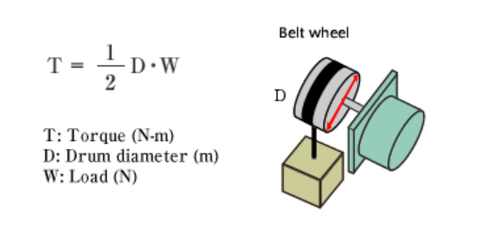
Pulley and Cable Systems: Actuators driving rotational motion through cable drums must overcome the torque resistance of the load. The effective drum radius and cable routing geometry determine the force-to-torque relationship.
Mounting Load Analysis: Forces acting on actuator mounting brackets at angles to the stroke axis create bending moments that can be analyzed using torque principles. Proper bracket selection requires understanding these rotational loads to prevent premature failure.
Gearbox Integration: When industrial actuators incorporate internal or external gear reduction, torque multiplication follows the gear ratio while speed decreases proportionally. A 10:1 reduction increases output torque by a factor of 10 (minus efficiency losses).
What is the difference between torque and force?
Engineers must clearly distinguish between force and torque to properly specify components and analyze mechanical systems:
- Force is a linear quantity measured in Newtons (N) or pounds (lb) that causes straight-line acceleration or deformation
- Torque is a rotational quantity measured in Newton-meters (Nm) or pound-feet (lb-ft) that causes angular acceleration or twisting
- Force has units of mass × acceleration, while torque has units of force × distance
- The same physical component—such as a linear actuator—can produce force in one application and contribute to torque generation in another, depending on system geometry
This distinction is particularly important when sizing power supplies and control systems, as power requirements depend on force/torque magnitude, speed, duty cycle, and efficiency factors.
What advanced torque calculations matter in real-world systems?
Beyond simple unit conversion, engineers frequently encounter more complex torque-related calculations:
Dynamic Torque and Acceleration
When a rotating component must accelerate or decelerate, additional torque is required to change its angular velocity. This dynamic torque depends on the moment of inertia (rotational equivalent of mass) and angular acceleration. Systems with high inertia loads—such as large TV lift mechanisms with heavy displays—require motors or actuators capable of providing both steady-state running torque and peak acceleration torque.
Friction and Efficiency Losses
Real mechanical systems lose energy to friction in bearings, gears, and sliding interfaces. Actual required input torque exceeds theoretical calculations by an efficiency factor, typically ranging from 0.85-0.95 for well-designed systems with proper lubrication. This margin must be included when selecting motors and actuators for rotational applications.
Preload and Holding Torque
Some applications require maintaining a specific torque value rather than producing continuous rotation—such as fastener preload or holding a mechanism against gravity. Stepper motors, servo systems, and certain linear actuators with self-locking features can provide this holding torque with minimal or zero power consumption.
Conclusion
Accurate torque conversion is fundamental to successful mechanical design, manufacturing quality control, and cross-disciplinary engineering collaboration. Our free online torque calculator eliminates conversion errors while saving valuable engineering time, allowing professionals to focus on design optimization rather than arithmetic. Whether you're specifying fastener tightness, selecting rotational actuators, or analyzing forces in lever-based systems, working with consistent torque units ensures reliable performance and prevents costly mistakes. The tool supports nine common torque units spanning multiple orders of magnitude—from attoNewton-meters in nanotechnology research to kilogram-force meters in heavy industrial applications—making it versatile enough for virtually any engineering discipline.
What are common mistakes when using this torque calculator?
- Confusing lb-in with lb-ft. These differ by a factor of 12. A bolt spec of 50 lb-in is not 50 lb-ft — entering the wrong one will over-torque or under-torque by 12×.
- Treating linear actuator force as torque. A 200 lb actuator does not have a 200 lb-ft rating. You only get torque when that force acts on a defined moment arm. Multiply force × perpendicular arm length first, then convert.
- Ignoring application angle. The calculator converts magnitudes only. If your force is not perpendicular to the lever, real torque is F × r × sin(θ) — the calculator answers a different question than your geometry does.
- Mixing kgf-m with Nm without the 9.80665 factor. Some legacy datasheets use kgf-m while modern specs use Nm. They are not numerically equivalent.
- Rounding too early. Convert at full precision, then round to the precision of your torque wrench or measuring instrument — not the other way around.
How can you verify the calculator output is reasonable?
- The 1.36 rule: Nm is roughly 1.36× lb-ft. If you enter 100 lb-ft and the result is not near 136 Nm, something is wrong (wrong input field or wrong unit selected).
- The 12 rule: lb-in is 1/12 of lb-ft. 60 lb-in must equal 5 lb-ft. If it doesn't, you have a unit-confusion error.
- The ~10 rule for kgf-m: kgf-m is ~9.81× larger than Nm. 1 kgf-m ≈ 9.81 Nm. Off by an order of magnitude usually means you've selected kgf-cm instead of kgf-m or vice versa (those differ by 100×).
- Dimensional sanity for actuator-lever problems: if you computed actuator force × moment arm and the result feels too large or too small, re-check the arm length units (inches vs feet vs meters) — this is where order-of-magnitude errors enter most often.
- Cross-check against a familiar value: a typical car lug nut is around 100 lb-ft (~136 Nm). If your converted result for a small fastener exceeds that, double-check the input unit.
Frequently Asked Questions
What torque unit should I use for my project?
The choice of torque unit depends primarily on your geographic location, industry standards, and component specifications. For international projects and scientific work, use Newton-meters (Nm) as the SI standard. In the United States automotive and general mechanical industries, pound-feet (lb-ft) remains dominant. For smaller fasteners and precision assemblies, pound-inches (lb-in) or milliNewton-meters (mN-m) provide more convenient numbers without excessive decimal places. When working with suppliers or documentation from different regions, convert all values to a single consistent unit to avoid errors—our calculator makes this process instantaneous regardless of which units you encounter.
How does torque relate to linear actuator force capacity?
Linear actuators are rated in force (pounds or Newtons), not torque. However, when an actuator pushes or pulls on a lever arm, it produces rotational torque equal to the actuator force multiplied by the perpendicular distance from the pivot point (moment arm). For example, a 500 N actuator acting on a 0.2 meter moment arm produces 100 Nm of torque. The relationship is linear—doubling either the actuator force or the moment arm length doubles the output torque. This principle is crucial when designing linear actuator systems for rotational applications like hatch opening, adjustable furniture, or industrial positioning mechanisms.
What's the difference between lb-ft and ft-lb?
These are different notations for the same torque unit—pound-feet. Both represent the rotational force from a one-pound force acting on a one-foot lever arm. The lb-ft notation is more common in automotive specifications and torque wrench markings, while ft-lb appears in some engineering texts and older documentation. They are completely interchangeable: 50 lb-ft equals 50 ft-lb. The potential for confusion arises with pound-inches (lb-in or in-lb), which is a different, smaller unit where 12 lb-in equals 1 lb-ft. Always verify which unit is specified to avoid calculation errors—our converter handles all common notations.
Why are there so many different torque units?
Multiple torque units exist due to historical development of measurement systems in different regions and the practical need for convenient number ranges across vastly different scales. The imperial system (lb-ft, lb-in) developed independently from metric systems, creating parallel standards that persist in different industries and countries. Additionally, different magnitude scales require different units—specifying a micro-actuator torque as 0.00007 Nm is less intuitive than 0.07 mN-m or 70 μN-m. Scientific research uses SI units (Nm) for standardization, US automotive uses lb-ft due to established tooling and documentation, and precision industries use smaller units for convenience. Rather than attempting to standardize globally—a slow process—engineers rely on conversion tools to bridge between systems.
How accurate is this torque conversion calculator?
The calculator uses standard conversion factors defined by international measurement authorities and maintains precision through multiple decimal places in internal calculations. Conversion accuracy is limited primarily by the precision of your input values and the number of significant figures appropriate for your application. For engineering and manufacturing purposes, the calculator provides more than sufficient accuracy—typically maintaining precision to 5-6 significant figures. Rounding to appropriate precision for your specific application (such as 0.1 lb-ft for torque wrench settings or 1 Nm for motor specifications) should be done based on the actual precision of your measuring instruments and manufacturing tolerances, not limitations of the conversion calculation itself.


