When engineers and designers face the challenge of creating motion systems, the choice of actuation technology fundamentally shapes project outcomes. For decades, hydraulic and pneumatic systems dominated industrial applications, but the landscape has shifted dramatically. Electric linear actuators now represent the most versatile, efficient, and intelligent solution for applications ranging from industrial machinery to medical equipment and ergonomic furniture.
🎥 Video — 10 Reasons to use an electric linear actuator
This transition from fluid power to electric actuation isn't merely a trend—it reflects substantial engineering advantages that impact every phase of product development and operation. Electric actuators eliminate the complexity of hydraulic pumps, reservoirs, and hoses, while offering programmability and precision that pneumatic systems simply cannot match. Whether you're designing agricultural equipment, medical devices, or automation systems, understanding these advantages is essential for making informed engineering decisions.
In this comprehensive guide, we'll examine ten compelling reasons why linear actuators have become the preferred choice for modern motion control applications, supported by technical specifications and real-world implementation considerations.
1. Programmable Motion Control
Electric linear actuators operate through sophisticated electronic control systems that transform them from simple mechanical devices into intelligent motion solutions. Unlike hydraulic cylinders that require complex valve assemblies or pneumatic actuators with limited control options, electric actuators integrate seamlessly with digital control boxes that manage every aspect of operation.

The programmable nature of electric actuators allows precise definition of operational parameters including stroke length, extension and retraction speeds, acceleration profiles, and positional waypoints. Advanced control systems can execute complex motion sequences, implement soft-start and soft-stop functions to reduce mechanical stress, and adjust behavior based on load conditions or external sensor inputs. This level of control enables engineers to fine-tune system performance during development and modify behavior in the field without hardware changes.
Modern control electronics also support multiple input methods—from simple switches and remote controls to integration with PLCs, microcontrollers like Arduino, and industrial automation protocols. This flexibility makes electric actuators equally suitable for standalone consumer products and fully integrated industrial automation systems.
2. Exceptional Precision and Accuracy
Positioning accuracy distinguishes electric actuators from their hydraulic and pneumatic counterparts. While hydraulic systems can suffer from fluid compression and temperature-dependent viscosity changes, and pneumatic actuators struggle with air compressibility, electric actuators deliver repeatable positioning with minimal deviation.
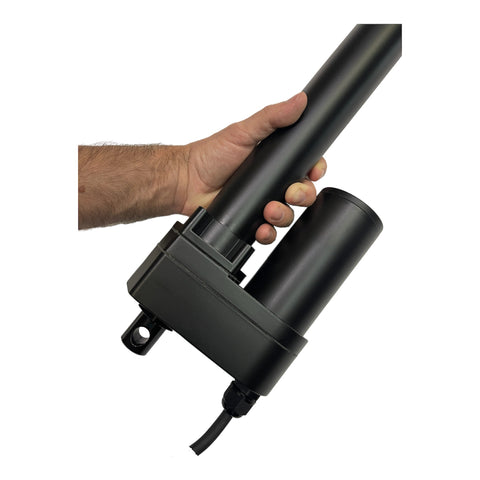
Feedback actuators equipped with Hall effect sensors, optical encoders, or potentiometers provide real-time position data, enabling closed-loop control with positioning accuracy often better than ±1mm. This precision remains consistent regardless of load variations within the actuator's rated capacity, temperature fluctuations, or duty cycle demands.
The smooth motion profile of electric actuators eliminates the jerky movement characteristic of pneumatic cylinders and the stick-slip phenomenon sometimes encountered with hydraulics. Variable speed control throughout the stroke allows applications to slow down for delicate positioning tasks or accelerate when moving between endpoints. This controllability is particularly valuable in medical equipment, precision manufacturing, and any application where gentle handling or exact positioning is critical.
3. Extensive Customization Options
Electric actuators offer unparalleled customization to match specific application requirements. Engineers can specify stroke lengths from as little as 25mm in micro linear actuators to over 1000mm in industrial actuators, with force ratings spanning from a few pounds to several thousand pounds.
Voltage options typically include 12VDC, 24VDC, and 36VDC configurations, with some models supporting 110VAC or 220VAC operation. Speed specifications can be tailored by selecting appropriate motor and gearbox combinations, with typical speeds ranging from 5mm/s for high-force applications to 50mm/s or more for rapid positioning tasks. The trade-off between speed and force follows fundamental mechanical principles—higher force ratings generally correspond to slower speeds at a given voltage and current draw.
Mounting configurations present another customization dimension. Standard options include clevis mounts, trunnion mounts, and threaded rod ends, but custom mounting brackets can be engineered for unique installation requirements. Physical dimensions, protective coatings, and environmental sealing levels can all be specified to match the operating environment, from clean office spaces to harsh industrial settings.
4. Comprehensive Safety Features
Safety considerations in motion control extend beyond simple emergency stops. Electric actuators can integrate multiple layers of protection that safeguard equipment, loads, and personnel while extending actuator service life.

Thermal protection through integrated thermistors (PTC devices) monitors motor temperature and disconnects power before overheating can damage windings. This protection is essential for applications with frequent duty cycles or those operating near the actuator's force limits. When thermal limits are reached, the system automatically shuts down and resumes operation only after cooling to safe temperatures.
Mechanical safety nuts provide redundant load support in the unlikely event of spindle nut failure. This backup mechanism ensures the load cannot free-fall even if the primary load-bearing components fail—a critical feature for overhead installations or applications where sudden load release could cause injury or damage.
Push-only functionality prevents the actuator from pulling against obstructions during retraction, protecting both the mechanism and any objects that might be in the path. This feature is particularly valuable in automation applications where environmental conditions may change or in furniture applications where users or objects might block the actuator's path.
Overload clutches mechanically disengage the motor when force exceeds preset limits, preventing damage from jamming, overloading, or unexpected resistance. Combined with current-limiting controls, these protection mechanisms ensure reliable operation even in demanding applications.
Manual quick-release systems enable emergency manual operation when power is unavailable, essential for medical beds, accessibility equipment, and any application where power failure could create unsafe conditions.
5. Advanced Synchronization Capabilities
Many applications require multiple actuators to operate in perfect coordination—whether lifting a heavy platform with actuators at multiple corners, operating dual workstation surfaces, or coordinating complex motion sequences. Hydraulic systems achieve this through flow dividers, but electric actuators offer far more sophisticated synchronization through electronic control and position feedback.
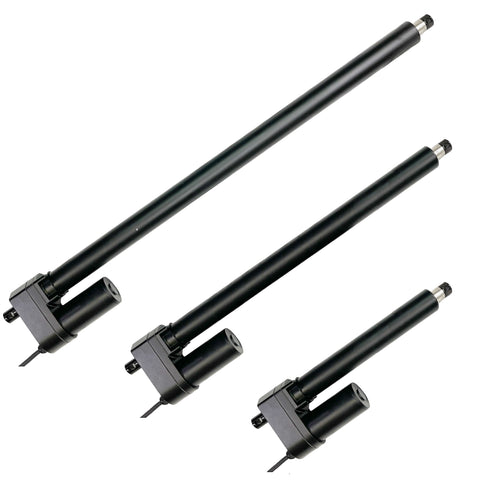
Position feedback from Hall sensors, optical encoders, or potentiometers enables the control system to monitor each actuator's position in real-time. When multiple actuators operate together, the controller continuously compares positions and adjusts individual motor speeds to maintain synchronization. This active compensation accounts for load distribution variations, manufacturing tolerances between actuators, and changing friction as mechanisms wear over time.
Synchronization accuracy typically achieves position matching within 1-2mm across multiple actuators, even when loads create uneven forces. This precision prevents binding, twisting, or structural stress that could occur with poorly synchronized systems. Applications ranging from adjustable workstations to agricultural equipment hatches benefit from this coordinated motion capability.
The control systems managing synchronization can be configured for various operating modes: parallel operation where all actuators move identically, sequential operation where actuators activate in programmed order, or complex choreographed movements where different actuators follow distinct profiles while maintaining precise timing relationships.
6. Superior Durability and Environmental Protection
Electric actuators are engineered for extended service life through careful attention to materials, sealing, and protection against environmental contaminants. The internal mechanisms are pre-lubricated during manufacturing with specialized greases that reduce friction, minimize wear, lower operating temperatures, and dampen noise and vibration.

IP (Ingress Protection) ratings define an actuator's resistance to solid particles and liquids. Standard actuators typically achieve IP54 rating, providing protection against dust accumulation and water splashing—suitable for most indoor applications and many outdoor installations. For demanding environments, industrial actuators can achieve IP66 or even IP68 ratings, enabling operation in dusty factories, outdoor agricultural equipment, marine environments, and applications involving washdown procedures.
Housing materials contribute significantly to environmental resistance. Aluminum housings with appropriate surface treatments resist corrosion while maintaining light weight. Stainless steel components are specified for maximum corrosion resistance in marine or food-processing applications. Sealed end caps, gasketed interfaces, and protective bellows shield internal mechanisms from environmental contaminants.
Properly specified electric actuators routinely achieve millions of cycles in normal operating conditions. Duty cycle ratings—expressed as percentage of time the actuator can operate continuously—range from 10% for cost-optimized consumer applications to 100% for continuous industrial use. Understanding these ratings ensures appropriate actuator selection for specific application demands.
7. Compact Design Enabling Design Flexibility
The compact form factor of electric actuators opens design possibilities impossible with hydraulic systems that require pumps, reservoirs, and routing for supply and return lines. A complete electric actuation system consists of the actuator itself, a power supply, and control electronics—often integrated into a single compact unit.
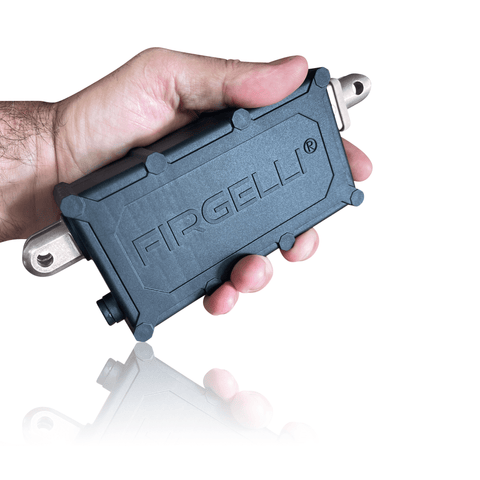
Micro actuators with diameters as small as 20mm enable motion control in space-constrained applications like medical instruments, compact furniture mechanisms, and consumer electronics. Track actuators provide an even more streamlined profile by housing the motor and drive mechanism within a rectangular track rather than a cylindrical tube, ideal for applications where a low profile is critical.
This compactness facilitates integration of multiple actuators within a single product. Modern standing desks routinely incorporate two or more actuators for height adjustment, while medical beds may use four or more actuators controlling backrest, leg elevation, and overall height. Complex automation systems might coordinate dozens of actuators, all managed through centralized control systems.
The modular nature of electric actuation systems also simplifies product family development. A manufacturer can use the same actuator across multiple products, varying only the control programming and mechanical interfaces. This standardization reduces inventory complexity, simplifies maintenance, and accelerates product development cycles.
8. Maintenance-Free Operation
One of the most significant advantages of electric actuation over hydraulic and pneumatic systems is the virtual elimination of routine maintenance requirements. Hydraulic systems demand regular fluid level checks, filter changes, seal inspections, and eventual replacement of degraded hydraulic fluid. Pneumatic systems require water trap drainage, lubricator maintenance, and filter element replacement. Both technologies involve consumables, scheduled service intervals, and potential for fluid leaks that create cleanup requirements and environmental concerns.
Electric actuators contain all necessary lubrication within sealed housings, require no external fluid supplies, and generate no consumable waste. Once installed and commissioned, they operate reliably for years without service intervention. This maintenance-free characteristic proves particularly valuable when actuators are installed in inaccessible locations—within furniture structures, overhead mountings, or integrated deep within machinery where access would require substantial disassembly.
The absence of hydraulic fluid eliminates concerns about leaks contaminating clean environments. This makes electric actuators ideal for medical facilities, food processing equipment, cleanroom applications, and anywhere fluid contamination would create serious problems. The reliability of sealed electric mechanisms also suits applications where unscheduled downtime for maintenance would be particularly costly or disruptive.
While electric actuators are not completely maintenance-free over their entire service life—mechanical components eventually wear and may require replacement—the intervals between service needs typically span years rather than months, and the service itself is usually limited to actuator replacement rather than ongoing consumable replenishment.
9. Superior Energy Efficiency
Energy consumption represents a critical consideration in both portable battery-powered applications and fixed installations where operating costs accumulate over years. Electric actuators demonstrate substantial efficiency advantages over hydraulic and pneumatic alternatives.
Hydraulic systems continuously circulate fluid under pressure, consuming energy even when no actuator movement occurs. Pneumatic systems compress air, a process with inherent thermodynamic losses, then vent that compressed air to atmosphere during operation—essentially discarding the energy invested in compression. Both technologies maintain constant energy consumption regardless of actual work being performed.
Electric actuators, by contrast, draw current only when moving. Modern control systems exhibit standby power consumption below 0.1W—effectively zero compared to the kilowatts consumed by idling hydraulic power units or compressors. During movement, typical actuators draw 2-5 amps at 12 or 24VDC, translating to 24-120 watts of power consumption—a fraction of the energy required for equivalent hydraulic or pneumatic actuation.
This efficiency advantage is particularly significant in battery-powered applications like mobile medical equipment, recreational vehicles, or portable workstations where available energy is limited. In fixed installations, reduced energy consumption translates directly to lower operating costs and smaller environmental footprint. Over multi-year operational lifespans, energy savings often exceed the initial actuator investment.
The direct electromechanical conversion of energy in electric actuators also generates less waste heat than fluid power systems, potentially reducing cooling requirements in enclosed equipment and further contributing to overall energy efficiency.
10. Enabling Ergonomic Design
Perhaps the most visible impact of electric actuator technology appears in the explosion of ergonomic products that enhance human comfort, health, and productivity. The combination of quiet operation, smooth motion, compact size, and electronic control makes electric actuators ideal for human-interactive applications.

The ergonomic furniture revolution—characterized by standing desks, adjustable workstations, and reconfigurable office environments—depends entirely on electric actuation. These applications demand quiet operation compatible with office environments, smooth motion that doesn't disturb work surfaces, and reliable positioning that maintains selected heights throughout the workday. Column lifts provide the stroke and force capacity for desk height adjustment while maintaining the clean aesthetic required in modern office spaces.
Medical applications represent another critical ergonomic domain. Hospital beds with electric actuators enable caregivers to adjust patient positioning without manual lifting, reducing workplace injuries while improving patient comfort and care outcomes. Examination tables, dental chairs, and mobility aids all benefit from the precise, controlled movement that electric actuators provide. The programmability of electric systems allows these medical devices to include preset positions, memory functions for individual patients, and integration with other medical equipment.
Residential furniture increasingly incorporates electric actuation for comfort and accessibility. Recliners, adjustable beds, and home office furniture use electric actuators to accommodate individual preferences and physical needs. TV lifts enable creative interior design solutions, concealing entertainment equipment when not in use and revealing it at the touch of a button.
Accessibility applications leverage electric actuators to provide independence for individuals with mobility limitations. Lift systems for wheelchairs, adjustable kitchen counters, and motorized door openers all rely on electric actuation to enhance quality of life and enable independent living.
Application Domains for Electric Linear Actuators
The versatility of electric actuation technology has driven adoption across remarkably diverse industries and applications. Understanding these application domains illustrates the breadth of problems electric actuators solve and may inspire solutions for your own projects.
Industrial and Agricultural Applications
Manufacturing automation relies heavily on electric actuators for material handling, assembly processes, and quality control systems. Conveyor positioning, parts orientation, press loading, and automated inspection stations all benefit from the precision and programmability of electric motion control. Agricultural equipment uses electric actuators for implement positioning, gate control, and crop handling systems where the clean operation and weather resistance of sealed electric actuators proves superior to hydraulic alternatives.
Vehicle applications span from motorhome slide-outs and RV leveling systems to specialized vehicle features like adjustable spoilers, convertible roof mechanisms, and access ramps. The automotive industry has long recognized that electric actuation offers advantages in weight, packaging, and control sophistication compared to traditional mechanical linkages or hydraulic systems.
Medical and Healthcare
Medical applications demand the highest standards of reliability, cleanliness, and patient safety—requirements where electric actuators excel. Hospital beds represent perhaps the highest-volume medical application, with multiple actuators providing independent control of backrest angle, knee bend, and overall bed height. These functions improve patient comfort, facilitate caregiver access, and reduce the physical strain of patient repositioning.
Examination and treatment tables use electric actuators for height adjustment, tilt control, and section positioning. Dental chairs achieve multiple degrees of freedom through coordinated actuator control. Patient lifts and transfer devices employ electric actuators to provide safe, controlled movement while minimizing caregiver physical demands. Mobility aids from stairlifts to powered wheelchairs depend on electric actuation for independence and accessibility.
Residential and Office Furniture
The modern furniture industry has embraced electric actuation as a means of enhancing functionality and user comfort. Height-adjustable desks have transitioned from expensive specialty items to mainstream office furniture, enabling users to alternate between sitting and standing postures throughout the workday. This ergonomic benefit addresses health concerns associated with prolonged sitting while improving productivity and comfort.
Home furniture applications include adjustable beds that enable independent head and foot elevation, recliners with powered positioning, and home theater seating with integrated actuators for tilt and recline. Kitchen furniture with height-adjustable counters provides accessibility benefits while accommodating multiple users of different heights. Drawer slides with electric actuation enable powered opening of heavy drawers in luxury applications.
Building Automation and Access Control
Building systems leverage electric actuators for window automation, skylight control, ventilation dampers, and solar shading systems. These applications benefit from the programmability of electric control, enabling integration with building management systems, daylight sensors, and climate control. Window actuators can automatically open for ventilation or close in response to rain sensors, optimizing building comfort and energy efficiency.
Security and access control systems use electric actuators for gate operators, door locks, and barrier systems. The precise control and position feedback of electric actuation enables sophisticated access sequences and safety features impossible with simpler technologies.
Why Choose FIRGELLI Electric Linear Actuators

For over two decades, FIRGELLI Automations has specialized in electric linear motion solutions, supporting engineers and designers from concept through production. This focus on electric actuation—rather than attempting to serve all motion control technologies—enables deep expertise and comprehensive product ranges tailored to specific application requirements.
The FIRGELLI product line spans from micro actuators for compact applications to heavy-duty industrial actuators for demanding environments. Specialized product families including track actuators, bullet actuators, and column lifts address specific installation and performance requirements. Supporting products including control systems, power supplies, and mounting hardware enable complete motion system integration from a single source.
Technical support and application engineering assistance help customers navigate specification decisions, addressing questions about force calculations, duty cycle requirements, environmental protection levels, and control system integration. This consultative approach recognizes that successful actuation system design involves much more than simply selecting an actuator from a catalog—it requires understanding the application, environment, and performance requirements to recommend appropriate solutions.
Quality control and testing procedures ensure that products meet published specifications and perform reliably across their intended service life. The company's commitment to engineering excellence reflects its founders' backgrounds at aerospace and automotive companies where reliability and precision are non-negotiable requirements.
Conclusion
The transition from hydraulic and pneumatic actuation to electric linear actuators represents more than a simple technology substitution—it reflects fundamental improvements in precision, control, efficiency, and reliability. The ten advantages outlined here demonstrate why electric actuation has become the preferred solution across industries from medical equipment to industrial automation, from ergonomic furniture to building systems.
Engineers and designers evaluating motion control options should carefully consider the total cost of ownership, not merely initial component costs. When maintenance requirements, energy consumption, system complexity, and operational flexibility are factored into the analysis, electric actuators frequently deliver superior value despite potentially higher upfront costs compared to basic pneumatic or hydraulic components.
As electric actuator technology continues advancing—with increasing force capabilities, enhanced environmental protection, more sophisticated control options, and decreasing costs—the application domains will continue expanding. Understanding the capabilities and advantages of electric actuation positions engineers to leverage these benefits in current projects and anticipate opportunities in future designs.
Frequently Asked Questions
What are the main differences between electric and hydraulic linear actuators?
Electric linear actuators use electric motors and mechanical drive systems (typically lead screws or ball screws) to convert rotary motion into linear motion, while hydraulic actuators use pressurized fluid to generate force. Electric actuators offer superior precision, programmability, and energy efficiency, consuming power only during movement rather than continuously. They require no hydraulic fluid, pumps, or hoses, making them cleaner, quieter, and maintenance-free. Hydraulic systems can generate higher forces in compact packages and may be preferred in extremely high-force applications, but for most applications under 10,000 pounds of force, electric actuators provide better overall performance, especially when control sophistication and total cost of ownership are considered.
How do I determine what force rating I need for my application?
Force requirements depend on the mass being moved, the angle of operation, friction in the system, and any external forces. For horizontal applications, calculate the force needed to overcome friction and accelerate the load. For vertical or angled applications, account for the gravitational component of the load. As a general guideline, select an actuator with 20-30% more force capacity than your calculated requirement to provide a safety margin and account for friction, binding, and other real-world factors. FIRGELLI offers actuators ranging from small micro actuators with forces around 10-50 pounds to heavy-duty industrial actuators capable of thousands of pounds. If you're uncertain about force calculations, technical support can help analyze your specific application requirements.
What is the relationship between actuator speed and force?
Electric linear actuators exhibit an inverse relationship between speed and force—higher force ratings typically correspond to slower speeds, and vice versa. This relationship stems from the gear reduction in the actuator's drive system. Higher gear ratios increase force output but reduce speed, while lower gear ratios enable faster movement but with less force. A typical 12V actuator might move at 0.5 inches per second with a 500-pound force rating, or 2 inches per second with a 150-pound rating. When selecting an actuator, consider both the force and speed requirements of your application—you may need to compromise between these parameters or select a higher voltage actuator that can deliver both adequate force and speed.
What does duty cycle mean and why does it matter?
Duty cycle refers to the percentage of time an actuator can operate continuously before requiring a rest period to cool down. It's typically expressed as a percentage over a defined time period, such as "20% duty cycle per 10 minutes." This means the actuator can run for 2 minutes out of every 10-minute period. Exceeding the rated duty cycle can cause overheating, potentially triggering thermal protection shutdowns or, in extreme cases, damaging the motor. Applications requiring frequent or continuous movement need actuators with higher duty cycle ratings—some industrial models support 100% duty cycle for continuous operation. For occasional-use applications like adjustable furniture or infrequent equipment positioning, lower duty cycle ratings are typically sufficient and more cost-effective.
What are feedback sensors and do I need them?
Feedback sensors in electric linear actuators provide real-time position information to the control system. Common types include Hall effect sensors that count motor rotations, potentiometers that provide analog voltage proportional to position, and optical encoders for high-precision applications. Feedback actuators enable several important capabilities: synchronizing multiple actuators, programming specific position waypoints, returning to saved positions after power cycling, and implementing closed-loop control for improved accuracy. If your application requires precise positioning, coordination of multiple actuators, or position memory, feedback sensors are essential. For simple open-loop applications where the actuator simply extends and retracts to mechanical stops without needing intermediate positions, basic actuators without feedback may be sufficient and more economical.
What IP rating do I need for my application?
IP (Ingress Protection) ratings indicate an actuator's resistance to solid particles and liquids, expressed as two digits (e.g., IP54, IP66). The first digit rates protection against solids (dust), the second against liquids (water). For indoor applications in clean, dry environments, IP40 or IP54 provides adequate protection. Outdoor installations, dusty environments, or applications involving moisture exposure require IP65 or IP66 ratings, which protect against water jets and complete dust exclusion. Marine applications or equipment requiring washdown procedures may need IP67 or IP68 ratings, offering protection against temporary water immersion. Higher IP ratings generally increase actuator cost, so select the minimum rating that provides adequate protection for your specific environmental conditions rather than automatically choosing the highest available rating.


