Understanding Actuators: The Hidden Powerhouse of Modern Automation
In the world of mechanical engineering and automation, some components work tirelessly behind the scenes, enabling the motion and functionality we often take for granted. Actuators are among these unsung heroes—critical components that convert energy into precise, controlled movement across countless applications. From the automated machinery on factory floors to the adjustable furniture in modern homes, actuators make it all possible.
Despite their fundamental importance, actuators rarely receive the recognition they deserve. They're typically concealed within housings, enclosures, and mechanical assemblies, quietly performing their essential function: creating motion on demand. Whether it's the smooth extension of a TV lift, the precise positioning of a standing desk, or the powerful movement in industrial machinery, actuators are the muscle behind the motion.
This comprehensive guide explores everything you need to know about actuators—from their fundamental operating principles and component architecture to the various types available and how to select the right actuator for your specific application. Whether you're an engineer designing a new automation system, a DIY enthusiast planning a custom project, or simply curious about the technology that powers modern motion control, this article will provide the technical knowledge and practical insights you need.

What Is an Actuator?
An actuator is a mechanical or electromechanical device that converts various forms of energy—typically electrical, hydraulic, or pneumatic—into controlled mechanical motion. In the most fundamental sense, an actuator is a "mover" that enables machines and systems to perform physical actions. It serves as the interface between a control system's electronic signals and the physical movement required to perform a task.
The term "actuator" derives from the Latin word "actuare," meaning "to put into motion." This etymology perfectly captures the device's primary function: translating control commands into tangible mechanical work. Every actuator system requires three essential elements: an energy source to power the motion, a control mechanism to regulate that motion, and a mechanical structure to execute the movement.
Actuators operate as the final control element in automated systems. They receive low-energy control signals—whether from manual input, electronic controllers, or sophisticated automation systems—and respond by generating the mechanical force needed to move, position, or control a load. This conversion process enables precise control over speed, position, force, and direction of movement.
The Role of Actuators in Mechanical Systems
In any automated or controlled system, actuators represent the "hands" that physically execute commands. While sensors gather information about the environment and controllers process that data to make decisions, actuators are responsible for acting on those decisions. This makes them indispensable in closed-loop control systems, where feedback from sensors allows for precise, adaptive motion control.
The comparison to biological muscles is particularly apt: just as muscles contract and extend to move limbs and manipulate objects, actuators extend, retract, rotate, or otherwise move to position components, open valves, apply pressure, or perform countless other mechanical functions. Modern feedback actuators even incorporate position sensing, allowing control systems to know exactly where the actuator is at any given moment—analogous to proprioception in biological systems.
How Actuators Work: The Mechanics of Motion Control
Understanding how actuators function requires examining both the energy conversion process and the mechanical principles that enable controlled motion. At their core, all actuators follow the same basic operational principle: they receive energy in one form and convert it into mechanical work, typically either linear displacement or rotational motion.

The Energy Conversion Process
The operational cycle of an actuator begins with energy input. In electric actuators, this energy arrives as electrical current, typically DC voltage ranging from 12V to 36V for most linear motion applications, though industrial actuators may operate at higher voltages. This electrical energy flows to a motor—usually a DC motor or stepper motor—which converts it into rotational mechanical energy.
The rotational motion generated by the motor must then be transformed into the desired output motion. In linear actuators, this conversion typically occurs through a lead screw or ball screw mechanism. As the motor turns the screw, a nut traveling along the screw's threads converts the rotation into linear extension or retraction. The pitch of the screw threads determines the relationship between rotational speed and linear velocity: finer thread pitches provide greater force output but slower movement, while coarser pitches enable faster motion at the expense of force capacity.
Hydraulic and pneumatic actuators operate on different principles. These fluid-power systems use pressurized hydraulic fluid or compressed air to push against a piston within a cylinder. The pressure differential across the piston face generates force, and the movement of the piston produces linear motion. The force output is directly proportional to the fluid pressure and the piston's surface area, following the fundamental principle F = P × A (Force equals Pressure times Area).
Control Mechanisms and Signal Processing
Modern actuators don't simply turn on and off; they provide sophisticated motion control through various mechanisms. The control signal—whether from a simple switch, a microcontroller like Arduino, or an industrial PLC—determines not just whether the actuator moves, but how it moves.
For basic applications, simple polarity reversal controls direction: positive voltage extends the actuator, negative voltage retracts it. More advanced systems use pulse-width modulation (PWM) to control speed by varying the percentage of time power is applied. A control box or motor driver processes these signals and delivers appropriate power to the actuator's motor.
Feedback mechanisms represent a significant advancement in actuator technology. Position feedback—typically achieved through potentiometers, Hall effect sensors, or optical encoders—provides real-time position data to the control system. This enables precise positioning to within fractions of a millimeter, closed-loop control for maintaining position under varying loads, and the ability to synchronize multiple actuators for coordinated motion.
Essential Components of an Actuator System
Every actuator system, regardless of type or application, comprises several critical components that work together to enable controlled motion. Understanding these components helps in both selecting appropriate actuators and troubleshooting systems when issues arise.
Power Supply
The power supply provides the energy that drives actuator motion. For electric actuators, this typically means DC power supplies with voltage ratings matched to the actuator's specifications—commonly 12V or 24V. The power supply must provide adequate current capacity to handle the actuator's maximum load conditions, including startup current that can be significantly higher than running current.
Proper power supply selection is critical for reliable operation. Undersized power supplies may cause voltage sag under load, resulting in reduced force output, slower motion, or complete failure to operate. The power supply should be rated for at least 20-30% more current than the actuator's maximum draw to ensure stable operation and account for efficiency losses in the system.
Motor and Gearing System
The motor converts electrical energy into rotational mechanical energy. Most linear actuators use permanent magnet DC motors for their combination of efficiency, controllability, and cost-effectiveness. The motor's characteristics—particularly its torque curve and speed—fundamentally determine the actuator's performance envelope.
Gearing plays a crucial role in optimizing performance. Gear reduction allows the motor to operate at its most efficient speed range while providing the torque multiplication necessary for moving heavy loads. Higher gear ratios increase force output but reduce speed, while lower ratios favor speed over force. This trade-off is fundamental to actuator performance and must be carefully considered during selection.
Mechanical Transmission System
For linear actuators, the mechanical transmission—typically a lead screw, ball screw, or belt drive—converts rotational motion into linear displacement. Lead screws offer a simple, cost-effective solution with good efficiency (typically 25-50%) and inherent self-locking capability that holds position without power. Ball screws provide superior efficiency (often exceeding 90%) and longer service life but at higher cost and without self-locking capability.
The transmission system must withstand both axial loads (forces along the direction of motion) and any side loads or moments applied to the actuator. Quality actuators incorporate robust bearings, proper alignment, and adequate structural rigidity to handle real-world loading conditions without premature wear or failure.
Housing and Structural Components
The actuator housing serves multiple critical functions: it protects internal components from environmental contamination, provides mounting points for installation, maintains proper alignment of moving parts, and contributes to overall system rigidity. Housing materials range from engineered plastics for light-duty applications to aluminum extrusions for general use and steel for heavy-duty industrial applications.
Environmental protection ratings (IP ratings) indicate the housing's ability to exclude dust and moisture. IP54-rated actuators offer basic protection suitable for indoor use, while IP66 or IP67 ratings provide the sealing necessary for outdoor or wash-down environments. The housing design must also accommodate thermal management, as motors and transmissions generate heat during operation that must be dissipated to prevent overheating.
Feedback and Sensing Components
Modern actuators often incorporate feedback sensors that provide position, speed, or force information to the control system. Position feedback is most common, typically implemented through a potentiometer that provides an analog voltage signal proportional to actuator extension. This enables closed-loop control, allowing the system to command specific positions and verify that the actuator has reached the target.
More sophisticated feedback actuators may include optical encoders for higher resolution position data, current sensors for load monitoring, or limit switches for over-travel protection. These sensors transform a simple open-loop actuator into an intelligent positioning system capable of complex motion profiles and adaptive control.
Types of Actuators and Their Applications
Actuators are categorized by both their power source (electric, hydraulic, pneumatic, or manual) and their motion type (linear or rotary). Each type offers distinct advantages and limitations that make it suitable for particular applications. Understanding these categories is essential for selecting the optimal actuator for any given project.

Electric Linear Actuators
Electric linear actuators represent the most versatile and widely used category in modern automation. These devices convert electrical energy into linear motion through a motor-driven screw mechanism, offering clean, quiet, and precisely controllable motion. They are available in a vast range of sizes, from compact micro linear actuators generating just a few pounds of force with stroke lengths of an inch or two, to industrial behemoths capable of pushing thousands of pounds over several feet of travel.
The advantages of electric linear actuation are substantial. Unlike hydraulic or pneumatic systems, electric actuators require no compressor, pump, or fluid distribution infrastructure—just a power supply and control signal. This simplicity reduces installation complexity, eliminates maintenance associated with fluid systems, and enables deployment in environments where hydraulic fluid leakage would be problematic. They provide excellent position control and repeatability, with feedback-equipped models achieving positioning accuracy of 0.1mm or better.
Force capacity in electric linear actuators typically ranges from 10 pounds in miniature units to over 2,000 pounds in heavy-duty models. Speed is inversely related to force: actuators designed for high force output generally move more slowly, with travel speeds ranging from under 0.1 inches per second for high-force units to over 2 inches per second for speed-optimized models. Voltage requirements commonly span 12VDC to 24VDC, with some industrial applications using 48VDC or higher.
Common applications include automotive seat and trunk adjustments, medical bed positioning, ergonomic furniture like standing desks, home automation systems, solar panel tracking, recreational vehicle slideouts, and countless industrial positioning tasks. The versatility of electric linear actuators makes them suitable for nearly any application requiring controlled linear motion within their force and speed envelopes.
Electric Rotary Actuators
While less common than their linear counterparts, rotary actuators serve critical functions in applications requiring controlled rotational motion. These devices typically provide a limited arc of rotation - commonly 90°, 180°, or 270°—rather than continuous rotation, making them ideal for valve operation, damper control, and robotic joint articulation.
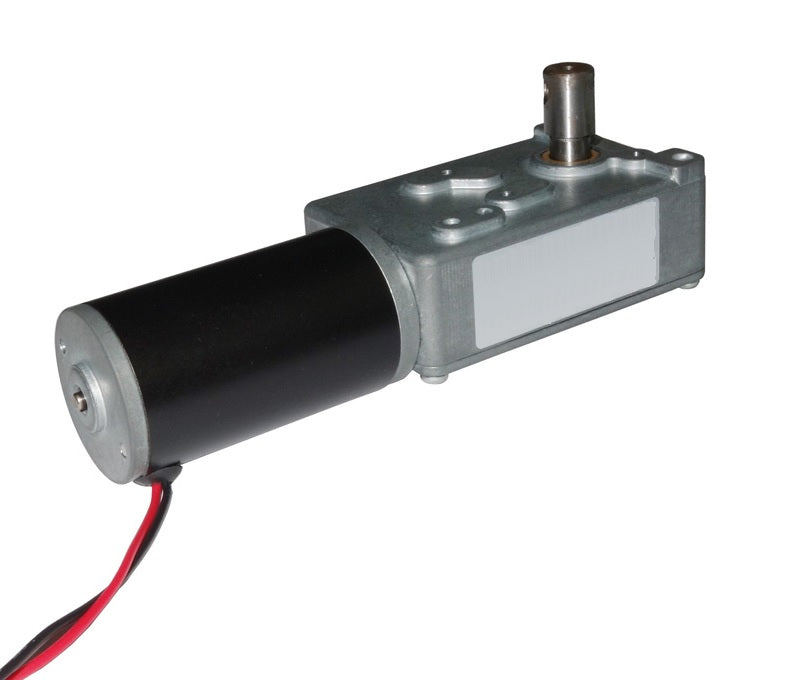
Electric rotary actuators generate torque rather than linear force, with output torque specifications ranging from ounce-inches in small servo-driven units to hundreds of foot-pounds in industrial quarter-turn actuators. They typically achieve their motion through gear-reduced motors or direct-drive servo motors, with the choice depending on the torque, speed, and precision requirements of the application.
The primary advantage of electric rotary actuation is precise angular positioning with excellent repeatability. Modern units incorporate position feedback through potentiometers or absolute encoders, enabling positioning accuracy of a fraction of a degree. This precision, combined with programmable motion profiles, makes electric rotary actuators ideal for automated processes requiring consistent, repeatable angular positioning.
Applications include quarter-turn valve automation in process industries, HVAC damper control, camera and sensor positioning systems, robotic arm joints, antenna pointing systems, and automated manufacturing equipment requiring rotational indexing. In many cases, they replace pneumatic rotary actuators, offering superior control and eliminating compressed air infrastructure requirements.
Hydraulic Actuators
Hydraulic actuators leverage pressurized hydraulic fluid—typically oil-based—to generate motion. These systems excel in applications requiring extremely high force output in a compact package. Hydraulic cylinders can generate tens or even hundreds of thousands of pounds of force, making them indispensable in heavy machinery, aircraft control systems, and large-scale industrial equipment.
The fundamental operation involves pumping hydraulic fluid into a cylinder, where it pushes against a piston to create linear motion, or into a hydraulic motor to produce rotary motion. Operating pressures typically range from 1,000 to 5,000 PSI, with specialized systems reaching 10,000 PSI or higher. This high pressure, combined with large piston areas, enables force generation that would be impractical with electric actuation.
Hydraulic systems offer several unique advantages. Their power-to-weight ratio is exceptional—a hydraulic cylinder can produce far more force than an electric actuator of similar size and weight. They can hold position under load without consuming energy, as the incompressible hydraulic fluid effectively locks the cylinder in place when valves are closed. They also provide inherent overload protection, as pressure relief valves prevent damage from excessive forces.
However, hydraulic systems come with significant complexity. They require a hydraulic power unit (pump, reservoir, filters, and valves), fluid distribution lines, and regular maintenance to prevent and address leaks. The risk of hydraulic fluid leakage makes them unsuitable for food processing, clean rooms, and other contamination-sensitive environments. They're primarily employed in construction equipment, aircraft control surfaces, heavy manufacturing machinery, injection molding machines, and large-scale material handling systems.
Pneumatic Actuators
Pneumatic actuators use compressed air as their power source, typically operating at pressures between 60 and 120 PSI. Like hydraulic systems, pneumatic cylinders contain a piston that moves when air pressure is applied, but the compressibility of air creates fundamentally different performance characteristics. Pneumatic actuators are faster and lighter than hydraulic systems but generate significantly less force.
The primary advantages of pneumatic actuation are simplicity, speed, and safety. Compressed air systems are common in industrial facilities, making pneumatic actuators easy to deploy without dedicated power infrastructure. They can achieve very high speeds—several feet per second—making them ideal for rapid pick-and-place operations and quick-cycling processes. Air leakage, while inefficient, poses no environmental hazard or contamination risk, making pneumatics acceptable even in food and pharmaceutical applications.
The trade-offs include limited force output compared to hydraulics, poor position control due to air compressibility, and higher operating costs due to the energy required for continuous air compression. Pneumatic actuators are typically used in binary (fully extended or retracted) applications rather than precision positioning tasks. They excel in automated assembly lines, packaging machinery, material handling systems, door and gate operators, and any application requiring rapid, repetitive motion where precise positioning isn't critical.
Specialized Actuator Types
Beyond the primary categories, several specialized actuator types serve specific niches. Track actuators incorporate guide rails or tracks that prevent rotation and handle significant side loads, making them ideal for applications like drawer slides and linear stages where lateral stability is crucial.
Bullet actuators feature a compact, cylindrical design that minimizes the installed footprint, making them suitable for space-constrained applications. Column lifts provide vertical lifting capability with integrated stability, commonly used in height-adjustable desks and workstations. Linear bearings and slide rails support and guide motion in applications requiring smooth, low-friction movement.
Manual actuators, while not powered, deserve mention as they serve applications where automation isn't required or desired. Manual linear actuators use lead screws turned by handwheels to provide controlled positioning without power consumption. They're common in machine tools, jacks and leveling systems, and adjustment mechanisms where precision matters but rapid or remote operation isn't necessary.
How to Select the Right Actuator for Your Application
Selecting an appropriate actuator requires carefully evaluating your application's requirements against the capabilities of available options. A systematic approach to this selection process helps ensure you choose an actuator that performs reliably while avoiding over-specification that increases cost unnecessarily.
Determine Motion Requirements
Begin by clearly defining the type of motion required. Is linear extension and retraction sufficient, or do you need rotational motion? For linear applications, what stroke length is necessary? Measure the actual distance the actuator must travel, then add a safety margin—typically 10-20%—to account for mounting geometry and installation tolerances.
Consider whether the application requires intermediate positioning or just fully extended and retracted positions. Simple two-position applications can use basic actuators with limit switches, while applications requiring positioning at multiple points along the stroke demand actuators with position feedback. If multiple actuators must move in coordination, feedback becomes essential for synchronization.
Calculate Force Requirements
Determining required force is critical but often underestimated. For pushing or pulling loads, calculate the force needed to move the object, including friction in any slides or guides. Add resistance from any springs, gas struts, or opposing forces in the system. Finally, apply a safety factor—typically 1.5 to 2.0 times the calculated force—to account for variations, wear, and unforeseen loads.
Remember that actuator force ratings are maximum values. Operating continuously at maximum rated force significantly reduces service life. For applications requiring sustained force output, size the actuator so normal operation occurs at 60-70% of rated capacity. This extends service life and provides margin for peaks in loading.
For lifting applications, force calculations must account for the full weight plus any acceleration forces. A safety factor of at least 2.0 is advisable for vertical lifting to ensure the actuator can safely support and move the load even if component friction increases with wear. Consider whether mechanical stops or locking mechanisms are needed to hold position if power fails.
Evaluate Speed Requirements
Speed and force exist in inverse relationship in electric actuators—designs optimized for high force move slowly, while speed-optimized units sacrifice force capacity. Determine your actual speed requirements: measure the desired time for the actuator to complete its full stroke, then calculate the required speed as stroke length divided by time.
Be realistic about speed requirements. Faster actuators cost more and generate less force. If your application functions adequately with a 30-second stroke time, specifying a 10-second requirement unnecessarily constrains your options and increases cost. For most home automation and furniture applications, speeds between 0.5 and 1.5 inches per second provide a good balance of reasonable cycle times and adequate force capacity.
Determine Duty Cycle and Service Life
Duty cycle—the percentage of time an actuator operates versus rests—significantly impacts actuator selection. Continuous-duty applications, where the actuator runs for extended periods, generate substantial heat that must be dissipated. Most linear actuators are rated for intermittent duty, typically 10-25%, meaning they can operate at full load for that percentage of time with adequate rest periods for cooling.
Applications like automated gates, adjustable furniture, or periodic positioning tasks typically involve very low duty cycles—perhaps 1% or less—making standard actuators suitable. Continuous-duty applications like conveyor systems or active vibration control require actuators specifically designed for continuous operation with enhanced cooling and more robust construction.
Consider the expected service life in cycles. Consumer-grade actuators might be rated for tens of thousands of cycles, adequate for furniture or occasional-use applications. Industrial actuators designed for automation may be rated for millions of cycles, necessary for high-cycle applications like automated assembly systems.
Assess Environmental Conditions
Environmental factors profoundly affect actuator selection and longevity. Indoor, climate-controlled environments are benign, allowing standard actuators with basic protection ratings. Outdoor applications require actuators with appropriate IP ratings—typically IP65 or IP66—to exclude moisture and dust that would compromise reliability.
Temperature extremes affect both actuator performance and longevity. Standard actuators typically operate in the range of -10°C to +60°C. Applications outside this range—such as outdoor winter use in cold climates or hot industrial environments—require actuators with appropriate temperature ratings and materials selection. Grease selection in the gearbox and lead screw becomes critical in temperature extremes.
Corrosive environments, whether from chemicals, salt spray, or cleaning agents, demand actuators with appropriate corrosion resistance. This might mean stainless steel construction, protective coatings, or sealed designs that prevent ingress of corrosive substances. For food processing or pharmaceutical applications, actuators must meet additional cleanliness and material compatibility requirements.
Consider Power and Control Requirements
Electrical requirements include both voltage and current. Most small to medium actuators operate on 12VDC or 24VDC, readily available from standard power supplies. Verify that your power supply can deliver adequate current—check the actuator's specifications at maximum load, not just no-load current.
Control requirements range from simple switches for manual operation to sophisticated systems involving microcontrollers, PLCs, or computer control. If you're using a microcontroller like an Arduino, you'll need a motor driver or control box capable of handling the actuator's current requirements, as microcontrollers cannot directly drive actuator motors.
For applications requiring precise positioning, feedback actuators provide position data to the control system. Consider whether simple analog voltage feedback (potentiometer) suffices, or if digital feedback (encoder) is necessary for higher resolution or noise immunity. Feedback enables closed-loop control, synchronization of multiple actuators, and monitoring of actuator position in software.
Evaluate Mounting and Installation Requirements
How the actuator mounts into your system affects both performance and reliability. Clevis or pivot mounting at both ends allows the actuator to articulate as it extends, accommodating the arc of motion. This is common in applications where the actuator pushes or pulls a hinged component, like a lid, door, or linkage.
Fixed mounting at one end—using a mounting flange or bracket—with a clevis at the other is typical for applications where the actuator pushes directly along its axis. Ensure your mounting configuration allows the actuator to move freely without binding. Actuators are designed to handle axial loads (along their length) but have limited capacity for side loads and bending moments. Proper mounting alignment is critical for preventing premature wear and failure.
Consider the space required for installation. The actuator's retracted length plus stroke length determines the total space needed along the axis of motion. Ensure adequate clearance exists not just for the actuator itself, but for mounting brackets, cables, and any required adjustment range during installation.
Actuator Installation and Mounting Methods
Proper installation is crucial for actuator performance and longevity. Even a well-selected actuator will fail prematurely if incorrectly mounted, misaligned, or subjected to loads it wasn't designed to handle. Understanding proper mounting techniques ensures your actuator delivers reliable service throughout its expected life.
Dual Pivot Mounting
Dual pivot mounting—where both ends of the actuator connect through pivot points—is the most versatile and commonly used mounting method. This configuration uses clevises, rod ends, or mounting pins at each end of the actuator, allowing rotation at both the mounting points. As the actuator extends or retracts, it can articulate to follow the natural arc of the components it's moving.
The key advantage of dual pivot mounting is that it automatically accommodates the geometric changes that occur during motion. When pushing open a hinged lid, for example, the angle between the actuator and both the lid and the base continuously changes. Pivot mounting at both ends allows this angular change without imposing bending loads on the actuator shaft or internal components.
When implementing dual pivot mounting, ensure pivot pins fit properly in their mounting holes—too loose creates slop and wear, too tight binds the pivot and creates excessive friction. Lubricate pivot points to minimize friction and wear. Consider using spherical bearings for applications where the actuator must articulate in multiple planes simultaneously, as simple clevis mounts only accommodate rotation in one plane.
Fixed Mounting
Fixed mounting involves securing one end of the actuator rigidly to a structure using a mounting flange, bracket, or trunnion mount. The other end typically retains a clevis or pivot connection to the load. This mounting style is appropriate when the actuator pushes directly along its axis without requiring articulation at the fixed end.
Fixed mounting provides excellent stability and can help the actuator resist side loads, but requires careful alignment. The actuator's axis must align precisely with the direction of required motion. Misalignment imposes side loads and bending moments on the actuator shaft, causing excessive wear on bushings and bearings, increased friction, and potential premature failure.
When using fixed mounting, consider incorporating adjustment capability at the fixed mount—slotted holes, shims, or adjustable brackets—to enable precise alignment during installation. This is particularly important when mounting multiple actuators that must operate in parallel, as manufacturing tolerances make perfect alignment without adjustment nearly impossible.
Alignment Considerations and Load Management
Proper alignment cannot be overemphasized. Actuators are designed to handle substantial axial loads—forces along their length—but have limited capacity for radial (side) loads and bending moments. Side loads accelerate wear on the actuator's internal bearings and bushings, increase friction and current draw, and can cause premature failure.
To minimize side loads, mount actuators so they push or pull directly along their axis. When this isn't possible—such as in linkage applications where some side loading is inevitable—select actuators with built-in capability to handle side loads, or use external guides or supports to carry those loads. Track actuators incorporate guide rails specifically to handle significant side loads and moments.
For vertical lifting applications, consider the consequences of power failure. Most electric linear actuators with lead screw drives are self-locking—they hold position when power is removed—but verify this characteristic rather than assuming it. For safety-critical applications like lifting desks or medical equipment, consider incorporating mechanical locks, counterbalances, or other failsafe mechanisms.
Cable Management and Protection
Actuator cables must be properly managed to prevent damage during operation. Plan cable routing to avoid pinch points, sharp edges, and moving parts that could damage the cable. Allow adequate slack so the cable doesn't become taut at any point in the actuator's travel, but avoid excess that could become entangled.
For applications where the actuator and cables are exposed to environmental hazards, use appropriate protective measures. Cable glands or strain reliefs at the actuator connection point prevent cable damage from flexing. Cable carriers or protective sleeves shield cables from abrasion, heat, and chemical exposure. Ensure electrical connections are appropriate for the environment—weatherproof connectors for outdoor use, sealed connections for wet environments.
Real-World Applications of Actuators
Actuators enable motion in an extraordinarily diverse range of applications across virtually every industry. Understanding these applications provides both inspiration for new projects and insight into how actuators solve real-world motion control challenges.


