Electric linear actuators have fundamentally transformed how we approach motion control across industries—from aerospace and automotive manufacturing to home automation and DIY projects. These devices convert electrical energy into precise, controllable linear motion, offering a cleaner, quieter, and more intelligent alternative to traditional hydraulic and pneumatic systems. Understanding the fundamentals of electric linear actuator technology isn't just academic knowledge; it's practical expertise that empowers engineers, roboticists, industrial designers, and makers to build more sophisticated, reliable, and efficient systems.
🎥 Video — Fundamentals of Electric Linear Actuators
Since FIRGELLI Automations' founding in 2002, we've witnessed the evolution of electric actuation from niche applications to mainstream adoption. This shift reflects both technological advancement and a growing recognition that electric systems deliver superior precision, energy efficiency, and control. Whether you're designing a robotic arm that requires sub-millimeter accuracy, automating a manufacturing process, or building a custom TV lift mechanism for your home, the principles covered in this guide will help you select, specify, and implement the right actuator for your application.
This comprehensive exploration covers everything from core operating principles and actuator types to control strategies, selection criteria, and emerging trends in smart actuator technology. By the end, you'll have the knowledge to confidently navigate the specifications, understand the trade-offs, and harness the full potential of electric linear actuators in your projects.
What Are Electric Linear Actuators and How Do They Work?
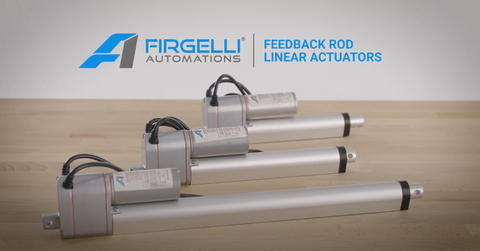
An electric linear actuator is an electromechanical device that converts the rotational motion of an electric motor into controlled linear motion. At its core, the actuator consists of a DC or AC motor connected to a mechanical drive mechanism—typically a leadscrew or ball screw—that translates rotary motion into straight-line movement. This fundamental conversion enables precise positioning and force application across a defined stroke length.
The basic operating principle is elegantly simple: when electrical current flows through the motor, it rotates a threaded shaft. A nut traveling along this shaft converts the rotation into linear displacement, extending or retracting the actuator rod. The pitch of the screw thread determines the relationship between rotational speed and linear velocity, while gear reduction in the motor assembly provides the mechanical advantage needed to generate substantial force.
What distinguishes electric linear actuators from hydraulic and pneumatic alternatives is their precision, cleanliness, and controllability. Hydraulic systems require pumps, reservoirs, and fluid management—introducing complexity, maintenance requirements, and the risk of leaks. Pneumatic actuators depend on compressed air systems and struggle with precise position control due to air compressibility. Electric actuators eliminate these concerns, offering programmable positioning, integrated feedback systems, and maintenance-free operation in most applications.
Modern electric actuators incorporate sophisticated electronics for control, including built-in limit switches, positional feedback sensors, and motor protection circuitry. These features enable precise speed control, programmable end-of-stroke positions, and integration with automation systems through standard control protocols.
Types of Electric Linear Actuators and Their Applications
Electric linear actuators come in several distinct configurations, each optimized for different application requirements. Understanding these variations helps you match actuator characteristics to your project's specific demands for speed, force, precision, and form factor.
Rod-Style Linear Actuators: Versatile Workhorses
Rod-style actuators represent the most common and recognizable configuration. These units feature an extending and retracting rod that emerges from a cylindrical housing, similar in appearance to hydraulic cylinders but with entirely electric operation. The rod typically connects to the load via mounting brackets at both ends, providing a push-pull capability.

Rod actuators excel in applications requiring compact installation, high force output, and protection from environmental contaminants. The sealed housing protects internal mechanisms from dust, moisture, and debris, making them ideal for both indoor and outdoor use. Common stroke lengths range from 50mm to over 1000mm, with force capacities from 50N up to 10,000N or more in industrial actuators.
These actuators are found in medical equipment where precision and reliability are paramount, in automotive applications like automated trunk lifts, in standing desk mechanisms, and in industrial automation for material handling and positioning tasks. The enclosed design also makes them suitable for food processing and clean room environments where contamination must be minimized.
Track and Slide Actuators: Guided Motion Systems
Track actuators, also called slide rail actuators, feature a carriage that travels along an exposed rail or track. Unlike rod-style units where the load mounts to the extending rod, track actuators provide a stable platform that moves along the guide rail, offering superior lateral load handling and moment resistance.
This configuration is particularly valuable in applications where the load must maintain precise alignment during motion or where side loads are unavoidable. The rigid track provides anti-rotation capability without requiring external guides, and the distributed bearing surface handles moment loads that would bind or damage a rod-style actuator. Track actuators are commonly specified for drawer slides, sliding door mechanisms, camera positioning systems, and anywhere precise linear guidance is required alongside actuation.
Force ratings for track actuators typically range from 100N to 2000N, with stroke lengths extending up to 1500mm or more in specialized applications. The open design does require consideration of environmental protection, though many models include bellows or covers to shield the screw mechanism from contaminants.
Micro and Miniature Actuators: Precision in Small Packages
When space is at an absolute premium or the application requires delicate force control, micro linear actuators deliver impressive performance in remarkably compact form factors. These miniaturized units can be as small as 10mm in diameter with stroke lengths of 10-100mm, yet still provide controlled forces up to 100N.
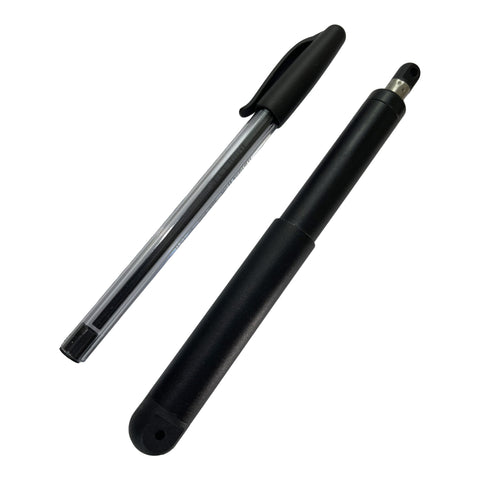
Micro actuators are essential in medical devices like surgical robots and automated dispensing systems, in consumer electronics for camera focus mechanisms and phone antennas, and in laboratory automation for sample handling and precision positioning. Despite their small size, these actuators can incorporate position feedback and fine speed control, making them suitable for demanding precision applications.
Specialty Actuator Configurations
Bullet actuators offer a unique cylindrical form factor ideal for tubular applications and installations where the actuator must fit within a confined round space. Column lifts provide vertical lifting capability in telescoping sections, perfect for height-adjustable tables and workstations where multiple stages of extension are needed.
Each actuator type represents engineering trade-offs between force, speed, stroke length, form factor, and cost. The key to successful actuator selection is understanding which parameters matter most for your specific application and choosing the configuration that best aligns with those priorities.
Critical Performance Parameters: Force, Speed, and Stroke
Selecting the right electric linear actuator requires understanding three fundamental performance parameters and how they interact: force output, speed, and stroke length. These specifications define what an actuator can accomplish and how it will behave in your application.
Force Capacity and Load Considerations
Force capacity, typically specified in Newtons (N) or pounds (lbs), represents the maximum load an actuator can push or pull. This rating assumes ideal mounting conditions with the load applied directly along the actuator's centerline. Real-world applications often involve less-than-ideal mounting angles, side loads, and dynamic forces that must be carefully considered.
When calculating required force, account for the static load weight, any friction in the system, acceleration forces if rapid motion is needed, and a safety margin—typically 20-30% above the calculated requirement. Environmental factors like temperature extremes, contamination, and duty cycle also affect sustainable force output over the actuator's service life.
It's crucial to understand that force ratings are maximum values, often measured under laboratory conditions. Operating continuously at maximum rated force will significantly reduce actuator lifespan. For applications requiring sustained high loads, specify an actuator with force capacity exceeding your requirement by a comfortable margin, or consider industrial actuators designed for heavy-duty continuous operation.
Speed and the Force-Speed Tradeoff
Actuator speed, specified in millimeters per second (mm/s) or inches per second (in/s), determines how quickly the rod extends or retracts across its stroke. This parameter is intimately linked to force through the fundamental physics of power: Power = Force × Velocity. For a given motor power output, increasing force requires reducing speed, and vice versa.
This force-speed tradeoff is managed through gear reduction ratios and screw pitch selection. A high gear reduction provides substantial mechanical advantage, multiplying motor torque to generate high force output but at correspondingly reduced speed. Lower gear ratios sacrifice force for faster motion. Manufacturers optimize these ratios for different application profiles—precision actuators favor higher reduction for controllability and force, while high-speed units use lower ratios for rapid cycling.
Belt-driven actuators represent an alternative approach, using a belt and pulley system rather than a screw drive. This configuration enables very high speeds—often 500mm/s or more—but at significantly reduced force capacity, typically under 200N. Belt-driven units excel in pick-and-place operations, packaging equipment, and other applications where rapid movement of light loads is paramount.
Stroke Length and Physical Dimensions
Stroke length defines the total travel distance from fully retracted to fully extended position. This specification directly impacts the actuator's physical dimensions—longer strokes require longer housings in rod-style actuators. When planning your installation, remember that the collapsed length of a rod actuator is approximately the stroke length plus the housing length, and you need additional clearance for the rod to fully extend.
Track actuators offer better space efficiency for long strokes, as the actuator body remains stationary while only the carriage moves. This can be advantageous in confined spaces where a rod actuator's extended length would be problematic. Standard stroke lengths range from 50mm to 1000mm for most applications, though custom lengths are often available for specialized requirements.
Control Methods and Positioning Systems
The sophistication of your control system should match the precision requirements of your application. Electric linear actuators can be controlled with anything from simple mechanical switches to advanced closed-loop servo systems with sub-millimeter positioning accuracy.
Basic Control with Limit Switches
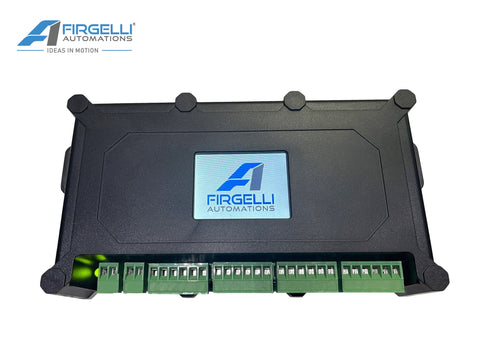
The simplest control method uses built-in limit switches that automatically cut power when the actuator reaches its fully extended or retracted position. These mechanical or magnetic switches protect the actuator from over-travel damage and provide reliable end-of-stroke stopping without external controllers. Direction control is achieved by reversing motor polarity, either through a DPDT (Double-Pole, Double-Throw) switch or a simple control box with extend/retract buttons.
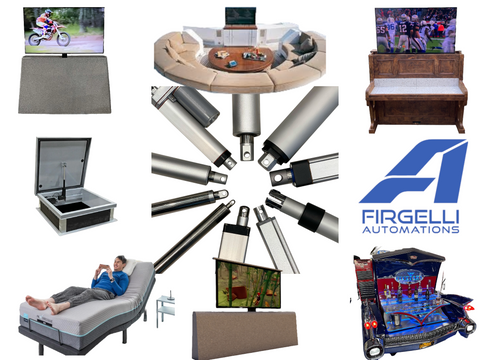
This approach works well for applications requiring simple two-position control: open/closed, up/down, extended/retracted. Installation is straightforward, requiring only a suitable power supply matched to the actuator's voltage and current requirements, and basic wiring to the control switches. Many home automation projects, TV lift mechanisms, and basic positioning tasks operate perfectly well with this level of control.
Feedback Systems for Precision Positioning
When applications demand precise positioning at intermediate points along the stroke, feedback actuators become essential. These units incorporate position sensors—typically potentiometers, Hall effect sensors, or optical encoders—that provide real-time position data to the control system.
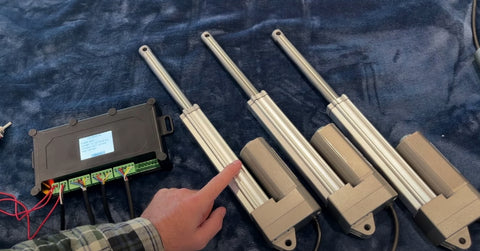
Potentiometer feedback provides an analog voltage output proportional to the actuator's position, typically 0-5V or 0-10V across the full stroke. This signal feeds into a controller or PLC (Programmable Logic Controller) that can command specific positions, implement closed-loop control, and coordinate multiple actuators for synchronized motion. The controller modulates motor voltage using PWM (Pulse Width Modulation) to achieve variable speed and can implement acceleration/deceleration profiles for smooth motion.
Hall effect sensors and optical encoders offer higher resolution and reliability than potentiometers, especially in demanding environments with vibration or temperature extremes. These digital feedback systems enable precise position tracking, often down to 0.1mm or better, making them suitable for robotic applications, CNC machinery, and precision assembly equipment.
Advanced Control with Microcontrollers and PLCs
For complex automation scenarios, Arduino boards, Raspberry Pi, and industrial PLCs provide programmable control platforms that can orchestrate sophisticated motion sequences. These systems can coordinate multiple actuators, implement conditional logic based on sensors, and communicate with other equipment through standard industrial protocols like Modbus, CANbus, or Ethernet/IP.
Microcontroller-based systems enable features like soft starts (gradual acceleration to reduce mechanical stress), programmable speed profiles, position memory, and integration with user interfaces for setup and monitoring. Open-source libraries and extensive community support make Arduino particularly accessible for DIY and prototype projects, while industrial PLCs provide the ruggedness and reliability required for production environments.
Application Considerations and Real-World Uses
Electric linear actuators have become indispensable across an extraordinary range of applications, from heavy industry to consumer products. Understanding how actuators are deployed in different scenarios provides valuable insight into selection criteria and design best practices.
Industrial and Manufacturing Applications
In manufacturing environments, electric actuators power conveyor systems, material handling equipment, automated assembly lines, and quality control stations. Their precision enables repeatable positioning for pick-and-place operations, component insertion, and testing procedures. Industrial actuators designed for these demanding applications feature reinforced construction, high duty cycle ratings, and extended service life under continuous operation.
Food processing and pharmaceutical manufacturing benefit from the cleanliness of electric actuation—no hydraulic fluid means no risk of product contamination. Stainless steel construction and IP-rated environmental protection enable sanitary designs that withstand washdown procedures and harsh cleaning chemicals.
Automotive and Transportation
The automotive industry has extensively adopted electric linear actuators for applications ranging from adjustable pedals and seat positioning to active aerodynamics and automated trunk closures. Electric systems offer weight savings compared to hydraulic alternatives, precise position control for comfort adjustments, and the ability to integrate with vehicle electronics for programmable behavior.
In aerospace, actuators control flap positions, landing gear doors, and cargo handling systems. The high power-to-weight ratio of electric systems and elimination of hydraulic fluid make them attractive for both aircraft and spacecraft applications where every kilogram matters.
Home Automation and Furniture
Residential applications have exploded in recent years as smart home technology becomes mainstream. Electric actuators enable TV lifts that hide screens when not in use, standing desks for ergonomic height adjustment, motorized window shutters, and automated kitchen appliances. The quiet operation of electric actuators is particularly valuable in living spaces where hydraulic or pneumatic noise would be unacceptable.
Custom cabinetry and furniture makers increasingly incorporate actuators for hidden compartments, adjustable shelving, and motorized panels. The compact size of micro actuators allows integration into furniture without compromising aesthetics or usable space.
Renewable Energy and Agriculture
Solar tracking systems use electric actuators to orient panels toward the sun throughout the day, maximizing energy capture. These systems must handle outdoor environmental exposure, including temperature extremes, UV radiation, and weather events, while operating reliably for years with minimal maintenance. Agricultural equipment employs actuators for automated ventilation in greenhouses, irrigation control, and livestock management systems.
Medical and Laboratory Equipment
Medical devices demand exceptional precision, reliability, and safety. Electric actuators are found in hospital beds for patient positioning, in surgical robots for instrument control, in diagnostic equipment for sample handling, and in rehabilitation devices for therapeutic motion. The smooth, controllable motion and precise force management of electric systems make them ideal for applications involving human interaction.
Key Advantages of Electric Actuation Over Alternative Technologies
Understanding why electric linear actuators have gained market share from hydraulic and pneumatic systems helps clarify when electric actuation is the optimal choice and where alternative technologies might still be preferable.
Precision and Repeatability
Electric actuators deliver unmatched positioning accuracy and repeatability. While hydraulic systems struggle with precision due to fluid compressibility and seal friction variations, and pneumatic systems face inherent challenges from air compressibility, electric actuators provide deterministic motion directly tied to motor rotation. With feedback actuators, positioning accuracy better than 0.1mm is readily achievable, enabling applications that would be impossible with other technologies.
Energy Efficiency and Environmental Benefits
Electric actuators consume power only when moving, unlike hydraulic systems that often run pumps continuously to maintain pressure. This on-demand power consumption results in substantial energy savings, particularly in applications with low duty cycles. The elimination of hydraulic fluid also removes risks of environmental contamination from leaks—a critical consideration in food processing, clean rooms, and environmentally sensitive installations.
From a total cost of ownership perspective, electric systems require no hydraulic fluid purchases, no filter changes, and no disposal of contaminated fluids. Maintenance is typically limited to periodic inspection and occasional lubrication, reducing both direct costs and downtime.
Compact and Clean Installation
A self-contained electric actuator requires only electrical power and control signals—no hydraulic power pack, no air compressor, no distribution plumbing. This dramatically simplifies installation and reduces the overall system footprint. The clean operation with no fluid mist or leakage makes electric actuators suitable for office environments, medical facilities, and consumer products where aesthetics and cleanliness matter.
Quiet Operation
Electric actuators operate far more quietly than pneumatic systems, which exhaust compressed air with characteristic hissing, or hydraulic systems with pump noise. This makes electric actuation the clear choice for noise-sensitive environments including homes, offices, hospitals, and recording studios.
Programmable Intelligence and Integration
Modern electric actuators integrate seamlessly with digital control systems, IoT platforms, and building automation networks. This connectivity enables remote monitoring, predictive maintenance based on usage data, and sophisticated control strategies impossible with purely mechanical systems. The ability to program motion profiles, store positions, and coordinate with other equipment provides flexibility that grows increasingly valuable as automation becomes more sophisticated.
Selection Criteria and Installation Best Practices
Successful actuator implementation requires careful attention to selection criteria, proper installation, and appropriate maintenance. Overlooking these considerations can lead to premature failure, inadequate performance, or safety issues.
Environmental Conditions
Operating environment significantly impacts actuator selection and longevity. Temperature extremes affect motor performance, lubrication viscosity, and seal effectiveness. Standard actuators typically operate reliably from -20°C to +60°C, but specialized units can handle more extreme conditions. High-temperature applications may require motors with Class F or H insulation and synthetic lubricants that maintain viscosity at elevated temperatures.
Moisture, dust, and chemical exposure demand appropriate IP (Ingress Protection) ratings. An IP54 rating provides protection against dust and water splashing, suitable for most indoor applications. Outdoor installations or washdown environments require IP65 or higher, with sealed housings and cable entries that prevent water ingress. Corrosive environments may necessitate stainless steel construction or protective coatings on exposed surfaces.
Duty Cycle and Service Life
Duty cycle—the percentage of time an actuator operates versus rests—critically affects service life. An actuator rated for 20% duty cycle should operate no more than 2 minutes out of every 10. Exceeding duty cycle ratings causes motor overheating, accelerated wear, and shortened service life. Applications requiring continuous or high-duty-cycle operation need actuators specifically designed for that service profile, often with larger motors, enhanced cooling, and reinforced mechanical components.
Expected service life depends on load conditions, cycle frequency, and maintenance. Under rated conditions, quality electric actuators should deliver 100,000+ cycles before requiring service. However, operating at maximum rated load continuously can reduce this significantly. Designing with appropriate safety margins—using actuators rated for higher force and duty cycle than minimally required—dramatically extends service life.
Mounting and Alignment
Proper mounting is essential for reliable operation and longevity. The actuator and load should align along the same centerline to avoid side loads and binding. Off-axis mounting introduces bending moments that load bearings asymmetrically and can cause premature wear or seizure. When perfect alignment isn't practical, mounting brackets with spherical bearings or rod-end bearings allow angular misalignment while maintaining proper load transfer.
Mounting surfaces must be rigid enough to resist deflection under load. Flexible mounting points allow the actuator to shift during operation, creating misalignment and vibration. Both the actuator body and the rod end require secure mounting—inadequate fastening can allow components to work loose under cyclic loading, leading to failure.
Electrical Considerations
Matching actuator voltage to available power sources is fundamental. While 12VDC and 24VDC are common for mobile and battery-powered applications, 120VAC or 230VAC may be more practical for stationary installations with mains power. The power supply must provide adequate current—check the actuator's stall current specification and select a supply rated at least 20% higher.
Wiring must be sized appropriately for current and length. Voltage drop in undersized wires reduces power at the actuator, limiting force and speed. Use wire gauge tables to select conductors that minimize voltage drop, particularly for low-voltage DC systems where line losses are more significant. Proper strain relief at cable connections prevents wire fatigue from flexing during actuator motion.
Maintenance Requirements
While electric actuators require minimal maintenance compared to hydraulic systems, periodic inspection and lubrication extend service life. Check mounting fasteners for tightness, particularly in applications with vibration or shock loading. Inspect the rod or track for scoring, corrosion, or contamination that could damage seals or bearings. Many actuators feature grease fittings for periodic lubrication of the screw mechanism—follow the manufacturer's recommendations for lubricant type and frequency.
Listen for unusual noises during operation, which may indicate worn bearings, inadequate lubrication, or misalignment. Monitor operating temperature—excessive heat suggests duty cycle violation, insufficient cooling, or electrical problems. In critical applications, implement preventive maintenance schedules based on cycle count or operating hours rather than waiting for failure symptoms.
Emerging Trends and Future Developments in Electric Actuator Technology
The field of electric linear actuation continues to evolve rapidly, driven by advances in motor technology, electronics, materials science, and artificial intelligence. Understanding these trends helps anticipate future capabilities and plan for next-generation systems.

Smart Actuators and IoT Integration
The integration of microprocessors, sensors, and wireless connectivity is transforming actuators from simple mechanical devices into intelligent, networked components. Smart actuators incorporate onboard processing to implement closed-loop control, monitor health metrics, and communicate via standard industrial protocols or wireless networks. This intelligence enables capabilities like automatic fault detection, predictive maintenance alerts based on operating conditions, and remote configuration without physical access.
IoT connectivity allows actuators to participate in Industry 4.0 manufacturing ecosystems, reporting performance data to cloud analytics platforms that optimize system-wide efficiency. In building automation, networked actuators can coordinate with HVAC, lighting, and security systems to implement sophisticated energy management strategies. The trend toward edge computing—processing data locally rather than in the cloud—enables faster response times and operation even when network connectivity is interrupted.
Miniaturization and Power Density
Advances in motor technology, particularly brushless DC motors with rare-earth magnets, continue to increase power density—more force output from smaller, lighter packages. This enables new applications where size constraints previously made electric actuation impractical. Miniature actuators with force outputs that would have required substantially larger units just a few years ago are now available, opening opportunities in consumer electronics, medical devices, and aerospace applications where every gram matters.
Improved materials, including carbon fiber composites and advanced polymers, reduce weight while maintaining structural integrity. This is particularly valuable in mobile applications like robotics and drone systems where actuator weight directly impacts payload capacity and battery life.
Improved Control Algorithms and Adaptive Systems
Modern motor controllers implement sophisticated control algorithms that optimize performance based on operating conditions. Adaptive control systems can automatically adjust parameters to compensate for load variations, temperature changes, or component wear, maintaining consistent performance throughout the actuator's service life. Machine learning algorithms are beginning to appear in high-end systems, enabling actuators to optimize motion profiles for specific tasks or predict maintenance needs based on subtle changes in operating characteristics.
Sustainability and Lifecycle Design
Environmental consciousness is driving design for recyclability, energy efficiency, and extended service life. Manufacturers are increasingly selecting materials that can be recycled at end-of-life and designing products for easier disassembly and component reuse. Energy-efficient motors and power electronics reduce operational carbon footprint, while longer-lasting components reduce replacement frequency and associated environmental impact.
Application-Specific Optimization
Rather than one-size-fits-all designs, actuator manufacturers are developing application-optimized products. This includes actuators specifically engineered for medical devices with biocompatible materials and sterilization compatibility, agricultural actuators with enhanced environmental protection, and collaborative robot actuators with integrated force sensing for safe human interaction. This specialization delivers better performance and reliability in demanding applications than generic designs could achieve.
Conclusion: Leveraging Electric Linear Actuators for Your Applications
Electric linear actuators represent a convergence of mechanical engineering, motor technology, and control systems that delivers precise, reliable, and efficient linear motion across an extraordinary range of applications. From the fundamental operating principles of converting rotary motor motion into linear displacement, through the diverse types and configurations available, to advanced control strategies and emerging smart technologies, this comprehensive guide has covered the essential knowledge needed to effectively specify, install, and operate electric actuators.
The key to successful implementation lies in understanding the critical performance parameters—force, speed, and stroke—and how they interact with your application requirements. Proper selection requires careful consideration of environmental conditions, duty cycle, mounting constraints, and control sophistication. When these factors align appropriately, electric actuators deliver


