Linear Actuator Uses: From Industrial Automation to Your Home
Linear actuators are the invisible workforce behind modern automation, transforming electrical energy into precise mechanical motion in applications ranging from automotive systems to home furniture. Whether you're watching your TV lift elegantly emerge from a cabinet, adjusting a standing desk to your preferred height, or simply opening your car's power liftgate, you're witnessing linear actuator technology at work. These devices have revolutionized how we interact with our environment, replacing cumbersome manual mechanisms and inefficient hydraulic systems with clean, precise electric motion control.
🎥 Video — Linear Actuator Uses: How they are used for projects & what are the applications
The transition from hydraulic to electric actuation represents one of the most significant advances in motion control technology over the past two decades. Electric linear actuators offer superior positional accuracy, require virtually no maintenance, eliminate the mess and environmental concerns of hydraulic fluids, and provide programmable control that hydraulic systems simply cannot match. This comprehensive guide explores the diverse applications of linear actuators across industries and helps you understand which type of actuator is right for your specific project or application.
From robotics and industrial automation to marine applications and smart home systems, linear actuators have become indispensable components in modern engineering. Understanding their capabilities, limitations, and proper selection criteria is essential whether you're a DIY enthusiast embarking on your first automation project or an engineer specifying components for a commercial application.
What Is a Linear Actuator?
At its core, a linear actuator is a mechanical device that converts rotational motion from a motor into linear (straight-line) motion. Unlike rotary motors that spin continuously, linear actuators produce controlled back-and-forth movement along a single axis, making them ideal for pushing, pulling, lifting, or lowering applications. The basic principle involves a motor driving a lead screw or ball screw mechanism that translates rotary motion into linear displacement of an extending rod or shaft.
In technical terms, an actuator provides control, movement, and precise positioning of mechanical systems through the conversion of various energy sources—electrical, hydraulic, or pneumatic—into mechanical force and motion. The output force of an actuator, typically measured in pounds (lbs) or Newtons (N), determines what loads it can move, while the stroke length defines the total distance the actuator shaft can extend and retract.
Modern electric linear actuators incorporate sophisticated electronics that enable features like position feedback, synchronization of multiple actuators, programmable end limits, and variable speed control. These capabilities have made them increasingly popular in applications that demand precision and reliability, from medical equipment to aerospace systems.
Types of Linear Actuators: Understanding Your Options
Linear actuators are typically categorized by their power source and operating mechanism. Each type offers distinct advantages and is suited to specific applications based on factors like force requirements, speed, duty cycle, environmental conditions, and precision needs.
Electric Linear Actuators
Electric actuators use AC or DC motors to drive a lead screw or ball screw mechanism that converts rotational motion into linear motion. These actuators are powered by electrical current and offer exceptional precision, cleanliness, and ease of integration with modern control systems. They require no hydraulic fluids or compressed air infrastructure, making them ideal for clean environments and applications where maintenance access is limited.
Electric actuators are available in various configurations, including micro linear actuators for compact applications requiring limited force (typically 10-150 lbs), standard rod-style actuators for general-purpose use (200-2,200 lbs force capacity), and industrial actuators for heavy-duty applications requiring forces exceeding 2,500 lbs. Many electric actuators can be equipped with feedback sensors that provide real-time position information, enabling closed-loop control and synchronization of multiple actuators.
Hydraulic Linear Actuators
Hydraulic actuators use pressurized hydraulic fluid to generate linear motion through a piston-cylinder arrangement. They excel in applications requiring extremely high forces, often exceeding 10,000 lbs, and can operate in harsh environments where electrical components might fail. The power density of hydraulic actuators—their ability to generate tremendous force relative to their size—makes them indispensable in heavy equipment, construction machinery, and aerospace applications.
However, hydraulic systems require extensive infrastructure including pumps, reservoirs, filters, and pressure regulators. They also present maintenance challenges due to potential fluid leaks, seal degradation, and the need for regular fluid changes. For these reasons, hydraulic actuators are gradually being replaced by electric alternatives in applications where the extreme force capabilities of hydraulics are not essential.
Pneumatic Linear Actuators
Pneumatic actuators use compressed air or gas to drive a piston that produces linear motion. They offer very high speeds and rapid response times, making them suitable for applications requiring quick, repetitive motions such as assembly line operations, packaging equipment, and automated sorting systems. Pneumatic actuators are inherently explosion-proof since they contain no electrical components or flammable fluids, making them safe for use in hazardous environments.
The primary limitations of pneumatic actuators include difficulty achieving precise position control, relatively low force output compared to hydraulic systems, and the requirement for compressed air infrastructure. They also tend to be less energy-efficient than electric actuators since compressed air generation and distribution involves significant energy losses.
Mechanical Linear Actuators
Mechanical actuators convert rotary motion into linear motion through mechanical means such as screws, gears, cams, chains, or belt drives. The most common type is the screw-driven actuator, which uses the simple principle of a threaded rod (screw) engaging with a threaded nut. When the screw rotates, the nut travels along its length, producing linear motion. Manual car jacks and adjustable furniture legs are everyday examples of mechanical actuators.
In modern automation, mechanical actuators typically refer to manually operated devices or those using simple mechanical advantage without external power. However, most electric linear actuators are technically mechanical actuators that use electric motors as the power source, so the distinction can be somewhat blurred in industry terminology.
Automotive Applications: The Most Common Use of Linear Actuators
The automotive industry represents one of the largest markets for electric linear actuators, with modern vehicles containing dozens of actuators controlling various comfort, convenience, and safety systems. The shift from hydraulic and cable-operated mechanisms to electric actuation has been driven by demands for improved reliability, reduced weight, easier integration with electronic control systems, and elimination of fluid leaks.

Power liftgates and trunk lids are among the most visible applications, using paired actuators to smoothly open and close the rear hatch at the touch of a button or with proximity-sensing automation. These systems typically employ actuators with integrated position feedback and sophisticated control algorithms that enable soft-start and soft-stop motion profiles, preventing the abrupt movements that could damage the liftgate or injure users.
Engine hood lifts, particularly in luxury and high-performance vehicles, increasingly use electric actuators to provide powered hood opening for easier engine bay access. Convertible roof systems often employ multiple synchronized actuators working in precise coordination to fold and stow complex roof structures. Door lock actuators, though much smaller, are another ubiquitous application, with each vehicle typically containing four to six of these micro actuators.
Additional automotive applications include powered running boards and side steps on trucks and SUVs, active aerodynamic elements like adjustable spoilers and grille shutters, seat adjustments, headlight leveling systems, and HVAC blend door controls. The reliability requirements in automotive applications are extremely demanding, with actuators expected to function flawlessly through temperature extremes, vibration, humidity, and repeated cycling over the vehicle's lifetime.
Home Automation and Residential Applications
Linear actuators have become central to the smart home revolution, enabling furniture and appliances that adapt to user needs while maintaining clean, minimalist aesthetics. The residential automation market has grown dramatically as actuator costs have declined and integration with home automation systems has become simpler.
TV Lifts and Entertainment Systems
TV lifts represent one of the most popular residential applications, allowing televisions to be concealed within furniture, cabinetry, or even ceiling mounts when not in use. These systems typically use one or two electric actuators with lift capacities ranging from 70 to 300 lbs, depending on television size. The actuators must provide smooth, quiet operation with precise speed control to prevent damage to the television and create an impressive visual effect.
Modern TV lift systems often incorporate wireless remote controls, integration with home automation platforms, and safety features like obstacle detection that automatically stops or reverses the lift if resistance is encountered. The mechanical design typically includes guidance systems using slide rails or linear guides to ensure stable, wobble-free motion throughout the travel range.
Kitchen Automation and Appliance Lifts
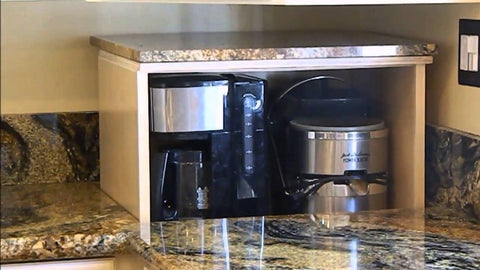
Kitchen appliance lifts use linear actuators to raise mixers, blenders, food processors, and other countertop appliances from concealed storage within base cabinets. This application addresses two key needs: keeping appliances readily accessible for use while maintaining uncluttered counter surfaces, and reducing the ergonomic strain of lifting heavy appliances from low cabinets.
These systems typically mount the actuator beneath a lifting platform within a modified base cabinet. When activated, the actuator raises the platform and appliance through an opening in the countertop. Force requirements are generally moderate, ranging from 150 to 400 lbs depending on appliance weight and mechanism design, but the duty cycle must accommodate frequent daily use.
Similar applications include pop-up power outlets and charging stations, pull-out cutting boards, and adjustable-height kitchen islands. Some luxury kitchens incorporate actuators to adjust the height of entire counter sections, accommodating users of different heights or enabling wheelchair accessibility.
Standing Desks and Ergonomic Furniture
Height-adjustable standing desks have become increasingly popular as awareness of sedentary lifestyle health risks has grown. These desks typically use two or three electric actuators arranged in a column configuration or as lifting mechanisms integrated into the desk legs. The actuators must synchronize precisely to ensure the desktop surface remains level throughout its height adjustment range, typically 24 to 50 inches.
Quality standing desk systems incorporate electronic controllers that store multiple height presets, gradually accelerate and decelerate to prevent desktop items from sliding, and include anti-collision systems that detect obstacles. The actuators must support substantial loads—often 200 lbs or more—while maintaining smooth, quiet operation suitable for office environments. Duty cycle considerations are important, as users may adjust desk height multiple times daily.
Beyond office desks, similar technology enables height-adjustable workbenches, medical examination tables, grooming tables for pet care, and accessibility-focused furniture like adjustable-height kitchen counters and bathroom vanities.
Marine and Yacht Applications

The marine industry presents unique challenges for actuator applications, with requirements for corrosion resistance, vibration tolerance, and often IP (Ingress Protection) ratings that ensure functionality in wet environments. The choice between electric and hydraulic actuation in marine applications typically depends on whether the actuator will operate in exposed or protected locations.
Electric linear actuators have become the preferred solution for interior yacht and boat applications including hatch lifts, berth adjustments, table conversions, entertainment system deployment, and galley equipment. These applications benefit from the clean operation, precise control, and low maintenance requirements of electric actuators. Marine-grade electric actuators feature 316 stainless steel construction, sealed electronics with IP66 or IP67 ratings, and special coatings to resist salt spray and moisture.
Hatch lifts for engine rooms, storage compartments, and deck access represent a primary application. These systems must reliably lift substantial loads—often 100 to 500 lbs—while operating in conditions of high humidity, temperature variation, and vibration. Gas springs (passive mechanical actuators) are sometimes used for lighter hatches, but electric actuators provide controlled motion and can support much heavier loads.
For external applications such as stabilizer fins, trim tabs, and steering systems, hydraulic actuators remain dominant due to their superior resistance to submersion, ability to generate extreme forces, and fail-safe behavior when powered systems are unavailable. However, even in these applications, electric actuators are gradually gaining acceptance as sealing technology and corrosion protection improve.
Industrial and Manufacturing Applications
Industrial automation represents perhaps the most diverse application area for linear actuators, with uses spanning material handling, assembly automation, testing equipment, packaging machinery, and process control. Industrial actuators are typically specified with higher duty cycles, more robust construction, and greater force capacity compared to residential units.
Assembly line automation uses actuators for part positioning, pressing operations, clamping, and transfer mechanisms. These applications often require high precision and repeatability, making feedback actuators with integrated position sensors essential. Ball screw actuators, which use recirculating ball bearings instead of sliding contact screws, are preferred for high-duty-cycle industrial applications due to their superior efficiency, minimal backlash, and extended service life.
Testing and inspection equipment relies on actuators to position test fixtures, apply controlled forces, and simulate operational conditions. Tensile testing machines, automated inspection systems, and environmental test chambers all incorporate precision linear actuators. These applications demand exceptional position accuracy and force control, often requiring actuators with sub-millimeter positioning resolution and force feedback capabilities.
Packaging machinery uses actuators for carton forming, product pushing, case sealing, and palletizing operations. The emphasis here is on speed and reliability, with actuators expected to perform millions of cycles with minimal maintenance. Pneumatic actuators remain popular in many packaging applications due to their high speed, but electric actuators are increasingly adopted where precise positioning or variable motion profiles are required.
Robotics and Advanced Motion Control Applications
Robotics represents one of the most technically demanding application areas for linear actuators, requiring devices that combine high force capacity, precision positioning, compact size, and sophisticated control capabilities. Modern robots, whether industrial manipulators or mobile autonomous systems, typically incorporate multiple actuators working in coordinated motion to achieve complex tasks.
Collaborative robots (cobots) designed to work safely alongside humans often use electric linear actuators with integrated force sensing to detect collisions and automatically limit output force. These actuators enable compliant motion control, where the robot can respond to external forces rather than rigidly following a programmed trajectory. Applications include assembly assistance, material handling, machine tending, and quality inspection.
Grippers and end-effectors frequently employ specialized linear actuators to provide the grasping motion. Electric grippers offer controllable grasping force, programmable opening width, and position feedback—capabilities difficult to achieve with pneumatic grippers. This enables delicate handling of varied objects without requiring dedicated gripper designs for each product.
Mobile robots and automated guided vehicles (AGVs) use actuators for lifting and lowering payloads, adjusting sensor positions, and operating manipulation tools. Compact size and efficient operation are critical in mobile applications due to limited available space and battery power. Track actuators and bullet actuators are often selected for these applications due to their high force-to-size ratio.
Research robotics explores emerging actuator technologies including artificial muscles, soft actuators using compliant materials, and biomimetic designs that replicate biological motion. While these remain primarily in laboratories, they point toward future actuator capabilities that may revolutionize robotic system design.
Specialized and Emerging Applications

Beyond the major application categories, linear actuators enable numerous specialized uses across diverse industries. Medical equipment relies on actuators for patient positioning tables, surgical robots, dental chairs, and mobility aids like wheelchair lifts and hospital bed adjustments. These applications demand exceptional reliability, smooth operation, and often compliance with strict medical device regulations.
Agricultural automation increasingly incorporates actuators for precision farming equipment including variable-rate seeders, automated irrigation systems, and robotic harvesting machines. Actuators in these applications must tolerate harsh conditions including dust, moisture, temperature extremes, and vibration while maintaining reliable operation throughout extended growing seasons.
Solar tracking systems use actuators to adjust panel orientation throughout the day, maximizing energy capture by maintaining optimal angles relative to the sun. Dual-axis tracking systems employ two actuators per panel array, while single-axis systems use one. The actuators must provide precise positioning, weather resistance, and extremely high reliability since solar installations are often located in remote areas where maintenance is difficult.
Theatrical and entertainment applications showcase actuators in stage automation, moving set pieces, special effects, and architectural elements. Concert venues, theaters, theme parks, and museums use actuators to create dynamic environments. These applications often require custom solutions with unusual stroke lengths, high speeds, or synchronized motion of multiple units, along with quiet operation to avoid disturbing performances.
Aerospace applications, while often using hydraulic actuators for primary flight controls, increasingly employ electric actuators for secondary systems including cargo doors, landing gear doors, and cabin equipment. The trend toward "more electric aircraft" aims to reduce or eliminate hydraulic systems, replacing them with electric actuation to save weight, reduce maintenance, and improve reliability.
How to Choose the Right Linear Actuator for Your Application
Selecting an appropriate linear actuator requires careful consideration of multiple technical parameters that define the actuator's capabilities and suitability for your specific application. Understanding these parameters and how they interact is essential for successful project outcomes.
Force Requirements
The force or load capacity, typically specified in pounds (lbs) or Newtons (N), represents the maximum load the actuator can push or pull. Calculating required force involves considering the weight being moved, any mechanical advantage or disadvantage in your mechanism, friction in the system, and safety factors. For vertical lifting applications, you must account for the full weight plus acceleration forces if rapid motion is required. Horizontal pushing applications may require substantial force to overcome static friction when initiating motion.
It's generally advisable to select an actuator with force capacity exceeding calculated requirements by 25-50% to ensure reliable operation, account for friction variations, and extend actuator service life. Operating an actuator consistently at its maximum rated force will reduce lifespan and may cause premature failure.
Stroke Length
Stroke length defines the total distance the actuator shaft extends from its fully retracted to fully extended position. This must accommodate the full range of motion required by your application plus allowances for mounting geometry. Actuators are available with strokes ranging from 1 inch to 60 inches or more, with longer strokes generally requiring larger, heavier actuators due to shaft deflection considerations.
When multiple actuators are synchronized, all units should typically have identical stroke lengths to simplify control systems and ensure coordinated motion. For applications requiring particularly long travel distances, track actuators or multiple standard actuators in series may be more appropriate than a single extremely long-stroke unit.
Speed Considerations
Actuator speed, typically specified as inches per second (in/s) or millimeters per second (mm/s) at no load, determines how quickly the mechanism will operate. Speed generally decreases as load increases, so specifications should indicate the speed/load relationship. For most residential and light commercial applications, speeds of 0.5 to 2.0 inches per second provide a good balance of adequate responsiveness without appearing abrupt or causing safety concerns.
There's typically an inverse relationship between force and speed in electric actuators—higher force capacity generally means slower operation, and vice versa. This reflects the gear ratios used to convert motor rotation into linear motion; higher gear ratios provide more force but reduce speed. Some actuators offer selectable gear ratios or variable-speed control through PWM (pulse width modulation) or adjustable voltage power supplies.
Duty Cycle and Environmental Protection
Duty cycle defines how much continuous operation an actuator can sustain without overheating, typically expressed as a percentage with an associated time period. For example, a 25% duty cycle at 10 minutes means the actuator can operate for 2.5 minutes out of every 10 minutes. Many residential applications have very low duty cycles—a TV lift might operate for 30 seconds a few times daily—while industrial applications may require continuous or near-continuous operation.
Environmental protection is indicated by IP (Ingress Protection) ratings, a two-digit code where the first digit indicates protection against solid particles and the second indicates protection against liquids. Common ratings include IP54 (protected against dust and water splashing), IP65 (dust-tight and protected against water jets), and IP66 or IP67 (dust-tight and protected against powerful water jets or temporary submersion). Select an IP rating appropriate for the installation environment, considering exposure to dust, moisture, cleaning procedures, and potential submersion.
Control and Feedback Options
Basic actuators operate with simple polarity reversal—apply voltage in one direction to extend, reverse polarity to retract. More sophisticated systems incorporate limit switches, position feedback sensors (potentiometers or Hall effect sensors), and electronic controllers that enable programmable positioning, speed control, and synchronization of multiple actuators.
Feedback actuators with integrated position sensors enable closed-loop control, where the controller continuously monitors actuator position and adjusts motion to achieve precise positioning. This is essential for applications requiring exact positioning or synchronization of multiple actuators within tight tolerances. Simpler applications can use control boxes with preset buttons for extend/retract operation with optional integrated limit switches to define end positions.
Mounting Considerations
Most actuators use clevis mounts at each end, allowing pivoting motion in one plane. Consider the geometry of your application—the actuator must accommodate the changing angle as it extends and retracts unless perfectly aligned with the motion. Mounting brackets are available in various configurations to adapt actuators to different installation requirements. Some compact applications may benefit from bullet actuators which have threaded rod ends instead of clevis mounts, offering more flexible installation options.
Installation Best Practices and Common Mistakes
Proper installation is critical for actuator performance and longevity. The most common installation error is side loading, where lateral forces are applied perpendicular to the actuator shaft. Actuators are designed to handle axial loads (along the shaft direction) but have limited capacity for side loads. Excessive side loading causes premature wear of internal components, binding, and eventual failure.
To prevent side loading, ensure the actuator can pivot freely at its mounting points and that the mechanism being driven has adequate guidance. Linear guides, slide rails, or drawer slides should support the load and constrain motion to a single axis, with the actuator providing only motive force. Never use the actuator itself as the sole guidance system for a load.
Electrical installation requires attention to voltage, polarity, and current capacity. Verify that your power supply provides the correct voltage (most common are 12V or 24V DC) and sufficient current capacity for your actuator. Multiple actuators operating simultaneously will draw cumulative current, requiring a power supply sized accordingly. Consider using a dedicated control box that integrates power distribution, polarity switching, and safety features rather than implementing custom wiring.
For applications requiring precise positioning or synchronization of multiple actuators, calibration is essential after installation. This typically involves programming the controller to recognize the fully retracted and extended positions, then testing operation through the full range to verify smooth motion and proper coordination. Many modern control systems can store multiple position presets and motion profiles for different operating modes.
Maintenance and Troubleshooting
One of the primary advantages of electric linear actuators is their minimal maintenance requirements compared to hydraulic or pneumatic systems. Electric actuators contain no fluids to leak or filters to replace, and their sealed construction protects internal components from environmental contamination. However, periodic inspection and basic maintenance will maximize service life.
External inspection should include checking mounting hardware for tightness, examining the actuator body and shaft for physical damage or corrosion, and verifying that the shaft extends and retracts smoothly without binding or unusual noise. For outdoor or harsh environment installations, periodically clean the actuator housing and apply a light coating of corrosion inhibitor to exposed metal surfaces.
Electrical connections should be inspected for corrosion, looseness, or damage. Outdoor installations benefit from dielectric grease application to electrical connectors to prevent moisture intrusion and corrosion. Verify that all wiring remains secure and properly strain-relieved to prevent fatigue from vibration or repeated flexing.
Common problems include actuators failing to move, moving more slowly than expected, or making unusual noises. Failure to move often indicates electrical issues—verify voltage at the actuator terminals, check for blown fuses or tripped circuit breakers, and ensure the controller is functioning properly. Slow movement may result from overloading, voltage drop due to undersized wiring or a failing power supply, or internal wear. Unusual noises like grinding or squealing typically indicate internal component wear or inadequate lubrication, suggesting the actuator may need replacement.
Most electric actuators are sealed units not designed for user servicing. If an actuator fails and is within warranty, contact the manufacturer for replacement. Out-of-warranty failures typically require actuator replacement rather than repair, as the cost of disassembly, diagnosis, and parts often exceeds replacement cost.
Integrating Linear Actuators with Automation Systems
Modern home and industrial automation systems can integrate linear actuators for sophisticated control capabilities. Smart home platforms like Home Assistant, SmartThings, and others can control actuators through relay modules or specialized controllers, enabling voice commands, smartphone control, and automation routines that coordinate actuators with other devices.
For DIY enthusiasts and makers, Arduino and similar microcontroller platforms provide accessible entry points for custom actuator control. Basic extend/retract control requires only a relay module or motor driver to switch polarity, while more advanced projects can incorporate position feedback for precise control, sensor inputs for automated operation, and wireless connectivity for remote access.
Industrial automation systems typically use PLCs (Programmable Logic Controllers) or industrial PCs to coordinate multiple actuators with other equipment. Standard industrial communication protocols including Modbus, CANbus, or industrial Ethernet enable integration into factory automation systems. When specifying actuators for industrial applications, consider whether you need analog position feedback (0-5V or 0-10V signals), digital feedback (pulse outputs), or industrial bus communication.
The control architecture should address safety considerations including emergency stop functionality, obstruction detection, and fail-safe behavior during power loss. Critical applications may require redundancy, with backup actuators or alternative mechanisms to ensure safe operation if primary systems fail. Position limit switches, either built into the actuator or installed externally, prevent over-travel that could damage equipment or create safety hazards.
Conclusion: The Versatility and Future of Linear Actuators
Linear actuators have evolved from niche industrial components to essential elements in countless applications spanning every industry and environment. The ongoing transition from hydraulic to electric actuation continues to accelerate, driven by the superior control, reliability, and efficiency of modern electric systems. As actuator technology advances with improved electronics, better materials, and more sophisticated control algorithms, applications will continue expanding into new domains.
Whether you're automating a home theater installation, designing a height-adjustable desk, building a robot, or engineering industrial equipment, understanding linear actuator capabilities and proper selection criteria is essential for project success. The diversity of available actuator types, configurations, and specifications ensures suitable solutions exist for virtually any application requiring controlled linear motion.
At FIRGELLI Automations, we combine engineering expertise with comprehensive product offerings to support your projects from concept to completion. Our extensive inventory includes everything from compact micro actuators for delicate applications to heavy-duty industrial actuators for demanding environments, along with all necessary accessories including controllers, power supplies, and mounting hardware. For those preferring complete solutions, our ready-to-install TV lifts,


