Where Linear Actuators Are Transforming Motion Control
Linear actuators have become ubiquitous in modern engineering, quietly powering motion systems across virtually every industry. From the power liftgate on your vehicle to the automated machinery in manufacturing plants, these devices convert rotational motion into precise linear movement. What makes them invaluable isn't just their ability to create push-pull motion—it's their combination of accuracy, reliability, and versatility that has made them the engineer's preferred choice for motion control applications.
The evolution of linear actuator technology represents one of the most significant shifts in industrial automation over the past two decades. The transition from hydraulic and pneumatic systems to electric actuation has fundamentally changed how engineers approach motion control problems. Where hydraulic systems once dominated due to their raw force capability, linear actuators now deliver comparable performance with superior control, reduced maintenance, and dramatically lower system complexity. This shift hasn't just improved existing applications—it has opened entirely new possibilities for automation in environments where traditional fluid power systems were impractical or impossible.
Understanding where and why linear actuators are used provides insight into modern engineering priorities: precision, energy efficiency, cleanliness, and ease of integration. Whether you're an engineer specifying components for an industrial application, a DIY enthusiast automating your home, or simply curious about the technology that makes modern conveniences possible, this comprehensive guide explores the diverse applications where linear actuators have become indispensable.

Why Electric Linear Actuators Have Become the Industry Standard
The dominance of electric linear actuation in modern applications isn't accidental—it's the result of fundamental advantages that address the practical challenges engineers face in real-world installations. While hydraulic actuators can deliver extremely high forces and pneumatic systems offer rapid cycling speeds, electric actuators provide the optimal balance of performance characteristics for the majority of applications.
Unmatched Precision and Control
Electric linear actuators excel at positional control. With feedback actuators incorporating potentiometers or Hall effect sensors, positioning accuracy can reach the micron level. This level of precision is nearly impossible to achieve consistently with hydraulic or pneumatic systems, where fluid compressibility, temperature variations, and pressure fluctuations introduce positioning errors. For applications requiring repeatability—medical equipment, precision assembly, or automated testing—electric actuation is often the only viable solution.
Simplified System Architecture
One of the most compelling advantages of electric actuation is system simplicity. A hydraulic system requires a pump, reservoir, pressure lines, return lines, filtration, and often cooling equipment. A pneumatic system needs an air compressor, pressure regulation, filtration to remove moisture, and exhaust management. An electric actuator system requires a power supply and, optionally, a control box or remote control. The reduction in components translates directly to lower installation costs, reduced maintenance requirements, and improved reliability.
Superior Energy Efficiency
Electric linear actuators consume power only when moving. A hydraulic system typically runs its pump continuously, maintaining pressure even when no motion is occurring. This continuous energy consumption represents a significant operational cost over the system's lifetime. Electric actuators, by contrast, draw current only during extension or retraction, making them far more efficient for applications with intermittent duty cycles—which describes the vast majority of automation applications.
Clean, Safe Operation
The absence of hydraulic fluid eliminates several significant concerns. There's no risk of leaks contaminating products, work areas, or the environment. There are no high-pressure lines that could fail catastrophically. Maintenance personnel don't need to handle potentially hazardous fluids. For food processing, pharmaceutical manufacturing, medical applications, and consumer products, these factors make electric actuation not just preferable but often mandatory.
Automotive Applications: The Primary Market for Linear Actuators
The automotive industry represents the single largest market for electric linear actuators, and examining these applications reveals why electric actuation has become so dominant. Modern vehicles incorporate dozens of actuators for comfort, convenience, and safety features.

Power Liftgates and Trunk Automation
Power liftgates are perhaps the most visible automotive application. These systems use paired actuators—typically in the 200-400N force range with 300-500mm stroke lengths—to lift and lower rear hatches or trunk lids. The actuators must provide sufficient force to overcome the weight of the door and any gas springs, while operating smoothly enough to prevent slamming. Modern systems incorporate pinch detection, obstacle sensing, and programmable height settings—all features that would be extraordinarily complex with hydraulic systems but are straightforward with electric actuation and electronic control.
Convertible Roof Mechanisms
The evolution of convertible roof systems perfectly illustrates the hydraulic-to-electric transition. Twenty years ago, vehicles like the Mercedes-Benz CLK Convertible used complex hydraulic systems with pumps, reservoirs, and multiple hydraulic rams. These systems were powerful but presented significant challenges: high component costs, complex calibration requirements, vulnerability to leaks, and the ever-present risk of hydraulic fluid contaminating the vehicle interior if a line failed.
Modern convertible systems use multiple synchronized electric actuators. These systems are lighter, more reliable, easier to manufacture, and simpler to service. The elimination of hydraulic components also removes several failure modes entirely—no more pump failures, no leaking seals, no contaminated fluid causing erratic operation.
Seat Positioning and Adjustment
Power seat adjustments in vehicles use micro linear actuators for lumbar support, bolster adjustment, and thigh support positioning. These actuators are typically compact, operate on 12V DC power, and provide force ranges from 50-200N with relatively short strokes. The ability to integrate position memory—returning seats to preset positions for different drivers—relies on the precise positioning capability of electric actuators with feedback sensors.
Home Automation and Furniture Applications
The home automation market has embraced linear actuator technology enthusiastically, driven by the desire for convenience, space optimization, and the "hidden technology" aesthetic popular in modern design. These applications demonstrate how accessible professional-grade motion control has become for residential use.
Television Lift Mechanisms
TV lifts have become increasingly popular for creating clean, uncluttered living spaces where televisions remain hidden until needed. These systems typically use one or two actuators—depending on the lift design—with forces ranging from 200-600N and strokes from 300-800mm, depending on the television size and lift configuration. The actuators must operate smoothly and quietly, criteria that electric motors meet far better than hydraulic or pneumatic alternatives. Modern TV lift systems often integrate with home automation platforms, enabling voice control or scheduled operation.
Kitchen Appliance Lifts and Pop-Up Storage
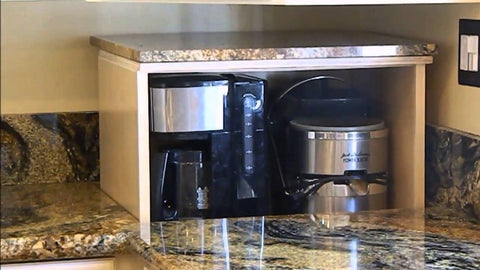
Kitchen designers have adopted linear actuators for appliance lift mechanisms that keep mixers, blenders, and other equipment hidden below counter level until needed. These lifts typically use a single heavy-duty actuator with forces in the 400-1000N range, depending on the weight of the appliance being lifted. The vertical orientation and relatively short strokes (200-400mm typically) make these installations straightforward. The key advantage is the recovery of valuable counter space—the appliance remains readily accessible but doesn't permanently occupy the work surface.
Standing Desks and Adjustable Workstations
Standing desks represent one of the fastest-growing applications for linear actuators in residential and office environments. These systems typically use two or three synchronized actuators mounted in slide rails or column lifts, with forces ranging from 500-1500N per actuator to support desktop loads of 50-100kg. The actuators must extend synchronously to prevent desk tipping, requiring either mechanical coupling or electronic synchronization. Quality standing desk systems incorporate position memory, allowing users to save preferred sitting and standing heights for one-touch adjustment.
Marine and Yacht Applications
The marine environment presents unique challenges for motion control systems: corrosion from saltwater exposure, vibration, moisture intrusion, and the space constraints inherent in vessel design. Linear actuators have found extensive application in marine environments, though the specific actuator type varies based on whether the installation is above or below the waterline.

Hatch and Door Automation
Yacht and boat hatches are ideal applications for electric linear actuators. Above-deck hatches on larger vessels can be heavy and awkward to operate manually, particularly in rough seas. Electric actuators—typically with marine-grade coatings and sealing—provide effortless operation with the touch of a button. These actuators are usually rated for 400-1000N forces with strokes matching the hatch opening distance, typically 300-600mm. The key specification for marine actuators is IP rating; IP65 or IP66 protection is common for interior installations, while exterior installations may require IP67 or IP68 ratings for submersion resistance.
Bunk and Berth Adjustment
Space optimization is critical in marine design, and adjustable berths maximize cabin flexibility. Linear actuators enable bunks to raise for storage access, convert from lounging to sleeping positions, or adjust height for comfort. These installations typically use compact actuators with moderate forces (200-400N) and strokes matching the desired adjustment range. The wiring typically runs on the vessel's DC electrical system, simplifying integration.
Hydraulic Systems for Below-Waterline Applications
While electric actuators dominate interior and above-deck applications, hydraulic actuators remain common for certain marine applications. Stabilizer systems, trim tabs, and steering systems often use hydraulic actuation because these mechanisms operate below the waterline where electric motor failures could be catastrophic. Hydraulic fluid is incompressible and doesn't present the electrical hazards associated with salt water intrusion into electric motor housings. This application-specific selection demonstrates that the choice between electric and hydraulic actuation should always be based on the specific requirements and operating environment.

Industrial Manufacturing and Automation
While less visible than consumer applications, industrial uses represent a massive market for industrial actuators. Manufacturing environments demand reliability, repeatability, and often operation under challenging conditions—requirements that modern electric actuators meet exceptionally well.
Material Handling and Positioning
Industrial actuators position components for assembly, move materials between process stages, and orient parts for inspection or machining. These applications often require high forces (1000-5000N or more), programmable positioning, and integration with PLCs or industrial control systems. Feedback actuators are essential in these applications, providing position data to the control system for closed-loop operation. The ability to program specific positions, speeds, and acceleration profiles makes electric actuators far more flexible than pneumatic cylinders for complex motion profiles.
Valve and Damper Control
Process control systems use linear actuators to position valves and dampers in industrial facilities. These actuators must provide precise positioning—often to within 1-2% of stroke—and maintain position under varying process conditions. Electric actuators with feedback offer significant advantages over pneumatic actuators in these applications: precise positioning, lower air consumption, and the ability to report position status to the control system. Force requirements vary widely based on valve size and pressure differential, from 50N for small process valves to several thousand Newtons for large industrial valves.
Automated Test Equipment
Test and measurement systems use linear actuators for pressing, pulling, positioning, and cycling operations. These applications often require extremely high cycle counts—millions of cycles over the equipment lifetime—making reliability paramount. The repeatability of electric actuators ensures consistent test results, while the ability to program complex motion profiles enables sophisticated test sequences. Many test applications use track actuators for guided motion where lateral load resistance is critical.
Medical and Laboratory Equipment
Medical and laboratory applications demand the highest levels of precision, cleanliness, and reliability—requirements that align perfectly with the strengths of electric linear actuators.
Patient Positioning and Medical Furniture
Hospital beds, examination tables, and surgical chairs use multiple synchronized actuators to position patients for comfort and clinical access. These actuators must operate smoothly and quietly, provide precise positioning, and meet stringent safety requirements. Force ratings typically range from 2000-6000N per actuator to support patient weight safely. The systems often incorporate battery backup to ensure patients can be moved to safe positions during power failures. The smooth, controlled motion of electric actuators is far superior to hydraulic systems for patient comfort.
Laboratory and Analytical Instruments
Automated laboratory equipment uses micro linear actuators for precise sample positioning, reagent dispensing, and optical alignment. These applications require extremely precise positioning—often to within microns—in compact form factors. The actuators must maintain position without power (self-locking), operate at very slow speeds for precise control, and provide long service life despite continuous operation. The cleanliness of electric actuation is essential in analytical instruments where hydraulic fluid contamination could invalidate test results.
Agricultural and Specialized Equipment
Agricultural machinery and specialized equipment represent growing markets for rugged linear actuators capable of operating in demanding outdoor environments.
Agricultural Implement Control
Modern agricultural equipment uses linear actuators for implement positioning, header height adjustment, and automated control systems. These actuators must withstand shock loads, vibration, temperature extremes, dust, and moisture. Force requirements are typically high—2000-8000N or more—and stroke lengths can be substantial (500-1000mm) for equipment adjustment ranges. While hydraulic systems remain common in agricultural applications due to the existing hydraulic infrastructure on tractors and combines, electric actuators are increasingly used for precision control functions where the accuracy of electric actuation justifies adding an electric power system.
Solar Panel Tracking Systems
Solar tracking systems use linear actuators to orient photovoltaic panels for maximum sun exposure throughout the day. These applications require weather-resistant actuators capable of moving substantial loads (dozens of solar panels) while maintaining position against wind loading. The actuators typically operate on low duty cycles—adjusting panel position every few minutes—making the efficiency of electric actuation particularly advantageous. Force requirements range from 2000-10000N depending on the array size, with stroke lengths from 300-800mm providing the necessary angular adjustment range.
Key Considerations When Selecting Linear Actuators for Applications
Successful application of linear actuators requires careful consideration of several key parameters. Understanding these factors ensures optimal performance and reliability.
Force Requirements and Load Analysis
The required force is typically the primary selection criterion. Calculate the maximum load the actuator must move, including any friction losses, and add a safety margin (typically 20-50%). Remember that force requirements may vary through the stroke—a vertically-mounted actuator lifting a load requires maximum force at the start of extension, while a horizontally-mounted actuator overcoming friction may have relatively constant force requirements. Consider whether the actuator must hold position without power (requiring a self-locking design) or if back-driving is acceptable.
Stroke Length and Installation Space
The stroke length must provide the full range of motion required, but actuator installation requires consideration of both the retracted and extended lengths. The closed length (retracted) determines the minimum space required, while the extended length determines the maximum. For applications with limited space, consider that the actuator mounting brackets and pivot points add to the required installation length.
Speed and Duty Cycle
Linear actuator speed is typically specified in mm/s or inches/s at no load. Speed decreases as load increases due to motor torque characteristics. Higher voltage generally provides higher speed, while gear reduction increases force at the expense of speed. Duty cycle—the percentage of time the actuator operates—affects thermal performance. Continuous-duty applications require actuators with larger motors and better heat dissipation than intermittent-duty applications. Most standard actuators are rated for 20-50% duty cycle, suitable for most automation applications.
Environmental Protection and Durability
The operating environment determines required IP (Ingress Protection) ratings. Indoor applications may only require IP42 (protection from finger-sized objects and dripping water), while outdoor or wash-down applications need IP65 or higher. Marine environments often require IP67 or IP68 ratings. Consider temperature extremes, corrosive atmospheres, and exposure to chemicals when selecting actuator materials and coatings. Stainless steel construction may be necessary for food processing or corrosive environments, while standard coatings suffice for controlled indoor use.
Integration and Control Systems
The versatility of electric linear actuators extends to their integration options. Simple applications may only require a switch and power supply, while sophisticated systems might integrate with building automation platforms or industrial control systems.
Basic Control Options
The simplest control method uses DPDT (Double Pole, Double Throw) switches to reverse polarity, extending or retracting the actuator. This works well for manual control in residential applications. Remote controls provide wireless operation, ideal for TV lifts, hatches, or any application where switch access is inconvenient. Most remote systems operate on RF (Radio Frequency) rather than infrared, allowing operation without line-of-sight.
Advanced Control and Automation
More sophisticated applications use dedicated control boxes that provide features like position memory, synchronized operation of multiple actuators, and programmable motion profiles. For integration with Arduino, Raspberry Pi, or other microcontroller systems, H-bridge motor controllers enable programmatic control of direction and speed. Industrial applications often use PLCs (Programmable Logic Controllers) with analog or digital I/O to control actuators based on process conditions, sensor inputs, or scheduled operations.
Synchronization of Multiple Actuators
Applications using multiple actuators—standing desks, large TV lifts, industrial positioning systems—require synchronization to prevent binding or uneven loading. Mechanical synchronization uses shafts or cables to physically couple the actuators, ensuring identical position regardless of load distribution. Electronic synchronization uses feedback actuators with position sensors, adjusting the speed of individual actuators to maintain alignment. Electronic synchronization is more flexible but requires more sophisticated control systems.
Conclusion: The Continuing Evolution of Linear Actuator Applications
Linear actuators have evolved from specialized industrial components to versatile motion control solutions found in nearly every aspect of modern life. The shift from hydraulic and pneumatic systems to electric actuation has been driven by fundamental advantages: superior precision, simplified installation, reduced maintenance, energy efficiency, and clean operation. These benefits have opened applications that were previously impractical or impossible with traditional fluid power systems.
The automotive industry's embrace of electric actuators—from power liftgates to convertible roofs—demonstrates the technology's reliability at production scale. The explosion of home automation applications shows how accessible professional-grade motion control has become. Industrial adoption proves that electric actuators meet demanding requirements for precision, duty cycle, and integration with control systems. Medical and laboratory applications validate the technology's capability for the most demanding precision requirements.
As actuator technology continues advancing—with improvements in motor efficiency, electronic control, feedback systems, and materials—the range of applications will only expand. Whether you're an engineer specifying components for a new design, a maker prototyping an automated system, or a homeowner considering a renovation, understanding linear actuator capabilities and applications empowers better design decisions and more effective solutions to motion control challenges.
Frequently Asked Questions
When should I choose an electric linear actuator over a hydraulic actuator?
Choose electric actuators when you need precise position control, clean operation, energy efficiency, or simplified installation. Electric actuators excel in applications requiring position feedback, low maintenance, or operation in environments where hydraulic fluid leaks would be problematic (food processing, medical equipment, consumer products). Hydraulic actuators remain preferable for applications requiring extremely high forces (over 10,000N) with relatively low precision requirements, or in existing systems with established hydraulic infrastructure. The decision often comes down to whether the application prioritizes force (hydraulic) or control (electric).
How do I calculate the force required for my application?
Calculate the total load including the weight of all moving components, then add friction losses (typically 10-30% depending on the mechanism design). For vertical applications, calculate the full weight being lifted. For angled installations, use trigonometry to determine the component of force acting along the actuator axis. Add a safety margin of 20-50% to account for variations in load, friction, and aging of mechanical components. Remember that mounting geometry affects required force—actuators mounted closer to the pivot point require more force than those mounted farther from the pivot due to leverage effects. When in doubt, testing with a force gauge or consulting with the actuator manufacturer ensures proper selection.
What IP rating do I need for outdoor applications?
For outdoor applications exposed to rain and dust, IP65 is the minimum recommended rating, providing protection against water jets from any direction and complete dust protection. For applications where the actuator might be temporarily submerged or exposed to pressure washing, specify IP67 (temporary immersion) or IP68 (continuous immersion). Marine applications above deck typically require IP66 or IP67, while below-deck installations should use IP67 or IP68. Remember that even with appropriate IP ratings, actuators in harsh environments benefit from additional protection such as boots over exposed shafts and proper drainage to prevent water accumulation around mounting points.
Can I control multiple actuators with a single control system?
Yes, multiple actuators can be controlled together, but the method depends on your synchronization requirements. For applications where actuators can operate independently (like separate TV lifts in different rooms), simple parallel wiring allows simultaneous control. For applications requiring synchronized movement (standing desks, large doors), you have two options: mechanical coupling using shafts or cables ensures identical position, or electronic synchronization using feedback actuators and a controller that adjusts individual actuator speeds to maintain alignment. Electronic synchronization offers more flexibility but costs more and requires sophisticated control systems. Most professional control boxes for multi-actuator applications include synchronization features designed for specific applications like standing desks or coordinated lifts.
How much maintenance do electric linear actuators require?
One of the primary advantages of electric linear actuators is their minimal maintenance requirement. Most applications require only periodic inspection—checking for loose mounting bolts, worn mounting brackets, and proper operation. For actuators in harsh environments, occasional cleaning to remove accumulated dust or debris extends service life. Lubrication requirements vary by design: some actuators are sealed and pre-lubricated for life, while others benefit from occasional grease application to exposed threads or shafts. Unlike hydraulic systems requiring fluid changes, filter replacements, and leak inspections, electric actuators typically operate maintenance-free for years in normal applications. The exception is high-duty-cycle industrial applications where regular inspection for wear is prudent. Always consult the manufacturer's documentation for specific maintenance recommendations for your actuator model and application conditions.


