
Electric linear actuators have become the backbone of modern automation, transforming how we interact with everything from the doors in our homes to the equipment in advanced manufacturing facilities. These precision devices convert electrical energy into controlled linear motion, functioning much like mechanical muscles that provide force, positioning, and repeatability that manual systems simply cannot match. Whether you're an automation engineer designing industrial systems, a DIY enthusiast building a standing desk, or simply curious about the technology that powers the automated world around us, understanding the versatile applications of linear actuators opens up a world of possibilities.
🎥 Video — 10 Ways to Use Actuators for Automation
The shift from hydraulic and pneumatic systems to electric linear actuation represents one of the most significant advances in motion control technology over the past two decades. Electric actuators offer precise position control, quiet operation, easy integration with control systems, and eliminate the need for compressed air lines or hydraulic fluid maintenance. This transition has made automation more accessible, reliable, and cost-effective across virtually every industry.
In this comprehensive guide, we'll explore ten practical applications where linear actuators are revolutionizing automation. From the obvious to the innovative, these examples demonstrate why electric linear actuators have become essential components in modern automated systems. We'll examine the technical requirements, benefits, and real-world considerations for each application, providing you with actionable insights whether you're specifying components for a commercial project or planning your next automation build.
Automated Gates and Doors: Convenient Access Control

Gate and door automation represents one of the most common and visible applications of linear actuators. From residential driveway gates to commercial loading docks, electric actuators provide the reliable force needed to move barriers weighing hundreds of pounds with the simple press of a button or swipe of a card.
Types of Gate and Door Automation
Linear actuators can automate several types of gate and door configurations:
- Swing gates: Single or double gates that pivot on hinges, requiring actuators rated for both the gate weight and wind load. Typical installations use 12V or 24V actuators with stroke lengths from 10 to 20 inches and force ratings from 200 to 1000 lbs.
- Sliding gates: Gates that move horizontally along slide rails, often using rack-and-pinion systems or chain drives powered by linear actuators.
- Overhead doors: Garage doors and commercial overhead doors using counterbalance systems where actuators provide the additional force needed for motorized operation.
- Access control doors: Pedestrian gates, security barriers, and controlled entry points in commercial buildings.
Technical Considerations for Gate Automation
Successful gate automation requires careful consideration of several factors. The actuator must provide sufficient force to overcome the gate's weight, wind resistance, and any friction in the mounting hardware. For outdoor applications, IP65 or higher environmental protection ratings are essential to withstand rain, dust, and temperature extremes. Duty cycle is another critical specification—residential applications might only require 10-20% duty cycle (operation time versus rest time), while commercial gates in high-traffic areas need industrial-grade actuators rated for continuous duty.
Safety features are paramount in gate automation. Modern systems incorporate obstacle detection through current sensing or feedback actuators that monitor position and resistance. When the actuator encounters unexpected resistance—such as a vehicle or pedestrian in the gate path—the control system can immediately stop or reverse motion to prevent injury or damage.
Integration and Control Options
Gate automation systems can integrate with various control methods. Basic installations use simple toggle switches or key switches, while advanced systems incorporate RF remote controls, smartphone apps, keypads, card readers, or integration with building management systems. A proper control box manages the actuator's direction, speed, and limits while providing the necessary safety features and battery backup during power outages.
Solar Panel Tracking Systems: Maximizing Energy Harvest
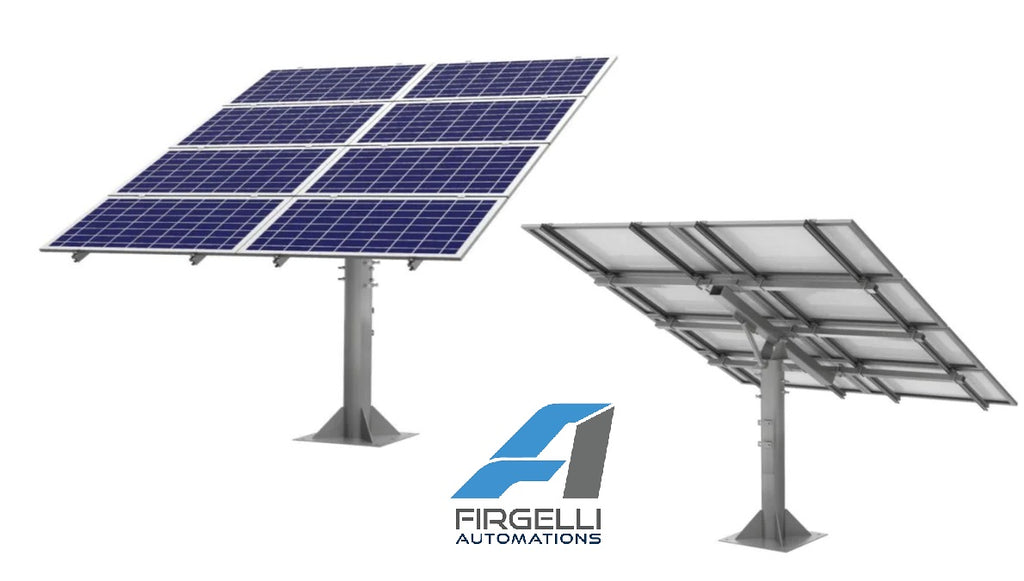
Solar energy systems achieve optimal efficiency when panels are positioned perpendicular to incoming sunlight. Since the sun's position changes throughout the day and across seasons, solar tracking systems using linear actuators can increase energy production by 25-45% compared to fixed installations. This significant improvement in efficiency makes the investment in tracking hardware economically viable for many solar installations.
Single-Axis vs. Dual-Axis Tracking
Solar tracking systems come in two primary configurations. Single-axis trackers rotate on one axis—typically east to west—following the sun's daily path across the sky. These systems use one or two linear actuators to tilt the panel array and represent the most cost-effective tracking solution. Dual-axis trackers adjust both azimuth (east-west) and elevation (seasonal tilt angle), maximizing energy capture year-round but requiring more complex mechanical systems and additional actuators.
Actuator Requirements for Solar Tracking
Solar tracking applications demand actuators with specific characteristics. The actuators must be weatherproof with high IP ratings to withstand continuous outdoor exposure. Stroke lengths typically range from 12 to 24 inches depending on panel array size and desired tilt range. Force requirements vary based on panel weight and wind load—a typical residential tracker might use actuators rated for 500-1000 lbs, while commercial arrays require industrial actuators capable of 2000+ lbs of force.
Low power consumption is crucial since the actuators draw from the same solar system they're optimizing. Most solar tracking actuators operate on 12V or 24V DC power and are designed for low duty cycle operation—they might only move the panels a few degrees every 15-30 minutes, then remain stationary until the next adjustment.
Control Strategies and Sensors
Solar trackers employ various control strategies. Passive trackers use photosensors that detect light intensity from different angles, automatically adjusting panel position to maximize the signal from the brightest direction. Active trackers use astronomical algorithms that calculate the sun's position based on GPS coordinates, date, and time—eliminating the need for sensors and providing reliable operation even on cloudy days. Many modern systems use feedback actuators with built-in position sensing, allowing precise control and enabling the system to return panels to a safe horizontal position during high winds.
Medical Equipment Automation: Precision for Patient Care
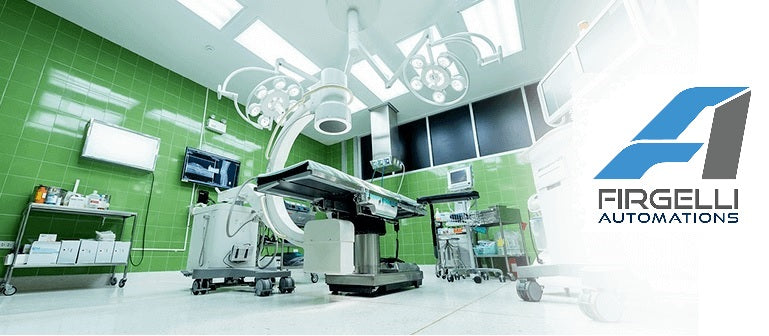
The medical industry has embraced linear actuator technology to improve patient outcomes, enhance caregiver efficiency, and enable procedures that would be impossible with manual positioning. From adjustable hospital beds to sophisticated surgical robots, electric actuators provide the precision, cleanliness, and reliability that medical applications demand.
Hospital Bed Positioning and Patient Handling
Modern hospital beds use multiple linear actuators to adjust bed height, backrest angle, leg elevation, and Trendelenburg positioning. These adjustments are critical for patient comfort, pressure sore prevention, and facilitating medical procedures. Actuators for hospital beds must meet stringent safety standards, operate quietly to avoid disturbing patients, and provide smooth, vibration-free motion. They typically incorporate built-in limit switches and overload protection to prevent excessive force that could harm patients.
Medical beds often use four or more actuators working in coordination. Height adjustment requires synchronized operation of multiple actuators to maintain bed stability, while articulated sections use independent actuators for head and foot positioning. Control systems range from simple wired pendants to sophisticated wireless controls that allow both patients and caregivers to make adjustments easily.
Surgical and Diagnostic Equipment
Linear actuators enable precise positioning in numerous surgical and diagnostic devices. Surgical tables use actuators for height, tilt, and lateral adjustments, allowing surgeons to position patients optimally for different procedures. Imaging equipment like CT scanners, MRI machines, and X-ray systems use actuators to position patients and move imaging components with sub-millimeter accuracy.
Dental chairs represent another common application, using actuators for height adjustment, backrest recline, and legrest positioning. The actuators must operate smoothly and quietly while providing sufficient force to position patients weighing up to 500 lbs or more. Many dental and surgical chair actuators include feedback capabilities that allow position memory functions—enabling quick return to preset positions for different procedures.
Cleanroom Compatibility and Hygiene Standards
Medical environments require actuators that can be easily cleaned and disinfected without degrading performance. Stainless steel housings, sealed motor compartments, and IP66 or IP67 ratings are common requirements. Actuators used in medical applications must also avoid harboring bacteria, which means smooth surfaces, minimal crevices, and materials that can withstand repeated exposure to hospital-grade disinfectants.
For surgical robots and minimally invasive surgical systems, actuators must provide exceptional precision and repeatability—often with positional accuracy better than 0.1mm. These applications frequently use specialized micro linear actuators that can be sterilized and offer the compact size needed for instrument positioning within constrained surgical spaces.
Industrial Process Automation: Enhancing Manufacturing Efficiency

Manufacturing and industrial facilities rely heavily on linear actuators to automate material handling, assembly processes, quality control systems, and production equipment. Electric actuators have largely replaced pneumatic and hydraulic systems in many industrial applications due to their superior precision, reduced maintenance requirements, and easier integration with modern control systems.
Assembly Line and Production Applications
Industrial actuators drive numerous production line functions. Component feeding systems use actuators to position parts for automated assembly. Pick-and-place systems rely on precise linear motion to move products between workstations. Pressing operations use actuators to apply controlled force for crimping, riveting, or heat-staking assemblies together. Inspection stations employ actuators to position sensors, cameras, or measuring equipment for quality control checks.
The key advantages in these applications include repeatability—actuators can return to programmed positions with accuracy better than 0.01 inches—and programmability, allowing quick changeover between different product configurations. Modern industrial actuators often integrate directly with PLCs (Programmable Logic Controllers) and industrial networks like EtherCAT or Profinet, enabling seamless communication within factory automation systems.
Conveyor Systems and Material Handling
Linear actuators automate material flow in warehouses and production facilities. Diverter gates use actuators to route products to different conveyor lines. Height-adjustable conveyors employ actuators to accommodate different truck bed heights at loading docks. Sorting systems use arrays of actuators to push, lift, or redirect items based on bar code scanning or weight measurement.
Pallet handling and lifting applications often require higher force actuators capable of moving loads weighing several thousand pounds. These heavy-duty applications typically use industrial actuators with force ratings from 2,000 to 10,000 lbs, robust steel construction, and duty cycles suitable for continuous operation. Proper mounting brackets and load distribution are critical in these high-force applications to ensure actuator longevity and system safety.
Process Control and Valve Automation
Industrial processes often require automated control of valves, dampers, and flow control devices. Electric linear actuators replace pneumatic valve actuators in many applications, offering advantages including elimination of air compressor requirements, precise position control, and integration with process control systems. Valve actuators must provide sufficient force to overcome valve stem friction and process pressure while offering position feedback for closed-loop control.
Access and Security Systems: Intelligent Perimeter Control
Physical security systems increasingly rely on automated barriers and access control points powered by linear actuators. These systems provide the perfect balance of security, convenience, and operational efficiency for facilities ranging from parking garages to high-security government installations.
Automated Bollard and Barrier Systems
Retractable bollards represent one of the most effective physical security measures for controlling vehicle access. These hydraulic or electric actuator-powered posts rise from the ground to create impenetrable vehicle barriers, then retract flush with the pavement when authorized access is needed. High-security bollards use heavy-duty linear actuators or hydraulic systems capable of withstanding vehicle impact forces, with crash-rated models tested to stop vehicles traveling at specific speeds.
For lower-security applications, removable barrier arms and rising barriers use standard industrial linear actuators to block vehicle access while allowing pedestrian passage. These systems typically integrate with access control readers, license plate recognition cameras, and intercom systems to verify authorization before granting entry.
Turnstiles and Pedestrian Access Control
Pedestrian access points use compact linear actuators to control turnstiles, swing barriers, and gate systems. Optical turnstiles in modern office buildings employ actuators to extend and retract barrier panels based on access card authentication. These actuators must react quickly—typically extending in less than one second when unauthorized passage is detected—while retracting smoothly to avoid startling authorized users.
Full-height security turnstiles and mantrap portals use synchronized actuators to control multiple locking points, creating secure passages that prevent tailgating and ensure only one person passes per authentication. The actuators in these systems require position feedback, often using feedback actuators that confirm barrier position and detect obstruction or tampering attempts.
Smart Lock and Latch Systems
Electronic locking systems increasingly use micro linear actuators to mechanically engage or withdraw lock bolts. These systems offer advantages over traditional electromagnetic locks by providing fail-secure operation—the mechanical latch remains engaged during power failure - while still allowing remote control and integration with building management systems. Actuated locks can also provide multi-point locking with a single actuator driving locking rods that engage at multiple points around a door frame, significantly improving security compared to single-point locks.
Renewable Energy Systems: Optimizing Power Generation
Beyond solar tracking, linear actuators play crucial roles in various renewable energy systems. Wind turbines, wave energy converters, and hydroelectric systems all benefit from the precise control that electric actuators provide.
Wind Turbine Pitch and Yaw Control
Wind turbines use linear actuators for blade pitch control—adjusting the angle of turbine blades to optimize power generation in varying wind conditions or to reduce blade angle during high winds to prevent overspeeding. Modern wind turbines typically have three independent pitch actuators, one for each blade, allowing individual blade angle adjustment for maximum efficiency and load balancing. These actuators must withstand harsh environmental conditions, provide high force output to overcome aerodynamic loads, and operate reliably for years with minimal maintenance.
Yaw control systems use actuators to rotate the turbine nacelle, keeping the rotor plane perpendicular to wind direction. While large commercial turbines often use hydraulic yaw drives, smaller turbines and residential wind systems employ electric linear actuators or rotary actuators for directional control.
Wave Energy and Tidal Systems
Emerging wave energy technologies use linear actuators as power take-off systems, converting the reciprocating motion of wave-driven floats into electrical energy. These actuators must operate in extremely harsh marine environments, withstand continuous cycling, and resist corrosion from salt water exposure. Specialized marine-grade actuators with stainless steel construction and IP68 submersible ratings enable these demanding applications.
Tidal barrage systems and flow control gates in hydroelectric facilities use large industrial actuators to position gates and control water flow. These applications require very high force actuators—often tens of thousands of pounds—along with robust construction and the ability to operate submerged or in high-humidity environments.
Biomass Fuel Handling Systems
Biomass power plants use actuators to control fuel feeders, ash removal systems, and combustion air control dampers. The actuators in these systems must tolerate high temperatures, dusty environments, and potential exposure to corrosive combustion byproducts. Position feedback is often critical for precise fuel flow control and maintaining optimal combustion efficiency.
Agricultural Automation: Precision Farming Technologies
Modern agriculture increasingly relies on automation to improve efficiency, reduce labor costs, and implement precision farming techniques. Linear actuators enable numerous farm automation systems that were previously impractical or prohibitively expensive.
Greenhouse Climate Control Systems
Automated greenhouses use linear actuators to control roof vents, side vents, shade screens, and heating system dampers. Environmental sensors monitor temperature, humidity, and light levels, automatically adjusting ventilation to maintain optimal growing conditions. Actuators for greenhouse applications must be weatherproof, operate reliably in high-humidity environments, and provide sufficient force to overcome wind resistance when opening large vent panels.
Modern greenhouse control systems use feedback actuators to provide precise vent positioning—rather than simple open/closed operation—allowing fine-tuned climate control that can significantly improve crop yields and reduce heating costs. The actuators typically operate on 24V DC power supplied by centralized control systems that coordinate multiple vents based on environmental conditions and time of day.
Automated Feeding and Watering Systems
Livestock operations use actuators to control feed distribution systems, automated gates for herd management, and waterer mechanisms. Poultry operations employ actuators to adjust feeder height as birds grow and to control ventilation systems that maintain optimal barn conditions. These agricultural actuators must resist corrosion from ammonia and cleaning chemicals while operating reliably in dusty, humid environments with significant temperature variations.
Harvesting and Sorting Equipment
Automated harvesting equipment uses actuators for cutter bar positioning, picking mechanism control, and conveyor adjustment. Post-harvest sorting systems employ actuator arrays to direct produce into different bins based on size, weight, or optical quality inspection. These applications benefit from the precise position control and easy programmability of electric actuators compared to traditional pneumatic or mechanical systems.
RV and Vehicle Automation: Mobile Comfort Systems
Recreational vehicles, specialty vehicles, and mobile equipment utilize linear actuators for numerous comfort and functional features. The mobile environment presents unique challenges including vibration resistance, compact packaging, and operation from vehicle electrical systems.
RV Slide-Out Mechanisms
Modern RVs commonly feature slide-out rooms that expand living space when parked. These systems typically use synchronized pairs of linear actuators mounted on slide rails to extend and retract room sections weighing several thousand pounds. The actuators must provide equal force output to prevent binding and ensure smooth operation. Synchronization is typically achieved through a control box that supplies equal current to matched actuators or through mechanical synchronization systems.
RV slide-out actuators operate from 12V DC vehicle power and must withstand continuous vibration during travel. They require relatively low duty cycles—typically extending or retracting once or twice per day—but must provide reliable operation even after months of storage. Proper mounting brackets and rigid frame construction are essential to prevent actuator misalignment that could cause premature wear.
Adjustable Sleeping Berths and Bunks
Long-haul trucks, RVs, and boats use actuators for adjustable sleeping berths that improve comfort during rest periods. Similar to hospital beds but designed for mobile environments, these systems use actuators to raise the head section, adjust firmness, or convert seating areas into sleeping surfaces. Marine applications require particular attention to corrosion resistance and secure mounting to withstand vessel motion.
Vehicle Access and Mobility Systems
Wheelchair-accessible vehicles use heavy-duty actuators for ramp deployment and lifting systems. These safety-critical applications require actuators with substantial force ratings—often 1,000 to 2,000 lbs—along with redundant safety features including backup lowering systems that allow ramp retraction even during electrical system failure. The actuators must be certified to meet ADA requirements and vehicle safety standards.
Entertainment and Home Automation: Hidden Technology
Residential automation has become increasingly popular, with linear actuators enabling sophisticated home theater systems, space-saving furniture, and automated window treatments. These applications prioritize quiet operation, aesthetic integration, and user-friendly control.
TV Lift and Projector Systems
TV lifts use linear actuators to raise televisions from furniture, lower projector screens, or move displays between rooms. These systems range from simple end-of-bed TV lifts in master bedrooms to elaborate multi-position lifts that can display a TV at different heights for viewing from bed or seating areas. The actuators must operate quietly—typically less than 50 dB—to avoid disturbing entertainment experiences and provide smooth motion that doesn't cause visible screen vibration.
Ceiling-mounted projector lifts use actuators to lower projectors for use and retract them into ceiling recesses when not needed. These applications require precise positioning to ensure proper screen alignment and often incorporate feedback actuators that can return to exact positions consistently.
Automated Furniture and Storage
Space-saving furniture increasingly incorporates electric actuators. Standing desks use synchronized actuators to raise and lower work surfaces, allowing users to alternate between sitting and standing throughout the day. These systems typically employ two or more actuators working in coordination, with control systems that include preset position memory and anti-collision detection.
Murphy beds, hidden storage compartments, and convertible furniture use actuators to transform spaces. Kitchen cabinets employ actuators to lower upper cabinets for easier access or raise appliances from countertops. These residential applications benefit from micro linear actuators that provide sufficient force in compact packages that can hide within furniture.
Automated Window Treatments and Skylights
High-end homes and commercial buildings use actuators for automated draperies, blinds, and skylights. Actuators provide sufficient force to move heavy motorized curtains or operate large skylights while maintaining quiet operation. Integration with home automation systems allows window treatments to respond to time of day, sunlight intensity, or temperature sensors—automatically adjusting to optimize natural lighting and climate control.
Robotic Systems and Automation Platforms
Linear actuators serve as the fundamental motion components in countless robotic systems, from simple hobby robots to sophisticated industrial manipulators. Their predictable operation, ease of control, and compact design make them ideal building blocks for robotic applications.
DIY and Hobby Robotics
The maker movement and DIY robotics community extensively use linear actuators to build everything from small desktop robots to large walking machines. Arduino-compatible actuators with built-in control electronics allow hobbyists to easily integrate linear motion into their projects. Common applications include robotic arms, camera pan-tilt mechanisms, animatronic props, and experimental platforms.
Micro actuators are particularly popular for small-scale projects where size and weight constraints matter. These compact units can provide surprising force output—often 50 to 200 lbs—in packages small enough to fit within robot joints or articulated mechanisms. Combined with Arduino microcontrollers and motor driver shields, these actuators enable sophisticated motion control accessible to hobbyists and students.
Research and Educational Platforms
Universities and research institutions use linear actuators in experimental setups, test fixtures, and prototype development. The versatility of electric actuators makes them ideal for research applications where requirements change frequently. Position feedback capabilities allow researchers to log motion data, implement closed-loop control algorithms, and integrate actuators with data acquisition systems.
Educational robotics programs benefit from actuators that combine ease of use with meaningful performance. Students can learn control theory, mechanical design, and programming by building actuator-based systems that demonstrate real-world engineering principles.
Industrial Collaborative Robots
Collaborative robots (cobots) designed to work alongside humans often use linear actuators for end effectors, extending reach mechanisms, and workpiece positioning. Unlike traditional industrial robots isolated behind safety cages, cobots must provide compliant motion that won't injure workers during incidental contact. Linear actuators with current-limited control can detect contact force and stop motion immediately, making them suitable for collaborative applications.
Aerospace and Specialty Applications
High-performance applications in aerospace, defense, and scientific research demand actuators with exceptional specifications and capabilities beyond typical industrial requirements.
Aircraft and UAV Systems
Aircraft use numerous actuators for control surface positioning, landing gear operation, cargo door mechanisms, and passenger comfort systems. Aerospace actuators must meet stringent weight requirements—often constructed from aluminum or composite materials—while providing high force output and extreme reliability. The actuators must also function across wide temperature ranges and withstand vibration levels that would quickly destroy industrial actuators.
Unmanned aerial vehicles (UAVs) use lightweight actuators for camera gimbal stabilization, payload bay doors, and sometimes flight control surfaces. These applications push the boundaries of actuator miniaturization, requiring maximum force output in minimum weight and volume. Some specialized micro actuators designed for UAV applications achieve force-to-weight ratios exceeding 100:1.
Scientific Instruments and Telescopes
Research telescopes and precision scientific instruments use ultra-precise linear actuators for mirror positioning, sensor alignment, and equipment calibration. These applications may require positional accuracy measured in microns along with extreme stability and repeatability. Vacuum-compatible actuators enable motion control inside electron microscopes, semiconductor processing equipment, and space simulation chambers.
Particle accelerators and fusion research facilities use specialized actuators to position diagnostic equipment, target chambers, and beam control elements. These extreme environments may expose actuators to high radiation levels, requiring radiation-hardened motors and electronics along with special materials that resist radiation damage.
Selecting the Right Actuator for Your Application
Choosing the appropriate linear actuator requires careful consideration of several key specifications and environmental factors. Understanding these parameters helps ensure reliable operation and optimal performance.
Force and Stroke Requirements
The two most fundamental specifications are force output and stroke length. Force (measured in pounds or Newtons) must be sufficient to move the load plus overcome friction, and should include a safety margin—typically 25-50%—to account for variations in operating conditions. Stroke length must cover the full range of motion required, with additional length for limit switch activation if external limits are used.
Calculate actual force requirements carefully, accounting for mounting angle, mechanical advantage, and dynamic loads. An actuator mounted at an angle produces less effective force along the axis of motion. Rapid acceleration or deceleration creates dynamic forces beyond simple static load calculations. When in doubt, consult force calculation guides or contact technical support for assistance.
Speed and Duty Cycle
Actuator speed (typically specified in inches per second or millimeters per second) affects both system performance and actuator longevity. Faster speeds generally require higher motor power and may reduce maximum force output. Consider whether your application requires maximum speed or if slower speeds with higher force would be more appropriate.
Duty cycle—the ratio of operation time to rest time—critically affects actuator selection. Continuous duty applications like industrial processes require actuators with robust motors, advanced cooling, and heavy-duty components. Intermitt


