
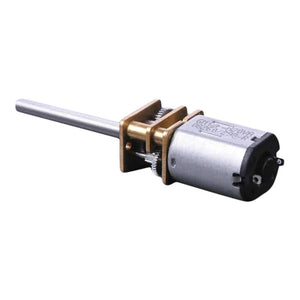
DC GEAR MOTORS
Whether you're a seasoned engineer or an automation enthusiast, our selection of rotary actuators are designed to meet your diverse needs. Discover the power of precision, reliability, and versatility in our range of rotary actuators that can revolutionize your automation projects. Get ready to elevate your applications with our cutting-edge DC gear motors. Browse our collection now and take the first step in starting your application with our DC gear motors.


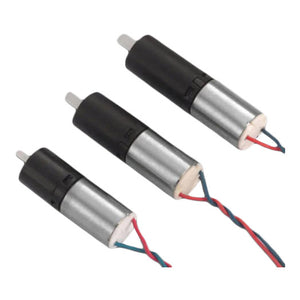
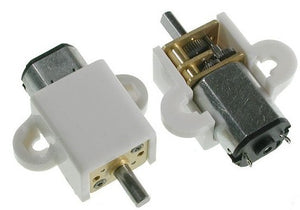

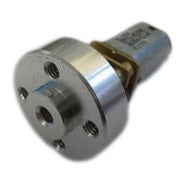

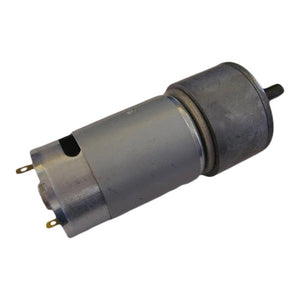
| Variable |
|---|
| Min Force |
| Max Force |
| Max Speed |
| Stroke Options |
| Voltage |
| IP Rating |
| Feedback |
| Price |

An introduction to rotary actuators
Rotary actuators are dynamic mechanical devices that serve as the heart of numerous industrial, commercial, and residential applications. At their core, these versatile components excel at transforming rotational motion into precise and controlled mechanical action. Unlike linear actuators that create linear movement, rotary actuators focus on generating circular or rotational motion. Their ingenious design and engineering allow them to power an array of functions, from opening valves to controlling the movement of robotic arms, positioning sensors, and operating complex machinery.
The distinct advantage of rotary actuators lies in their remarkable ability to bring nuanced and accurate motion to applications that require circular movement. Their mechanism offers unparalleled control, making them a go-to choice for scenarios where precision is paramount. In contrast to linear actuators that offer linear movement, rotary actuators unlock the potential for a wide spectrum of rotary motion applications, making them an essential asset across industries and automation projects.

Precision and Control
Rotary actuators are incredibly precise due to a combination of engineering design and their inherent mechanical properties. The use of gears play a crucial role in controlling and regulating the rotary motion of the actuator. These gears are manufactured with utmost precision to ensure minimal backlash and maximum efficiency. The gear actuation system enables fine adjustments and controlled movement, allowing the actuator to rotate or turn with remarkable accuracy.
In addition to their gear mechanism, rotary actuators maintain stable and accurate movements through the implementation of high-quality bearings. These bearings provide crucial support and guidance to the rotating components of the mechanical actuator. By minimizing play and wobble, these precision bearings contribute to a stable and consistent rotary motion. The synergy between precise gear design and high-quality bearings results in an actuator that achieves exceptional precision, making it an ideal choice for industry applications that demand controlled and exact movement.
The synergy between precise gear design and its high-quality bearings results in a mechanical actuator that achieves exceptional levels of precision.

What are the different type of rotary actuators
The most common types of rotary actuators use a electric motor for its power source. But their are different motor types that exist, which work in different ways to better suit different needs in applications.
First we have Stepper motors which converts electricity to produce a continuous rotation motion at a constant speed. Stepper motors excel at this as they are designed to move in discrete steps and hold positions accurately without the need for feedback. Stepper motors divide a full rotation into equal steps, with moving from one step to the next when it receives a series of electrical pulses.
Secondly we have Servo motors which take advantage of feedback. Unlike stepper motors, servo motors require feedback mechanisms such as encoders or resolvers to provide information about the motor's actual position, speed, and sometimes even torque. This feedback enables the control system to adjust the motor's operation in real-time, making servo motors well-suited for industry applications that demand high performance and responsiveness.
Other motors exist that use hydraulic and pneumatic power to drive an actuator. These actuators are usually larger and more powerful than its electric counterpart.
Frequently Asked Questions
Top Blog Posts for Rotary Actuators

A complete technical guide to rotary actuators. Learn how they convert torque to force using lever arms, explore types like rack & pinion and electric...
