Why are TV lifts transforming modern homes?
A TV lift is a motorized mechanism — typically driven by a linear actuator — that raises, lowers, or repositions a television so it can be concealed inside furniture, a cabinet, the ceiling, or the floor when not in use. The era of permanently wall-mounted televisions is giving way to something far more sophisticated and versatile. Modern homeowners are discovering that TV lifts offer a level of flexibility, safety, and aesthetic control that traditional mounting solutions simply cannot match. Whether you're a design-conscious homeowner looking to eliminate visual clutter, a parent concerned about child safety, or someone who values the ability to transform a space at the touch of a button, motorized television lifts represent a significant upgrade in how we integrate entertainment technology into our living spaces.
At their core, TV lifts use precision linear actuators to raise, lower, or move televisions smoothly and reliably. These electric motion systems can be integrated into furniture, cabinets, ceilings, or floors, allowing your television to appear when needed and disappear when not in use. The result is a cleaner, more flexible living environment that adapts to your lifestyle rather than dictating it. Beyond the obvious convenience factor, TV lifts provide tangible benefits in home safety, property value, space utilization, and equipment protection that make them an increasingly popular choice among homeowners, interior designers, and custom home builders.
In this comprehensive guide, we'll explore five compelling reasons why TV lifts have become essential features in modern homes, examine the technical considerations that make them work, and help you understand whether this innovation is the right solution for your space.
A TV lift is a load path before it is a motor. The cabinet, the bracket, and the cable carrier carry the screen — the actuator only moves it. If the structure isn't guiding the load, the actuator becomes the guide, and that's how lifts fail early.
"People size the actuator for the TV's weight and stop there. The actuator has to handle the dynamic load during motion, the bracket, the cable carrier, and a future TV that's heavier than the one you own today. Pick the force rating with headroom, not at the limit." — Robbie Dickson, Founder and Chief Engineer of FIRGELLI Automations
How do TV lifts increase your home's value and marketability?
When it comes to selling a home, first impressions are everything. Real estate professionals consistently report that homes with unique, high-end features sell faster and often command premium prices. A professionally installed TV lift system creates an immediate "wow factor" that distinguishes your property from comparable listings in your area.
The appeal goes beyond simple novelty. Potential buyers recognize that a home equipped with motorized TV lifts demonstrates attention to detail, quality construction, and forward-thinking design. Even if you don't include the television itself in the sale, the infrastructure—the linear actuator system, control box, and custom cabinetry—represents a valuable installed feature that buyers cannot easily replicate without significant investment.
Interior designers and home stagers often recommend TV lifts as a strategic improvement for sellers because they solve multiple aesthetic challenges simultaneously. They eliminate the visual dominance of a large black screen in living spaces, reduce cable clutter, and demonstrate sophisticated home automation capabilities. In luxury and semi-custom home markets, built-in TV lift systems are increasingly expected rather than exceptional, making them a worthwhile investment that can yield returns when it's time to sell.
Beyond the immediate sales advantage, TV lifts appeal to a specific demographic of buyers—typically professionals and families who value both technology and design. These buyers are often willing to pay premiums for homes that reduce their post-purchase renovation burden. By installing a TV lift system before listing, you're effectively pre-solving a design challenge that your ideal buyer would otherwise face after purchase.
How do TV lifts eliminate safety hazards for children and pets?
Television-related injuries remain a significant and often underestimated household safety concern. According to consumer safety data, thousands of emergency room visits each year result from televisions tipping over, with children under six being the most vulnerable demographic. Traditional wall mounts reduce but don't eliminate this risk—improper installation, deteriorating drywall anchors, or curious children climbing furniture can still lead to catastrophic failures.
TV lift systems fundamentally solve this safety equation by removing the television from the equation when it's not actively in use. When the TV is retracted into a cabinet, lowered into a console, or lifted into the ceiling, it becomes physically inaccessible to small children and pets. There's no screen to push, no cords to pull, and no freestanding furniture to tip over.
The engineering behind modern TV lifts also incorporates multiple safety features. Quality systems include obstruction detection that stops movement if the actuator encounters resistance, preventing pinch points or crushing hazards. The remote control systems can be secured away from children, ensuring they cannot operate the lift unsupervised. Many systems also feature lockout modes that completely disable operation when parental control is desired.
For families with active pets—particularly large dogs or cats that like to jump—TV lifts offer peace of mind that traditional mounting solutions cannot provide. A hidden television cannot be knocked over by an exuberant dog or used as a climbing surface by an adventurous cat. This protection extends to the television itself, safeguarding your investment in expensive display technology from accidental damage.
The safety benefits extend beyond just the television. By eliminating the need for entertainment centers, TV stands, or wall mounts with exposed hardware, TV lifts reduce the overall number of potential hazards in a room. There are no sharp corners on media cabinets, no low shelves for toddlers to climb, and no cables creating trip hazards across the floor.
How do TV lifts transform spaces for different uses?
Modern homes need to serve multiple functions, and TV lifts provide the flexibility to reconfigure spaces quickly and effortlessly. A living room that hosts movie night on Friday can become an elegant entertaining space for dinner guests on Saturday—all without moving furniture or rearranging the room.
This spatial versatility is particularly valuable in open-concept homes where a single large room serves as living room, dining room, and entertainment space. When the television is hidden, the space feels more formal and conducive to conversation. When it rises for viewing, the room instantly transforms into a dedicated entertainment environment. This transformation happens smoothly and quietly, powered by precision linear actuators designed for thousands of reliable operation cycles.
Home offices and multipurpose rooms benefit enormously from TV lift technology. A spare bedroom that doubles as a home office can maintain its professional appearance during video conferences with the TV concealed in a cabinet or credenza. After work hours, that same space becomes a comfortable media room or guest bedroom with full entertainment capabilities. The same control box technology that powers TV lifts can also be integrated with standing desk systems for a completely adaptable workspace.
Outdoor living spaces present unique opportunities for TV lift applications. Weatherproof outdoor TV lifts allow you to create exceptional alfresco entertainment areas without leaving expensive equipment exposed to the elements when not in use. Imagine hosting a pool party where a television rises from within a bar counter for the big game, then disappears afterward to restore your patio's clean aesthetic lines.
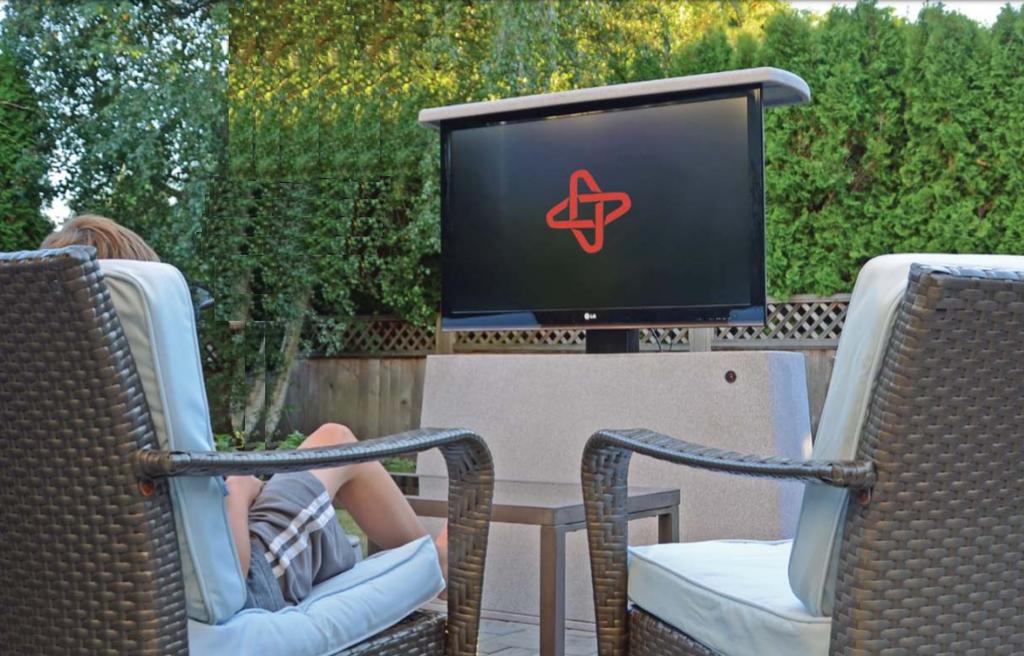
The flexibility extends to unconventional installations as well. Foot-of-bed TV lifts are popular in master suites, allowing televisions to rise from within a custom cabinet or the bed frame itself. Kitchen TV lifts can emerge from under cabinets for cooking shows and news, then tuck away to maintain clean countertop spaces. Some homeowners even install ceiling-mounted lifts that lower TVs into position in media rooms or basements, maximizing floor space when the screen isn't needed.
How do TV lifts protect your investment in premium display technology?
Modern televisions represent significant investments, with premium large-format displays easily costing thousands of dollars. These sophisticated electronics are vulnerable to physical damage, environmental factors, and accidental impacts that can render them unusable or significantly degrade performance. TV lifts provide multiple layers of protection that traditional mounting methods cannot offer.
Physical protection is the most obvious benefit. When a television is concealed within a cabinet or retracted into a ceiling compartment, it's shielded from accidental bumps, thrown toys, sports equipment, and the countless other projectiles that threaten exposed screens in active households. This is especially critical in homes with children, where a single errant toy can crack an expensive OLED panel.
Beyond impact protection, TV lifts offer environmental benefits. Dust accumulation, which can infiltrate television ventilation systems and degrade electronics over time, is significantly reduced when the TV spends much of its time enclosed. For outdoor installations, weatherproof TV lift cabinets protect equipment from moisture, temperature extremes, and UV exposure that would quickly damage an unprotected display.
The controlled motion provided by quality TV lifts also protects the mounting interface itself. Unlike manual adjustments or shaky articulating arms, motorized lifts using precision linear actuators move televisions smoothly without jerking, twisting, or stressing the mounting points. This gentle motion prevents the gradual loosening of connections and mounting hardware that can occur with frequently adjusted manual mounts.
Security is another dimension of protection. A hidden television is less visible to potential thieves looking through windows or during open houses. Home security experts consistently recommend reducing the visibility of valuable electronics from outside your home, and TV lifts accomplish this elegantly without requiring you to sacrifice functionality or enjoyment.
For collectors of vintage or specialty displays—projection televisions, large-format professional monitors, or rare CRT units—TV lift systems can provide museum-quality protection and presentation. These systems can be customized with climate control, vibration isolation, and precise positioning to preserve and showcase valuable equipment while keeping it safe when not in display.
How do TV lifts deliver minimalist aesthetics without sacrifice?
The modern design movement emphasizes clean lines, uncluttered spaces, and intentional minimalism. Yet this aesthetic philosophy often conflicts with the reality of contemporary life, which includes large televisions, gaming consoles, sound systems, and the accompanying tangle of cables and components. TV lifts resolve this conflict by allowing you to enjoy full entertainment capabilities while maintaining the visual simplicity that characterizes well-designed spaces.
When a television dominates a room's focal point—whether mounted on a wall or sitting on a media console—it dictates the space's character even when turned off. That large black rectangle becomes the room's visual anchor, pulling attention away from architectural features, artwork, or views that you might prefer to emphasize. By concealing the television when not in use, TV lifts allow other design elements to take center stage.
This is particularly valuable in formal living rooms, dining rooms, or spaces where you want to maintain an elegant, sophisticated atmosphere. Interior designers often struggle with the challenge of incorporating entertainment technology into traditionally formal spaces. TV lifts solve this problem completely—the technology is available when desired but invisible when it would compromise the room's aesthetic integrity.
The decluttering benefits extend beyond the television itself. When integrated with thoughtful cabinetry design, TV lift systems can conceal entire entertainment centers—gaming consoles, streaming devices, sound system components, and the inevitable cable chaos—behind clean cabinet facades. When you need to access these components for connection changes or troubleshooting, the cabinet opens. The rest of the time, your space remains pristine.
TV lifts also enable architectural flexibility that wall mounts cannot provide. Without the constraint of leaving wall space open for a visible television, you have complete freedom to arrange furniture, hang artwork, or position architectural elements based purely on design considerations rather than working around entertainment equipment placement.
For homeowners pursuing minimalist or Scandinavian design aesthetics—where every visible object should serve both functional and aesthetic purposes—TV lifts are often the only solution that satisfies both requirements. The television serves its entertainment function superbly when deployed but contributes nothing visually to the space when retracted, allowing the room to maintain its carefully curated simplicity.
What do you need to know about TV lift installation and technical requirements?
While the benefits of TV lifts are compelling, successful implementation requires understanding the technical and practical considerations involved. Modern TV lift systems are sophisticated pieces of engineering, and choosing the right solution for your specific application ensures years of reliable operation.
Types of TV Lift Mechanisms
TV lifts come in several configurations, each suited to different installation scenarios. Vertical cabinet lifts are the most common, raising televisions up from within furniture pieces like cabinets, consoles, or footboards. These systems typically use track actuators for smooth, stable vertical motion and can accommodate televisions ranging from small bedroom units to large living room displays.
Ceiling-mounted or drop-down lifts suspend the television from above, lowering it into viewing position when needed. These are popular in media rooms, basements, and bedrooms where floor space is at a premium. Flip-down lifts rotate the television out from a ceiling or wall mounting, common in kitchen applications or RV installations.
Swivel and articulating lifts combine vertical motion with rotation or angle adjustment, allowing optimal viewing angles from multiple seating positions. These more complex systems incorporate rotary actuators in addition to linear motion components.
| Type | Motion | Typical Location | Actuator Type | Best Use |
|---|---|---|---|---|
| Vertical cabinet lift | Linear vertical | Cabinet, console, footboard | Track linear actuator | Living rooms, bedrooms |
| Ceiling drop-down lift | Linear vertical (downward) | Ceiling cavity | Linear actuator | Media rooms, basements |
| Flip-down lift | Rotational from stowed | Ceiling, under cabinet | Linear or rotary actuator | Kitchens, RVs |
| Swivel/articulating lift | Vertical + rotation | Cabinet with multi-seat viewing | Linear + rotary actuator | Open-concept rooms |
Choosing the Right Linear Actuator System
The heart of any TV lift is its linear actuator—the motorized component that provides the lifting force. Selecting an actuator with appropriate force rating is critical. Television weights vary significantly, and the actuator must handle not just the static weight but also the dynamic forces during motion and any additional weight from mounting brackets or cable management systems.
For typical residential TV lifts handling displays between 30-70 inches, actuators with force ratings between 200-400 lbs are common. Stroke length—the distance the actuator can extend—must match your desired lift height, accounting for the television's dimensions plus any clearance requirements. Speed is another consideration; quality TV lifts typically move at 0.5-1.5 inches per second, providing smooth motion that doesn't stress the television or create jarring visual effects.
Feedback actuators offer precise position control, allowing the lift to stop at specific heights or remember favorite viewing positions. This is valuable for lifts that need to accommodate different seating arrangements or viewing preferences.
Worked example. Take a 65-inch OLED at roughly 55 lbs, mounted on a 10 lb steel bracket, lifted 28 inches out of a console. Static load is about 65 lbs. Allowing roughly 2x for dynamic load, bracket sag, and a future TV upgrade pushes the design target to ~130 lbs. A 200 lb-rated actuator is the right pick — it leaves headroom without oversizing the motor and drawing unnecessary current. Stroke length should be at least 28 inches plus a small allowance so the actuator isn't bottoming out at end of travel. At 0.7 in/sec, the full stroke runs in about 40 seconds — the smooth, quiet motion most homeowners expect.
Power Supply and Control Systems
TV lifts require reliable electrical power, typically 12V or 24V DC supplied by a power supply that converts household AC current. The power supply must be sized appropriately for the actuator's current draw, with some headroom for peak loads during startup.
Control options range from simple up/down switches to sophisticated remote control systems with programmable positions and integration with home automation platforms. A quality control box provides smooth acceleration and deceleration, preventing jarring starts and stops that could damage the television or the mechanism.
Structural and Space Requirements
Successful TV lift installation requires adequate structural support and clearance. Cabinet installations need sufficient depth and height to accommodate the television plus the mechanism, typically requiring 6-8 inches more height than the TV's dimensions. The supporting furniture or structure must be reinforced to handle the concentrated weight and dynamic loads.
Ceiling installations require access to solid structural members for mounting, and you must account for the lift mechanism's housed dimensions plus clearance for safe operation. Professional installation is often recommended for ceiling mounts to ensure proper structural anchoring and to avoid damaging electrical or HVAC systems in the ceiling cavity.
Cable Management Considerations
One often-overlooked aspect of TV lift installation is managing the cables connecting the television to source components. As the TV moves, cables must flex without creating strain or pulling connections loose. Quality installations incorporate cable management systems—often using flexible cable carriers or appropriately sized service loops—that allow free movement throughout the lift's range while protecting both the cables and connections.
What usually goes wrong with TV lifts?
- Side-loading from a misaligned cabinet opening. If the TV doesn't travel through the opening cleanly, the actuator absorbs the binding force, and side load shortens its life long before the rated cycle count.
- Undersized force rating. Specifying for the TV's static weight only — and ignoring bracket weight, dynamic load, and a future larger TV — leads to stalling and premature motor wear.
- Cable strain. Cables that aren't routed through a flexible carrier or sized service loop will eventually pull connectors loose or kink at the bend point.
- Power supply mismatch. A supply sized at the actuator's nominal current with no headroom for inrush will brown out at startup and trip the controller.
- Mounting deflection. If the cabinet or ceiling structure flexes under load, the lift's travel path shifts every cycle and the bracket bolts work loose.
How should you test a TV lift before trusting it?
- Cycle with the real TV mounted, not an empty bracket. A bracket alone won't reveal binding, sag, or cable strain. Run at least 20 full-stroke cycles before committing.
- Test the hard part of travel. Watch the lift entering and exiting the cabinet opening — that's where misalignment shows up, not in the easy middle.
- Trigger obstruction detection deliberately. Place a soft object in the travel path and confirm the controller stops cleanly.
- Check cable carrier behavior across the full stroke. Look for kinks, tight bends, or connector strain at both extremes.
- Measure startup current. The supply should not drop voltage at the actuator on cold startup with the TV mounted — that's the worst-case load condition.
Frequently Asked Questions
How much does a TV lift system cost to install?
TV lift system costs vary widely based on lift type, television size, installation complexity, and whether you're purchasing a complete furniture piece or installing a mechanism in custom cabinetry. Basic vertical lift mechanisms suitable for televisions up to 50 inches typically start around $800-1,200 for the mechanism alone. Complete furniture pieces with integrated lifts range from $1,500-5,000 depending on size and quality. Custom installations with sophisticated control systems, specialty mounting requirements, or architectural integration can exceed $10,000. Installation labor adds $500-2,000 for straightforward applications, more for complex ceiling mounts or custom cabinetry work. While this represents a significant investment, many homeowners find the combination of safety benefits, aesthetic improvement, and increased home value justify the cost.
How reliable are TV lifts, and what maintenance do they require?
Modern TV lift systems using quality linear actuators are engineered for thousands of operation cycles with minimal maintenance. Industrial-grade actuators like those used in FIRGELLI TV lifts are typically rated for 10,000+ full-stroke cycles, which translates to years of daily use in residential applications. Maintenance requirements are minimal—periodic inspection of mounting brackets for tightness, keeping the mechanism free from dust and debris, and checking cable connections. The actuator mechanisms themselves are typically sealed units requiring no lubrication or adjustment. If you experience issues, they most commonly relate to the control electronics or power supply rather than the mechanical components. Choosing systems from established manufacturers ensures availability of replacement parts and technical support if needed.
What size televisions can TV lifts accommodate?
TV lifts are available for virtually any television size, from small 32-inch bedroom displays to massive 85-inch+ screens. The determining factors are the lift mechanism's weight capacity and physical dimensions rather than screen size per se. Most residential TV lifts handle televisions between 40-70 inches, with weight capacities ranging from 60 to 200+ pounds depending on the actuator system. When selecting a TV lift, you need to consider not just your current television but whether the system can accommodate a larger replacement in the future. Screen sizes continue to increase, and a lift system installed today should have enough capacity headroom to handle the next generation of displays. Custom TV lift solutions can be engineered for exceptionally large displays, though these typically require commercial-grade actuators and reinforced structural support.
Can TV lifts be used outdoors or in high-moisture environments?
Yes, specialized TV lift systems are designed for outdoor and high-moisture environments, though they require weather-resistant components and proper enclosure design. Outdoor TV lifts use sealed actuator mechanisms with corrosion-resistant materials, weatherproof control boxes, and marine-grade wiring and connectors. The cabinet or housing must provide complete protection from rain, snow, and direct water exposure when the television is stored. Many outdoor installations also incorporate heating elements or ventilation systems to manage condensation and temperature extremes. While outdoor TV lifts cost more than indoor systems due to the specialized components required, they enable luxury outdoor entertainment spaces with full equipment protection. Similar weatherproofing considerations apply to bathroom installations, steam rooms, or poolside locations where humidity levels are high.
Can TV lifts integrate with smart home automation systems?
Modern TV lift systems offer excellent integration possibilities with smart home platforms and automation systems. Many lifts can be controlled through IR, RF, or Wi-Fi-based systems compatible with popular automation platforms like Control4, Crestron, or smart home hubs supporting standard protocols. Integration allows you to incorporate TV lift operation into broader automation scenes - for example, a "movie night" scene that dims lights, closes shades, and raises the television simultaneously. Voice control through systems like Amazon Alexa or Google Assistant is possible with appropriate interface hardware. The control box in your TV lift system determines integration capability, with more sophisticated controllers offering multiple input options and programmable logic. For DIY enthusiasts, open-source platforms like Arduino can control TV lifts directly, enabling fully customized automation solutions.
Do I need custom furniture for a TV lift, or can I retrofit existing pieces?
Both options are viable depending on your existing furniture and the lift system you choose. Purpose-built TV lift cabinets, consoles, and footboards are available as complete furniture pieces with integrated lift mechanisms, offering the simplest installation path. However, many homeowners successfully retrofit TV lifts into existing furniture if it has sufficient interior dimensions and structural integrity. Retrofitting requires careful measurements to ensure the television and lift mechanism fit within the available space, with adequate clearance for cable routing and mechanism operation. The furniture must be reinforced to support the combined weight of the television and mechanism, and you'll need to cut appropriate access openings for the television to emerge. Custom cabinetry remains the most flexible option, allowing a TV lift system to be integrated exactly as desired with furniture designed around its specific dimensions and requirements. A skilled carpenter or cabinet maker can often retrofit existing pieces successfully, though this may cost more than purchasing a pre-integrated furniture piece designed specifically for TV lift installation.
How does TV lift technology transform your home?
The decision to install a TV lift system represents more than just an equipment upgrade—it's a fundamental reimagining of how entertainment technology integrates with living spaces. From enhanced safety for children and pets to increased property values, spatial flexibility, equipment protection, and aesthetic refinement, the benefits extend far beyond simple convenience.
As home automation becomes increasingly sophisticated and homeowners demand greater versatility from their spaces, TV lifts have evolved from luxury novelties to practical solutions addressing real challenges in modern home design. The technology has matured, costs have become more accessible, and installation options now accommodate virtually any architectural situation from traditional homes to contemporary spaces, indoor and outdoor applications alike.
Whether you're planning a major renovation, building a custom home, or simply looking to enhance your current living space, TV lifts powered by precision linear actuator systems offer a proven solution that delivers measurable benefits in safety, functionality, and design quality. As with any significant home improvement, careful planning, quality components, and professional installation ensure results that will provide satisfaction for years to come.
Industries: residential construction, custom home building, interior design, home automation, smart home integration, outdoor living, RV and marine.
Mechanisms: linear actuator, track actuator, rotary actuator, feedback actuator, DC control box, cable carrier, mounting bracket.


