Drop-down TV lifts represent one of the most elegant solutions in modern home automation, transforming how we integrate entertainment technology into our living spaces. Whether you're designing a luxury home theater, creating a minimalist bedroom retreat, or maximizing space in a multi-purpose room, a ceiling-mounted TV lift offers an unmatched combination of functionality and aesthetics. When the TV isn't in use, it disappears completely into the ceiling, preserving your carefully designed interior while maintaining clean sightlines and architectural integrity.
🎥 Video — How to choose the correct drop down TV Lift
However, selecting the right drop-down TV lift mechanism isn't as simple as matching your TV size to a product specification. The installation environment, ceiling cavity dimensions, viewing angles, and integration requirements all play critical roles in determining which system will deliver the best performance. At FIRGELLI Automations, we've engineered our drop-down TV lifts to address these challenges with precision-built electric actuation systems that eliminate the maintenance headaches of traditional rack-and-pinion designs while delivering whisper-quiet operation and reliable performance.
This comprehensive guide will walk you through every consideration necessary to choose the correct drop-down TV lift for your installation, from measuring your available ceiling space to understanding load capacities and selecting the optimal stroke length for your viewing preferences.
Understanding Drop-Down TV Lift Mechanisms
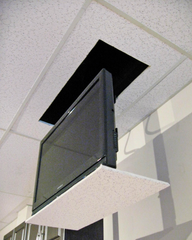
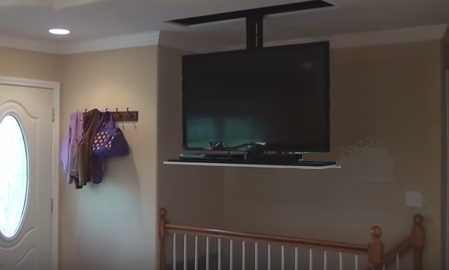
Drop-down TV lift systems are fundamentally different from traditional pop-up TV lifts that rise from furniture. These ceiling-mounted systems consist of several key components that work together to lower your television smoothly from a concealed position above the ceiling plane into the viewing area below.
The core of the system is an electric linear actuator mechanism housed within a rigid column assembly. Unlike hydraulic systems or cable-driven designs, modern drop-down lifts use precision electric actuators that provide consistent force throughout the stroke, eliminating the drift and maintenance issues associated with older technologies. The FIRGELLI drop-down TV lift systems operate on this principle, using advanced electric actuation to deliver smooth, silent motion without the complexity of racks, pinions, or tensioned cables that can wear or fail over time.
The mechanism features two mounting points: a top bracket that fixes securely to your ceiling structure, and a bottom mounting point where your television attaches. When activated via remote control, the actuator extends or retracts, lowering or raising the TV column. The entire assembly is designed for flush ceiling integration, with the ability to add a decorative panel or drywall finish to the bottom bracket so the system becomes virtually invisible when retracted.
Critical Measurements: Understanding Retracted Length
The single most important dimension when selecting a drop-down TV lift is the retracted length—the total height of the mechanism when fully closed. This measurement determines whether the system will physically fit within your ceiling cavity, and failing to account for it properly is the most common installation mistake.
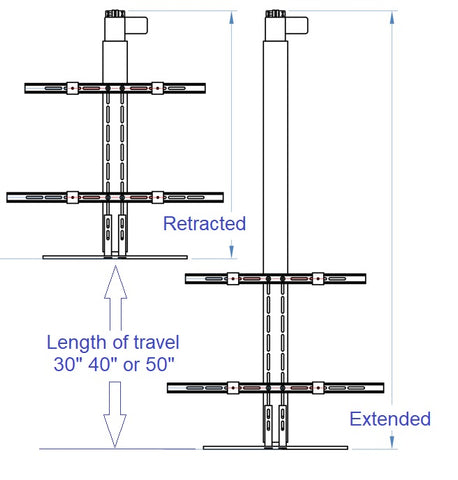
The retracted length encompasses the entire mechanism assembly from the top mounting bracket to the bottom of the column when fully retracted. You must have clear, unobstructed space in your ceiling equal to or greater than this dimension. This means accounting for ceiling joists, HVAC ducting, electrical conduits, and structural members that might interfere with installation.
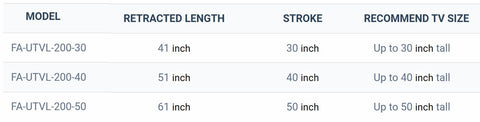
FIRGELLI offers three sizes of drop-down TV lift mechanisms, each with different retracted and extended lengths:

- Compact Model: Ideal for installations with limited ceiling cavity depth, typically suitable for smaller TVs where viewing distance is closer
- Standard Model: The most versatile option, balancing ceiling space requirements with extended drop length for optimal viewing angles
- Extended Model: Designed for installations with ample ceiling depth, providing maximum drop distance for large screens and flexible positioning
When measuring your ceiling cavity, measure from the finished ceiling surface up to the first obstruction—whether that's the floor/ceiling joist above, ductwork, or the roof structure itself. Add at least 2 inches of clearance beyond the retracted length specification to allow for mounting hardware and any minor installation adjustments. If you're working with a suspended ceiling grid, remember that the mechanism mounts above the grid, so measure to your structural ceiling, not just to the top of the drop ceiling tiles.
Stroke Length and Viewing Angle Optimization
Once you've confirmed that a particular model will fit within your ceiling cavity, the next consideration is stroke length—how far the TV will descend into your viewing space. This isn't just about clearance; it's about creating the optimal viewing experience.
We consistently recommend selecting the largest drop-down TV lift mechanism that your ceiling space will accommodate, even if you're installing a relatively small television. There's a practical reason for this: viewing angle comfort. When a TV is positioned too high, viewers strain their necks looking upward, leading to discomfort during extended viewing sessions. By maximizing the drop distance, you can position the screen at or slightly below eye level when seated, which is the ergonomically ideal viewing position.
The beauty of electric linear actuators in these systems is their infinite positioning capability. You're not locked into fully extended or fully retracted positions—the TV can be stopped at any point along its travel. This means you can program different preset positions for various seating arrangements or viewing scenarios. Perhaps you want the TV to drop 24 inches for viewing from your bed, but only 18 inches when you're standing in the room getting dressed. These adjustments are simple with the included remote control system.
For home theater installations, consider the relationship between screen size, viewing distance, and drop length. A larger screen positioned optimally will create a more immersive experience than a smaller screen mounted at a compromised height simply because you chose a shorter lift mechanism.
TV Size and Weight Capacity Considerations
Modern flat-panel TVs have become remarkably lighter over the years, but matching your television to the appropriate lift mechanism still requires attention to both size and weight specifications. The drop-down TV lifts from FIRGELLI are designed with generous load capacities to accommodate most residential displays, but understanding the limits ensures safe, reliable operation.
TV size, measured diagonally across the screen, gives you a general sense of compatibility, but the actual weight of the display is what matters for the actuator mechanism. A 55-inch LED TV might weigh 35 pounds, while a 65-inch model could range from 45 to 65 pounds depending on the manufacturer and technology. Always check your TV's specifications before ordering your lift mechanism.
The universal mounting bracket included with FIRGELLI drop-down systems accommodates the standard VESA mounting patterns found on virtually all flat-panel TVs, including 200x200mm, 400x400mm, and various rectangular patterns. This means LED, LCD, OLED, and QLED displays from any manufacturer can be securely attached to the lift column.
When calculating total load, remember to include the weight of the VESA bracket itself and any additional accessories like soundbar mounts or cable management systems you might attach to the TV. Build in a safety margin—if your TV weighs 50 pounds with bracket and accessories, don't select a lift rated for exactly 50 pounds. Choose one with at least 20-30% additional capacity to ensure smooth operation and long mechanism life.
Installation Requirements and Structural Considerations
Proper installation of a drop-down TV lift requires careful attention to structural mounting and electrical requirements. These systems must be securely anchored to your ceiling structure—not simply to drywall or ceiling panels—to safely support the weight of the television and withstand the dynamic forces during operation.
The top bracket of the mechanism must be fastened directly to ceiling joists or blocking installed between joists. For concrete ceilings, appropriate concrete anchors rated for the total system weight must be used. The installation location should be chosen not only for optimal viewing but also for access to solid structural members. In many cases, installers add additional blocking or a mounting plate above the ceiling to distribute load across multiple joists.
Electrical requirements for FIRGELLI drop-down TV lifts are straightforward but must be planned during installation. The system requires a standard power connection, typically provided by a power supply unit that converts household AC voltage to the DC voltage required by the actuator motor. This power supply can be located in the ceiling cavity near the mechanism or in an adjacent equipment closet or attic space.
The RF (radio frequency) receiver that communicates with the remote control also mounts in the ceiling area. One significant advantage of RF control over infrared systems is that no line-of-sight is required—you can operate the lift from anywhere in the home, even from another room. This makes integration into whole-home automation systems more flexible.
Cable management deserves special attention in drop-down TV lift installations. Your television needs power and likely signal cables (HDMI, network, etc.). These cables must move with the TV as it travels up and down without binding, pinching, or creating unsightly loops. Plan for adequate cable length with service loops stored in the ceiling cavity, and consider using cable carriers or protective sleeving to maintain a clean appearance and prevent wear.
Assembly and Installation Process
The assembly and installation of a drop-down TV lift mechanism follows a logical sequence that, when properly planned, results in a professional installation that operates flawlessly for years. FIRGELLI designs these systems with installer-friendly features that simplify the process while maintaining the engineering precision required for smooth, reliable operation.
The installation process begins with preparing the ceiling opening. This opening must be precisely sized to allow the TV and column to pass through when descending while providing adequate support around the perimeter for mounting. The rough opening should be framed with solid blocking to provide secure attachment points for the mechanism's top bracket.
The lift mechanism arrives as a modular system with several main components: the actuator assembly with column, the control box, the RF receiver, and the remote control. All electrical connections use plug-type connectors, eliminating the need for wire splicing or specialized electrical knowledge. This plug-and-play design significantly reduces installation time and the potential for wiring errors.
After securing the top bracket to the ceiling structure, the main column assembly attaches to the bracket. The TV mounting bracket then attaches to the bottom of the column using the universal VESA mounting pattern. Finally, the TV itself mounts to this bracket, and all cables are routed and secured to prevent interference with the mechanism's travel.
The bottom of the opening can be finished with the included drywall bracket or decorative panel that creates a flush, finished appearance when the TV is retracted. This panel effectively hides the mechanism and creates the "disappearing TV" effect that makes drop-down lifts so appealing.
Wireless Control and Home Automation Integration
The control system for FIRGELLI drop-down TV lifts represents a significant advantage over older TV lift technologies. The radio frequency remote control operates without requiring line-of-sight, meaning you can activate the lift from anywhere in your home, not just while standing directly in front of it pointing a remote.
The RF remote typically provides simple up, down, and stop functions, allowing you to position the TV anywhere along its travel range. The mechanism includes built-in limit switches that prevent over-extension or over-retraction, protecting both the TV and the mechanism from damage even if the remote buttons are held too long.
For those integrating the drop-down TV lift into a broader home automation system, FIRGELLI offers a contact closure interface that allows the lift to be controlled by third-party automation systems like Control4, Crestron, Savant, or even DIY platforms like Home Assistant or Arduino-based systems. This contact closure box accepts simple on/off signals from your automation controller, translating them into the appropriate commands for the lift mechanism.
This integration capability means your TV lift can be incorporated into scenes or routines—imagine a "movie night" scene that dims the lights, closes the motorized shades, and automatically lowers the TV to the perfect viewing position, all triggered by a single button press or voice command. The possibilities for creating sophisticated, automated experiences are nearly limitless.
Maintenance and Reliability
One of the defining characteristics of FIRGELLI drop-down TV lifts is their engineering for long-term reliability with minimal maintenance requirements. The electric linear actuators at the heart of these systems are industrial-grade components designed for thousands of duty cycles, far exceeding the typical residential use case even over decades of ownership.
Unlike rack-and-pinion systems that require periodic lubrication and adjustment, or cable-driven designs where cables can stretch or fray over time, the sealed linear actuator design requires essentially no routine maintenance. There are no exposed gears to accumulate dust or debris, no cables to inspect for wear, and no hydraulic seals to leak or fail.
The mechanisms are CE and UL approved, confirming they meet rigorous safety standards for electrical equipment and mechanical operation. This certification isn't just a regulatory checkbox—it reflects the engineering discipline and quality control that goes into every unit, ensuring consistent performance and safety.
The quiet operation of these systems is another reliability indicator. Excessive noise in mechanical systems often signals friction, misalignment, or wear. The whisper-quiet performance of FIRGELLI drop-down lifts demonstrates the precision of the internal components and the efficiency of the drive mechanism. Even after years of operation, the smooth, silent motion should remain consistent.
Design Considerations and Aesthetic Integration
The visual impact of a well-installed drop-down TV lift extends beyond the wow factor when the television descends from the ceiling. The true mark of a quality installation is how seamlessly the system disappears when not in use, preserving the architectural integrity and design vision of the space.
The bottom panel or drywall bracket that covers the opening when the TV is retracted can be finished to match your ceiling exactly. This means painting it the same color, applying the same texture, or even incorporating it into a coffered ceiling design or decorative ceiling treatment. When properly executed, guests may not even realize a TV is hidden above until you activate the lift.
For modern or contemporary spaces, some designers choose to make the opening a design feature rather than hiding it entirely. A recessed panel with LED perimeter lighting, a contrasting paint color, or a architectural detail that draws the eye can turn the TV opening into an intentional design element rather than something to camouflage.
The slim profile of the column and TV when descended also contributes to a cleaner aesthetic compared to wall-mounted TVs with their visible mounting brackets, cable covers, and the gap between the TV and wall. A drop-down installation creates a floating appearance that feels more refined and intentional.
Consider the view from different angles as well. Unlike a wall-mounted TV that may be visible from multiple rooms or through doorways, a ceiling-mounted TV can be positioned to remain out of sight until needed, preserving carefully curated sightlines through your home.
Common Installation Locations and Applications
While bedrooms are perhaps the most popular location for drop-down TV lifts, the versatility of these systems makes them valuable in numerous residential and commercial applications. Understanding where these mechanisms excel helps you identify opportunities you might not have initially considered.
Primary bedroom suites benefit enormously from drop-down lifts. The TV can descend for viewing from bed, then retract completely to maintain the peaceful, uncluttered atmosphere crucial for quality sleep. Many homeowners resist TV in the bedroom specifically because they don't want it to be a dominant visual element; a drop-down lift resolves this conflict perfectly.
Home theaters with projector screens can incorporate drop-down TV lifts for those times when you want to watch regular television without the ceremony of deploying the screen and projector. The TV provides casual viewing capability without compromising the dedicated theater configuration.
Open-concept living spaces where the kitchen flows into the family room can use drop-down lifts to add a TV that appears only when needed, rather than having a screen dominate the social space when you're entertaining. The TV can lower for watching while cooking or during casual family time, then disappear to maintain the open, conversational atmosphere during dinner parties.
Commercial applications include hotel suites, executive conference rooms, yacht cabins, and medical facilities where space is at a premium and aesthetics matter. The robust construction and reliable operation of FIRGELLI systems make them suitable for commercial environments where frequent use demands higher durability.
RVs and mobile homes also benefit from drop-down TV lifts, particularly in slide-out sections where ceiling mounting preserves valuable floor and wall space. The solid-state electronic control systems handle the vibration and movement of mobile applications without issue.
Frequently Asked Questions
What ceiling height do I need for a drop-down TV lift installation?
The minimum ceiling height depends on both the ceiling cavity depth and the overall room height. You need sufficient cavity depth above your finished ceiling to accommodate the retracted mechanism (ranging from approximately 24 to 40 inches depending on the model you select), plus adequate room height below to comfortably view the TV when extended. For a typical installation with an 8-foot ceiling, you'd want at least 12-16 inches of cavity depth for the smallest mechanism. Higher ceilings provide more flexibility for both larger mechanisms and optimal TV positioning. Measure your specific ceiling cavity carefully, as obstructions like joists, ductwork, or electrical runs can limit available space even if the overall cavity depth seems adequate.
Can I install a drop-down TV lift myself or do I need a professional?
Drop-down TV lift installation is within the capability of experienced DIYers who are comfortable with basic carpentry, structural mounting, and electrical work. The FIRGELLI systems are designed with plug-and-play electrical connections that don't require specialized knowledge, and the assembly process is straightforward with the provided instructions and video guides. However, the installation does require properly securing the mechanism to structural ceiling members, creating or modifying a ceiling opening, running power to the installation location, and safely handling a television while working overhead. If you're not confident in your ability to locate and securely mount to ceiling joists, or if you're uncomfortable working with power tools above your head, hiring a professional installer or home theater integrator is advisable. Many installations also benefit from a two-person team simply because managing the components during installation is easier with assistance.
How fast does the TV lower and raise, and is it noisy?
FIRGELLI drop-down TV lifts operate at a measured pace designed to balance smooth motion with reasonable cycle time, typically lowering or raising a TV through their full stroke in 30-60 seconds depending on the model and stroke length. The speed is intentionally moderate to ensure smooth, controlled motion and prevent any mechanical stress or unsafe conditions. Regarding noise, these systems are remarkably quiet—the electric linear actuator mechanism produces minimal sound during operation, typically comparable to a quiet refrigerator compressor or less. There are no gears grinding, cables rattling, or motors straining. In most installations, the slight mechanical hum is barely noticeable even in a quiet room, and it's completely unobtrusive with any ambient sound present. This near-silent operation is a significant advantage over older rack-and-pinion designs or cable-driven systems.
What happens if the power goes out while the TV is extended?
If power is lost while your TV is in the extended position, the mechanism simply stops wherever it is in its travel. The linear actuator design includes an internal mechanical locking mechanism that prevents the TV from falling or drifting when unpowered—your television will remain safely suspended at its current position until power is restored. Once power returns, you can operate the lift normally using the remote control. There's no need for manual override procedures or emergency retraction mechanisms. This fail-safe design is one of the safety features that contributes to the UL and CE certification of these systems. The actuator's internal mechanics physically prevent any movement without electrical power, unlike some cable-driven systems that might rely on electric brakes or hydraulic systems that could potentially drift.
Can I integrate the drop-down TV lift with my smart home system or voice control?
Yes, FIRGELLI drop-down TV lifts can be integrated into most smart home and automation platforms through a contact closure interface. This device translates simple on/off signals from your automation system into the appropriate commands for the lift mechanism. Once connected, the lift can be controlled by systems like Control4, Crestron, Savant, RTI, and others, as well as DIY platforms like Home Assistant, Hubitat, or Arduino-based controllers. For voice control through Alexa, Google Assistant, or Siri, you would typically integrate the lift into your smart home system first, then create voice commands through that platform. This allows you to include the TV lift in automation scenes—for example, saying "Alexa, movie time" could dim the lights, close the shades, and lower the TV simultaneously. The contact closure box is available separately and connects to the lift's control box with simple wiring.
How do I run cables to the TV when it moves up and down?
Cable management is an essential consideration in any drop-down TV lift installation. You'll need to provide adequate cable length for power and signal cables (HDMI, network, etc.) to travel with the TV through its full range of motion. The typical approach is to route cables from your equipment location (AV receiver, cable box, streaming devices) up into the ceiling cavity, then down through or alongside the lift column to the TV. You must provide enough extra cable length—called a service loop—to accommodate the TV's full stroke distance plus an additional safety margin. This excess cable is coiled or managed in the ceiling cavity when the TV is extended, then gradually deploys as the TV raises. Some installers use cable carriers or protective sleeving to keep cables organized and prevent tangling. For HDMI and other signal cables, be aware that longer runs may require active cables or signal boosters to maintain quality, particularly for 4K or 8K signals. Plan your cable paths during the installation design phase to ensure clean routing that doesn't interfere with the mechanism's operation.


