In today's business environment, the flat-screen television has evolved from a luxury amenity to an essential tool for customer engagement, employee communication, and brand presentation. Yet most businesses still mount these expensive displays in fixed positions on walls—an approach that creates unnecessary safety risks, limits flexibility, and fails to maximize the value of this critical technology investment. The solution lies in implementing tv lifts, motorized systems that provide precise vertical and horizontal positioning of displays while addressing fundamental security and operational concerns.
A TV lift mechanism, powered by precision linear actuators, transforms a static screen into a dynamic element of your business infrastructure. Whether you operate a medical office with a waiting room full of children, a corporate conference center where presentation equipment must adapt to different room configurations, or a retail environment where displays need protection after hours, the ability to move and conceal television screens on demand delivers measurable benefits. This comprehensive guide examines eight compelling reasons why commercial TV lift systems have become essential equipment for forward-thinking businesses across industries.
A lift that handles the screen once proves the geometry. A lift that handles it ten thousand times proves the design.
"On a TV lift, the actuator does two jobs — it carries the load and it keeps the screen square. The moment one side leads the other, you stop lifting a screen and start twisting it. That's why we run synchronized dual actuators on anything beyond the smallest pop-ups, and why you size for at least 20% over the screen weight. The margin isn't for the first cycle. It's for cycle ten thousand." — Robbie Dickson, Founder and Chief Engineer of FIRGELLI Automations
What safety hazards do wall-mounted displays create in commercial spaces?
Traditional wall-mounted televisions present significant liability concerns that many business owners overlook until an incident occurs. A 55-inch television can weigh between 30 and 50 pounds, while larger 75-inch commercial displays can exceed 100 pounds. When mounted at accessible heights, these devices become potential hazards in environments with foot traffic, particularly in waiting areas, reception spaces, or retail floors.
Children in waiting rooms frequently run into walls and furniture, and a sufficiently forceful impact can dislodge even professionally installed mounting brackets. The consequences of a falling television range from property damage to serious injury. Furthermore, standard wall mounts position screens at fixed viewing angles, often requiring installation at heights that make the display vulnerable to accidental contact during cleaning, furniture rearrangement, or equipment moves.
Commercial TV lifts eliminate these concerns by enabling displays to retract into protective housing—ceiling cavities, cabinet enclosures, or floor-mounted furniture—when not in use. This physical separation between the display and the occupied space removes the primary risk factor entirely. When presentations or information display are needed, the screen emerges at the optimal viewing position, then retracts automatically when the function is complete.
How do TV lifts improve physical security and deter theft?
Commercial displays represent significant capital investments, with quality business-grade screens ranging from $1,000 to $5,000 or more. Wall-mounted installations, despite security screws and reinforced brackets, remain vulnerable to theft. A determined individual with basic tools can remove a wall-mounted television in minutes, particularly during off-hours when businesses are unattended.
Motorized tv lift systems fundamentally change this security equation. Pop-up TV lifts that retract displays into lockable cabinets or drop-down ceiling lifts that conceal screens above accessible reach make theft dramatically more difficult and time-consuming. The physical barriers created by the lift mechanism—whether furniture enclosures, ceiling panels, or floor housings—require specialized tools and extended time to breach, factors that deter opportunistic theft.
For businesses in high-traffic public areas or locations with variable security coverage, this theft deterrence provides tangible return on investment. Insurance considerations also favor protected installations, as carriers recognize the reduced risk profile of concealed display systems compared to exposed wall mounts. The integration of lift control systems with building security allows displays to automatically retract during alarm events or after-hours periods, adding an additional security layer without requiring staff intervention.
How do TV lifts protect displays from accidental damage and tampering?
Beyond theft concerns, commercial displays face constant risk from accidental damage and unauthorized tampering. In busy office environments, equipment moves, furniture rearrangement, and renovation work create numerous opportunities for impact damage to fixed-position screens. Maintenance staff cleaning around televisions can accidentally strike screens with equipment or apply inappropriate cleaning solutions to sensitive display surfaces.
Customer-facing environments present additional challenges. In retail settings, shopping carts, carried merchandise, and crowded conditions regularly result in impacts to wall-mounted displays. Medical and dental offices contend with wheelchairs, walkers, and medical equipment that can contact low-mounted screens. Even in controlled corporate environments, conference room furniture rearrangement and presentation equipment setup can lead to accidental screen damage.
TV lift mechanisms address these concerns through strategic positioning and protective housing. When displays aren't actively in use, they retract into protective enclosures that shield expensive screens from environmental hazards. The lift system itself, built around robust industrial actuators with force ratings ranging from 200 to 1,000 pounds depending on screen size, provides stable mounting that resists vibration and impact far better than cantilever wall brackets.
Tampering protection extends beyond physical damage to unauthorized control changes. Fixed wall-mounted displays with accessible cables and controls invite customers or visitors to adjust volume, change channels, or modify settings. TV lifts enable complete concealment of all cables and controls within locked enclosures, ensuring that only authorized personnel can access display functions via remote control systems.
How do TV lifts optimize space and add functional flexibility?
Commercial real estate costs demand maximum utilization of every square foot, yet traditional TV installations often constrain space usage and furniture arrangement. A wall-dominated by a large fixed display limits options for room reconfiguration, restricts furniture placement, and creates permanent visual focal points that may not align with evolving business needs.
Motorized TV lift systems transform displays from static fixtures into flexible tools that adapt to changing spatial requirements. Conference rooms, for example, benefit dramatically from displays that emerge from furniture or descend from ceilings only during presentations, then disappear to restore full whiteboard access and unobstructed sightlines for collaborative work sessions. This single feature can effectively expand the functional capacity of existing meeting spaces without requiring additional square footage.
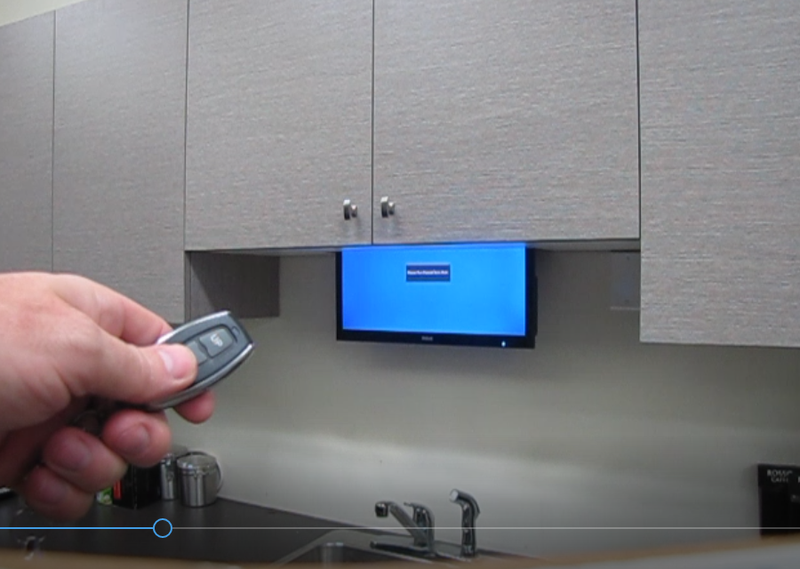
Retail environments gain similar advantages from display flexibility. Pop-up displays can emerge from sales counters during product demonstrations, then retract to maintain clean merchandising presentations during normal operations. Reception areas can present informational content during business hours while maintaining sophisticated, screen-free aesthetics during evening networking events or after-hours building access periods.
The mechanical systems that enable this flexibility rely on precision motion control technology. Quality TV lifts utilize synchronized linear actuators with integrated positional feedback to ensure smooth, controlled movement regardless of screen weight. Stroke lengths ranging from 24 to 60 inches accommodate various installation configurations, from cabinet pop-up systems to floor-to-ceiling column installations. Control box systems manage actuator timing and provide programmable position presets, allowing users to recall optimal viewing heights for different applications at the touch of a button.
How do TV lifts improve professional aesthetics and brand presentation?
First impressions shape customer perceptions in measurable ways, and the physical environment of your business communicates volumes about operational standards, attention to detail, and commitment to quality. A reception area cluttered with visible cables, mismatched mounting hardware, and screens positioned at awkward viewing angles signals operational compromises that undermine brand positioning, particularly in professional services, healthcare, and high-end retail environments.
Integrated TV lift systems elevate interior presentation to architectural standards. When displays retract completely from view, spaces present clean, intentional aesthetics without the visual clutter of consumer-grade wall mounts and cable management attempts. Custom furniture integration allows displays to emerge seamlessly from reception desks, conference tables, and credenzas with no visible hardware or mechanisms—an effect impossible to achieve with fixed installations.
This aesthetic advantage extends beyond simply hiding screens. The ability to reveal displays on demand creates sophisticated presentation moments that reinforce perceptions of technological capability and operational excellence. A conference room where screens descend smoothly from architectural ceiling pockets or rise from polished furniture surfaces communicates investment in quality infrastructure and attention to user experience. These details matter significantly in competitive industries where facility presentation influences client decisions.
Material and finish options for lift mechanisms ensure aesthetic consistency across design schemes. Commercial-grade actuator systems incorporate quiet operation features—critical in professional environments where mechanical noise disrupts meetings and client interactions. Premium installations achieve nearly silent operation through the use of specialized track actuators with polymer bearing surfaces that eliminate metal-on-metal contact.
How do TV lifts give you better operational control and content management?
In multi-screen business environments, centralized control over display visibility and operation provides substantial operational advantages. Traditional wall-mounted screens require manual power control and remain visible whether or not content display serves current business objectives. This passive approach limits the strategic use of screens as communication tools and creates management overhead when display presence conflicts with specific activities or brand experiences.
Integrated TV lift systems with programmable control box infrastructure enable sophisticated display management strategies. Business owners can schedule automatic screen deployment during specific hours—presenting informational content during peak customer periods, then retracting displays during professional service delivery when screens would distract from personal interaction. This automation eliminates reliance on staff to manually manage display visibility, ensuring consistent execution of operational standards.
For businesses concerned about productivity and workplace distraction, the ability to physically remove displays from the environment provides unique advantages over simply powering screens off. A dark screen mounted on a wall still draws attention and invites interaction; a screen that retracts completely from view eliminates the temptation entirely. This distinction matters in environments ranging from medical offices where waiting room televisions should not distract during examination room conversations, to corporate offices where conference rooms serve both presentation and focused work functions.
Multi-zone control systems allow differentiated display strategies across business locations. A reception area might maintain extended screen visibility for customer engagement, while back-office conference rooms deploy displays only during scheduled meetings. Integration with building automation systems, access control, and occupancy sensors creates intelligent display management that responds to actual space utilization rather than fixed schedules.
How do TV lifts improve viewing ergonomics and comfort?
Display ergonomics significantly impact viewer comfort and content effectiveness, yet fixed wall mounts severely limit viewing angle optimization. Industry standards recommend positioning screens at eye level when viewers are seated, with the center of the display approximately 42 inches from the floor in typical seating arrangements. However, this ideal height conflicts with accessibility requirements, foot traffic patterns, and furniture placement in most commercial spaces, forcing compromises that degrade viewing experience.
Motorized TV lifts eliminate these compromises through programmable positioning that adapts to specific viewing scenarios. A conference room display can rise to optimal height for seated presentations, then adjust to standing-height for interactive sessions where participants remain on their feet. Medical waiting rooms can position screens higher during busy periods when standing adults block lower-mounted displays, then lower to child-friendly heights during slower periods when young patients represent primary viewers.
This positional flexibility extends beyond simple height adjustment. Drop-down ceiling lifts can include articulating mounts that adjust viewing angle to accommodate different seating arrangements within the same space. Pop-up systems emerging from furniture can rotate to face different areas of a room, maximizing viewing coverage without requiring multiple fixed displays. The mechanical systems enabling this movement—precision feedback actuators with positional accuracy within 1-2mm—ensure repeatable positioning that maintains calibrated viewing optimization across countless deployment cycles.
For businesses hosting diverse audiences or serving accessibility requirements, adjustable positioning directly addresses ADA compliance concerns (see ADA Standards for Accessible Design, 2010, §308 Reach Ranges). The ability to raise, lower, or angle displays ensures that individuals in wheelchairs, children, and standing adults all experience optimal viewing conditions without requiring separate screens for different population segments.
What installation configurations and technical options exist for TV lifts?
TV lift systems accommodate diverse architectural conditions and aesthetic requirements through multiple installation configurations. Understanding available options ensures optimal matching between lift technology and specific business applications:
TV Lift Configuration Comparison
| Configuration | Typical Stroke | Screen Size Range | Mount Location | Best Application |
|---|---|---|---|---|
| Pop-Up | 24–36 in | 32–60 in | Furniture, cabinetry, floor | Reception desks, conference tables, retail counters |
| Drop-Down Ceiling | Varies (ceiling-pocket dependent) | Up to 100 in (200 lb) | Ceiling cavity | Conference rooms, presentation spaces, high-ceiling environments |
| Cabinet-Mounted | 24–36 in | Up to ~65 in | Inside credenza, armoire, millwork | Hospitality, executive offices, residential-style settings |
| Floor-Mounted Column | 40+ in | Varies | Freestanding column | Open-plan offices, retail, temporary presentation spaces |
Pop-Up TV Lifts: These systems mount within furniture, cabinetry, or floor structures, with displays rising vertically when activated. Pop-up configurations work exceptionally well in reception desks, conference tables, and retail counters where maintaining clear sightlines and work surfaces requires display concealment during non-use periods. Stroke lengths typically range from 24 to 36 inches, accommodating screen sizes from 32 to 60 inches depending on model specifications.
Drop-Down Ceiling Lifts: Ideal for conference rooms, presentation spaces, and high-ceiling environments, drop-down systems conceal displays in ceiling pockets when retracted. These installations preserve maximum floor and wall space while providing dramatic presentation impact when screens descend for use. Ceiling lifts accommodate the largest commercial displays, with industrial-grade systems handling screens up to 100 inches and 200 pounds when properly specified with appropriate industrial actuators.
Cabinet-Mounted Systems: For businesses seeking display integration within existing or custom millwork, cabinet-mounted lifts install within credenzas, armoires, and built-in furniture. This configuration provides both display functionality and physical security, as screens remain protected within lockable enclosures. Cabinet systems work particularly well in hospitality applications, executive offices, and residential-style business settings where overt technology presence conflicts with design objectives.
Floor-Mounted Column Lifts: Where neither furniture nor ceiling integration proves practical, floor-mounted column lift systems provide freestanding display positioning with adjustment ranges exceeding 40 inches. These installations suit open-plan offices, retail environments, and temporary presentation spaces where permanent architectural integration isn't feasible or desired.
Regardless of configuration, quality TV lift systems share common technical characteristics. Synchronized dual-actuator designs prevent screen tilting during movement, critical for protecting expensive displays from mechanical stress. Integrated power supplies with appropriate voltage and current capacity ensure reliable operation, typically 12V or 24V DC systems drawing 2-8 amps depending on screen weight and lift speed. Mounting brackets accommodate VESA patterns from 200x200mm through 800x400mm (per the VESA FDMI / MIS-F mounting interface standard), covering virtually all commercial display models.
What usually goes wrong with TV lift installations?
Most TV lift failures aren't dramatic mechanical breakdowns — they're slow consequences of decisions made at the specification or installation stage. The recurring patterns:
- Capacity sized to nominal screen weight, not real load. Designers spec to the bare display weight and forget the bracket, swivel, cables, and any trim panel that travels with the screen. By cycle 5,000 the actuator is running near its rated limit every stroke. Size for at least 20% margin above the total moving mass.
- Unsynchronized dual actuators causing screen racking. On wider screens, two actuators must move together within a few millimetres. If sync is lost — bad feedback wiring, mismatched units, or no feedback at all — the screen twists in its bracket. That stress goes straight into the display chassis, not the lift.
- Side loading from cantilevered mounting. A screen mounted forward of the actuator centerline puts a bending moment on the rod the actuator was never designed to carry. Side loads destroy actuators long before bending forces do.
- Cable routing into the travel path. HDMI and power cables left loose get pulled, pinched, or sheared when the lift travels. Cable management has to be designed for the full stroke, not just the retracted position.
- Power supply undersized for inrush. A 4 A continuous-draw lift can pull 6–8 A on startup. Undersized transformers cause voltage sag, slow travel, and premature actuator wear.
- No end-of-travel verification. Limit switches that drift or fail let the actuator stall against a hard stop every cycle. That's the fastest way to cook a motor.
How should you test a TV lift before trusting it?
A lift that looks fine on the showroom bench can still hide problems that only appear under installed conditions and repeated use. Verify the hard parts of travel, not the easy middle:
- Cycle with the real screen, not a weight box. A sandbag at the right mass tells you the actuator can carry the load once. It doesn't tell you about cable routing, bracket flex, or how the screen settles into its housing. Mount the actual display and run it.
- Measure current draw at the slowest point in travel. Most TV lifts pull peak current at the start of upward motion and at any point where a seal or guide adds friction. If the current at that point is within 80% of your supply rating, you're fine. If it spikes higher, the supply is undersized.
- Verify both end stops manually. Drive the lift to the top and the bottom, then check that the limit switch — not the mechanical stop — is what cut the motor. An actuator that hits the hard stop every cycle is one that will fail early.
- On dual-actuator systems, check sync after 50 cycles. Initial alignment isn't enough. Run the lift through a representative cycle count and re-measure the difference between left and right travel. Any drift greater than 2 mm needs investigation before installation.
- Run a noise check in the actual installed enclosure. A bare actuator on a bench reads quieter than the same actuator inside a cabinet that resonates. If acoustics matter, measure in place.
- Cycle test under power-fail recovery. Cut power mid-travel and confirm the lift holds position safely. Restore power and confirm clean recovery without re-homing issues.
Why is a TV lift a strategic business infrastructure investment?
The evolution from fixed wall mounts to dynamic motorized TV lift systems represents more than technological advancement—it reflects fundamental changes in how businesses utilize display technology strategically. In environments where displays serve critical communication, presentation, and customer engagement functions, the flexibility, security, and aesthetic advantages of lift systems deliver measurable operational value that fixed installations cannot match.
From liability mitigation through enhanced safety, to brand presentation benefits through architectural integration, to operational efficiency through programmable control, TV lift technology addresses diverse business requirements through a single infrastructure investment. As display sizes continue growing and screen technology becomes increasingly central to business operations across industries, the limitations of traditional fixed mounting become progressively more constraining.
For businesses evaluating TV lift implementation, the decision framework extends beyond simple cost comparison to fixed mounts. The relevant analysis compares lift system investment against the combined value of enhanced security, reduced damage risk, improved space utilization, elevated brand presentation, and operational flexibility—benefits that compound over years of daily use. When evaluated against these comprehensive criteria, motorized TV lifts represent strategic infrastructure investments that enhance business capability while protecting valuable technology assets.
Frequently Asked Questions
What weight capacity do TV lifts support?
Commercial TV lift systems accommodate displays ranging from 30 pounds to over 200 pounds depending on actuator specifications and lift configuration. Standard pop-up lifts typically handle screens up to 100 pounds, suitable for displays up to 65 inches. Heavy-duty ceiling lifts with parallel dual-actuator designs support screens exceeding 150 pounds, accommodating commercial displays up to 100 inches. When selecting a lift system, ensure rated capacity exceeds your display weight by at least 20% to account for mounting hardware and provide operational margin for smooth, reliable movement over thousands of cycles.
Can TV lifts be installed in existing furniture and spaces?
Yes, TV lift systems accommodate both new construction integration and retrofit installation in existing environments. Pop-up lifts require minimum clearance dimensions typically ranging from 8 to 12 inches in depth and width adequate to house both the collapsed mechanism and display. Cabinet retrofits may require internal structural modifications to provide adequate support for actuator mounting. Ceiling installations demand accessible ceiling cavities with sufficient depth—typically 18 to 24 inches—to house retracted displays and lift mechanisms. Professional installation services can assess specific spaces and recommend appropriate lift configurations based on existing architectural conditions and desired functionality.
How noisy are TV lift mechanisms during operation?
Quality commercial TV lifts operate at sound levels between 45 and 55 decibels—comparable to quiet conversation or typical office ambient sound. This acoustic performance results from precision-engineered actuator systems with polymer bearing surfaces that eliminate metal contact and high-quality electric motors with vibration isolation mounting. Operation speed affects noise levels, with slower deployment cycles (60-90 seconds for full travel) producing less audible sound than rapid movement. For environments where acoustic performance is critical—medical offices, upscale hospitality, corporate boardrooms—specify premium lift systems with documented sound ratings and request operational demonstrations before purchase commitment.
What electrical requirements do TV lift systems need?
Most commercial TV lifts operate on low-voltage DC power, typically 12V or 24V systems, supplied through plug-in transformers that connect to standard 110V AC outlets. Power consumption during operation ranges from 2 to 8 amps depending on screen weight and lift speed, with standby power draw under 1 watt. This low-voltage design provides inherent safety advantages in commercial environments and simplifies installation compared to high-voltage systems. For built-in installations where visible power cords conflict with aesthetic requirements, electricians can install dedicated circuits with in-wall wiring to concealed outlets within furniture or ceiling spaces. Battery backup options exist for critical applications requiring lift operation during power failures.
What maintenance do TV lift systems require?
Quality TV lift mechanisms require minimal maintenance when properly installed and operated within rated specifications. Annual inspection should verify secure mounting of all components, check electrical connections for corrosion or looseness, and test limit switches that prevent over-travel. Actuator systems with sealed bearings and enclosed mechanisms generally require no lubrication, though exposed slide rails may benefit from light silicone lubricant application every 12-18 months in high-cycle installations. Remote control batteries require periodic replacement, typically annually. Most operational issues result from improper loading, cable interference with moving components, or electrical supply problems rather than mechanical failure. Professional installation services often offer maintenance contracts that include annual inspection and adjustment, worthwhile consideration for businesses with multiple lift systems or mission-critical display applications.
Industry applications covered: medical and dental offices, retail, corporate conference rooms, hospitality, executive offices, reception areas, open-plan offices.


