The Safety Actuators Market: Engineering Reliability Into Critical Systems
Safety actuators represent one of the most critical components in modern industrial automation, serving as the last line of defense between operational hazards and catastrophic failure. Unlike standard motion control devices, safety actuators are engineered to fail-safe specifications, incorporating redundant systems, position monitoring, and compliance with stringent safety standards like IEC 61508 and ISO 13849. As manufacturing facilities, automotive production lines, and process industries become increasingly automated, the demand for these specialized devices continues to accelerate at unprecedented rates.
🎥 Video — Safety Actuators Market 2023
The global safety actuators market stands at a pivotal moment in its evolution. With industrial accidents costing billions annually in damages, downtime, and regulatory penalties, companies are prioritizing safety-rated motion control systems that can prevent incidents before they occur. From linear actuators with integrated safety monitoring to pneumatic systems with fail-safe valve configurations, these devices bridge the gap between automation efficiency and workplace protection. This comprehensive market analysis examines the trajectory of safety actuator adoption, the technologies driving growth, and the industries reshaping their operations around safety-first principles.
According to recent market research, the safety actuators sector is experiencing robust expansion, projected to grow from US$772.9 million in 2023 to US$1.8 billion by 2033, representing a compound annual growth rate of 9.1%. This growth reflects not just increased industrial activity, but a fundamental shift in how companies approach risk management and regulatory compliance in automated environments.
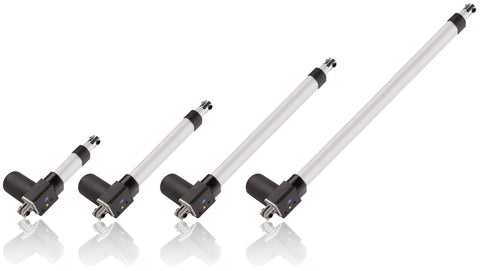
What Makes an Actuator "Safety-Rated"?
Safety actuators differ fundamentally from conventional motion control devices through their design philosophy and validation process. While standard actuators focus on precision, speed, and repeatability, safety actuators prioritize predictable behavior during fault conditions, position verification, and compliance with safety integrity level (SIL) requirements. These devices undergo rigorous testing and certification processes to ensure they can achieve and maintain safe states even when components fail.
The core technologies employed in safety actuators include multiple independent monitoring channels, redundant sensor systems, and self-diagnostic capabilities. Feedback actuators with dual Hall-effect sensors or potentiometers provide position verification that can detect discrepancies indicating mechanical failure or electronic malfunction. Electric safety actuators may incorporate dual-motor configurations or brake systems that engage automatically during power loss, ensuring loads cannot fall or move unexpectedly.
Categories of safety actuators span the full spectrum of industrial motion control technologies. Electric safety actuators dominate applications requiring precise control and integration with safety PLCs, offering advantages in energy efficiency and environmental compatibility. Pneumatic safety actuators excel in explosive atmospheres where electrical components pose ignition risks, utilizing spring-return mechanisms and pilot-operated valves for fail-safe operation. Hydraulic safety actuators serve high-force applications in heavy machinery, incorporating pressure monitoring and relief systems to prevent dangerous over-force conditions.
Market Size and Regional Growth Dynamics
The safety actuators market demonstrates strong momentum across global industrial economies, with market valuation expected to exceed US$772.9 million in 2023 and reach approximately US$1.8 billion by 2033. This 9.1% compound annual growth rate reflects sustained investment in automation safety infrastructure across manufacturing, energy, transportation, and process industries.
Regional growth patterns reveal interesting variations in adoption rates and market maturity. The United States maintains steady growth at a 9.0% CAGR, driven by stringent OSHA regulations and mature industrial safety culture. American manufacturers increasingly specify safety-rated components not just for compliance, but as competitive advantages that reduce insurance costs and liability exposure. The integration of safety actuators with control systems and safety PLCs has become standard practice in new facility designs and retrofit projects.
Japan's safety actuator market, also growing at 9.0% CAGR, reflects the nation's leadership in robotics and advanced manufacturing. Japanese manufacturers prioritize collaborative robot applications where safety actuators enable human-robot interaction without physical barriers. The emphasis on precision manufacturing and zero-defect production philosophies drives adoption of safety technologies that prevent quality issues resulting from unsafe conditions.
South Korea's 8.8% CAGR represents the nation's aggressive industrial modernization programs and expansion of semiconductor, automotive, and electronics manufacturing. Korean companies invest heavily in industrial actuators that meet both productivity and safety requirements, particularly in cleanroom environments where conventional safety barriers prove impractical.
China represents perhaps the most significant growth opportunity, though specific CAGR data varies by source. The nation's rapid industrialization, coupled with high-profile industrial accidents and subsequent regulatory reforms, has created explosive demand for safety technologies. Chinese manufacturers increasingly specify safety actuators to meet export market requirements and reduce workplace incidents that disrupt production.
Forces Driving Safety Actuator Adoption
Technological Innovation and Integration
Technological advancement in safety actuator design has transformed these devices from simple fail-safe mechanisms into intelligent safety systems. Modern electric safety actuators incorporate microprocessor-based controllers that perform continuous self-diagnostics, detecting degradation in performance before failures occur. Feedback actuators with integrated position sensing enable safety controllers to verify that commanded movements match actual positions, triggering safe shutdowns when discrepancies appear.
The integration of safety actuators with Industrial IoT platforms enables predictive maintenance strategies that prevent safety incidents while optimizing uptime. Condition monitoring systems analyze actuator performance data to identify bearing wear, lubrication degradation, or electrical anomalies before they compromise safety functions. This shift from reactive to predictive safety management represents a fundamental change in how industries approach risk mitigation.
Communication protocol standardization, particularly Safety over EtherCAT and PROFIsafe, has simplified integration of safety actuators into complex automation systems. Manufacturers can now deploy distributed safety architectures where safety actuators communicate directly with safety controllers without dedicated hardwired circuits, reducing installation costs while improving diagnostic capabilities.
Evolving Regulatory Landscapes
Regulatory requirements represent perhaps the most consistent driver of safety actuator adoption across industries and geographies. The machinery directive 2006/42/EC in Europe mandates comprehensive risk assessments and implementation of safety measures adequate to the identified risks. Compliance often necessitates safety-rated actuators that achieve required Performance Levels (PL) or Safety Integrity Levels (SIL).
North American OSHA regulations, particularly standards for machine guarding (29 CFR 1910.212) and control of hazardous energy (29 CFR 1910.147), drive specification of safety actuators in applications where workers interact with automated equipment. The emphasis on hierarchy of controls, favoring engineering solutions over administrative controls or personal protective equipment, positions safety actuators as preferred risk mitigation strategies.
Industry-specific regulations further accelerate adoption in particular sectors. Pharmaceutical manufacturing facilities must comply with GAMP 5 guidelines that require validated, traceable safety systems. Food processing operations follow HACCP principles that may mandate safety actuators preventing contamination during equipment malfunctions. Nuclear facilities require safety-qualified components meeting 10 CFR 50 Appendix B quality assurance requirements.
Rising Safety Culture and Awareness
Corporate safety culture has evolved dramatically over the past two decades, with leading companies recognizing that safety performance correlates directly with operational excellence. Organizations implementing robust safety programs report reduced insurance costs, improved employee retention, enhanced productivity, and stronger brand reputation. Safety actuators enable this cultural shift by providing engineering controls that protect workers even when human factors contribute to hazardous situations.
The true cost of workplace incidents extends far beyond immediate medical expenses and workers' compensation claims. Production downtime following serious accidents can cost manufacturers tens of thousands of dollars per hour. Regulatory investigations may halt operations for extended periods. Litigation and reputation damage can impact companies for years. Safety actuators that prevent incidents deliver return on investment that far exceeds their acquisition and installation costs.
Employee expectations regarding workplace safety have risen substantially, particularly among younger workers who prioritize employer safety records when evaluating job opportunities. Companies that demonstrate commitment to safety through investment in technologies like safety actuators find recruitment and retention advantages in competitive labor markets.
Enhanced Operational Efficiency Requirements
Modern manufacturing operates on increasingly thin margins where unplanned downtime represents catastrophic cost. Safety actuators contribute to operational efficiency not just by preventing accidents, but by enabling automation strategies that would be too risky without proper safeguards. Collaborative robot applications, high-speed production lines, and lights-out manufacturing all depend on safety systems that protect equipment and personnel without constant human supervision.
The integration of safety actuators with predictive maintenance systems creates efficiency gains beyond traditional safety benefits. Condition monitoring data from safety actuators enables maintenance scheduling during planned downtime rather than emergency repairs following failures. This transition from reactive to proactive maintenance strategies reduces overall maintenance costs while improving equipment availability.
Energy efficiency considerations increasingly influence actuator selection decisions. Electric safety actuators typically consume power only during movement, unlike pneumatic systems requiring continuous compressed air. This efficiency advantage becomes significant in large facilities with hundreds or thousands of actuators, where energy costs represent substantial operational expenses. Linear actuators with efficient motor designs and optimized gearing can reduce facility energy consumption while providing safety functionality.
Critical Industry Applications and Use Cases
Automotive Manufacturing and Assembly
Automotive production represents one of the largest application areas for safety actuators, with modern assembly plants containing thousands of safety-rated devices. Robotic welding cells utilize safety actuators in access gates and light curtain systems that prevent worker access during hazardous operations. Paint booths employ safety actuators in ventilation systems and conveyor controls that prevent fire hazards and exposure to toxic substances.
The automotive industry's transition to electric and autonomous vehicles creates new safety actuator applications in battery assembly, where high-voltage systems present electrocution risks, and in testing facilities where prototype vehicles require fail-safe restraint systems. Advanced Driver Assistance Systems (ADAS) production lines demand cleanroom environments with safety actuators that prevent contamination while protecting workers from automated material handling equipment.
Process Industries and Chemical Manufacturing
Chemical plants, refineries, and pharmaceutical facilities present some of the most demanding environments for safety actuators. Process isolation valves must achieve Safety Integrity Level 3 (SIL 3) ratings to prevent catastrophic releases of hazardous materials. Emergency shutdown systems incorporate safety actuators that can isolate process sections within seconds, preventing cascading failures that could lead to explosions or toxic releases.
Pharmaceutical manufacturing requires safety actuators that meet stringent cleanability standards while providing validated safety functions. Industrial actuators in pharmaceutical applications often feature electropolished stainless steel construction and IP69K ratings enabling high-pressure, high-temperature washdown without compromising safety functionality or position accuracy.
Material Handling and Logistics
Automated warehouses and distribution centers deploy safety actuators in numerous applications from conveyor systems to automated storage and retrieval systems (AS/RS). Safety actuators in these environments must handle high cycle counts while maintaining reliable safety functions despite dust, temperature variations, and occasional impact loads. Pallet shuttle systems utilize safety actuators in access gates that prevent personnel entry during automated operations while enabling rapid access for maintenance.
Vertical lift modules and automated storage systems increasingly employ linear actuators with integrated safety monitoring that can detect obstructions and halt operations before crushing or trapping incidents occur. The combination of high-speed automation and human interaction in modern warehouses makes robust safety systems essential for both regulatory compliance and operational continuity.
Medical Equipment and Healthcare Facilities
Healthcare applications demand safety actuators with exceptional reliability and fail-safe characteristics where patient safety depends on proper equipment operation. Surgical tables employ safety actuators with redundant position monitoring and mechanical locks preventing unexpected movement during procedures. Patient lift systems require safety actuators that can support loads safely even during power failures, typically incorporating battery backup and mechanical brake systems.
Medical imaging equipment, from CT scanners to MRI machines, utilizes precision safety actuators for patient positioning that must move smoothly and stop reliably to prevent injury. Radiation therapy equipment employs safety actuators in multiple interlocked systems ensuring precise targeting while preventing exposure to personnel.
Emerging Technologies and Market Trends
Electric Safety Actuator Market Leadership
Electric safety actuators have captured increasing market share due to advantages in controllability, energy efficiency, and environmental compatibility. Unlike pneumatic systems requiring compressed air infrastructure and hydraulic systems with potential fluid leakage, electric actuators offer clean operation with lower lifecycle costs. The ability to integrate electric actuators with safety PLCs and standard industrial networks simplifies system design while enabling sophisticated safety functions.
Brushless DC motor technology has dramatically improved electric safety actuator reliability by eliminating wear-prone carbon brushes. Modern feedback actuators with brushless motors can achieve millions of cycles between maintenance intervals while maintaining position accuracy essential for safety applications. The integration of motor controllers with safety logic enables single-device solutions that simplify installation and reduce potential failure points.
Cybersecurity Considerations in Safety Systems
As safety actuators become networked devices integrated into industrial control systems, cybersecurity has emerged as a critical design consideration. The IEC 62443 standard for industrial automation and control systems security now influences safety actuator development, with manufacturers implementing secure boot processes, encrypted communications, and access control mechanisms.
Cyberattacks targeting industrial control systems represent growing threats that could compromise safety actuator functionality. Safety system designers must now consider both functional safety (preventing random and systematic failures) and security (preventing malicious interference). This convergence of safety and security drives demand for safety actuators with built-in cybersecurity features and certification to both safety and security standards.
Miniaturization and Micro Actuator Applications
Miniaturization trends in industrial equipment and medical devices create demand for safety-rated micro linear actuators that provide safety functions in constrained spaces. Semiconductor manufacturing equipment, analytical instruments, and minimally invasive surgical devices all require compact safety actuators that maintain performance despite size constraints.
Advanced manufacturing techniques including precision metal injection molding and micro-machining enable production of miniature safety actuators with integrated position feedback and fail-safe mechanisms. These devices incorporate sophisticated electronics in packages measuring just millimeters in cross-section while maintaining SIL ratings appropriate for their applications.
Challenges and Barriers to Market Growth
Initial Investment and Total Cost of Ownership
Safety actuators command premium pricing compared to conventional actuators due to their specialized design, certification costs, and extensive testing requirements. Small and medium-sized manufacturers may view the 50-150% price premium as prohibitive, particularly when retrofitting existing equipment. However, this perspective often fails to account for total cost of ownership including reduced insurance premiums, avoided accident costs, and improved operational efficiency.
The business case for safety actuator investment strengthens when companies calculate the true cost of workplace incidents. OSHA estimates the average cost of a recordable workplace injury at approximately $40,000, while fatalities can result in millions of dollars in direct costs plus incalculable impacts on company reputation and employee morale. A comprehensive risk assessment typically reveals that safety actuator investments deliver positive returns within 2-3 years even without incident occurrence, simply through improved operational efficiency and reduced insurance costs.
Integration Complexity and Technical Expertise
Proper implementation of safety actuators requires expertise in both safety engineering and automation technology. Small companies may lack personnel qualified to perform risk assessments, calculate required Performance Levels, and validate safety system designs. This skills gap can delay adoption as companies must either develop internal expertise or engage specialized consultants for safety system implementation.
The proliferation of safety standards and certification schemes across different regions complicates specification and procurement. An actuator certified to European Performance Level requirements may not meet North American standards without additional documentation. Manufacturers serving global markets must navigate multiple certification processes, increasing development costs that ultimately impact pricing.
Legacy System Integration
Many industrial facilities operate equipment installed decades ago without consideration for modern safety standards. Retrofitting safety actuators into legacy systems presents technical challenges including physical space constraints, incompatible electrical interfaces, and control system limitations. Older machinery may lack the mounting brackets or structural supports necessary for safety actuator installation.
Control system upgrades often become necessary when implementing safety actuators in existing facilities. Legacy relay-based controls may require complete replacement with safety PLCs capable of processing safety actuator feedback and implementing required safety logic. These system-level costs can multiply the apparent expense of safety actuator adoption, though they simultaneously enable broader automation improvements.
Competitive Landscape and Market Structure
The safety actuators market features a mix of large multinational automation suppliers and specialized manufacturers focusing on specific technologies or application niches. Leading companies compete through innovation in actuator design, comprehensive safety system solutions, and technical support services that help customers navigate complex safety standards.
Product differentiation strategies vary significantly across competitors. Some manufacturers emphasize modular designs enabling customization for specific applications, while others offer standardized products with extensive certification documentation. Companies like FIRGELLI Automations that bring deep engineering expertise from automotive and aerospace backgrounds can provide consultation on safety actuator selection and integration beyond simple product sales.
Service and support capabilities increasingly influence purchasing decisions as customers seek suppliers who can provide lifecycle support including installation assistance, safety validation documentation, and preventive maintenance programs. Manufacturers offering complete motion control solutions including control boxes, power supplies, and integration services gain competitive advantages over pure component suppliers.
Future Market Outlook and Opportunities
The safety actuators market outlook through 2033 remains strongly positive, supported by multiple reinforcing trends. Continued industrial automation expansion, particularly in emerging economies, creates greenfield opportunities for safety system implementation. Aging infrastructure in developed economies drives retrofit and upgrade projects where modern safety actuators replace obsolete technologies.
Collaborative robotics represents a high-growth application area where safety actuators enable new automation strategies. Traditional industrial robots operate behind safety barriers, limiting their flexibility and requiring substantial facility space. Collaborative robots working alongside humans depend on sophisticated safety systems including force-limiting actuators, redundant position monitoring, and fail-safe behaviors that allow productive human-robot interaction without physical barriers.
Emerging applications in renewable energy, particularly wind turbine blade pitch control and solar tracking systems, create new markets for safety actuators capable of outdoor operation in harsh environments. These applications demand actuators with extreme temperature ratings, corrosion resistance, and reliable fail-safe functions protecting expensive equipment from damage during adverse conditions.
The integration of artificial intelligence and machine learning into safety systems represents a longer-term opportunity where safety actuators become active participants in predictive safety management. Rather than simply responding to safety events, future safety systems may anticipate hazardous conditions and proactively adjust equipment operation to prevent incidents before they develop. This evolution requires safety actuators with enhanced sensing capabilities and communication interfaces supporting advanced control strategies.
Frequently Asked Questions
What are safety actuators and how do they differ from standard actuators?
Safety actuators are specialized motion control devices designed and certified to perform safety functions in industrial environments. Unlike standard actuators that focus primarily on motion performance, safety actuators incorporate redundant monitoring systems, fail-safe mechanisms, and compliance with safety standards such as IEC 61508 and ISO 13849. They undergo rigorous testing and certification to ensure they achieve and maintain safe states even during component failures. Safety actuators typically feature dual sensors for position verification, self-diagnostic capabilities, and designs that fail to predetermined safe conditions rather than unpredictable states.
What is the projected growth rate for the safety actuators market?
The global safety actuators market is projected to grow at a compound annual growth rate (CAGR) of approximately 9.1% from 2023 to 2033. Market valuation is expected to increase from US$772.9 million in 2023 to approximately US$1.8 billion by 2033. Regional growth rates vary slightly, with the United States and Japan both showing 9.0% CAGR, while South Korea projects 8.8% growth. This robust expansion reflects increasing industrial automation, stricter safety regulations, and growing awareness of workplace safety across manufacturing, process industries, and automotive sectors.
What factors are driving increased demand for safety actuators?
Multiple factors contribute to growing safety actuator demand. Technological advancement in automation requires integrated safety systems that enable human-machine collaboration without physical barriers. Evolving regulatory landscapes mandate compliance with increasingly stringent safety standards across industries and geographies. Rising safety awareness among employers and employees creates cultural pressure for engineering controls that prevent workplace incidents. Enhanced operational efficiency requirements drive adoption of safety systems that reduce unplanned downtime from accidents while enabling more aggressive automation strategies. The convergence of these factors creates sustained market growth across diverse industrial applications.
What are the advantages of electric safety actuators compared to pneumatic or hydraulic alternatives?
Electric safety actuators offer several advantages driving their increasing market dominance. They provide superior energy efficiency by consuming power only during movement, unlike pneumatic systems requiring continuous compressed air. Electric actuators integrate seamlessly with modern safety PLCs and industrial networks, enabling sophisticated safety logic and diagnostics. They operate cleanly without risk of fluid leakage that could contaminate products or environments. Electric actuators deliver precise position control and repeatability essential for many safety applications. Modern brushless motor designs provide exceptional reliability with minimal maintenance requirements. Environmental compatibility and reduced lifecycle costs make electric safety actuators increasingly attractive despite higher initial investment compared to pneumatic alternatives.
In which industries are safety actuators most commonly used?
Safety actuators find applications across numerous industries with varying requirements. Automotive manufacturing represents the largest market segment, with safety actuators controlling robotic cell access, conveyor systems, and assembly equipment. Process industries including chemical plants, refineries, and pharmaceutical facilities utilize safety actuators in emergency shutdown systems and process isolation applications requiring high Safety Integrity Levels. Material handling and logistics operations employ safety actuators in automated warehouses, conveyor systems, and storage retrieval equipment. Medical equipment and healthcare facilities use safety actuators in surgical tables, patient positioning systems, and diagnostic imaging equipment where patient safety is paramount. Food and beverage processing, packaging machinery, and semiconductor manufacturing represent additional significant application areas.
How do engineers select appropriate safety actuators for specific applications?
Safety actuator selection begins with comprehensive risk assessment identifying potential hazards and required risk reduction. Engineers calculate required Performance Level (PL) or Safety Integrity Level (SIL) based on severity of potential harm, frequency of exposure, and possibility of avoiding hazards. Load requirements including force, stroke length, and speed specifications determine basic actuator sizing. Environmental conditions such as temperature extremes, moisture, contamination, and explosion hazards influence actuator type selection between electric, pneumatic, or hydraulic technologies. Mounting configuration and available space constrain physical design options. Integration requirements including control interfaces, feedback signals, and communication protocols affect compatibility with existing systems. Certification documentation and compliance with industry-specific standards ensure regulatory acceptance. Lifecycle costs including energy consumption, maintenance requirements, and expected service life factor into total cost of ownership analysis.
How do cybersecurity concerns impact safety actuator design and implementation?
Cybersecurity has become a critical consideration in safety actuator design as these devices increasingly connect to industrial networks. The convergence of safety and security standards, particularly IEC 62443 for industrial automation systems security, drives manufacturers to implement secure boot processes, encrypted communications, and role-based access controls. Safety system designers must now address both random hardware failures and intentional cyberattacks that could compromise safety functions. Modern safety actuators incorporate authentication mechanisms preventing unauthorized configuration changes and monitoring capabilities detecting anomalous behavior potentially indicating compromise. Network segmentation strategies isolate safety systems from enterprise networks while enabling necessary data exchange for monitoring and diagnostics. Regular security assessments and firmware updates maintain protection against evolving threats throughout equipment lifecycle.
What maintenance requirements do safety actuators typically have?
Safety actuator maintenance requirements vary by technology and application severity. Preventive maintenance programs include periodic inspection of mechanical components such as mounting hardware, clevis pins, and mounting brackets for wear or damage. Electrical connections require inspection ensuring proper termination and absence of corrosion or damage. Functional testing verifies that safety actuators respond correctly to safety signals and achieve required safe states within specified timeframes. Self-diagnostic capabilities in modern safety actuators enable condition monitoring that identifies degraded performance before failures occur. Lubrication requirements depend on actuator design, with some sealed electric actuators requiring no lubrication while others need periodic application of appropriate lubricants. Documentation of maintenance activities and test results provides evidence of compliance with safety standards and supports validation of safety system performance. Manufacturers typically specify proof test intervals based on calculated probability of dangerous failure and required Safety Integrity Level.
What certifications and standards apply to safety actuators?
Safety actuators must comply with numerous standards varying by region and application. IEC 61508 provides the functional safety foundation covering safety instrumented systems across industries. ISO 13849 specifically addresses safety of machinery and control systems, defining Performance Levels (PL) from a through e based on reliability requirements. IEC 62061 offers an alternative approach to machinery safety using Safety Integrity Levels (SIL). Regional machinery directives such as European Machinery Directive 2006/42/EC and North American OSHA standards establish legal requirements for safety systems. Industry-specific standards apply in certain sectors: IEC 61511 for process industries, IEC 61513 for nuclear applications, and ISO 25119 for agricultural machinery. Product certification from recognized testing organizations such as TÜV, UL, or CSA provides third-party validation of safety actuator compliance. Manufacturers must maintain comprehensive technical documentation demonstrating safety lifecycle compliance from design through decommissioning.
What return on investment can companies expect from safety actuator implementation?
Safety actuator ROI encompasses both direct cost avoidance and operational improvements. Avoided accident costs provide the most obvious benefit, with OSHA estimating average recordable injury costs at approximately $40,000 and fatalities potentially exceeding millions in direct costs plus incalculable reputation damage. Reduced insurance premiums reward companies demonstrating effective safety programs through lower workers' compensation and liability rates. Improved operational efficiency results from reduced unplanned downtime following incidents and enabled automation strategies that would be too risky without proper safeguards. Enhanced productivity occurs when workers operate confidently in environments with robust safety systems rather than constant concern about potential hazards. Regulatory compliance avoids penalties for safety violations while enabling continued operations without shutdown orders. Recruitment and retention advantages emerge as safety-conscious workers preferentially seek employers demonstrating commitment to workplace protection. Most companies realize positive ROI within 2-3 years even without incident occurrence, with payback accelerating dramatically if safety systems prevent even a single serious injury.


