
You want a boat hatch to open cleanly without fighting the weight, the hinge angle, or the wet environment around it. A boat hatch actuator needs enough force, enough stroke, the right speed, and the right IP rating. Get any 1 of those wrong and the hatch either stalls, moves badly, or fails early.
What is a boat hatch actuator?
A boat hatch actuator is an electric linear actuator that pushes or pulls a hatch open and closed. It replaces your hand, gas strut, or mechanical prop with controlled linear motion.
What is the simple explanation?
Think of the hatch as a lever. The hinge sits at 1 end, the hatch weight pulls down through its center of gravity, and the actuator pushes at some point between the hinge and the outer edge.
The farther from the hinge you mount the actuator, the easier its job becomes. The flatter the actuator sits at the start of travel, the harder its job becomes.
Use the formula below to estimate the actuator force for a boat hatch.
Actuator force: F = (W × D) ÷ (A × sin(θ))
What boat hatch actuator should you choose?
Choose a marine hatch actuator with enough force at the worst starting angle, enough stroke to reach the open angle you want, and an enclosure rating that matches the water exposure. For most hatch projects, the geometry matters more than the hatch weight alone.
A 40 lb hatch can overload a small actuator if you mount it too close to the hinge or nearly parallel to the hatch. Move the actuator mounting point outward and increase the push angle. That usually cuts the force requirement faster than buying a larger actuator.
"On hatch projects, people reach for a bigger actuator when the real fix is bracket geometry. Move the mounting point outward, increase the starting angle, and the same actuator suddenly does the job. The hatch weight rarely changes — the leverage does."
When do you need this calculation?
You need this calculation before you drill the first bracket hole. After you mount the brackets, the geometry locks you into a force requirement.
Boat hatches create 4 common problems:
- The actuator starts at a poor angle and stalls.
- The actuator has enough force but not enough stroke.
- The hatch twists because the load lacks guide support.
- The actuator works on day 1 but corrodes because the IP rating does not suit the location.
FIRGELLI explains the actuator basics, dynamic load, static load, limit switches, speed, duty cycle, and side loading in our linear actuators guide. Read that before you choose hardware for a hatch that matters.
Where do boat hatch actuators get used?
- Engine compartment hatches on small boats
- Storage lids on center consoles
- Deck access panels
- Battery compartment covers
- Marine equipment lockers
- Ventilation hatches
- Custom swim platform access panels
The job looks simple. Push a lid open. But boats add vibration, water, salt air, temperature swings, and awkward access. That combination punishes weak mounting and poor electrical protection.
How does the hatch geometry work?
The hatch weight creates torque around the hinge. The actuator must create more opposing torque than the hatch weight creates. Simple enough.
The problem sits in the angle. An actuator only produces useful lifting force through the component of force perpendicular to the hatch. At a shallow angle, most of the actuator force tries to shove along the hatch instead of lifting it.
That is why hatch actuators often struggle at the first inch of movement. The hatch weighs the same through the full motion, but the starting geometry usually gives the actuator its worst leverage.
What formula sizes a boat hatch actuator?
Use this formula for a first-pass force estimate:
F = (W × D) ÷ (A × sin(θ))
The calculator assumes the center of gravity sits roughly halfway along the lid, hatch, or cover. If the load is heavier at one end, use the real balance point instead.
Then multiply the result by a safety factor. We usually start with 1.5× for a clean DIY mechanism and increase it if the hatch sees wind, water drag, poor alignment, or unknown friction.
Force with safety factor: Fsafe = F × 1.5
What should the calculator inputs be?
Use the full hatch length, not “Length from hinge.” The calculator assumes the hatch center of gravity sits near the middle of the hatch. That is close enough for a first-pass estimate on a normal uniform hatch.
The hatch starts closed at 0°. You choose the target open angle, usually somewhere around 45° to 90° depending on access.
How do you use this calculator?
- Measure the hatch weight or estimate it from material and size.
- Measure from the hinge to the hatch center of gravity.
- Measure the actuator mounting distance and starting angle.
- Click Calculate to see your result.
What is a simple example?
A 40 lb hatch has its length of 36 inches, so the estimated center of gravity sits 18 inches from the hinge. You mount the actuator 24 inches from the hinge at a 35° starting angle.
F = (40 × 18) ÷ (24 × sin(35°))
F = 720 ÷ 13.77 ≈ 52.3 lbs
Now add 1.5× safety factor:
Fsafe = 52.3 × 1.5 ≈ 78.5 lbs
So you would not choose a 50 lb actuator. You would choose an actuator above 80 lbs, then check stroke, speed, duty cycle, and IP rating.
Can we calculate a real boat hatch?
Let’s size an engine hatch on a small boat.
Given:
- Hatch weight: 65 lbs (29.5 kg)
- Hatch length from hinge to outer edge: 42 inches (1,067 mm)
- hatch length: 42 inches, so estimated center of gravity is 21 inches from hinge (533 mm)
- Actuator hatch mount: 30 inches from hinge (762 mm)
- Worst starting angle: 28°
- Safety factor: 1.75× because the hatch uses a gasket and lives in a wet location
Substitute the numbers:
F = (65 × 21) ÷ (30 × sin(28°))
F = 1,365 ÷ (30 × 0.469)
F = 1,365 ÷ 14.07 ≈ 97 lbs
Now apply the safety factor:
Fsafe = 97 × 1.75 ≈ 170 lbs
This hatch needs an actuator rated above 170 lbs in that mounting geometry. If you move the actuator mount farther from the hinge or increase the starting angle, the required force drops.
How do you choose the right stroke?
Mock it up before you buy. Stroke depends on the open angle, the mounting points, and the actuator closed length.
Do not guess stroke from hatch size. A 12-inch actuator can open 1 hatch perfectly and barely move another hatch if the brackets sit in the wrong place.
The quick method uses cardboard, wood strips, or CAD:
- Mark the hinge point.
- Mark the closed hatch position.
- Mark the desired open hatch angle.
- Test actuator mounting points until the distance change matches a real actuator stroke.
Check both ends of travel. You need enough closed length to fit when shut and enough extended length to hit the open angle.
How fast should a boat hatch actuator move?
Most hatches should move slowly enough that a hand, cable, or loose item does not get surprised. Faster motion usually means lower force for the same motor and gear package.
FIRGELLI covers that force/speed tradeoff in our linear actuators guide. Faster actuators generally produce less force. Higher-force actuators generally move slower.
For a heavy hatch, controlled movement matters more than drama. Smooth, predictable, and strong enough. That wins.
What IP rating does a marine hatch actuator need?
Match the IP rating to the exposure. A hatch inside a dry cabin does not face the same environment as a hatch near spray, rain, washdown, or bilge moisture.
FIRGELLI explains IP ratings in our linear actuator reference page. Higher IP ratings provide more protection against dust and water, but you still need to protect wiring, connectors, switches, and controllers. IP rating definitions follow IEC 60529 (Degrees of Protection Provided by Enclosures).
Do not treat the actuator body as the whole system. A well-sealed actuator with exposed electrical connectors still gives water a path to failure.
Should you use 1 actuator or 2 actuators?
Use 1 actuator if the hatch stays stiff, the hinge runs straight, and the load does not twist. Use 2 actuators when the hatch is wide, flexible, or prone to racking.
2 actuators create a new problem: synchronization. Small speed differences can make 1 side lead the other. That can bind the hatch.
For controlled multi-actuator systems, FIRGELLI’s FCB-2 actuator controller guide explains how the controller handles up to 4 actuator channels, feedback actuators, synchronization, speed control, timers, and custom limits. Use feedback actuators when you need true position control between 2 sides of a hatch.
What goes wrong if you ignore side loading?
Side loading kills actuators. The actuator should push and pull along its own shaft. It should not act as the hinge, guide rail, or structural brace.
FIRGELLI’s actuator reference material says side loading and eccentric loading should always be avoided because they can cause binding and shorten actuator life. Use hinges, brackets, slides, or guide rails to carry the side load. Let the actuator do the linear work.
How should you mount the actuator?
Use pivoting mounts at both ends. A boat hatch actuator changes angle as the hatch moves, so rigid mounting fights the motion.
Before final drilling, cycle the hatch by hand through the full path. Look for bracket collision, cable pinch points, bad angles, and over-center positions.
Do not drive the actuator into a hard stop. FIRGELLI warns against hard stops because they can jam the actuator or overload the motor. Let the actuator’s limit switches stop travel, or use a controller with properly configured limits.
How do the options compare?
Recommended FIRGELLI setup
Which FIRGELLI parts fit a boat hatch actuator project?
For a boat hatch, start with the actuator first, then choose the control method. A heavy or exposed hatch usually pushes you toward a stronger actuator. A compact interior hatch may only need a smaller, quieter actuator. Feedback helps when you need position control or synchronization, but it does not make the actuator difficult to use. You can ignore feedback and run the actuator with a normal switch for simple extend/retract motion.
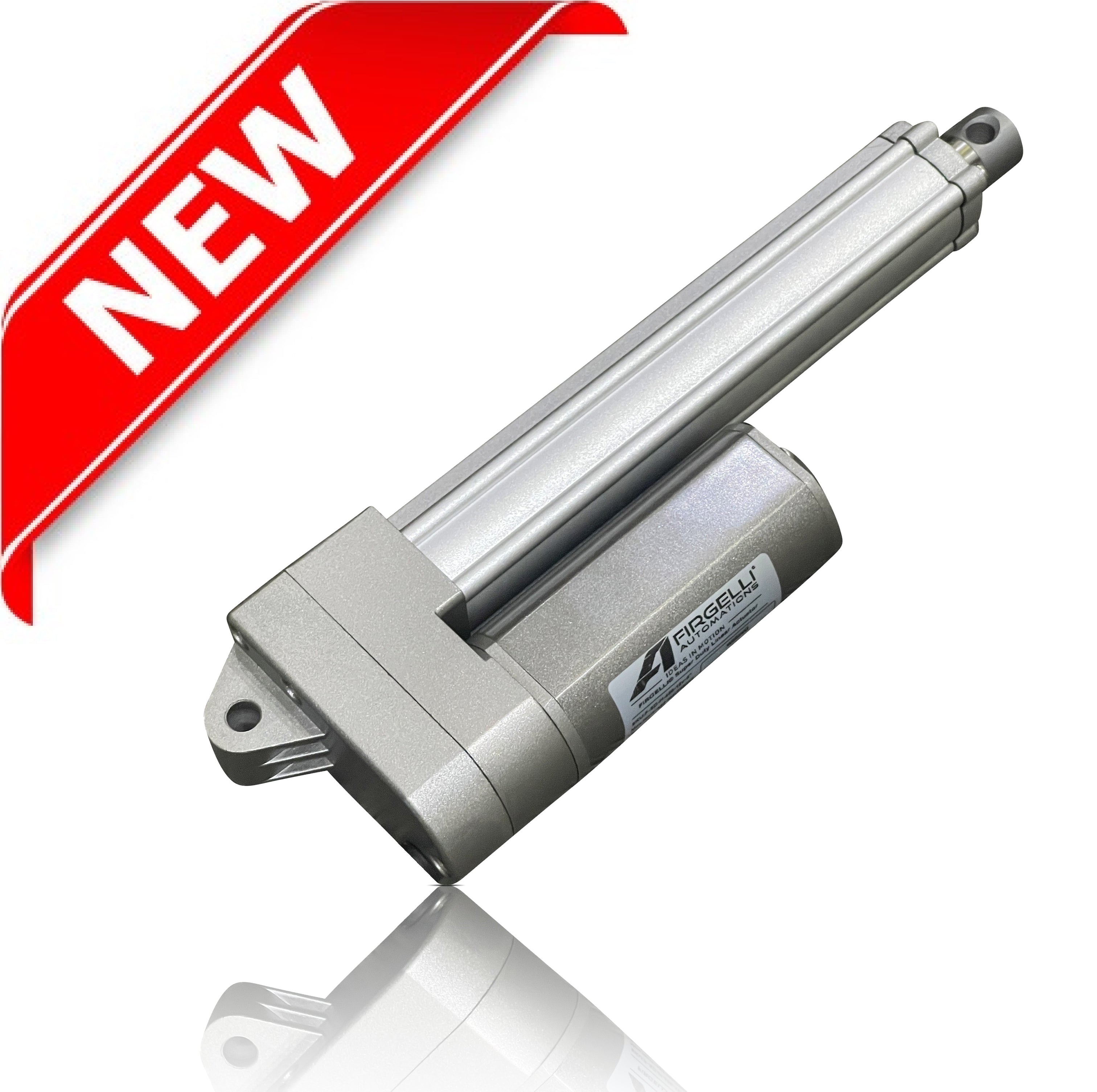
Super Duty Electric Linear Actuator
Use this when the hatch needs more force, longer stroke options, or a more serious actuator platform. It has built-in feedback options for FCB-2 control, but you can still run it with a regular switch when you only need basic motion.
View Super Duty Actuators
Utility Linear Actuator
Use this when space matters and you want a compact, lightweight, quiet actuator with useful force for its size. It can work with the FCB-2 through feedback, or with a simple switch when feedback control is not needed.
View Utility Actuators
FCB-2 Actuator Controller
Use the FCB-2 when a hatch needs synchronized motion, feedback-based position control, speed adjustment, timers, or custom limits. This matters most when you use 2 actuators on 1 wide hatch.
View the FCB-2 ControllerThe important point: feedback gives you more control, but it does not force you into a complex system. Pick feedback and the FCB-2 actuator controller when you need precision. Pick a regular actuator switch when the hatch only needs simple open and close control.
What should you check before ordering?
- Hatch weight
- Hinge condition
- Hinge-to-center-of-gravity distance
- Actuator mounting distance from hinge
- Starting actuator angle
- Required open angle
- Closed length and extended length
- Stroke length
- IP rating
- Power supply voltage and current
- Switch, remote, relay, or controller choice
- Wiring protection and strain relief
If you need a general actuator starting point, use our actuators page and linear actuators page to understand the families, terminology, load ratings, mounting notes, and actuator tradeoffs.
What are common mistakes when using this calculator?
- Entering distance from hinge instead of full hatch length. The calculator estimates the center of gravity at half the length you enter. Use the full hatch length from hinge to outer edge.
- Guessing stroke from hatch size. Stroke depends on where the brackets sit, not how big the hatch is. Two identical hatches with different mount points need different stroke lengths.
- Skipping the safety factor. Real hatches add friction, gasket resistance, wind load, and hinge wear. The raw formula result is the minimum, not the answer.
- Ignoring the starting angle. The calculation uses the hardest position. A shallow starting angle creates the worst leverage, even if the hatch later swings through easier geometry.
- Mixing units. Keep weight in lbs and dimensions in inches, or weight in N and dimensions in mm. Do not mix.
How can you verify the calculator output is reasonable?
- Sanity check against the worked example. A 65 lb hatch at 28° starting angle with a 1.75× safety factor needs around 170 lbs of actuator force. If your numbers are similar and the result is wildly different, recheck inputs.
- Mock up the geometry. Use cardboard, wood strips, or CAD to confirm the brackets fit, the actuator clears at both ends of travel, and the open angle is what you actually want.
- Compare closed and extended length. The stroke output should equal extended length minus closed length on the real actuator you plan to buy. If it does not fit, change the mount distance, not the actuator stroke.
- Check the starting push angle. If the calculator shows the closed push angle below about 20°, the actuator will work very hard at startup. Move the base bracket lower or the hatch mount farther from the hinge.
- Verify against the actuator data sheet. Required force should fall below the actuator's rated dynamic load, not its peak or static load.
Frequently Asked Questions
Can a linear actuator replace a gas strut on a boat hatch?
Yes, but you must size it as a powered lift, not as a direct gas strut swap. A gas strut assists the hatch through its own force curve. A linear actuator follows fixed stroke geometry and sees the highest load where the mounting angle gives it the worst leverage.
Do I need a waterproof actuator for a boat hatch?
You need an actuator and wiring system that match the exposure. If the hatch sees rain, spray, washdown, or salt air, choose an actuator with a suitable IP rating and protect the connectors. The controller may need a dry compartment or enclosure even when the actuator handles moisture.
Why does my hatch actuator stall at the start?
The starting angle usually causes the stall. Near the closed position, the actuator may push almost along the hatch instead of lifting it. Increase the actuator angle, move the hatch-side bracket farther from the hinge, reduce friction, or choose a stronger actuator after recalculating the load.
Can I use 2 actuators on 1 boat hatch?
Yes, and wide hatches often need 2 actuators to prevent twisting. Use matched actuators, strong brackets, and good alignment. If the hatch must stay level, use feedback actuators and a controller that can synchronize motion rather than relying on 2 motors to run at identical speeds.
What voltage should I use on a boat hatch actuator?
Most small boat systems use DC power, commonly 12V or 24V depending on the boat and actuator. Match the actuator, controller, and power supply voltage. Do not mix 12V and 24V components unless the controller documentation clearly supports that setup. Marine DC wiring practices follow ABYC E-11 (AC and DC Electrical Systems on Boats).
How much force should I add as a safety factor?
Start with 1.5x for a clean, low-friction hatch. Use 1.75x or 2x when the hatch has old hinges, a tight gasket, poor geometry, wind exposure, or wet conditions. Safety factor does not fix bad geometry, but it protects you from real-world friction and load variation.


