
A kicker motor bracket rotates a heavy outboard around a pivot in a wet, vibrating environment. Treat it as a marine pivot mechanism, not a simple lift.
Guide the load properly. The actuator should not become the guide.
"On a kicker bracket, the structure carries the outboard and the actuator moves the structure. The moment you let the actuator rod become the hinge, the bearing, and the stop, you've built a system that will fail in salt water within a season. Side load kills marine actuators faster than weight ever will." — Robbie Dickson, FIRGELLI Automations founder and former Rolls-Royce, BMW, and Ford engineer
What is the real mechanism?
The first job is to identify how the load moves. Is it lifting vertically, rotating around a hinge, sliding on rails, or moving through a linkage? That mechanism decides the force math.
What should you check before ordering?
Check moving load, stroke, closed length, extended length, speed, duty cycle, voltage, current, brackets, control method, and physical access for service. Do not order from force alone.
What should the first-pass inputs be?
Use the calculator only as a first-pass check. The final design still depends on geometry, hardware, wiring, and safety.
Relevant FIRGELLI products
Which products are worth looking at?
Only use product pages when the hardware actually matches the job. The explanation above should still make sense without buying anything.

Industrial Linear Actuator
Use this when the product family fits the real mechanism, load, stroke, and installation environment.
View Industrial Linear Actuator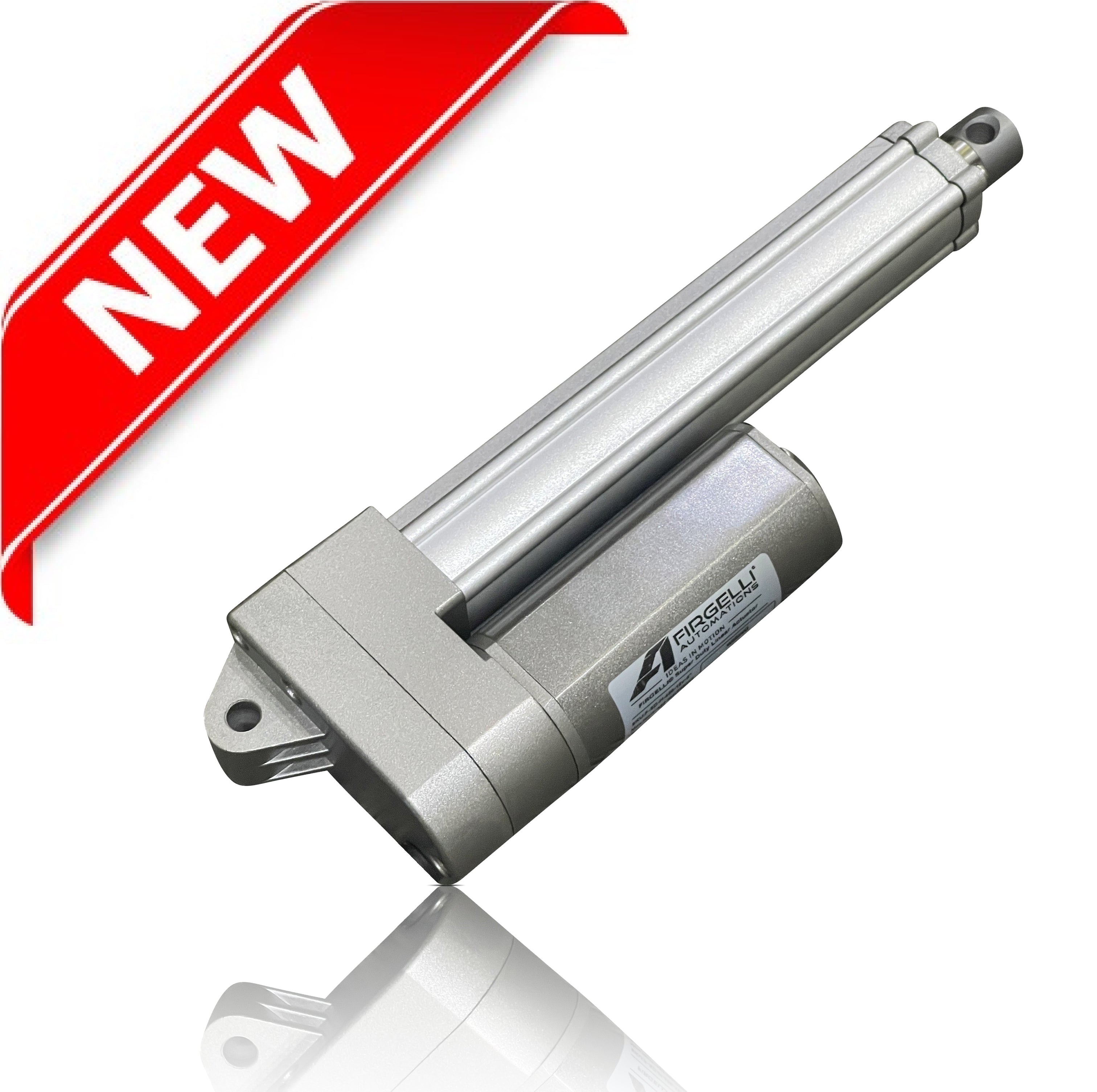
Super Duty Electric Linear Actuator
Use this as an alternate starting point when packaging, force, feedback, or control requirements point this way.
View Super Duty Electric Linear Actuator
Utility Linear Actuator
Use this when the surrounding mechanism or controls need support beyond the actuator itself.
View Utility Linear ActuatorWhat components actually matter?
A kicker bracket sees weight, vibration, thrust, water, and corrosion. The actuator should move the bracket. The bracket structure should carry the outboard load. If the actuator becomes the structural member, the design will not last.
Where would you use this?
Use powered kicker brackets on fishing boats, trolling setups, sailboats with auxiliary motors, and stern platforms where manual lifting is awkward. They help when the operator needs to raise or lower the kicker from the helm or cockpit.
How would you use it in a real build?
Design the linkage so the actuator pushes along a clean line through the useful part of travel. Keep side load out of the actuator rod. Use stainless pivots and bushings. Route wiring above splash zones where possible, then create drip loops and sealed connections.
What is a realistic example?
A 90 lb kicker sits 14 inches behind the transom pivot. That creates 1,260 lb-in of static moment before wave shock. If the actuator connects to a linkage point with only 5 inches of effective lever arm, the ideal force already reaches 252 lbs before friction and safety factor. Add at least 1.5× for real hardware.
What usually goes wrong?
Do not size only for motor weight. Thrust, bouncing, corrosion, and pivot friction matter. Do not mount the actuator where the rod angle goes nearly parallel to the linkage at the hardest part of travel.
What should you measure before choosing parts?
Measure outboard weight, distance from transom pivot to motor center of mass, bracket lever arm, actuator mounting distance, and the full linkage path. Add wave shock and corrosion margin. A kicker bracket lives harder than a clean shop mechanism.
How should you test it before trusting it?
Test the mechanism at the 2 worst positions: the highest load position and the tightest clearance position. Run it at least 20 full cycles before you judge it. Listen for speed changes, bracket flex, cable rub, and any point where the actuator rod stops moving in a straight line.
Then test it with the real load, not a hand pushing on the frame. A mechanism that works empty can bind once the mattress, TV, hatch, motor, or patient load gets added.
What changes when this becomes a real product?
A one-off build can tolerate adjustment. A real product cannot. Production needs slotted brackets removed or locked down, repeatable hole locations, controlled wire routing, service access, and a clear failure mode. If a user can overload the system, the control system should detect it before the hardware bends.
What rule of thumb should you remember?
Make the structure guide the load and make the actuator provide motion. When the actuator also becomes the guide, the bearing, and the stop, the design starts eating itself.
Which applications are a good fit?
Good applications include trolling motors, sailboat auxiliary motors, fishing boat kickers, swim-platform brackets, and stern-mounted service motors. The common thread is controlled motion. The load should move through a known path, with brackets, guides, hinges, or structure carrying the side loads.
What details should go on the design checklist?
Before choosing hardware, write down motor weight, thrust line, pivot friction, lever arm, bracket material, salt exposure, wiring route, and manual override. These numbers and conditions stop the project from turning into guesswork. They also make support conversations much faster because the important facts are already on the table.
For a prototype, you can adjust brackets and reroute wires after the first test. For a finished installation, make those decisions early. Leave access to fasteners. Leave access to wiring. Leave enough room to replace the actuator without taking the whole project apart.
What is the practical takeaway?
The bracket carries the motor. The actuator moves the bracket. Do not swap those jobs.
What final check should you do before ordering?
Write the project down as 5 numbers before you buy anything: load, stroke, speed, voltage, and available mounting space. Then add the real-world conditions: water, vibration, dust, heat, access, duty cycle, and what happens if the mechanism jams. This 10-minute check catches most actuator mistakes before money gets spent.
After that, check the control path. The switch, relay, controller, fuse, wire, and power supply all need to match the actuator current. A strong actuator with weak wiring is still a weak system.


