
A quiet linear actuator is not just a quiet motor. Noise comes from gears, screw drive, speed, load, brackets, panels, resonance, and how the actuator stops. Pick the wrong mounting and a quiet actuator can still make the whole cabinet sound cheap.
Mounting and structure matter as much as the actuator itself. The hardware makes the motion; the structure decides how loud that motion sounds.
"A quiet actuator on a loose panel is a loud cabinet. Most of the noise customers complain about lives in the brackets, the panel, and the end stops — not the motor." — Robbie Dickson, Founder and Chief Engineer of FIRGELLI Automations
What is a quiet linear actuator?
A quiet linear actuator reduces motor, gearbox, and screw noise during extension and retraction. The installation must also avoid vibration and panel resonance.
What is the simple explanation?
The actuator makes motion. The structure can amplify that motion into sound. Quiet design needs both a suitable actuator and a solid mount.
Use the simple score below to estimate noise risk.
Noise risk = speed + load + resonance + hard stop risk
What should the calculator inputs be?
Use this as a first-pass sizing tool. Then confirm the final choice against the actual FIRGELLI product page, the wiring diagram, and your real mounting geometry.
How do you use this calculator?
- Enter the real project values, not guesses from a different mechanism.
- Use measured current, load, stroke, voltage, or signal values where you can.
- Add margin for real brackets, wiring, friction, and installation conditions.
- Click Calculate to see your result.
How do you make an actuator quieter?
Start with the actuator type, then fix the structure. A compact quiet actuator helps, but a loose panel can turn small vibration into a loud buzz.
Use rubber isolation only where it does not make alignment worse. The actuator still needs to push straight, and the brackets still need to hold load safely.
What is a simple example?
A hidden cabinet door uses a small actuator on a thin wood panel. The actuator sounds fine on the bench but buzzes in the cabinet.
The fix is not always a different actuator. Add a rigid bracket, move the mount closer to the frame, guide the door, and prevent the actuator from slamming into hard stops.
Recommended FIRGELLI setup
Which FIRGELLI products fit this job?
Choose quiet motion from actuator design, load, speed, and the structure it bolts into.

Silent Micro Linear Actuator
Use this when the project needs very compact quiet motion and the load/stroke requirements fit the product page.
View Silent Micro Actuator
Utility Linear Actuator
Use this for compact, quiet actuator projects where the Utility actuator’s worm gear behavior and feedback options fit.
View Utility Actuators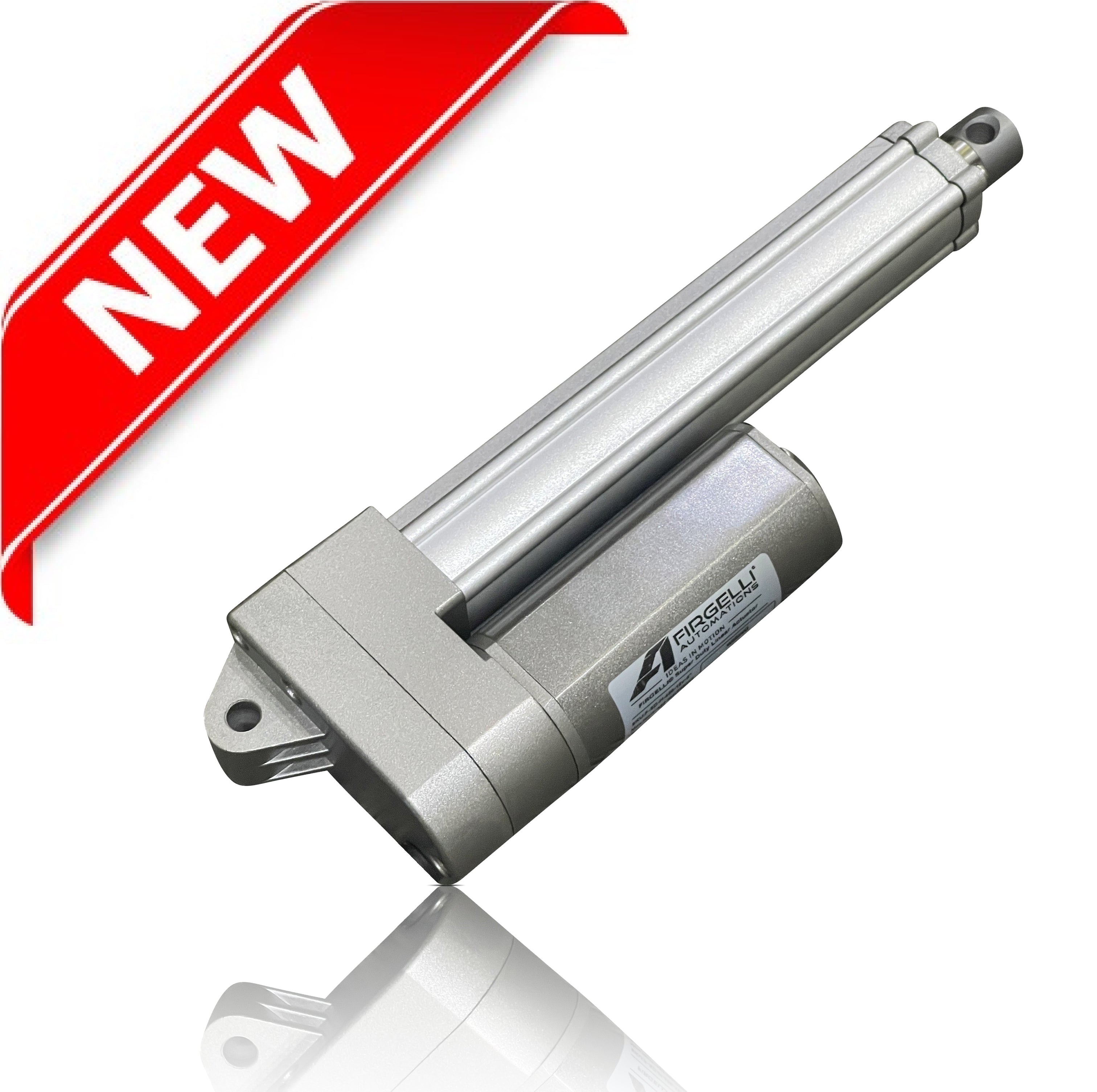
Super Duty Electric Linear Actuator
Use this when the project needs a stronger actuator platform with feedback-capable options and regular switch control still works.
View Super Duty ActuatorsFor position-aware control or softer motion planning, use the FCB-2 actuator controller where it fits the actuator setup.
What usually goes wrong with quiet actuator installs?
- Overspeeding a gearbox. Running an actuator near its top speed raises gear whine. Slower motion is usually quieter.
- Thin panel resonance. A small actuator vibration into a thin cabinet door turns the door into a speaker. The actuator is not the problem — the panel is.
- Side loading the rod. If the actuator is forced to act as the guide instead of just the pusher, you get grinding, uneven motion, and shortened life.
- Hard mechanical end stops. Slamming into a hard stop at full speed makes a clunk, stresses the gear train, and can loosen mounting hardware over time.
- Loose or undersized brackets. A bracket that flexes under load lets the actuator twist. That twist becomes vibration, and vibration becomes noise.
- Mounting isolation done wrong. Rubber isolators help on rigid frames but can let the actuator misalign on thin panels, making the noise worse, not better.
How should you test a quiet actuator before trusting it?
- Test installed, not on the bench. An actuator running free on a workbench will always sound quieter than the same actuator pushing against a panel. Always test in the real structure.
- Cycle under real load. Run the actuator at the actual load it will see in service, not unloaded. Noise and vibration change with load.
- Listen at both end stops. Most noise complaints come from how the actuator stops, not how it moves. Cycle to full extension and full retraction and listen for clunks.
- Check alignment under load. Watch the rod while the actuator pushes. If it deflects sideways, the bracket or guide is wrong and noise will follow.
- Run multiple cycles. A single cycle proves the idea. Repeated cycles prove the design — vibration that loosens hardware shows up over time, not on cycle one.
Where does quiet linear actuator design matter most?
- Smart furniture and hidden cabinetry. TV lifts, hidden bars, motorized drawers, and concealed compartments where users expect silent motion.
- Home office and standing desks. Height-adjustable desks used in shared offices and bedrooms where motor whine is unacceptable.
- Medical and assistive equipment. Adjustable beds, patient lifts, and exam tables operated in quiet rooms or near sleeping patients.
- Retail display and exhibits. Showroom pieces and museum installations where actuator noise would break the experience.
- Home theater and entertainment. Motorized screens, projector lifts, and seating where any audible noise during operation is a defect.


